
A Pho-nomenal Three Weeks in Vietnam
Author’s Note: buckle up, this is a long one!
Hello from Vietnam! Like Cambodia, I visited this country nine years ago on my post-grad Asia trip, though I only made it as far as Hanoi. That first visit gave me just a small taste of the country; this trip made clear just how much I'd missed. Beyond Hanoi and Ho Chi Minh City, we’re exploring the misty mountains of Sapa, the limestone karsts of Ha Long Bay, and the lantern-lit streets of Hoi An. Three weeks in, and Vietnam might be one of the most diverse, captivating countries we’ve visited so far.
Hanoi
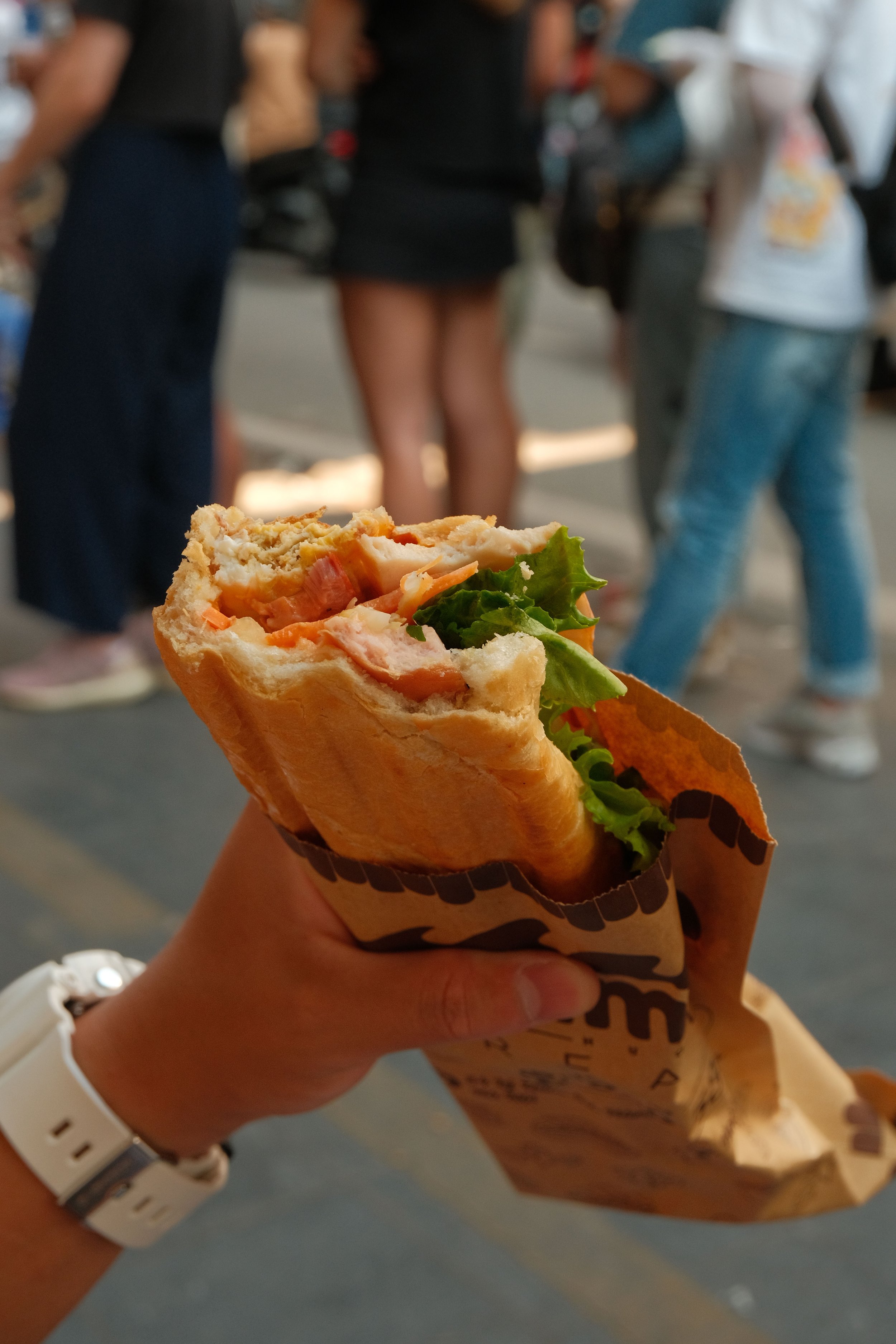
We landed in Hanoi in the early evening, checked in, and immediately went looking for food. A few blocks from our Airbnb was Banh Mi 25, a humble street cart with a big reputation on social media. We probably would have walked right past it if not for the crowd spilling onto the sidewalk - not what you want to see at the end of a travel day, but worth every minute of the wait. The fillings were simple but delicious: pork, pâté, cucumber, and herbs, with a baguette that was warm and crisp outside, soft and airy inside. Easily the best bánh mì we’ve ever had. We finished our sandwiches and decided we still had room, so we stopped at another shop on the walk home for a second round and a couple of beers. A perfect first evening.
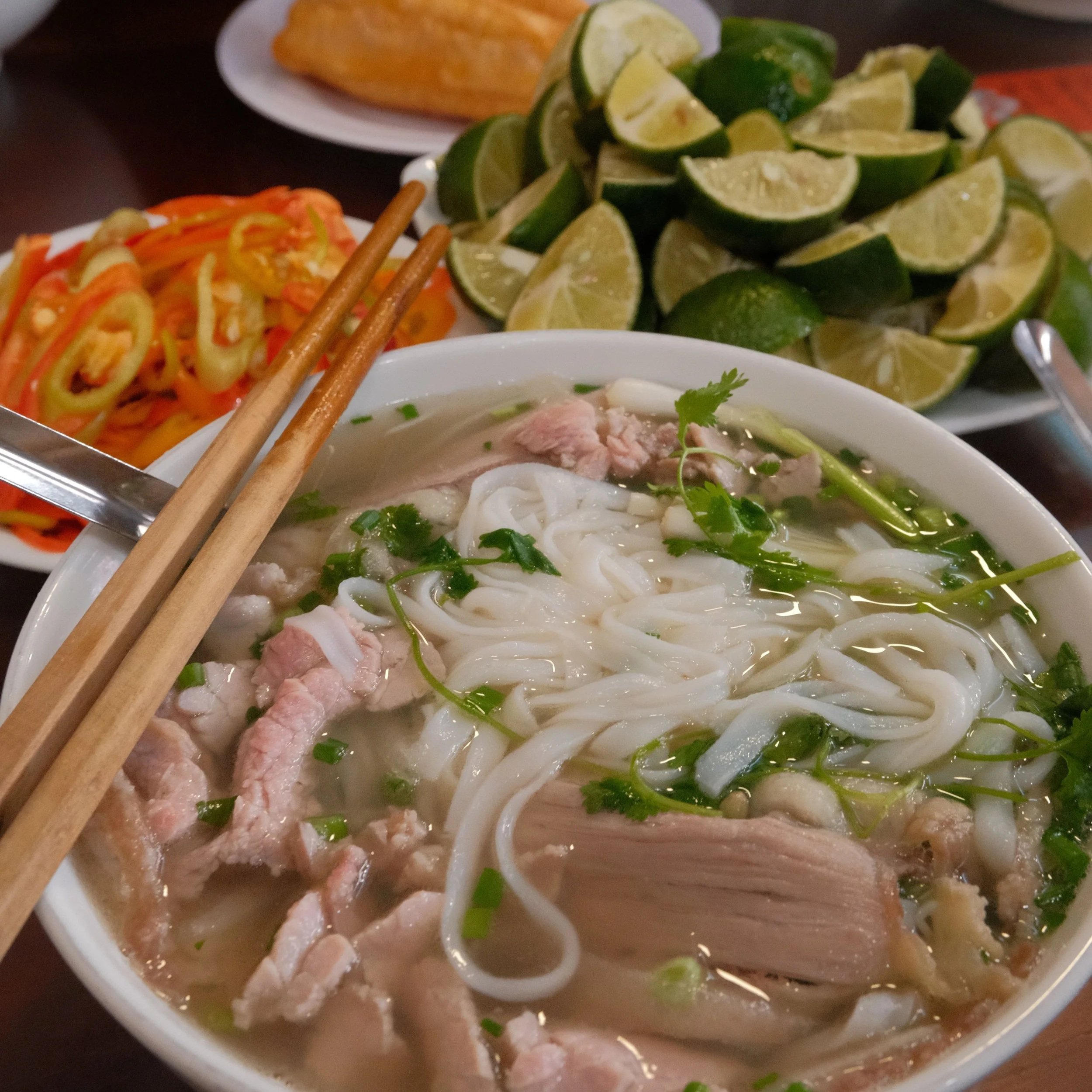
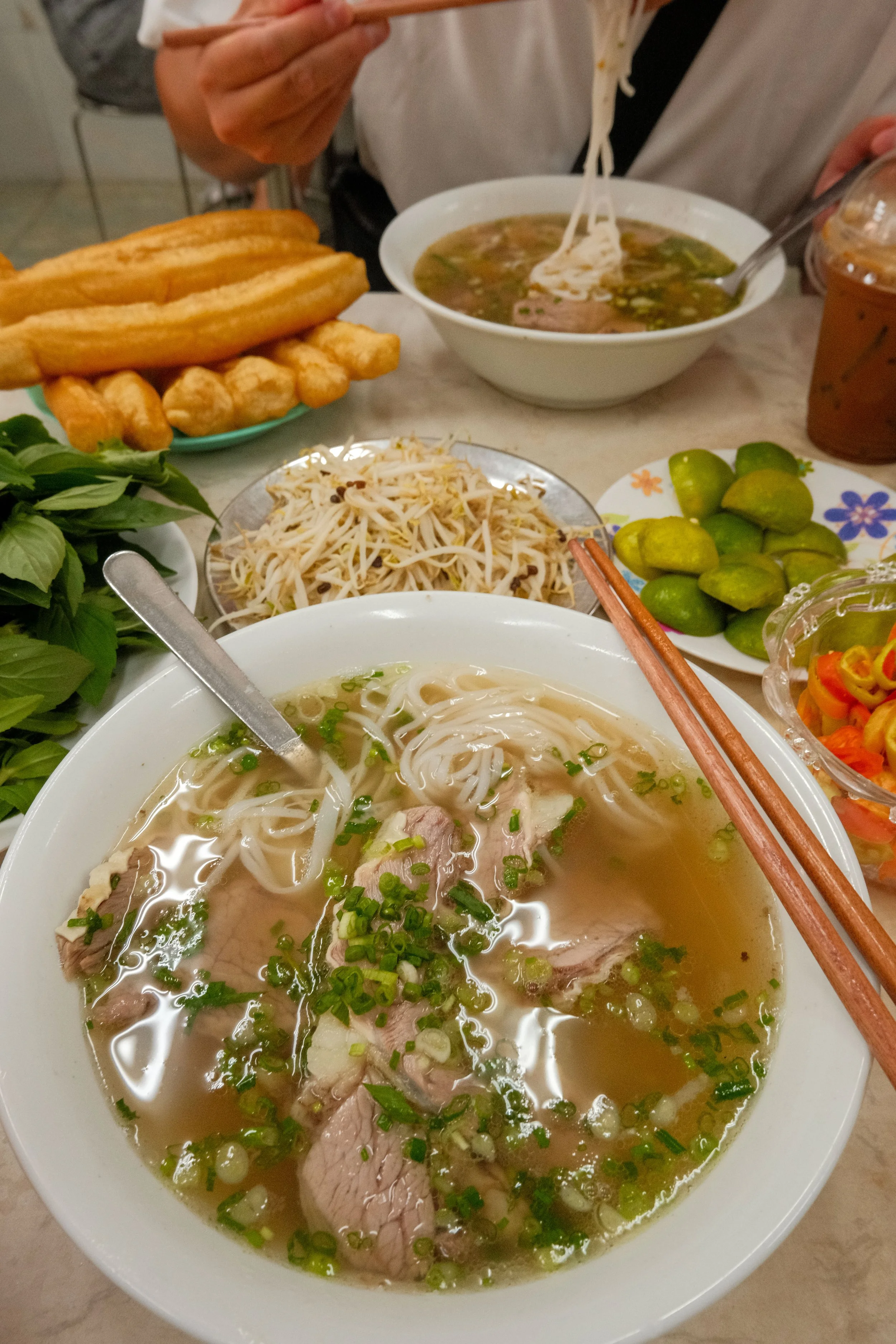
As you might expect, a lot of our time in Hanoi revolved around eating. We had pho for breakfast (it’s traditionally the first meal of the day here!) and bánh mì as an afternoon snack almost every day, and it never got old. One of the most memorable bowls came from what turned out to be someone’s living room - we followed Google Maps to a woman prepping ingredients on the sidewalk, who led us through an alley into her home. We sat at the dining room table beside a refrigerator and an ancestral altar, her kids’ graduation photos on the wall behind us. The pho was exactly as homey as the setting. Northern-style pho tends to be lighter than what we’re used to back home - a clear broth, minimal toppings, clean and deeply savory. I wish I could have it for breakfast every day for the rest of my life.
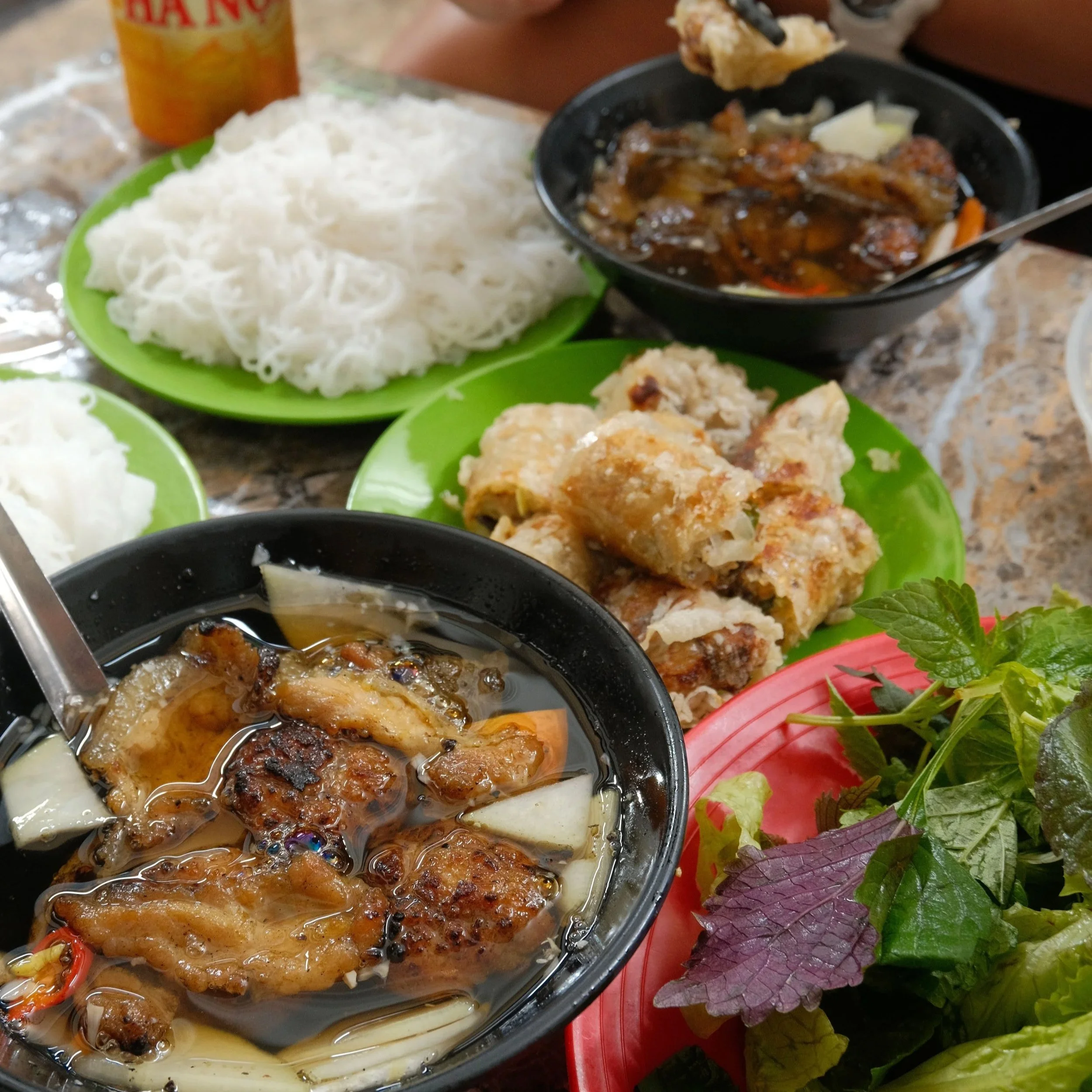
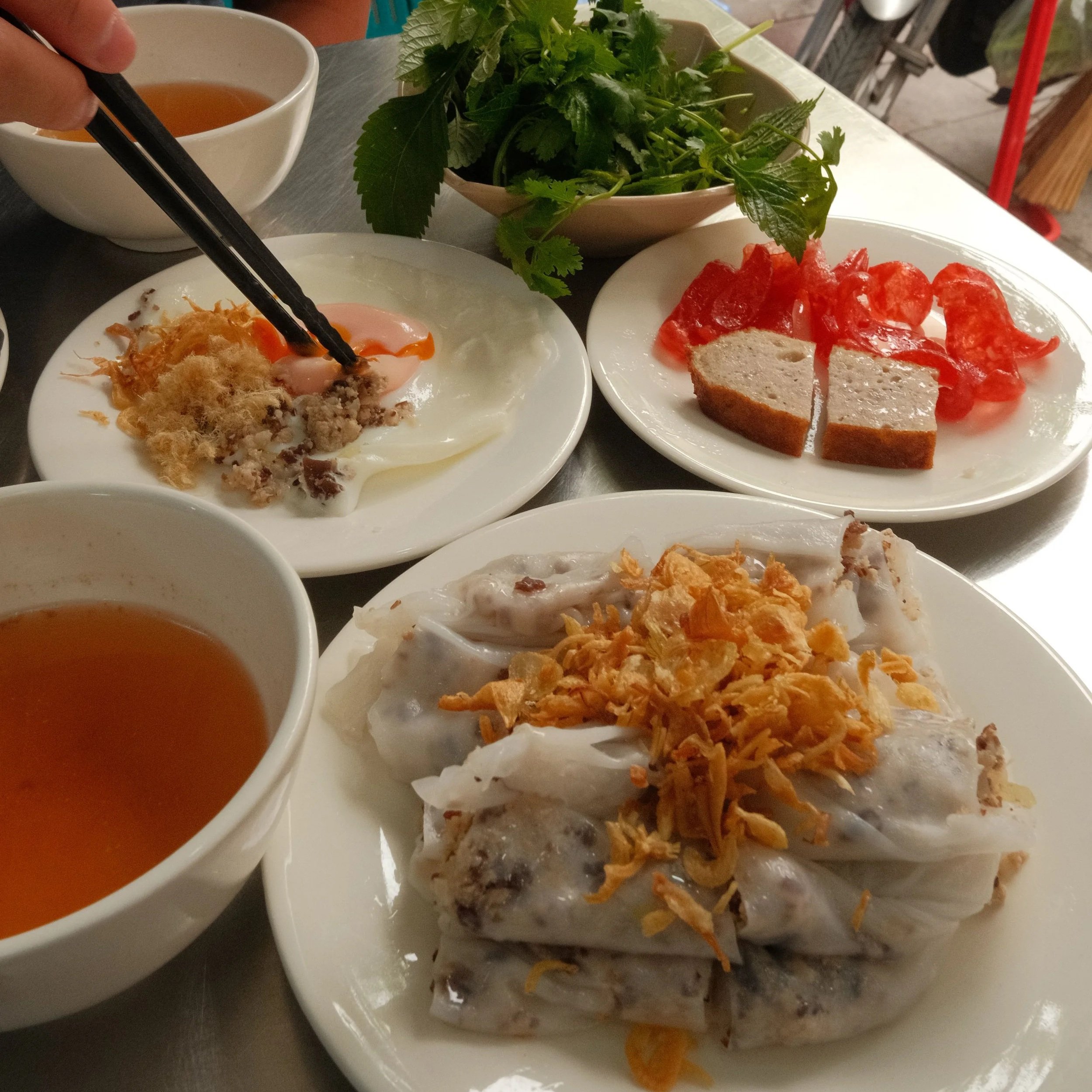
We also worked our way through a few northern Vietnamese specialties that deserve a shout-out: bánh cuon (soft steamed rice rolls filled with pork and mushrooms), bún cha (grilled pork with rice noodles, herbs, and dipping broth), and cháo (a rice porridge similar to congee, topped with pork floss and herbs). Safe to say, we didn’t have a single disappointing meal in Hanoi.
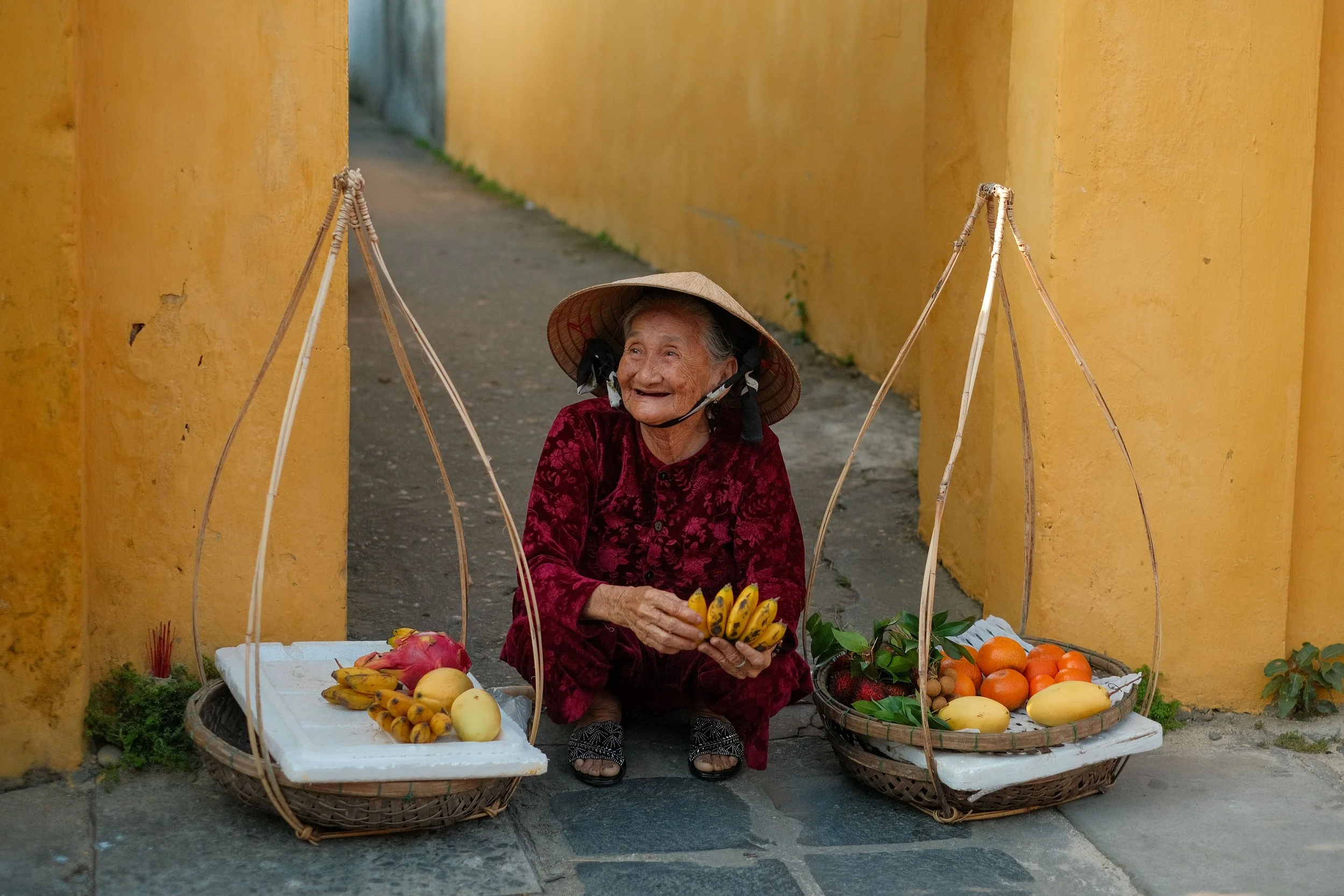
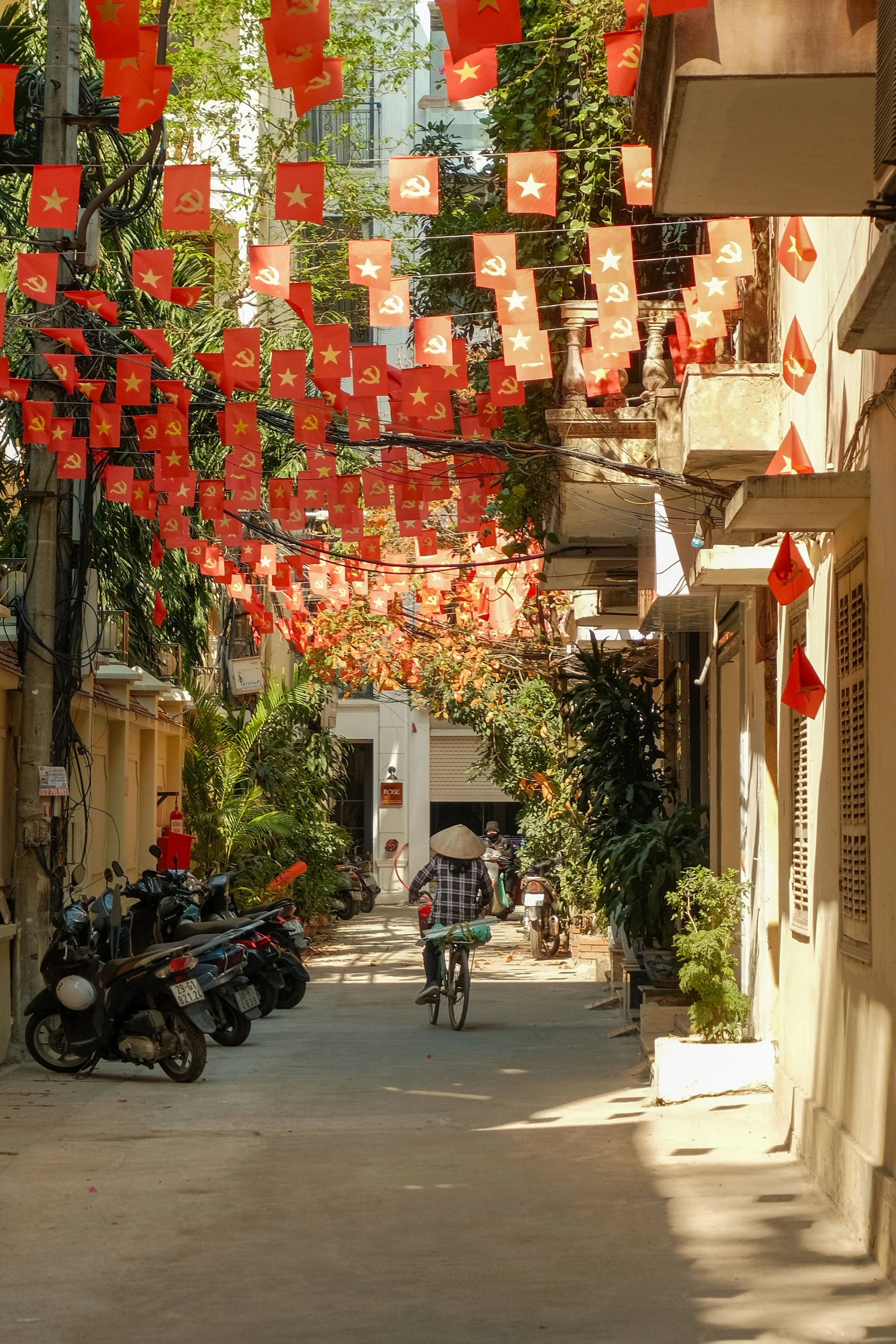
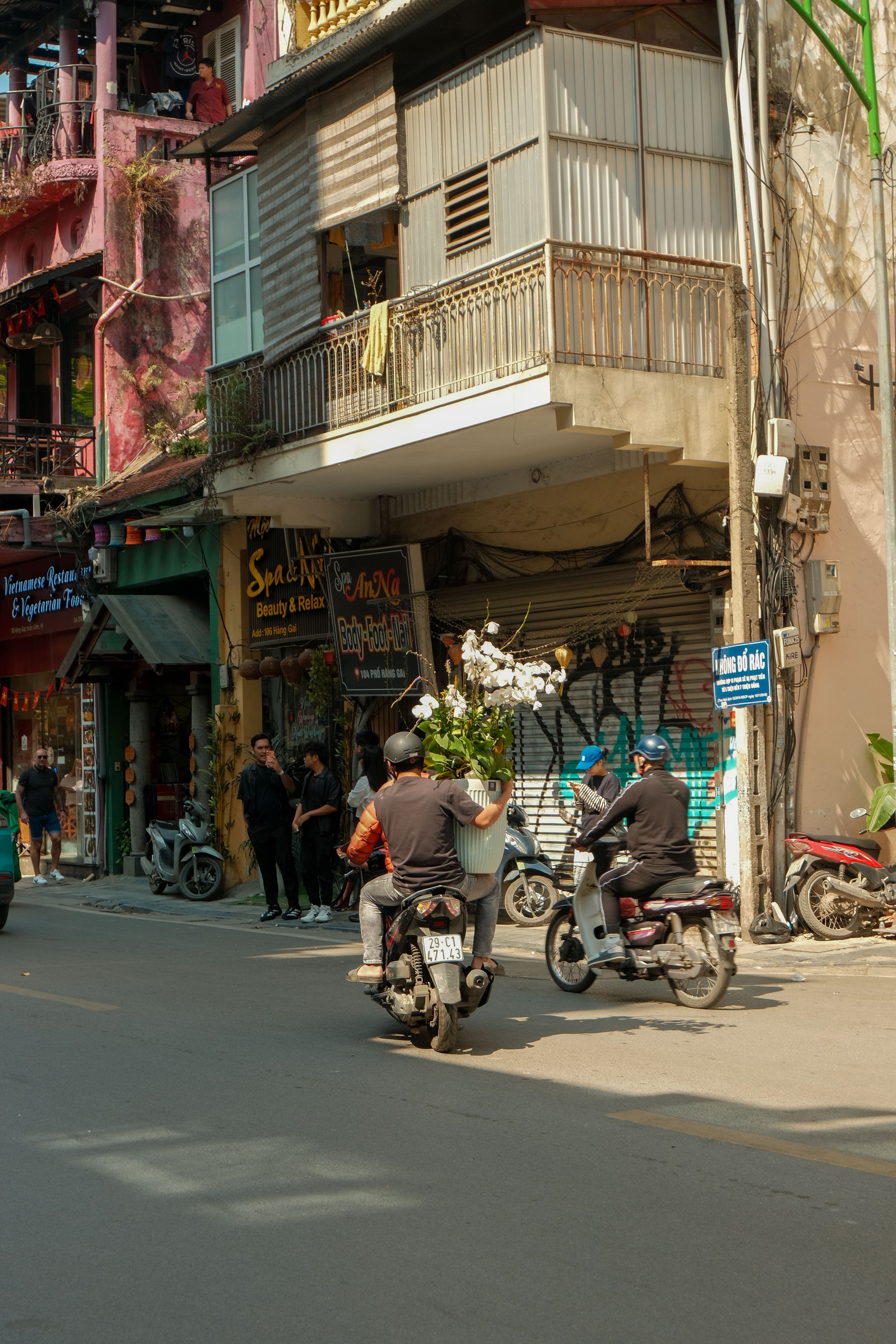
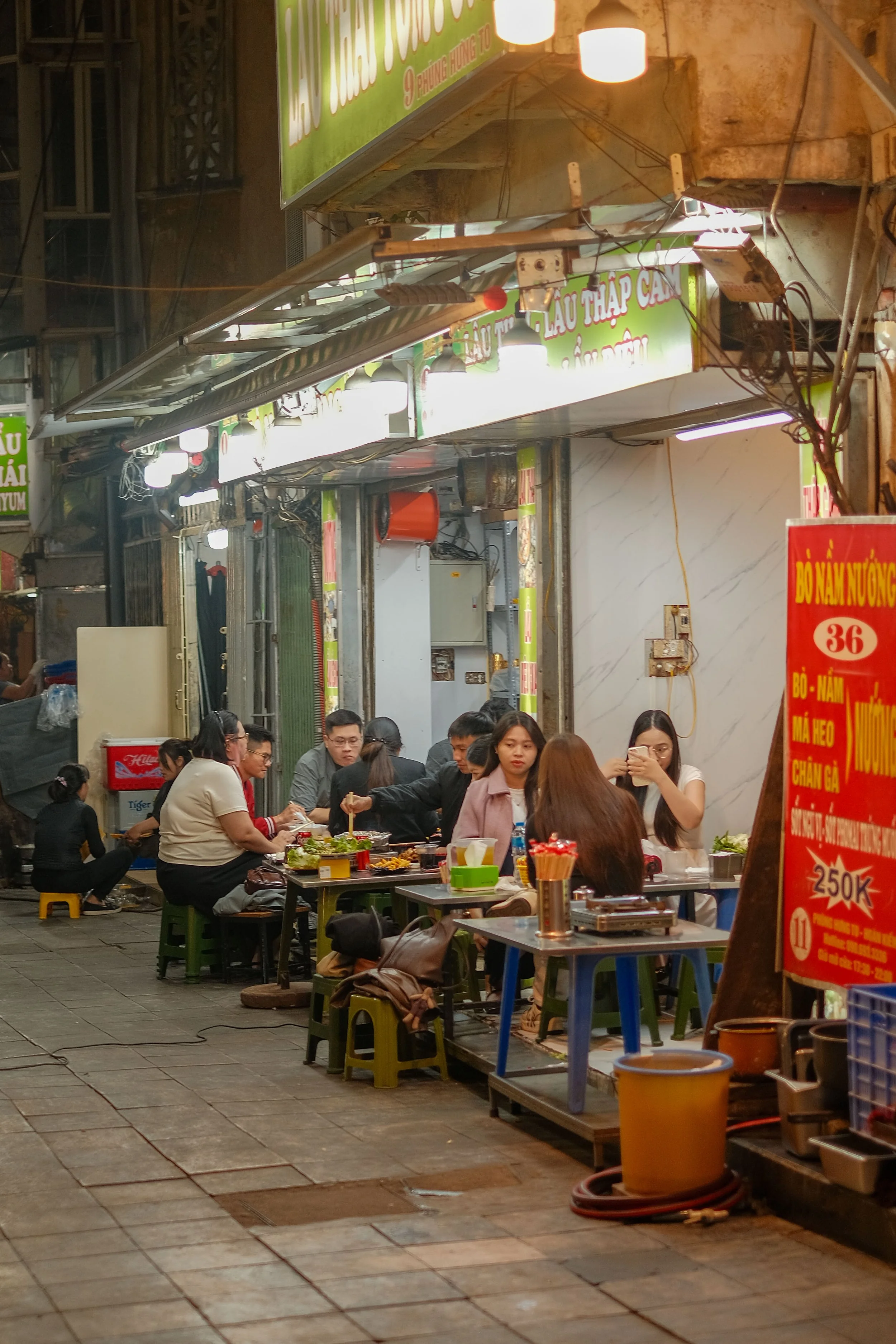
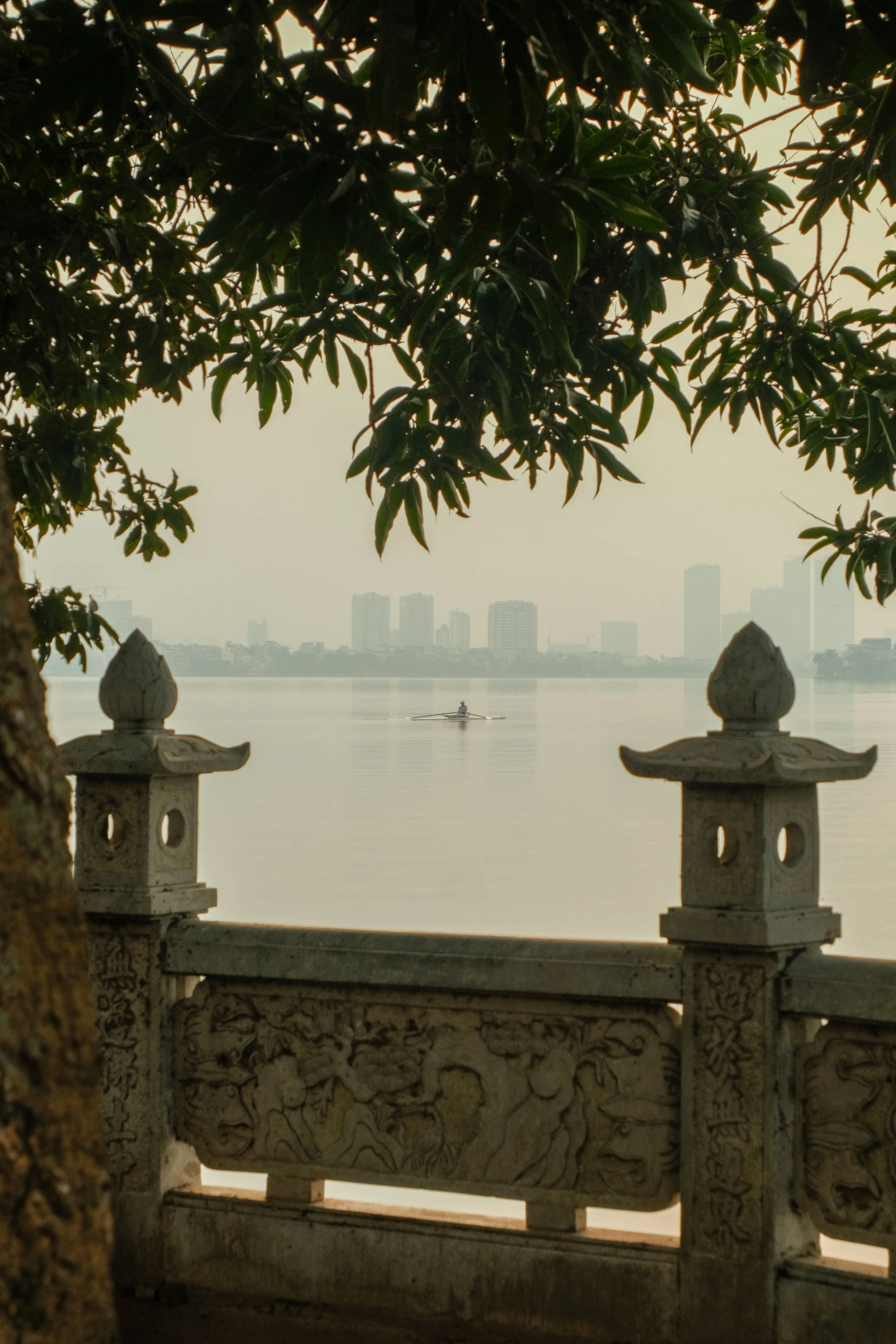
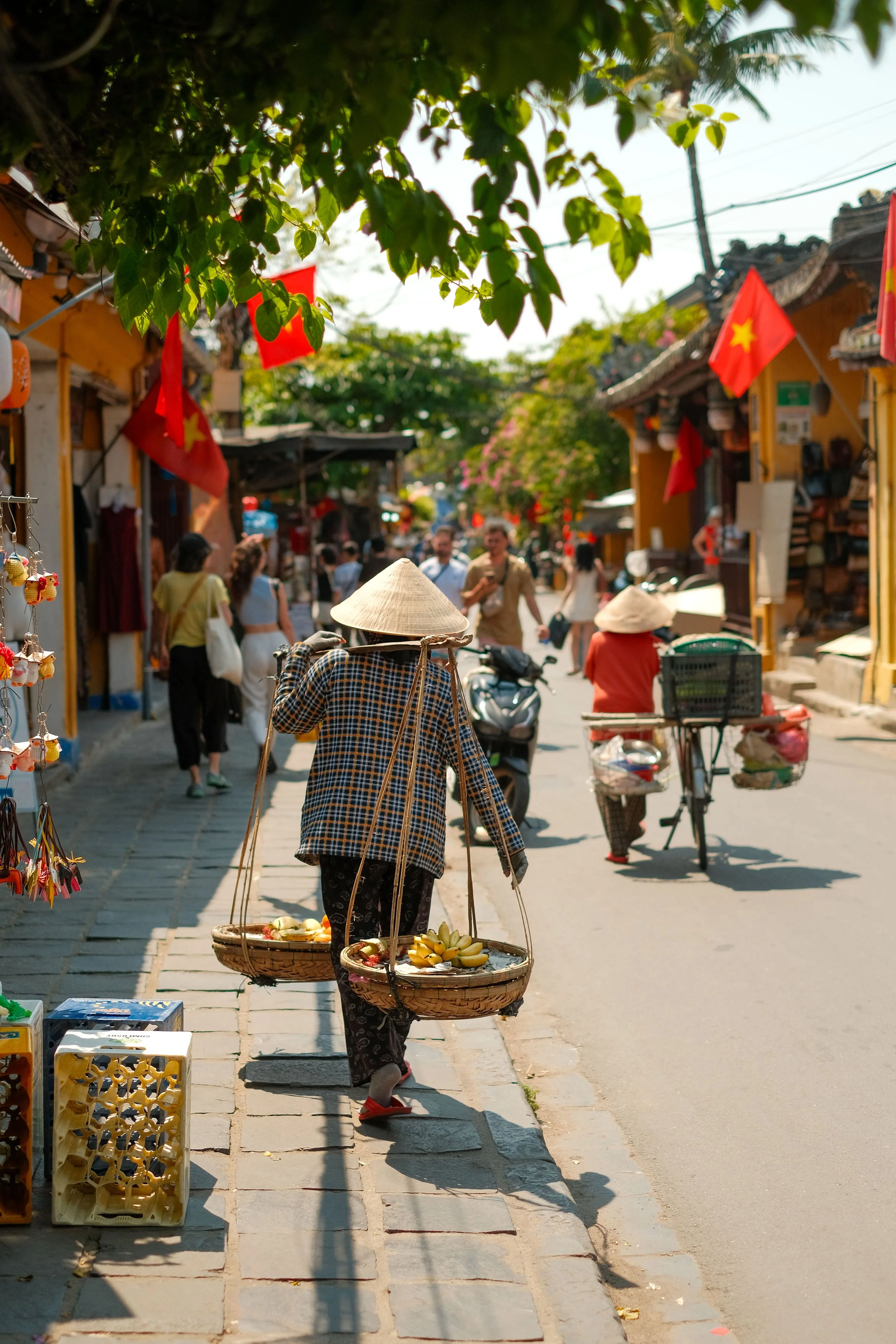
We stayed in the Old Quarter, a dense, fascinating mix of architectural eras. Narrow “tube houses” sit shoulder to shoulder with faded yellow French colonial buildings. Plants overflow from balconies, laundry flutters overhead, and tangled electrical wires loop between buildings. At street level, life unfolds in public: people cook on the roadside, fix motorbikes in the street, and nap in hammocks outside their shops. Tiny plastic stools fill the sidewalks with people eating bowls of pho, while vendors wearing straw hats weave through crowds, balancing bamboo poles of fruit baskets on their shoulders. Motorbikes flow through it all like a choreographed dance, a constant chorus of beeping in the background. In Vietnam, honking isn’t aggressive - it’s communication, a steady stream of “I’m passing” or “watch out.” Crossing the street felt terrifying at first, until we learned to just step out and keep a steady pace, trusting traffic to move around us.
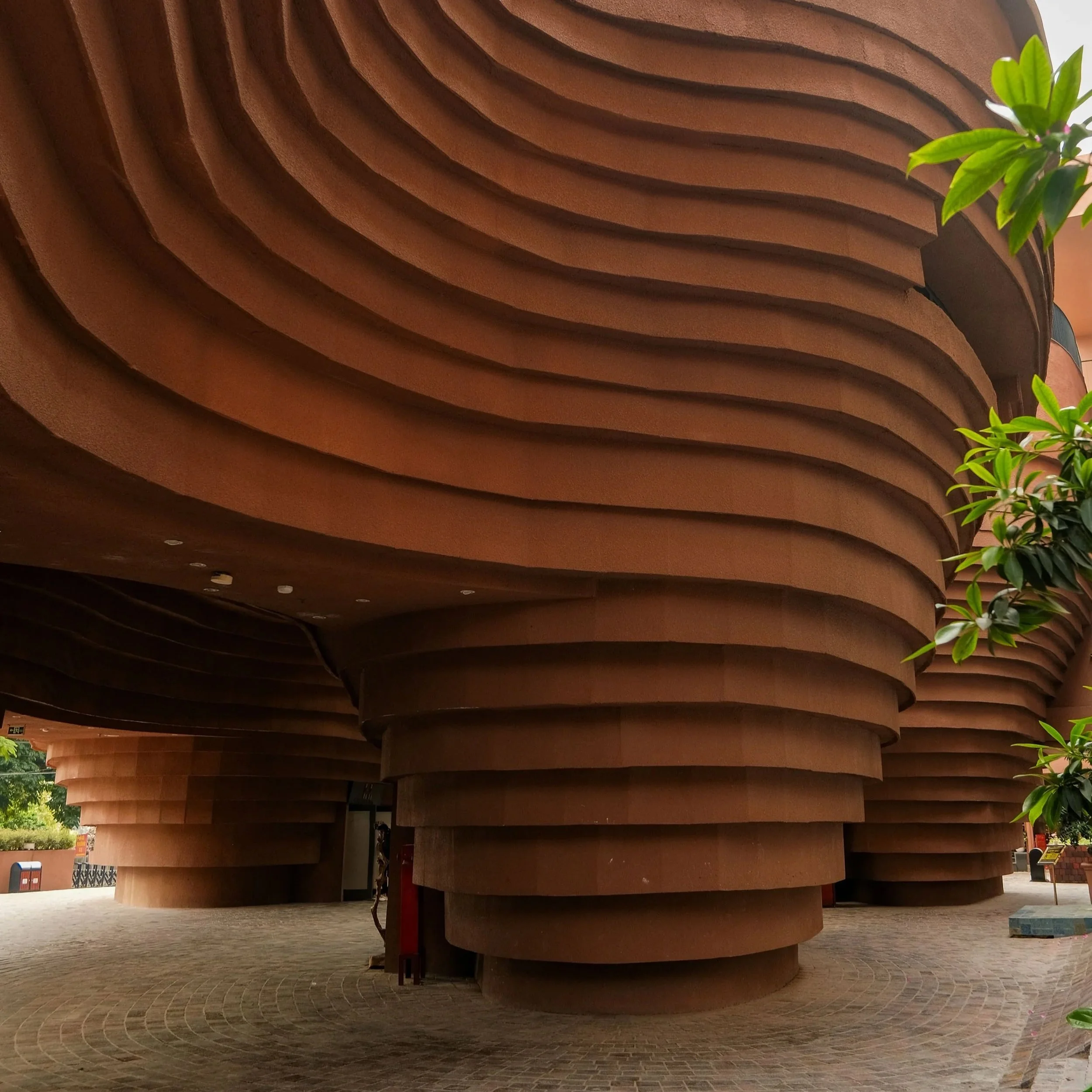
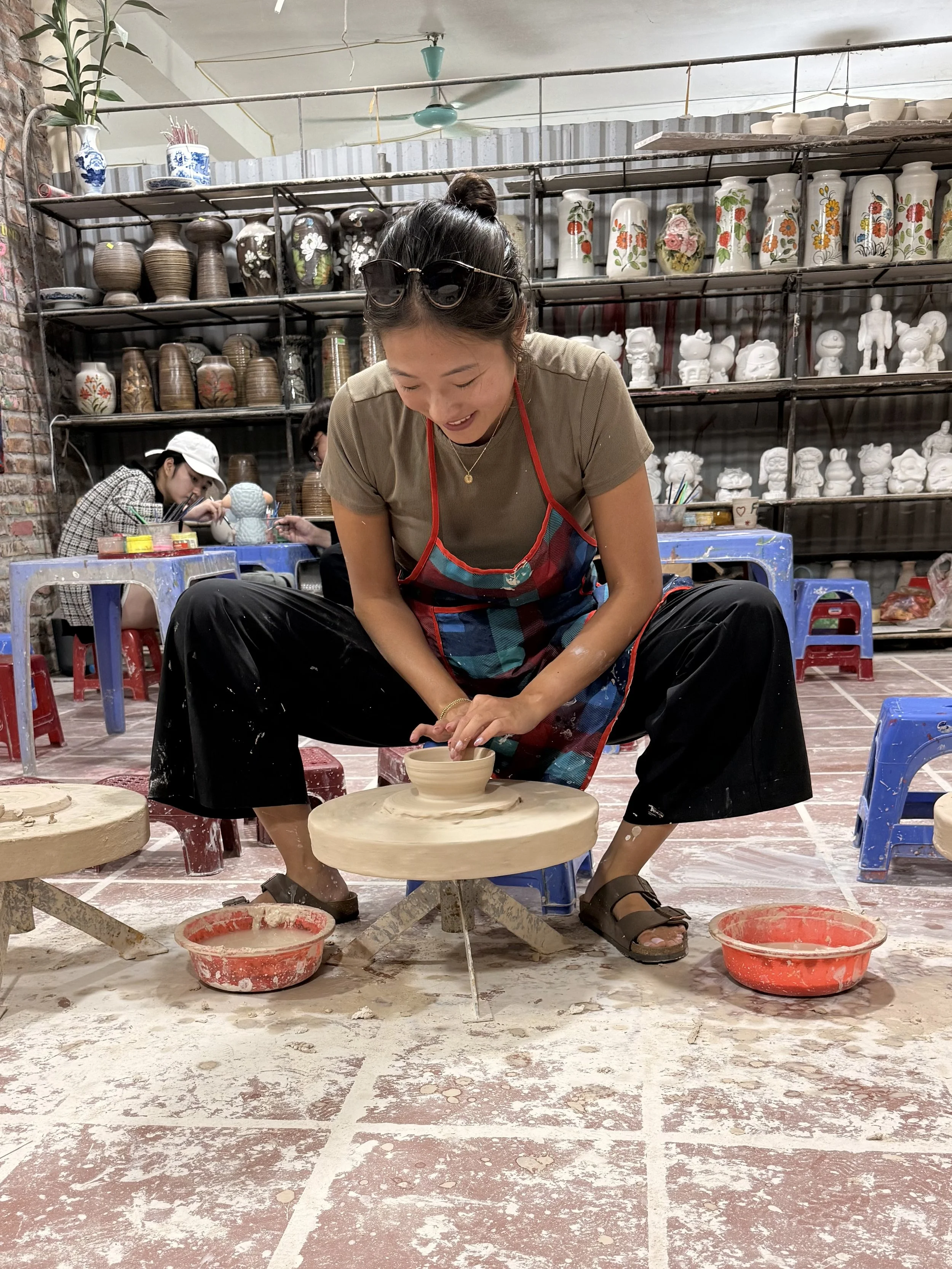
One afternoon, we visited Bát Tràng, a pottery village just outside Hanoi that’s been producing ceramics for over 700 years thanks to the high-quality clay along the Red River. We stopped by the Bát Tràng Pottery Museum to admire decorative pieces with intricate hand-painted designs, then ducked into a small workshop in the pottery market for a hands-on session. I’ve been doing pottery regularly for five years, and the last six months of travel have been the longest I’ve gone without it. It was invigorating to get my hands back on the clay, and fun to finally show Hanqing what I spend so many hours doing back home.
Sapa
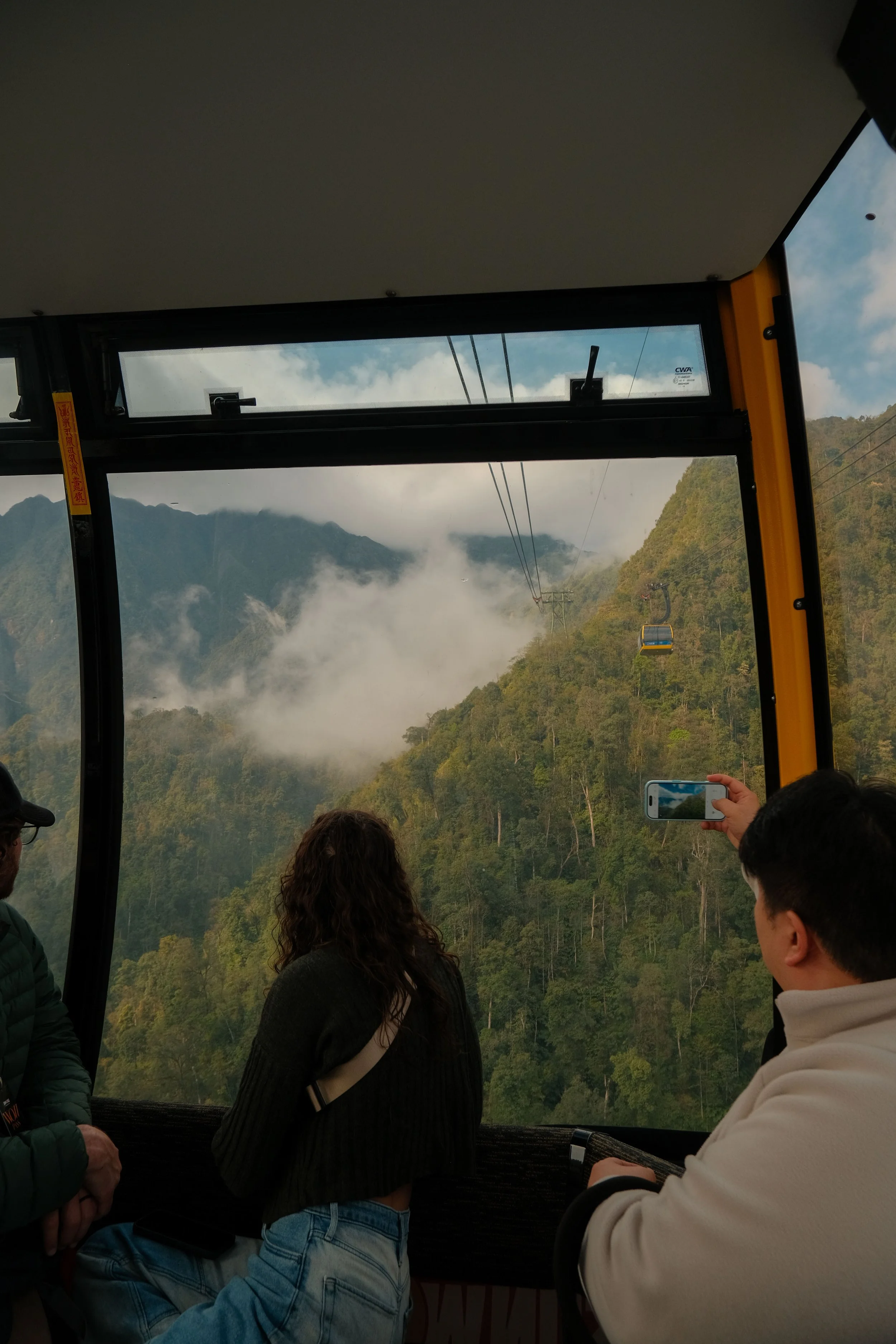
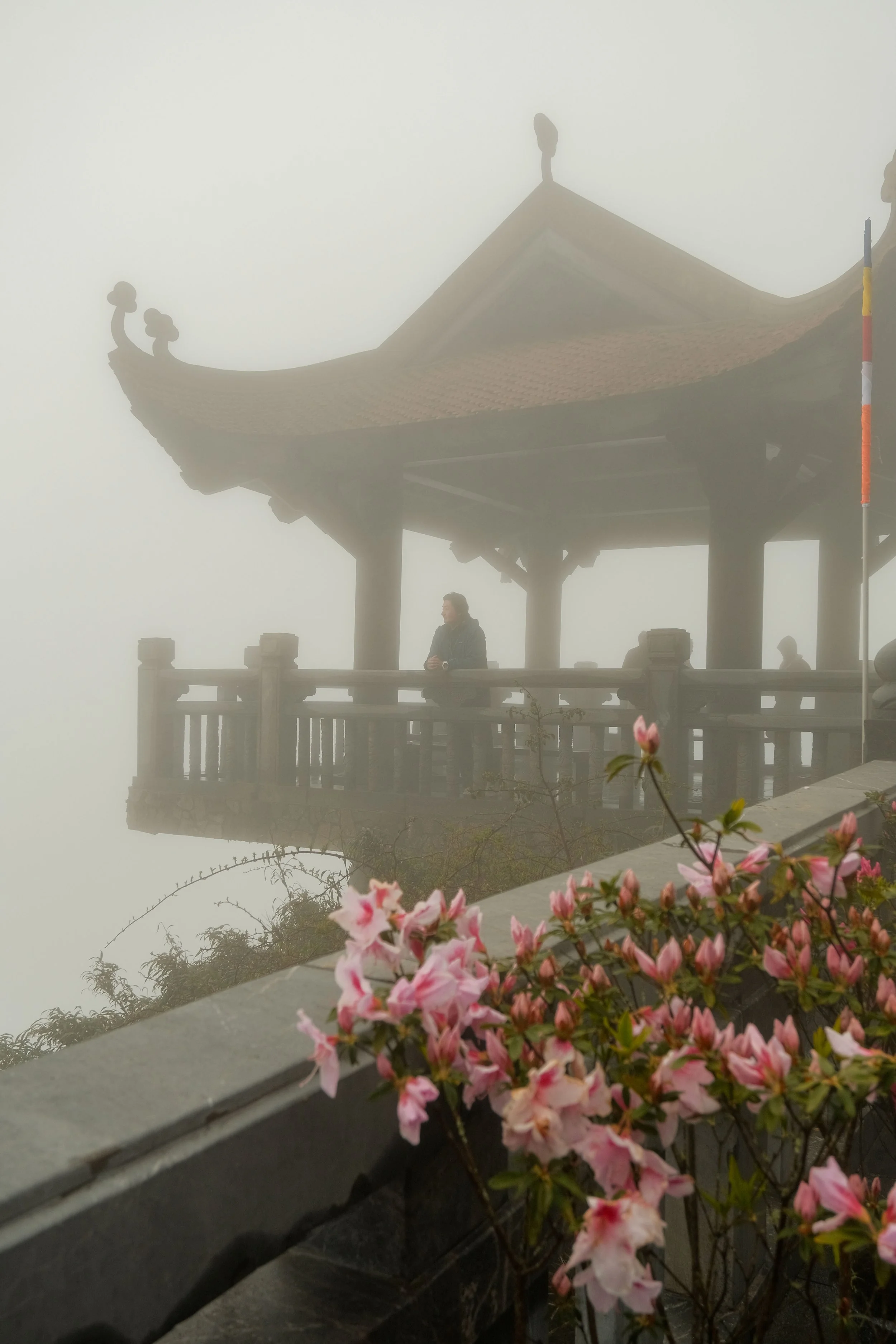
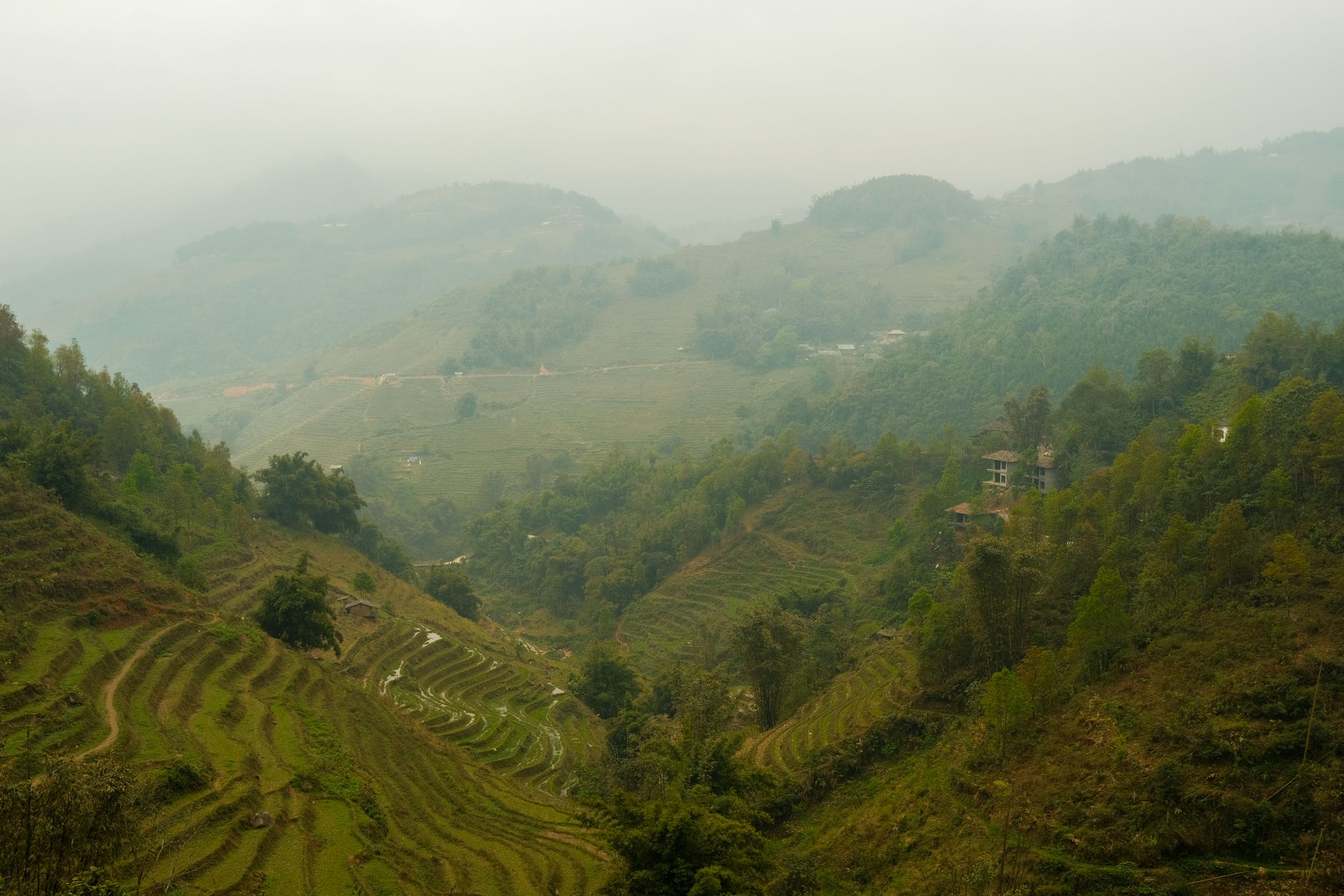
From Hanoi, we took a six-hour bus to Sapa, a mountain town near the Chinese border known for its terraced rice fields carved into steep hillsides. When we arrived, though, we could barely see any of it - the entire town was wrapped in dense fog that lingered for most of our stay. It finally lifted on our last morning, and with a few hours before our bus, we took the cable car up to Fansipan, Vietnam’s highest peak. The cable car holds the Guinness World Record for the longest and the greatest elevation difference by a non-stop three-rope cable car. As we ascended, the rice terraces and mountains came into view. At the summit, we were quickly swallowed back into fog, but climbed the final steps anyway, passing Buddhist temples emerging and disappearing in the mist. Before heading down, we stopped for coffee at the highest Starbucks in Asia, which, as it turns out, had opened just two days earlier.
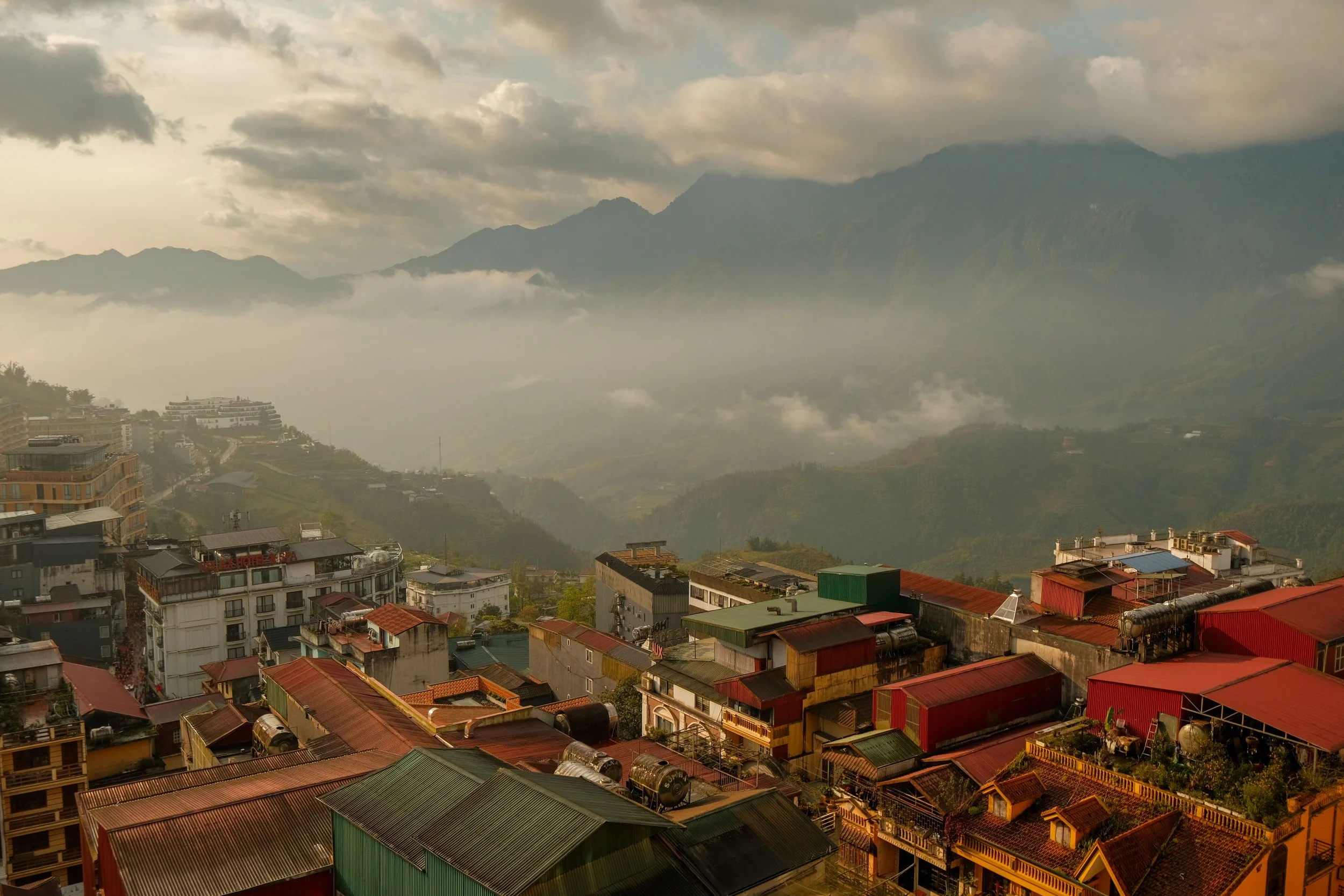
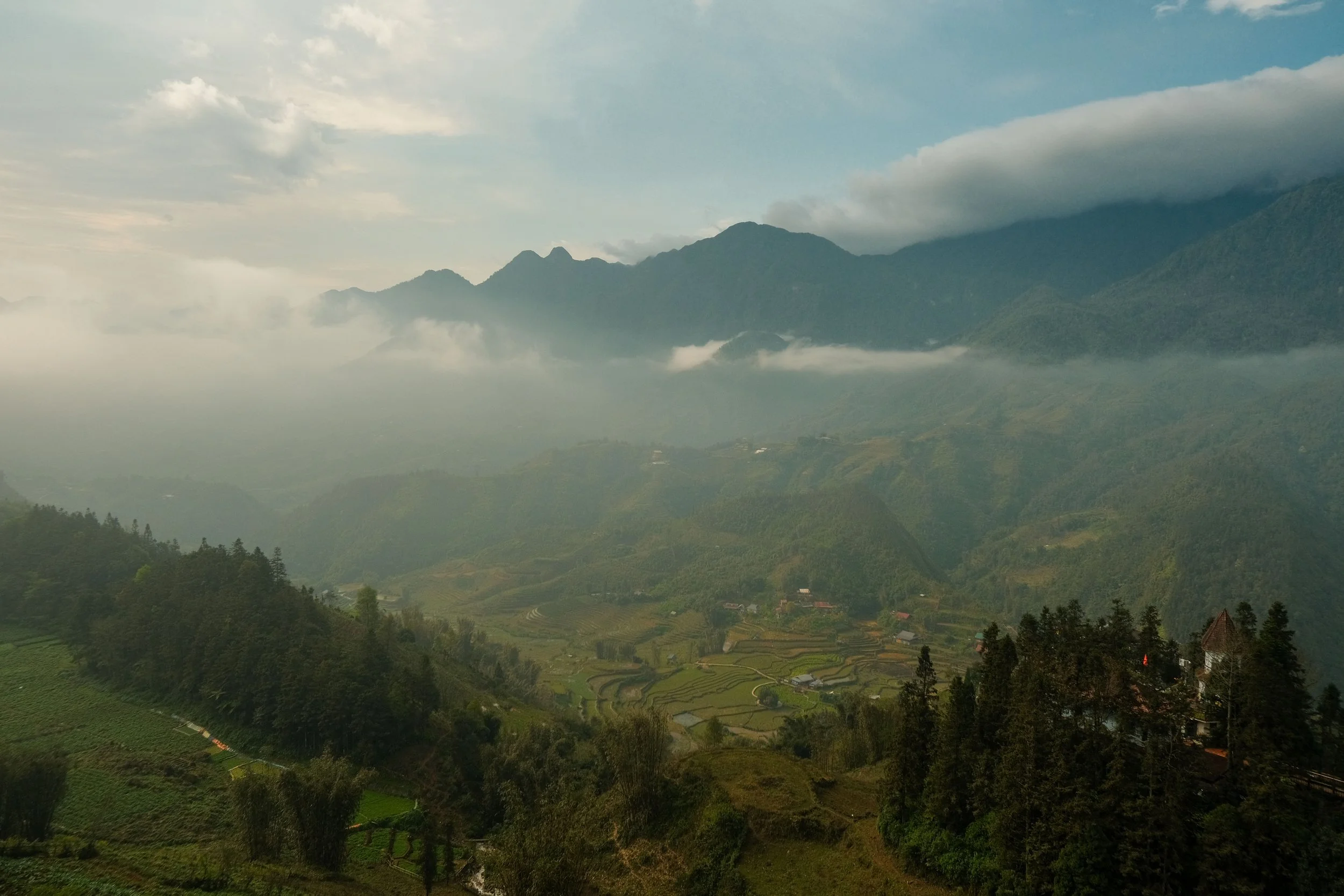
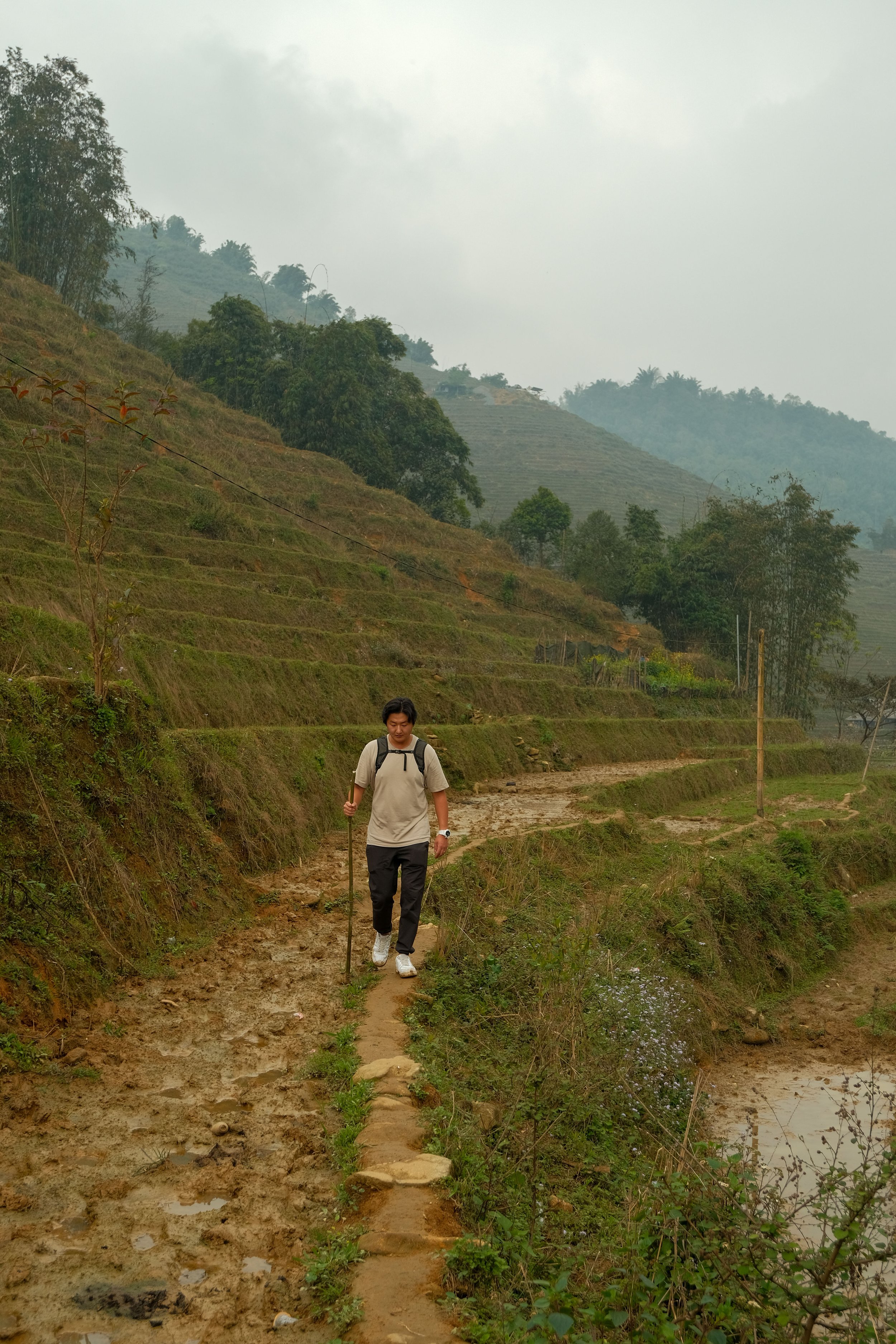
Sapa is as much about its culture as it is about its landscape. The region is home to several ethnic minority groups - including the Hmong, Dao, Tay, and Giáy - each with distinct languages, traditions, and styles of dress. We spent a day trekking with a Hmong guide named Lang, who led us through rice terraces and small villages tucked into the hills. Because of the mist, the trek was muddy and treacherous (we saw a couple people slip and wipe out), but the views made it worth it. Lang led us slightly off the beaten path and at one point we found ourselves looking out over a wide, open valley of rice terraces, the fog drifting just high enough to reveal the landscape below. We stopped walking to take it in for a while.
What stayed with me most, though, was learning about Lang’s culture. The Hmong are the largest ethnic minority group in Sapa, made up of subgroups named after their clothing. Lang is part of the Black Hmong, known for their deep indigo (nearly black) attire. She wore her traditional daily outfit - an embroidered indigo jacket, pleated skirt, apron, and leg wraps - all handmade by herself. She explained that girls begin learning how to stitch and dye around age seven, and by their teens many can create a full outfit from scratch. We stopped by a local house in the village, where she demonstrated parts of the process: hemp plants are separated into fine fibers, twisted together into a continuous thread, woven on a hand-operated loom, dyed with natural indigo, and polished against stone until smooth and shiny. Months of work, for a single outfit. It reframed what clothing can mean when it's made with that kind of care and intention.
Daily life for Black Hmong communities around Sapa has long revolved around rice and vegetable farming, with days that start early and end late. Both men and women work the fields, while women also handle the household and textile-making. Lang told us that as a kid, she would spend hours each evening during harvest season pounding rice by hand to separate the grain from the husk, getting only two to four hours of sleep a night. And here I am, complaining when I don't get my full eight hours.
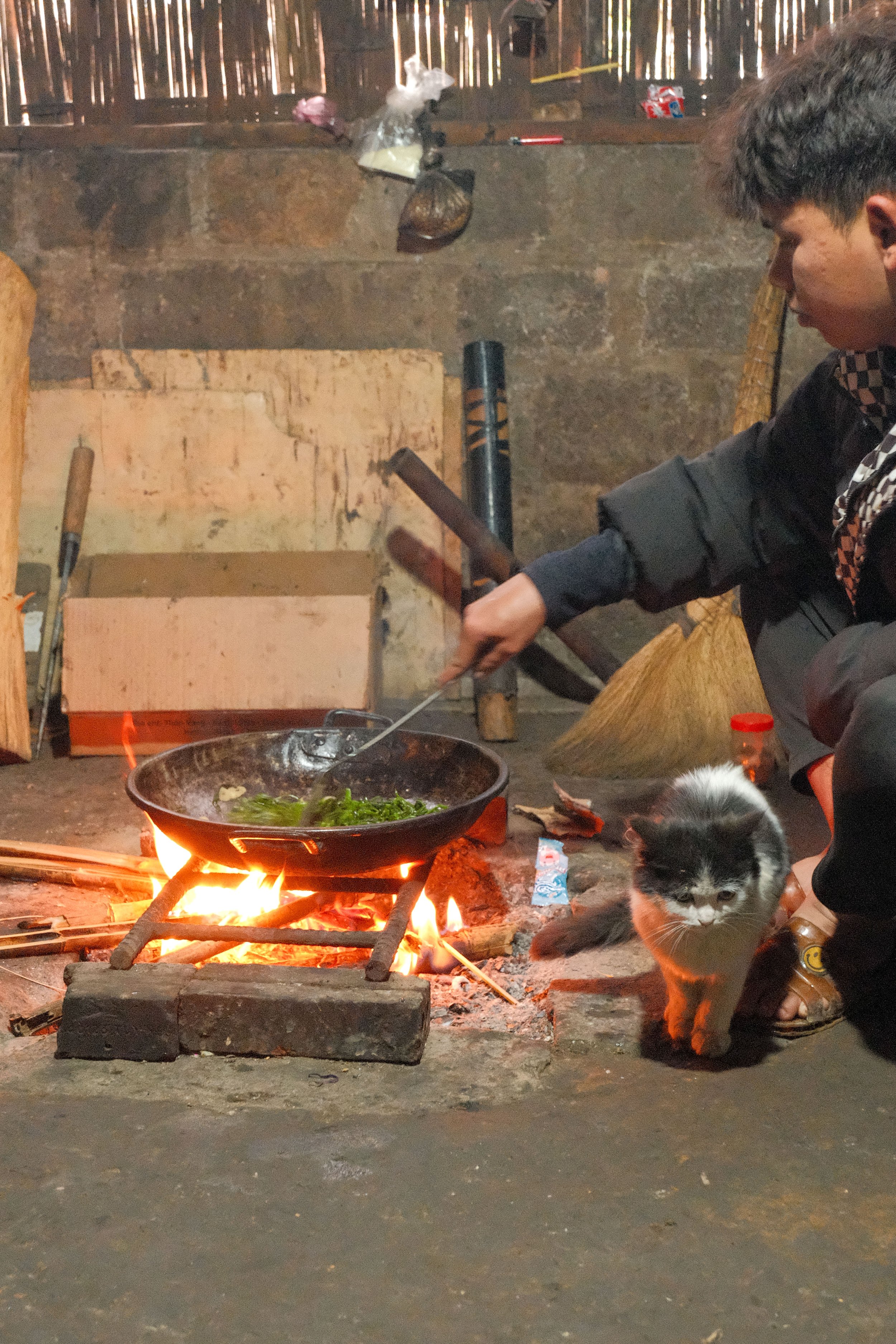
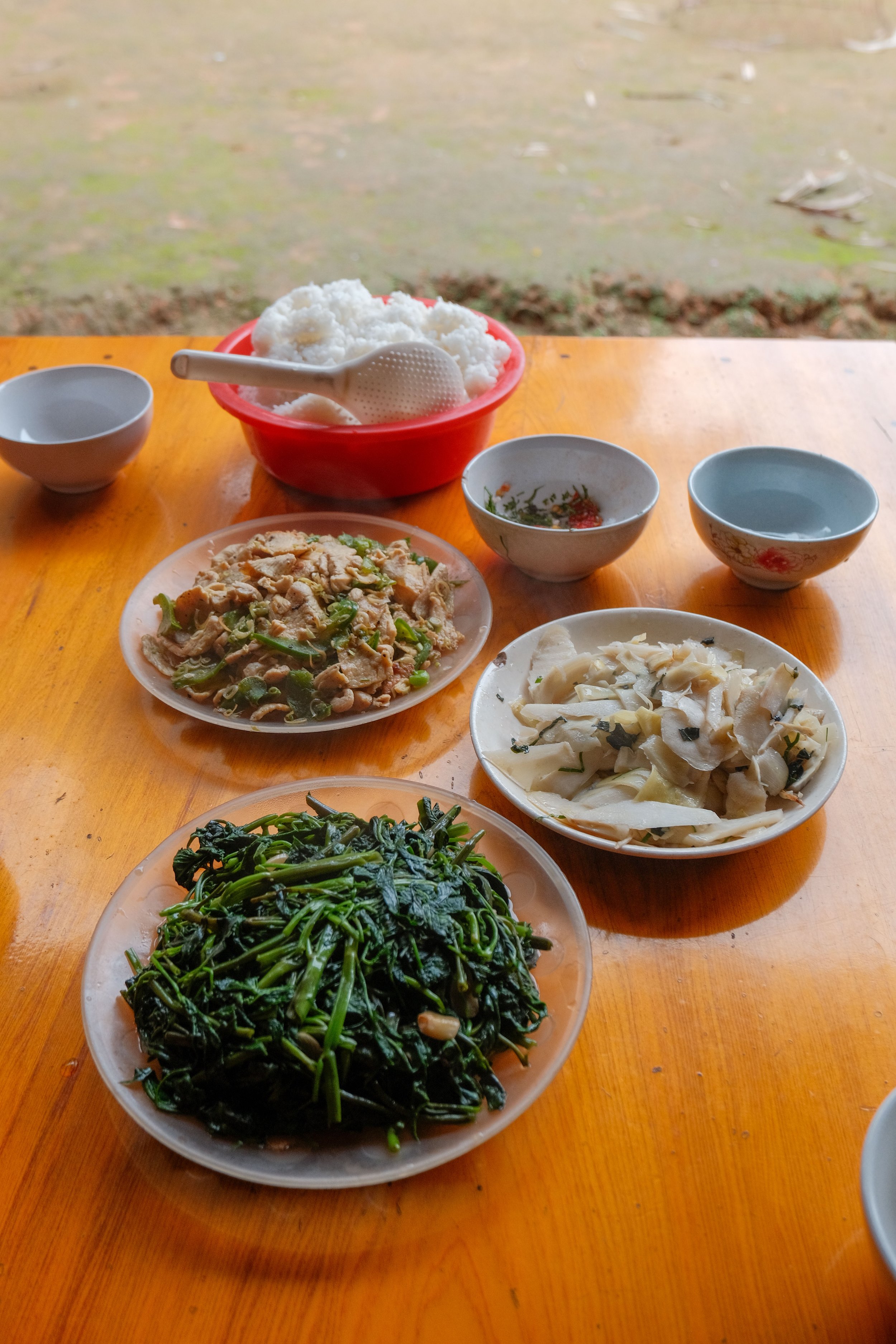
The trek ended at her cousin’s home, where we helped prep lunch by stringing green beans and separating water spinach. Her cousin’s toddler and an adorable kitten wandered in and out, occasionally supervising. After Lang’s nephew cooked over an open-fire hearth stove, we sat down in the courtyard to a meal of stir-fried vegetables, chicken, eggs, and rice. The flavors reminded me of my mom’s cooking - simple and comforting. At the end of the meal, we toasted the day with a round of homemade rice wine, which was stronger than expected but went down easy.
Ha Long Bay
From Sapa, we made our way east to Ha Long Bay - an excursion I'd been looking forward to since 2017, when it didn’t quite make the final cut of my jam-packed itinerary. It had been sitting on my bucket list ever since. We booked a two-night cruise on Dragon Legend, a traditional Vietnamese-style wooden junk boat with just 22 cabins - small enough to feel cozy and intimate (we befriended a lovely couple from the UK), but large enough to carve out our own space when we wanted.
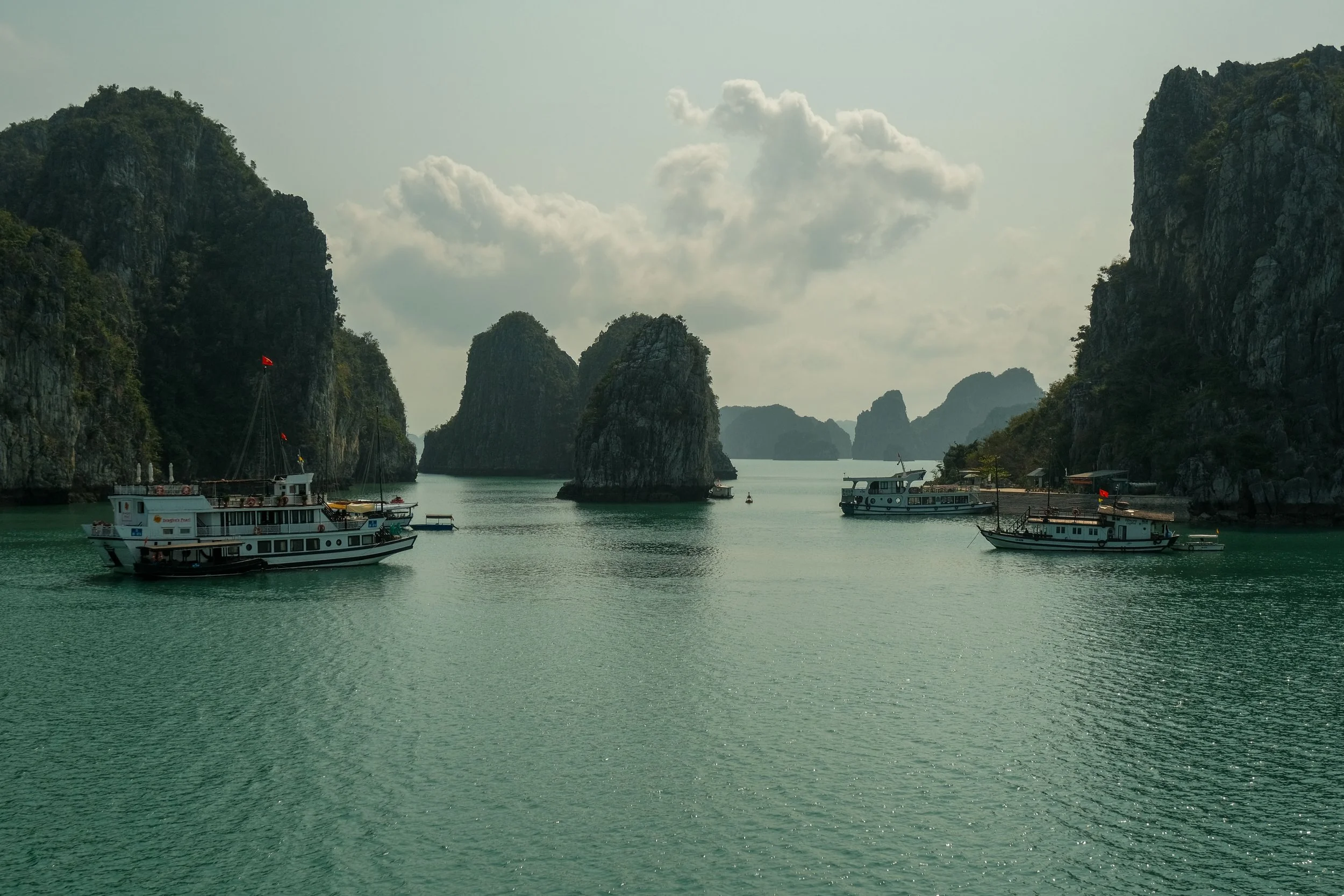
Unlike most cruises that stay within Ha Long Bay, Dragon Legend sails through nearby Bai Tu Long Bay, passing the same dramatic limestone karsts and emerald water, but with noticeably fewer boats. Not long after we left port, the landscape began to unfold with towering limestone pillars rising straight out of the water. There are around 2,000 karst islands and islets scattered across the bay, shaped over hundreds of millions of years. Our guide explained that the name "Ha Long" means "descending dragon," tied to a legend that dragons were sent by the gods to protect Vietnam, and that the islands were formed where they plunged into the sea. From a distance, they almost looked like a continuous mountain range; up close, you could see each formation layered in slightly different shades of blue, depending on the distance.

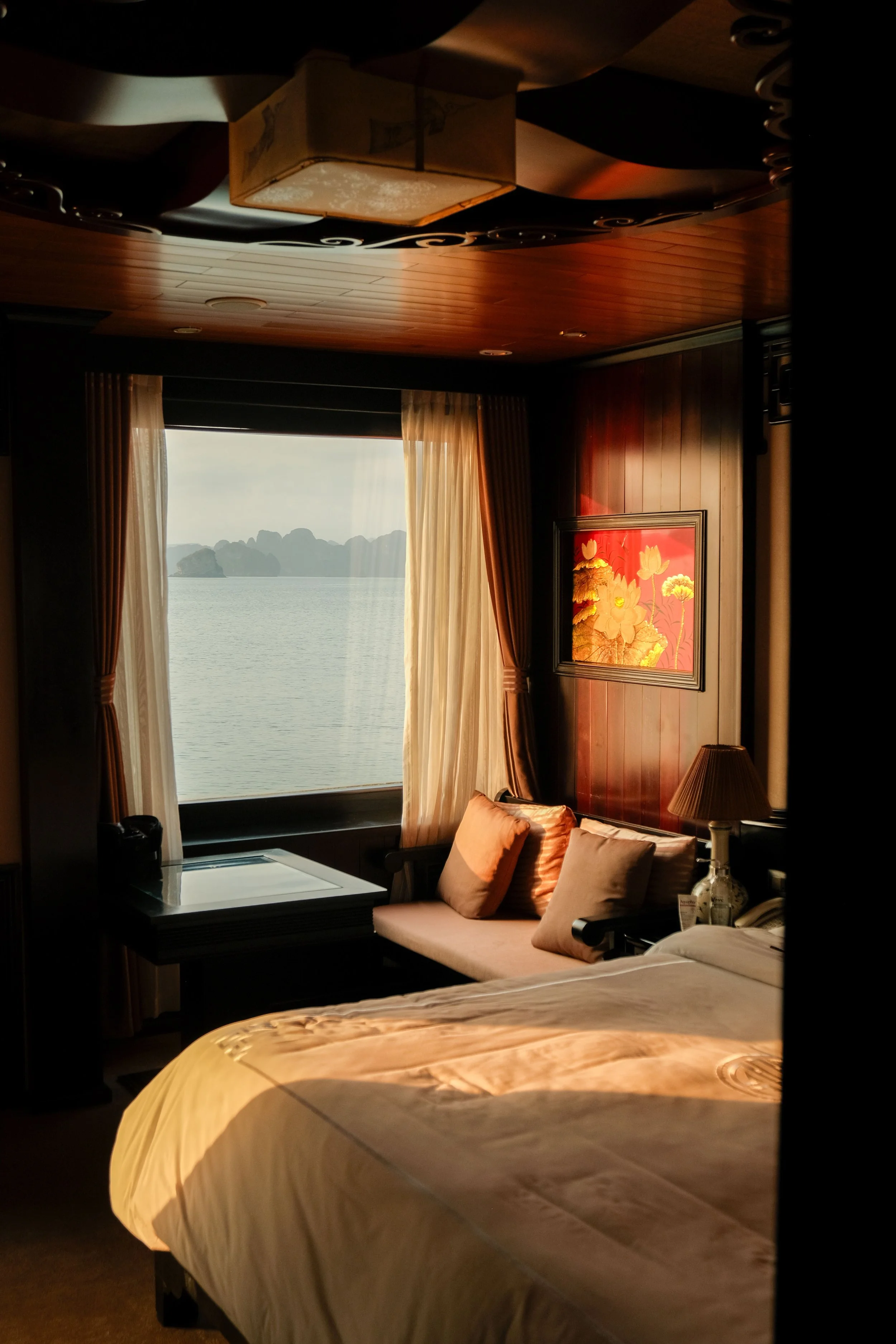
After a leisurely lunch on the top deck - spent mostly staring out at the passing scenery - we headed down to our cabin and were pleasantly surprised. It was spacious and thoughtfully designed, with a soaking tub positioned right by the window to take in the views. Another discovery was that the boat had no Wi-Fi. As we sailed deeper into the bay, our data signal slowly dropped off, which felt like a gentle nudge to unplug.
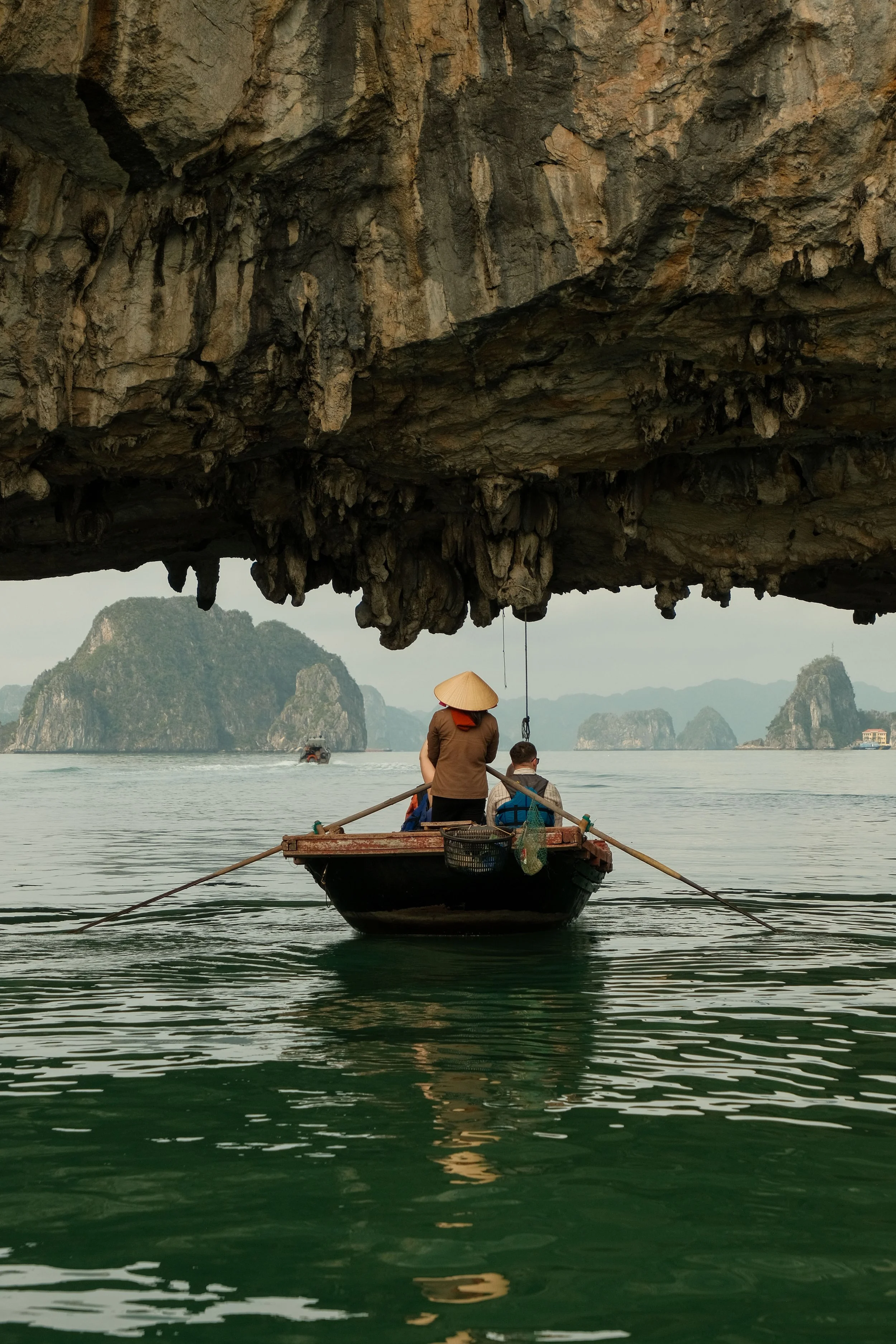
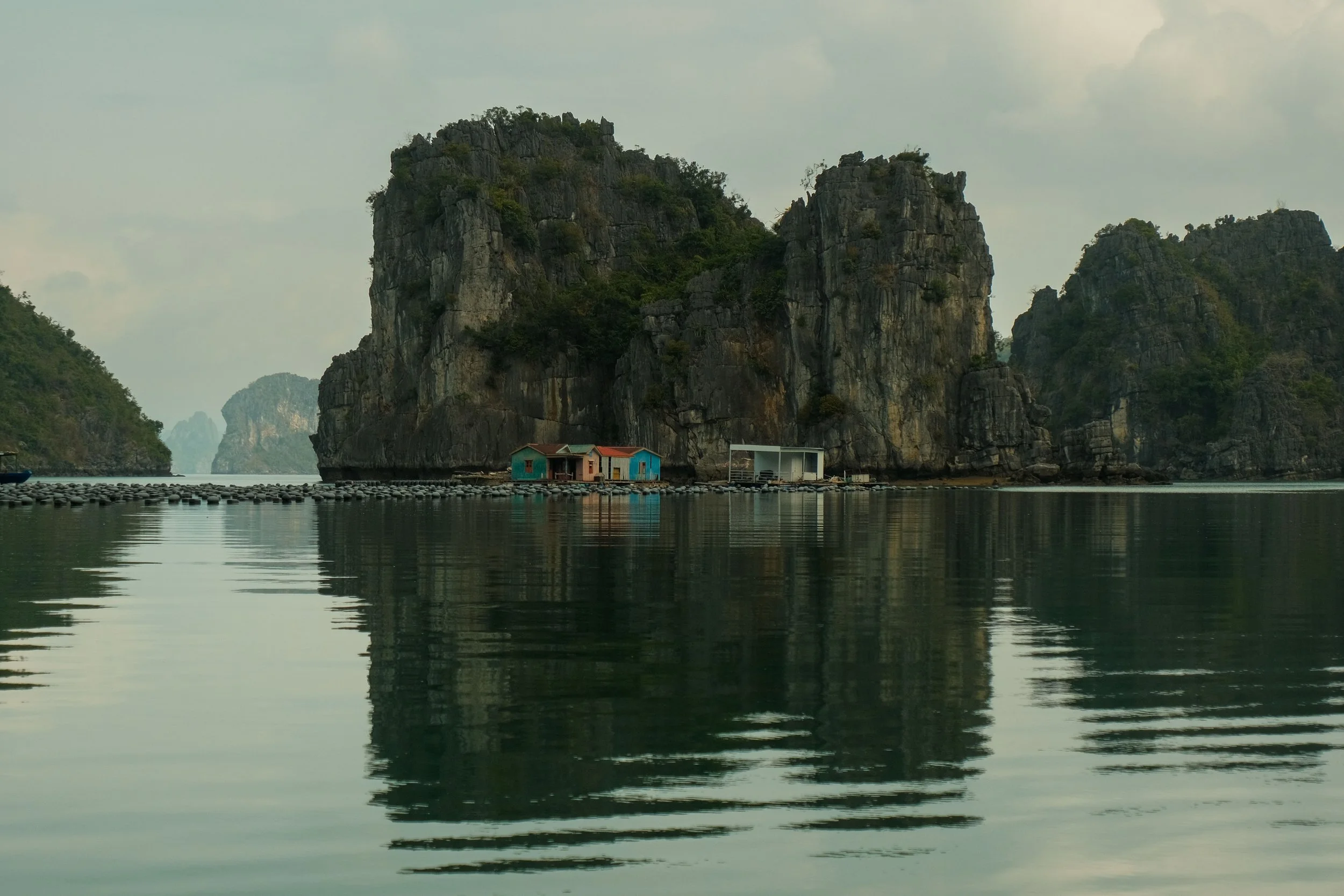
Over the next couple of days, we fell into an easy rhythm of activities and downtime. We explored a cave, kayaked between karsts, had a barbecue lunch on a quiet beach, and watched the sunset from the deck with a drink in hand. One of the highlights was visiting Vung Vieng, a small floating fishing village. About 30 households still live here, many for generations, relying primarily on fishing and pearl farming to make a living. We climbed into a small bamboo rowboat and were rowed through the village by a local, passing clusters of colorful floating homes. We didn’t see many people around - most of the adults were out fishing, and the children now live on the mainland to attend school. The docks weren't entirely empty, though - we were greeted by a curious cast of cats and dogs as we drifted past. Without a boat engine running for the first time all trip, the bay was remarkably quiet - just the sound of birds calling from somewhere up in the karsts.

Hoi An
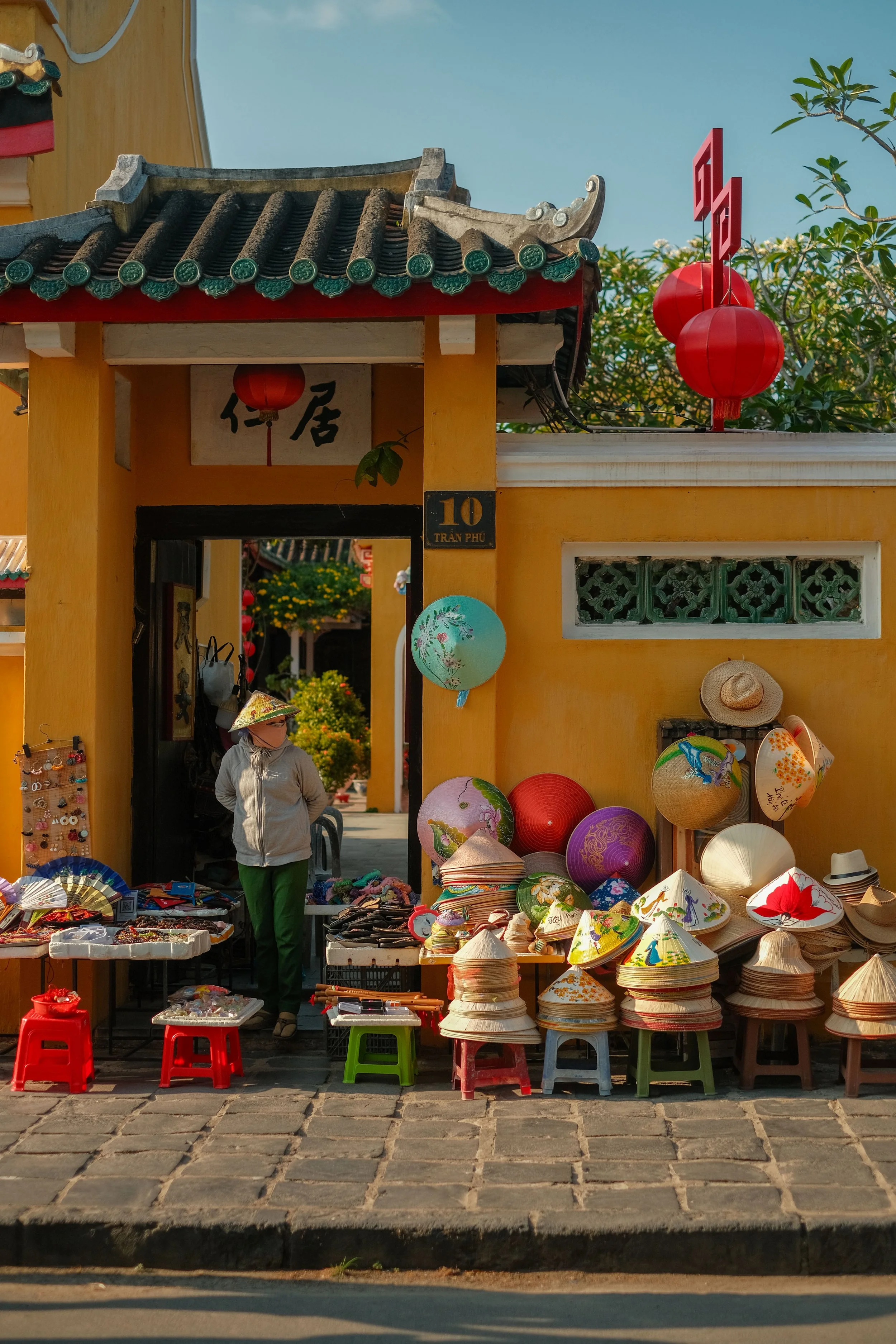
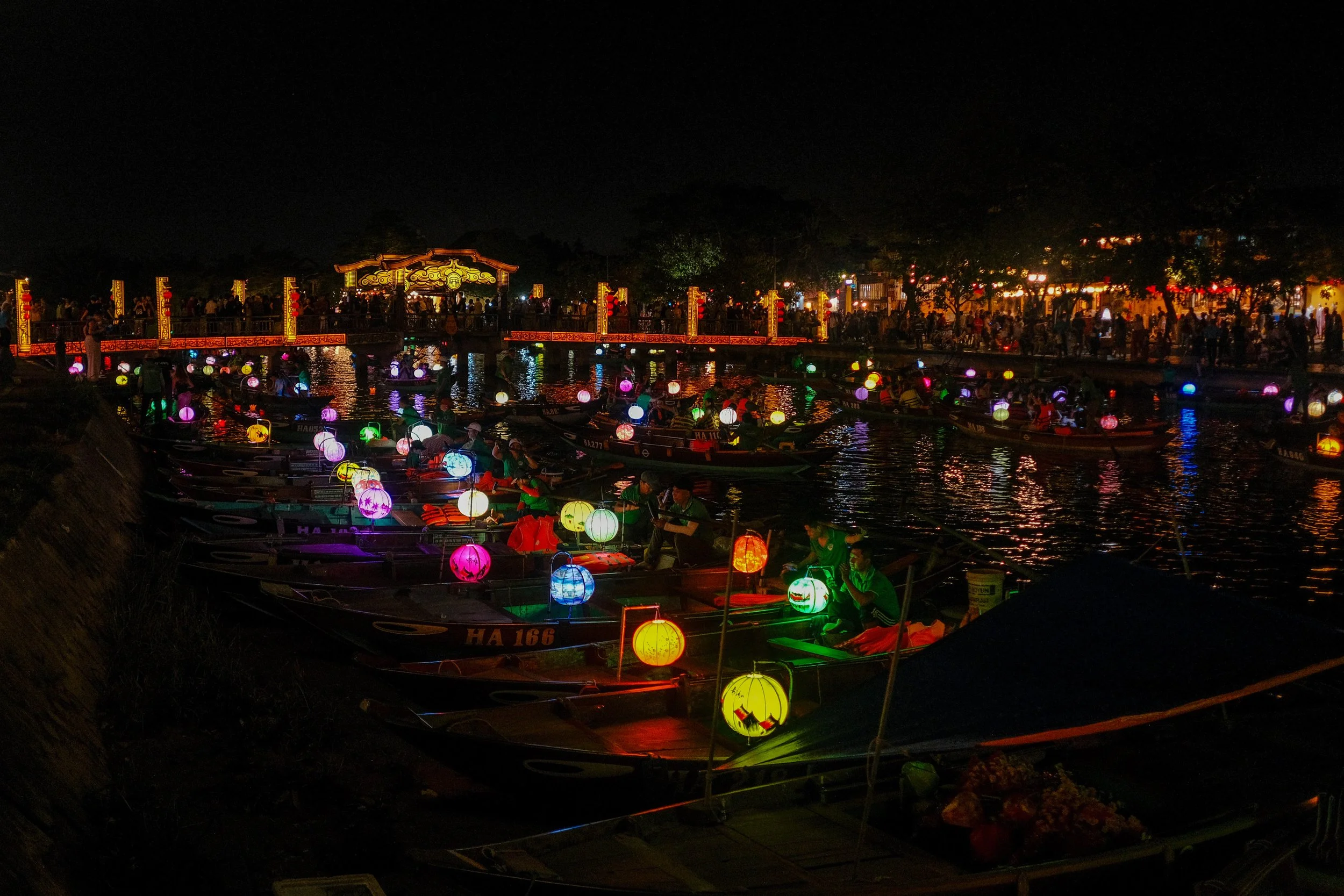
Next up was Hoi An, a small riverside trading port that felt like it was straight out of a storybook. It has much of Hanoi’s charm, just with a little less of the chaos. I loved wandering through the streets of Old Town, taking in the yellow-painted buildings, wooden shutters, and lanterns strung up everywhere. As the sun set, the whole town began to glow. Silk lanterns lit up in every color across streets and shopfronts, and vendors set up along the main road selling souvenirs and snacks. Out on the river, boats drifted by slowly, each one illuminated by its own cluster of lanterns reflecting on the water. Every so often, someone would release a small candle lantern into the river - it felt a bit touristy, but still quietly beautiful to watch.
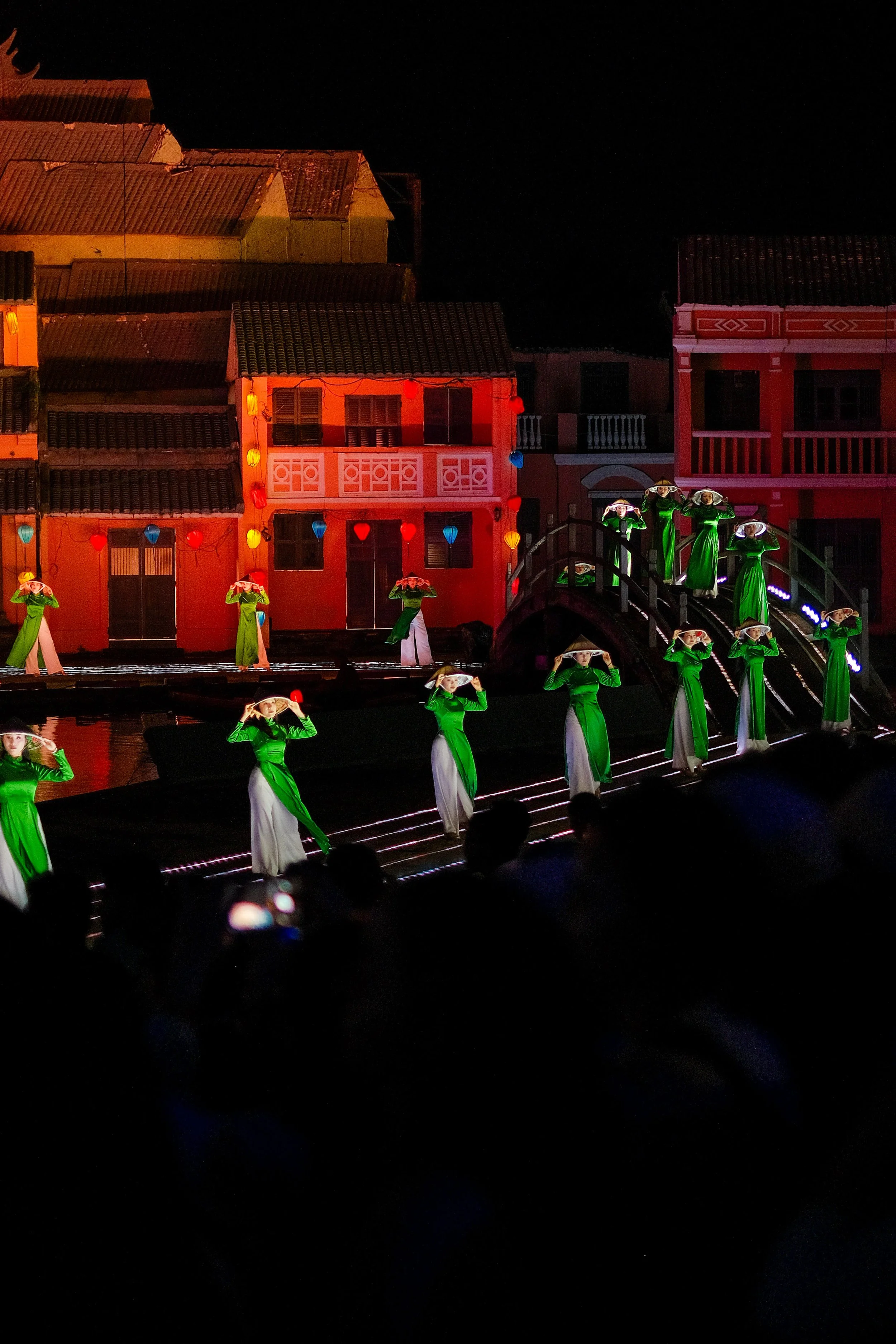
A British couple we met in Laos insisted we see the Hoi An Memories Show, so we booked tickets for one evening. The open-air stage was massive - far bigger than I expected - and the moment the show began, a wave of women in flowing áo dài and white conical hats swept across it in perfectly synchronized formations. Over the next hour, hundreds of performers moved in rhythm with dramatic lighting and music. It wasn’t a single storyline so much as a visual highlight reel of Hoi An’s history - from early village life and fishing culture to its rise as a bustling trading port, threaded together with love stories and festivals.
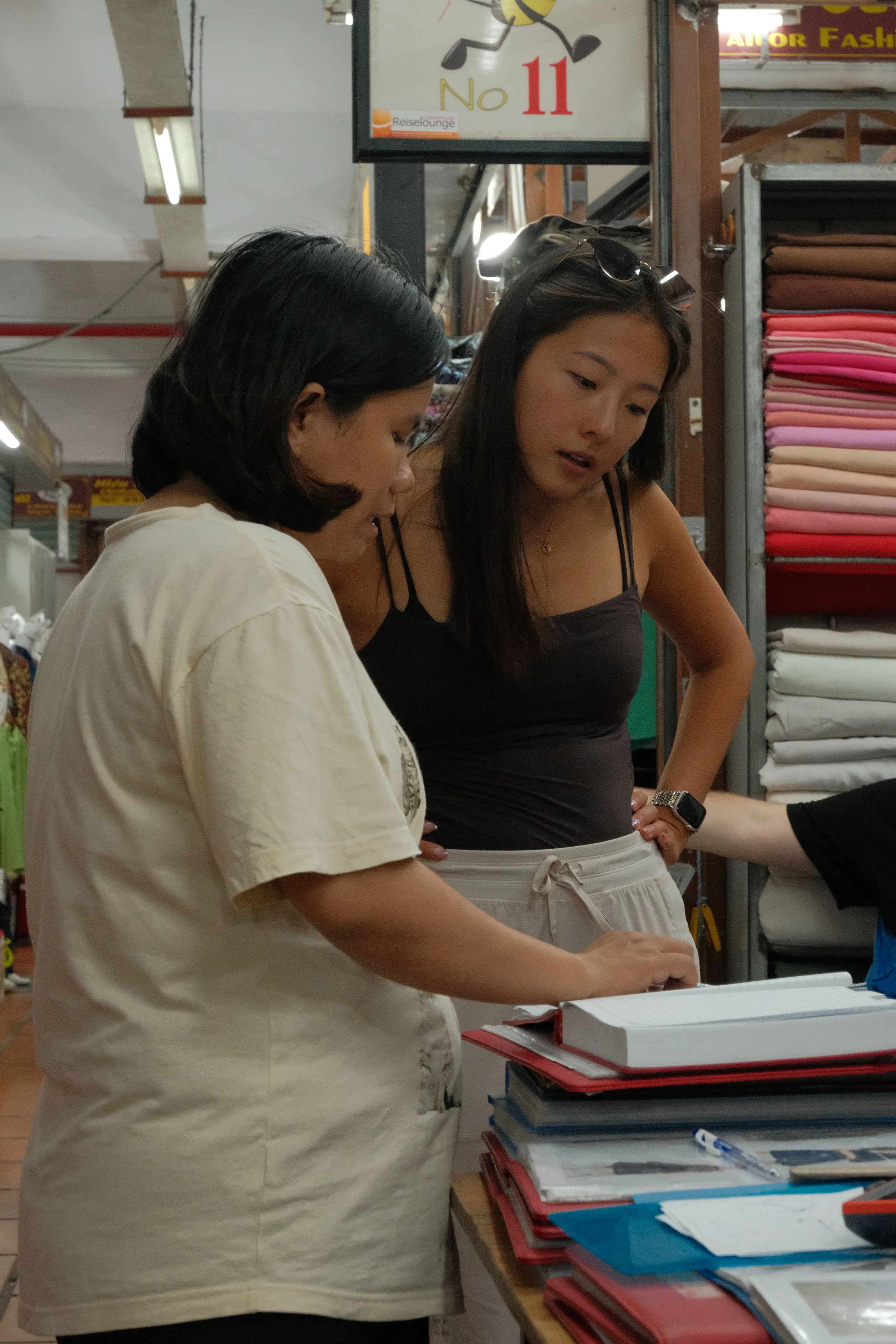
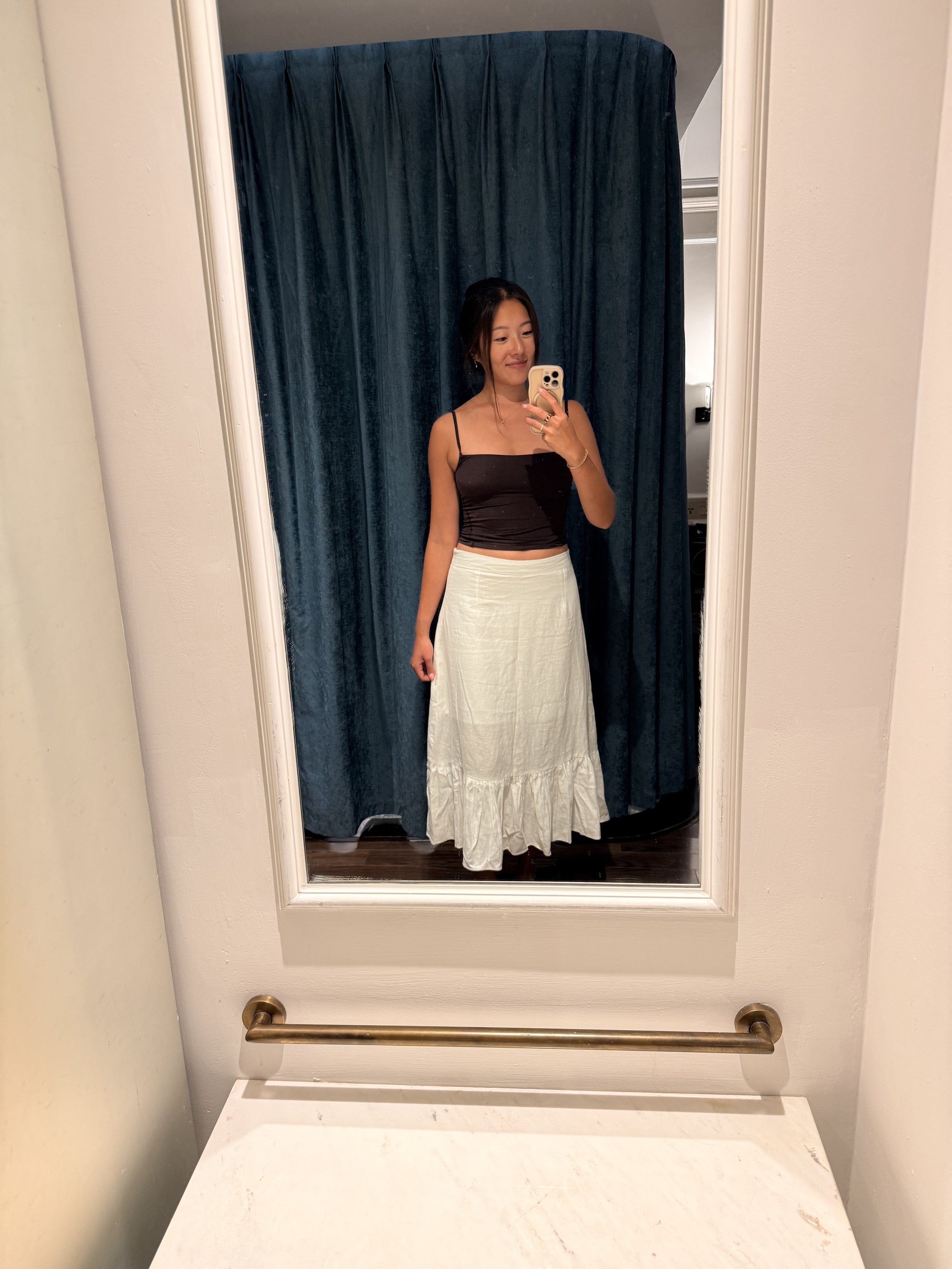
No trip to Hoi An is complete without at least considering getting something tailored. The tradition dates back to its trading port days, when merchants brought in fabrics like silk and cotton and local artisans honed their craft. Today, that legacy lives on in hundreds of tailor shops packed into a small area, many promising custom pieces in 24-48 hours (including full suits). We even walked past one called “Taylor Swift,” which made me do a double take before realizing it was actually a pretty fitting name for a speedy tailor. Despite my very limited suitcase space, I decided this was too good an opportunity to pass up. I showed the owner photos of what I had in mind - a linen top and skirt - and she took my measurements. Two days later I went in for a fitting, made a few small tweaks, and picked everything up that evening. My only regret was not having more room in my suitcase. Next time, I'm bringing an extra bag specifically for Hoi An.
Ho Chi Minh City
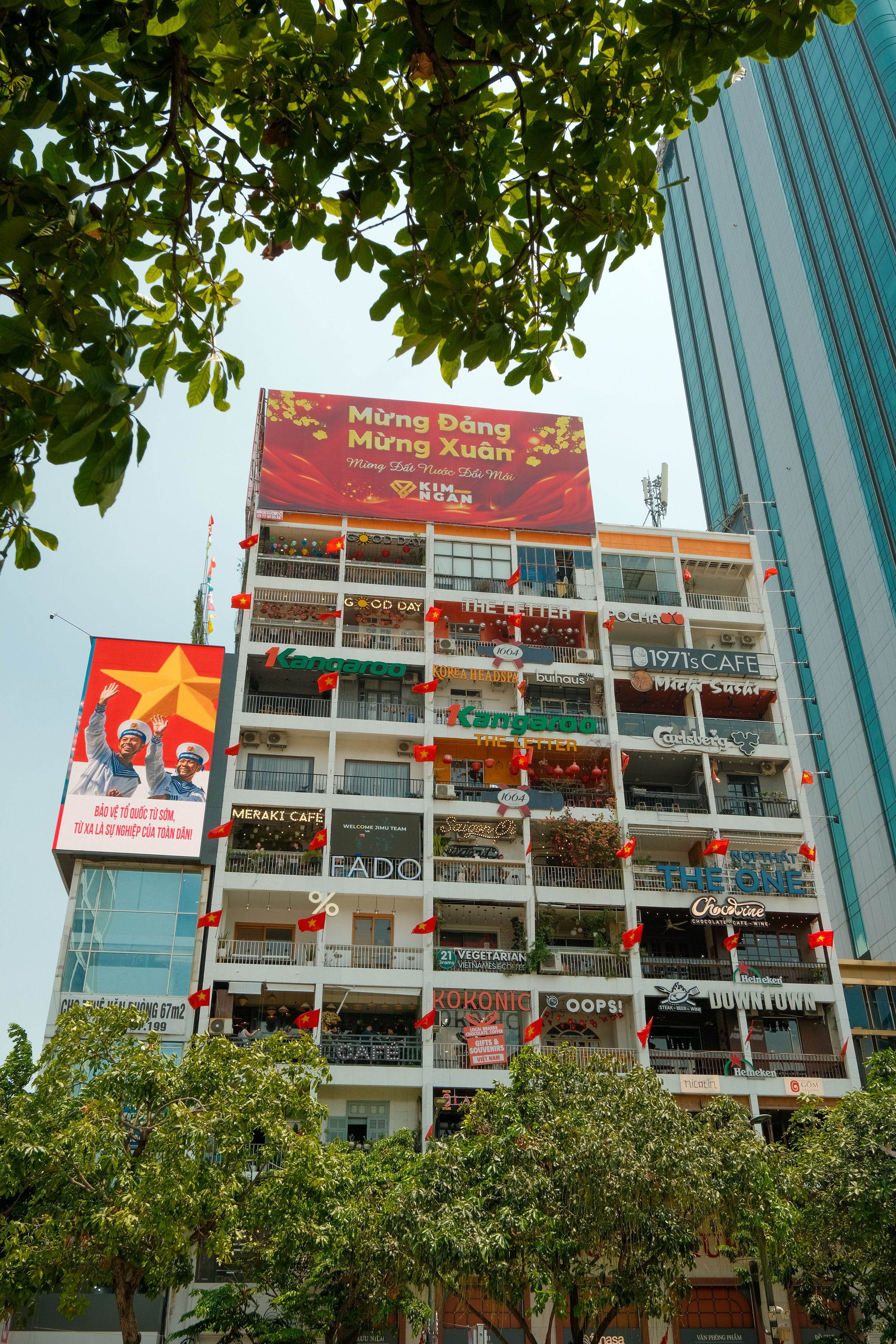
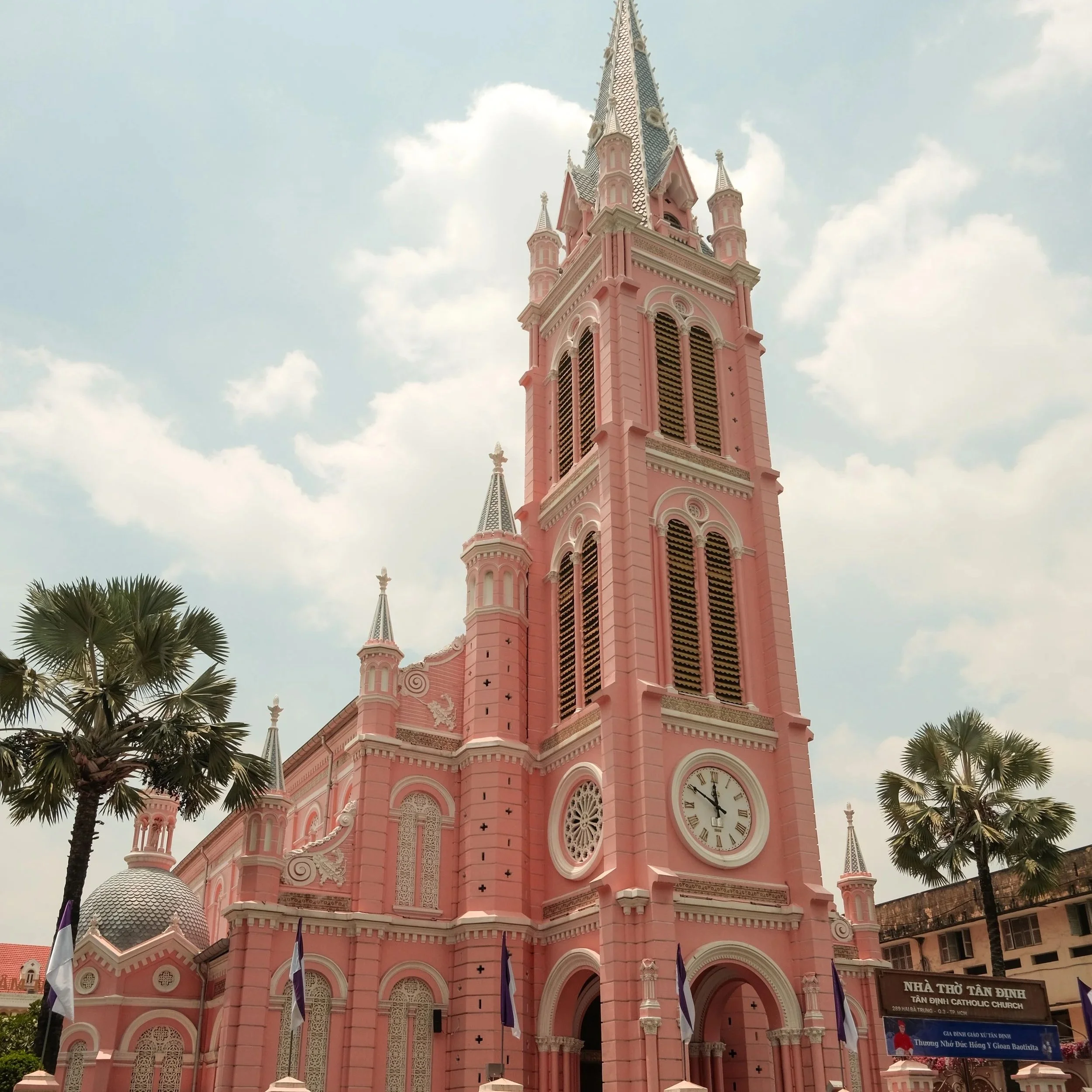
We saved the biggest for last - Ho Chi Minh City, formerly Saigon until it was renamed after the Vietnam War (though many still call it Saigon). If we thought Hanoi was bustling, Ho Chi Minh City is on a whole different level. Everything moves faster: swarms of motorbikes fill the streets, especially around rush hour, but at least there are traffic lights and crosswalks to help us pedestrians out. French colonial buildings still dot the city, but it feels more cosmopolitan, with skyscrapers and modern malls rising alongside historic streets.
I took advantage of the convenience of a big city one morning by scheduling a dentist appointment. Ever since getting Invisalign treatment five years ago, I’ve been a tad bit obsessive about dental hygiene. Our health insurance doesn’t cover routine dental visits, so I was excited to learn that Vietnam is known for affordable, high-quality dental care. The clinic was spotless and modern, and after a dentist and two hygienists examined my teeth (no cavities!), they gave me a thorough cleaning. I was in and out in under half an hour, all for less than $20.
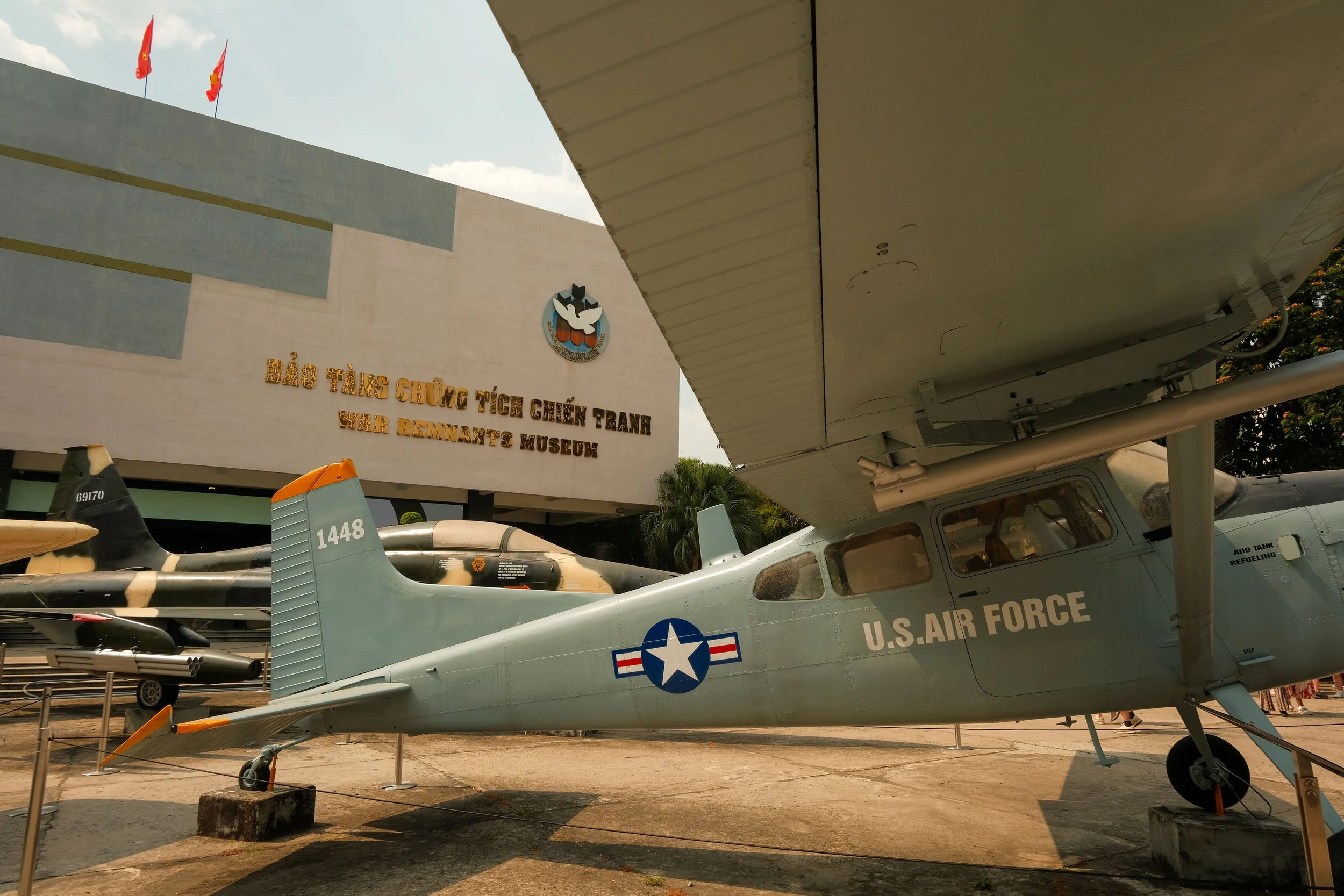
One afternoon, we visited the War Remnants Museum to deepen our understanding of Vietnam’s modern history. Outside, captured American warplanes, tanks, and artillery immediately signaled the harsh reality of the conflict. Inside, we wandered through powerful photography exhibits showing the devastating human cost, from bombings to the lasting effects of chemical weapons like Agent Orange, making the suffering of civilians viscerally real. At the same time, the museum highlighted the resilience and courage of the Vietnamese people, showing how they endured and rebuilt. Some exhibits focused on the photojournalists themselves, detailing the risks they took - sometimes at the cost of their own lives - to capture and share these moments with the world. It was a sobering visit, but one I’m glad we made.
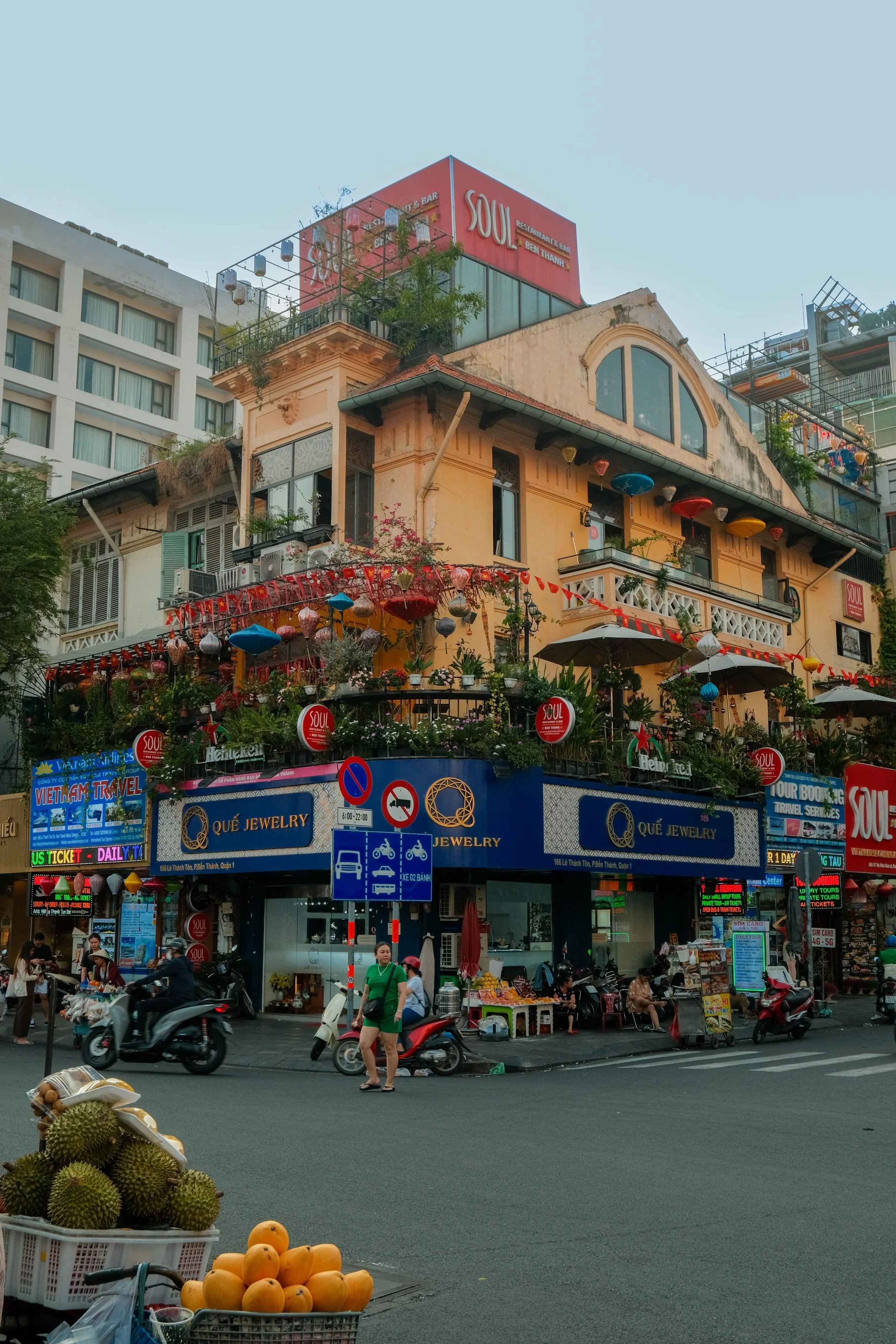
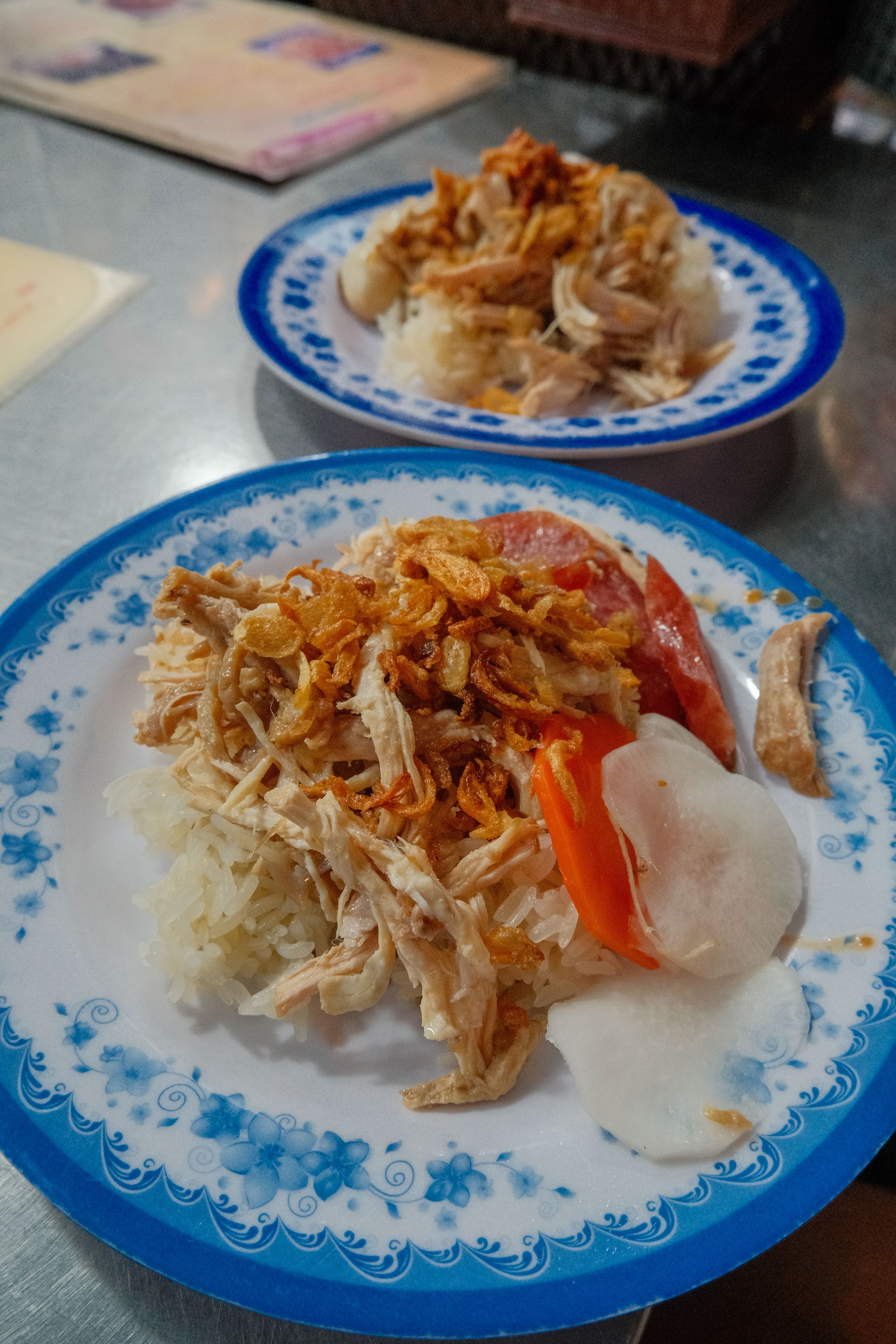
Of course, we also ate very well. Street food in Ho Chi Minh City rivals Hanoi at every corner, with the smell of grilled pork, fish sauce, and fresh herbs wafting through the air. But southern Vietnamese cooking has its own personality, a touch sweeter and more herb-forward than the north. We compared both the pho and bánh mì with what we'd had up north and landed on the very diplomatic conclusion that both are delicious. We also devoured bowls of bún bò hue (a rich, spicy noodle soup with beef and pork hocks), bún thit nuong (cold rice noodles with grilled pork, fresh herbs, and fish sauce), and xôi gà (sticky rice topped with shredded chicken, quail eggs, fried shallots, and Chinese sausage).
That's a wrap on three weeks in Vietnam. Despite its relatively small size, I feel like we only scratched the surface of this incredible country. I already know it won't be my last visit.
Talk soon,
Tanya
