
Sunrises in Cambodia, Sunsets in Laos
Our Southeast Asia adventures continue in Cambodia and Laos, where we're spending a combined week. After a slower-paced two months in Australia and New Zealand to kick off the year, we've finally reached the part of the itinerary where things start to pick up.
We divided the week between three days in Siem Reap, Cambodia followed by four days in Luang Prabang, Laos. Both are small, charming cities shaped by their own ancient Buddhist kingdoms and later by a shared chapter as part of French Indochina. That common history gives them a surface similarity, but they couldn't feel more different. Siem Reap is lively and energetic, its identity anchored almost entirely around nearby Angkor Wat. Luang Prabang feels calmer and more contemplative, with a stronger pull toward the surrounding natural landscape. Visiting them back-to-back made the contrast hard to miss.
Cambodia
Siem Reap holds a special place for me - it’s the first destination on this trip I’ve visited before. I first came in 2017 with my friend Alicia, fresh out of college, on a month-long trip around Asia. I remember immediately falling for its vibrant and historic atmosphere: the lively night market, the street food, the temples. This time, I was excited to see it again through fresh eyes - mine nine years later, and Hanqing’s for the first time.
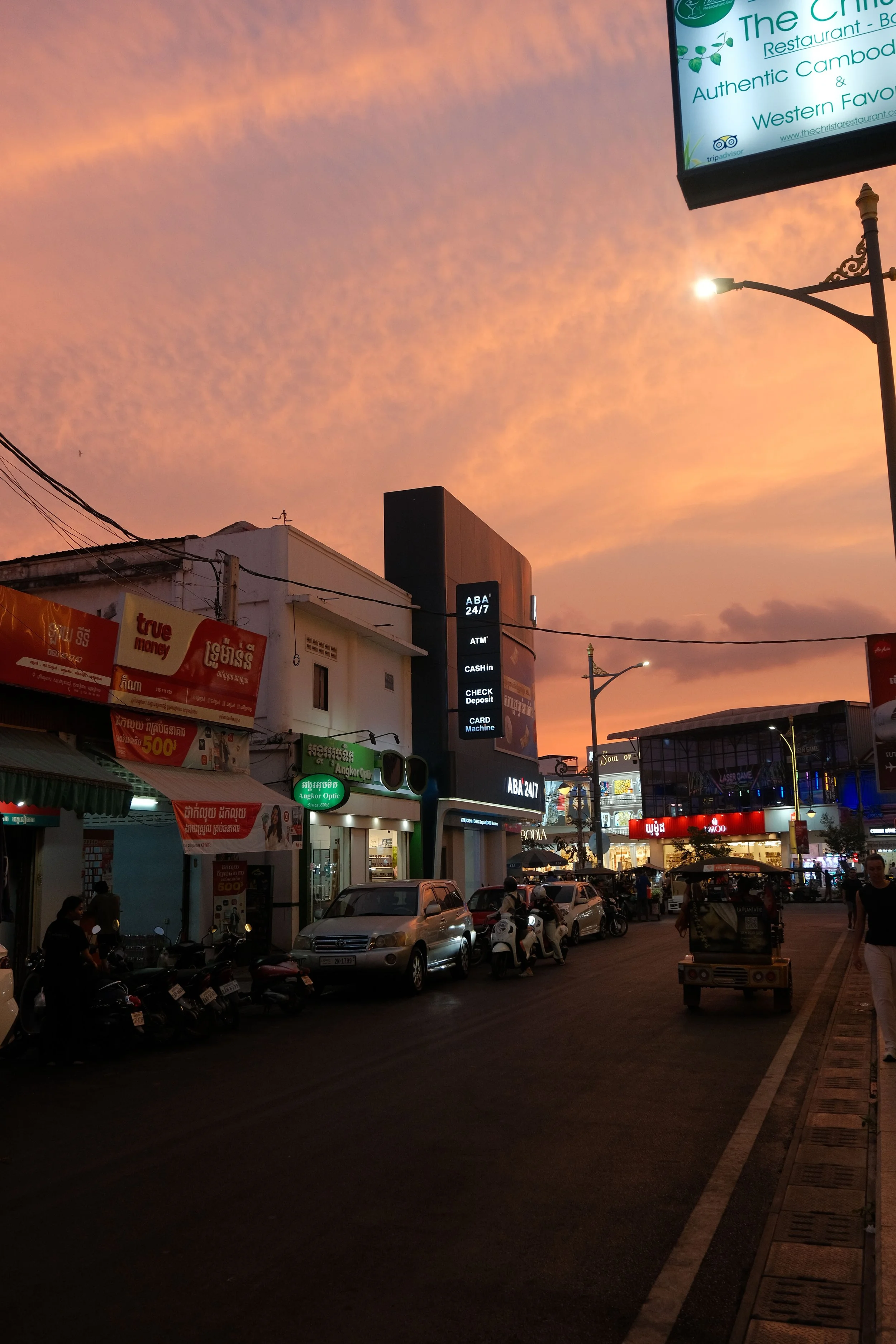
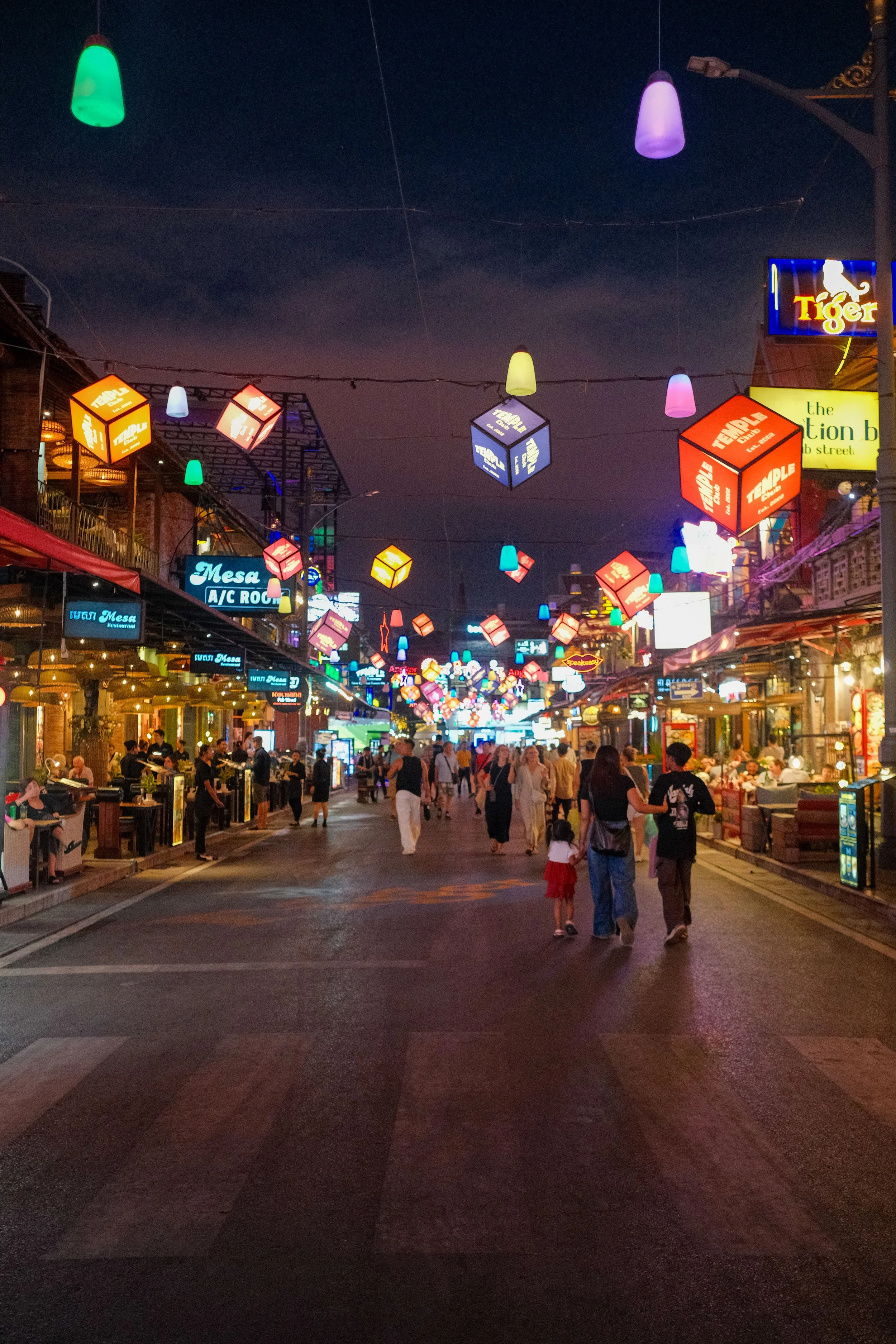
Some things had changed. A new airport opened two years ago, built an hour outside the city to accommodate larger planes and protect the temples near the historic center. Gone were the days of a ten-minute tuk-tuk ride into town. Instead, a driver picked us up and drove us past mango trees heavy with fruit and sprawling cashew farms to our hotel. The city itself felt more developed too, the scrappy backpacker vibe of my memory replaced by a more polished food and bar scene. I missed the old quaintness, though some of the charm returned after dark when the street vendors came out.
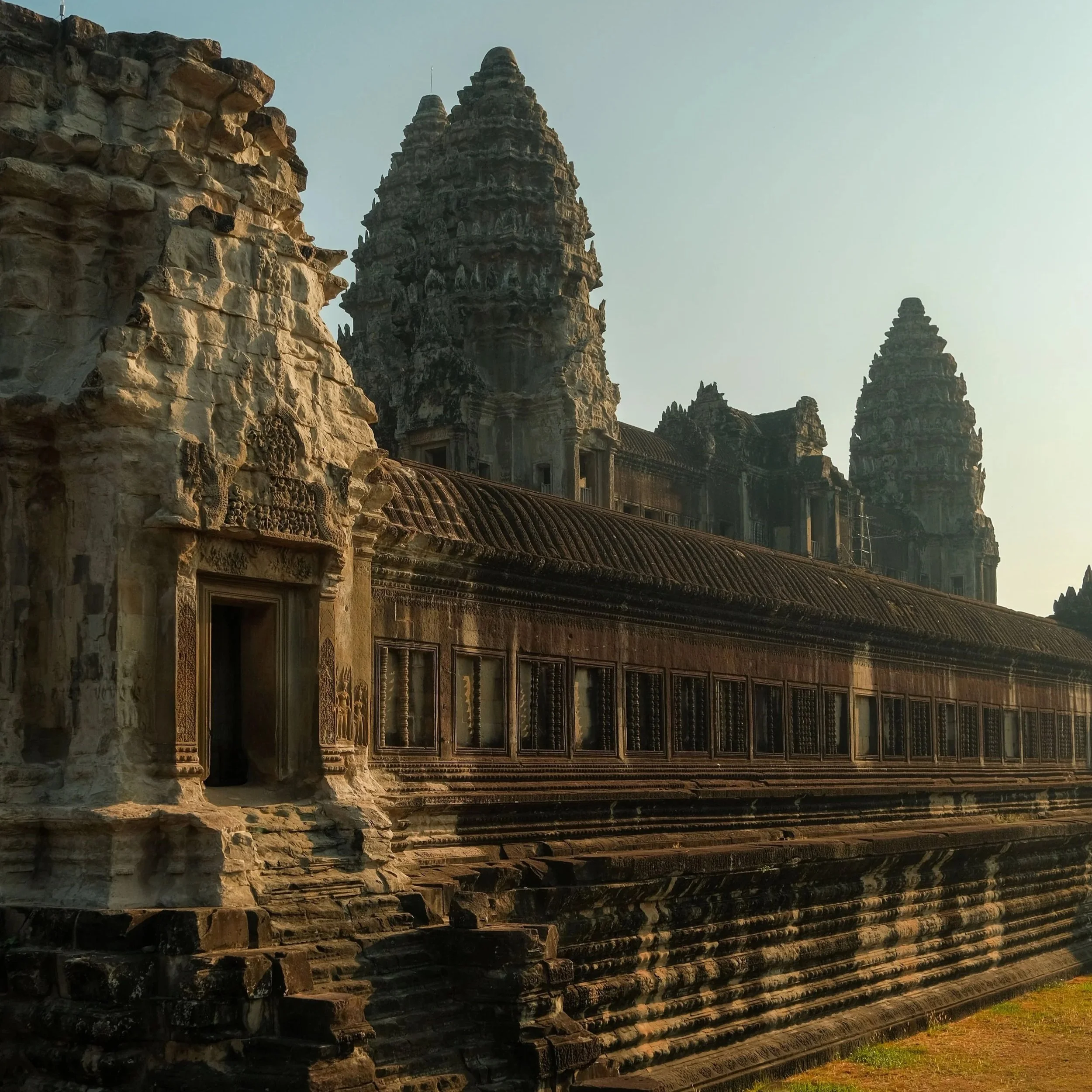
While some things had changed, the temples had not. Walking up to Angkor Wat, it’s almost impossible to process the scale of what you’re looking at. It’s not just a temple, but the surviving heart of a massive urban civilization. From the 9th to the 15th centuries, this region was the center of the Khmer Empire, one of Southeast Asia’s most powerful kingdoms. At its peak, Angkor may have been one of the largest cities in the world, home to around a million people - rivaling, if not surpassing, ancient Rome. Today it’s preserved as Angkor Archaeological Park, a UNESCO World Heritage Site covering more than 150 square miles.
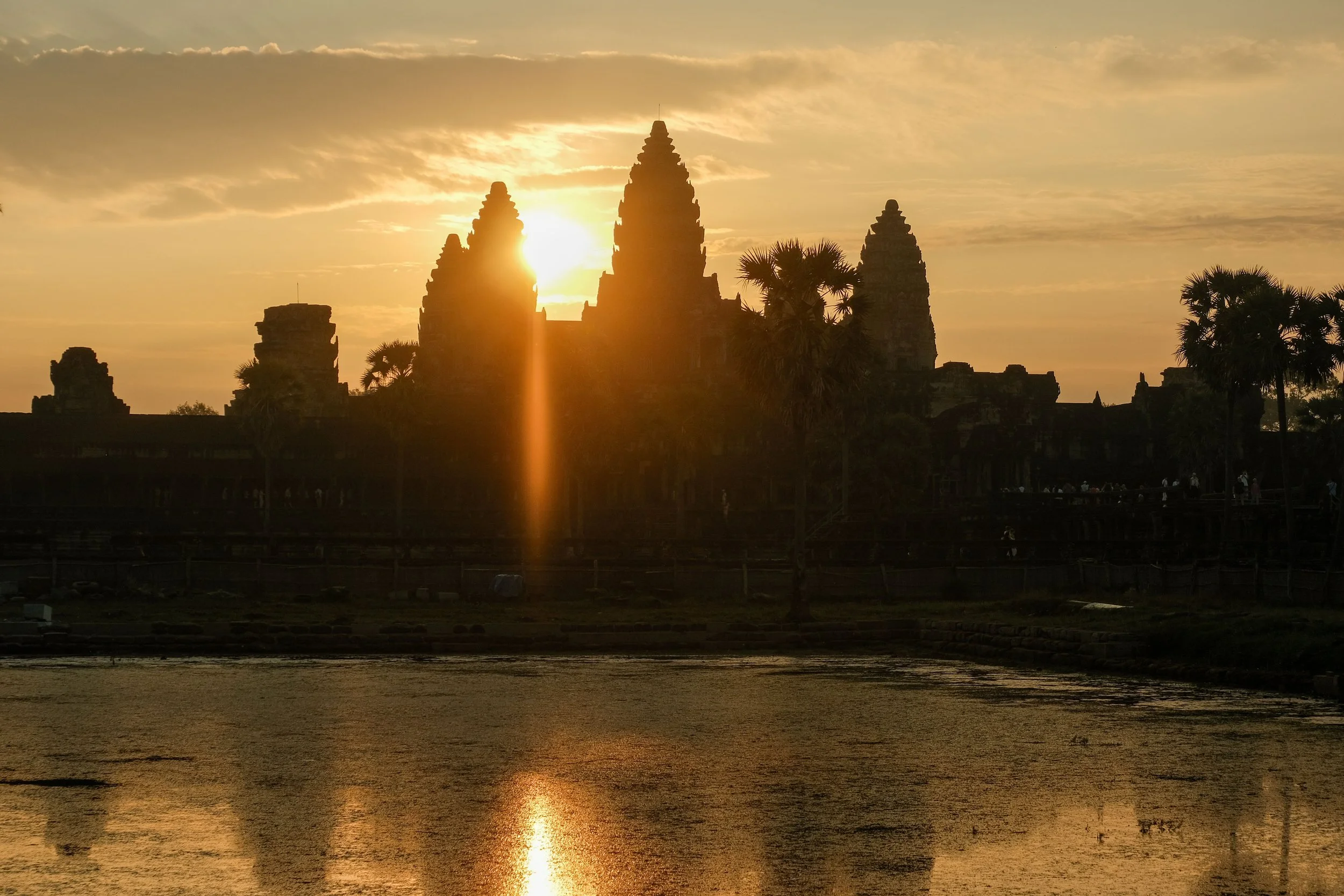
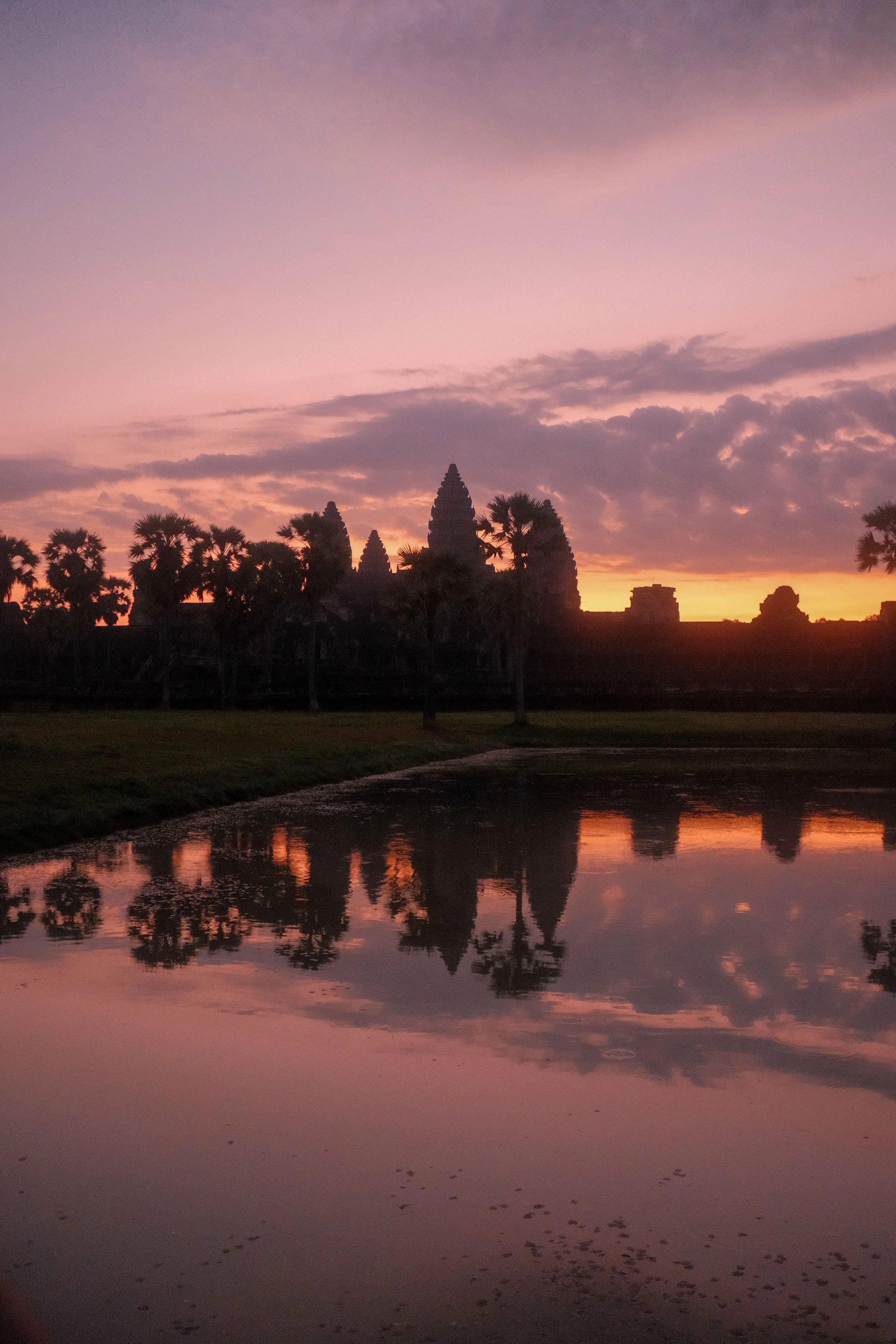
We had a 4 a.m. wake-up on our first full day to watch the iconic sunrise at the temple. The early start also helped us beat at least some of the heat, since we’re visiting during peak dry season with temperatures pushing close to 100 degrees. When I came in 2017, the sunrise was hidden behind thick clouds. This time I finally got to see it, and it was worth the wait. The real highlight was the twenty minutes before the sun appeared, when the sky glowed a deep, vivid red and the lotus-shaped towers reflected perfectly in the moat below.
Our guide, Pheap, walked us through the temple’s history, carvings, and statues. Unlike most Khmer temples, which were dedicated to Hindu gods and later abandoned, Angkor Wat has remained in continuous religious use, eventually transitioning into a Buddhist temple. That layered history was evident in the Hindu carvings sitting alongside Buddhist statues added centuries later. Pheap also pointed out the missing heads on many of the Buddha figures, looted over the centuries before the site received UNESCO protection, and sections of the temple that have been carefully restored by international conservation teams.
What struck me most was how much of the original structure survives. Historians estimate around 80–90% of Angkor Wat still dates to the 12th century. The sandstone blocks were cut so precisely that they fit together without mortar, held in place by tight joints and gravity alone. It reminded me of Machu Picchu, which we’d visited a few months earlier in Peru - remarkable given that the Khmer and Inca civilizations developed completely independently, on opposite sides of the world.
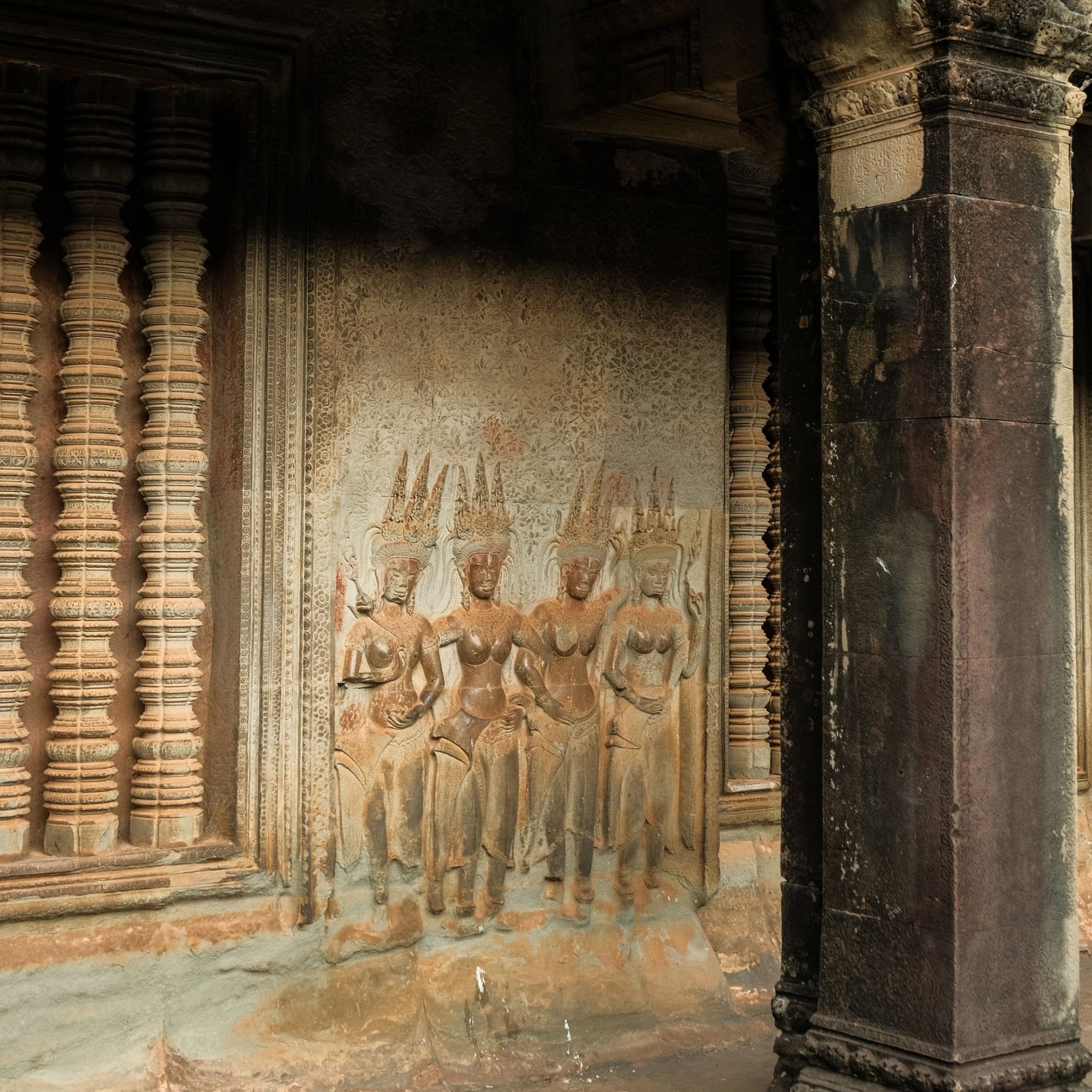
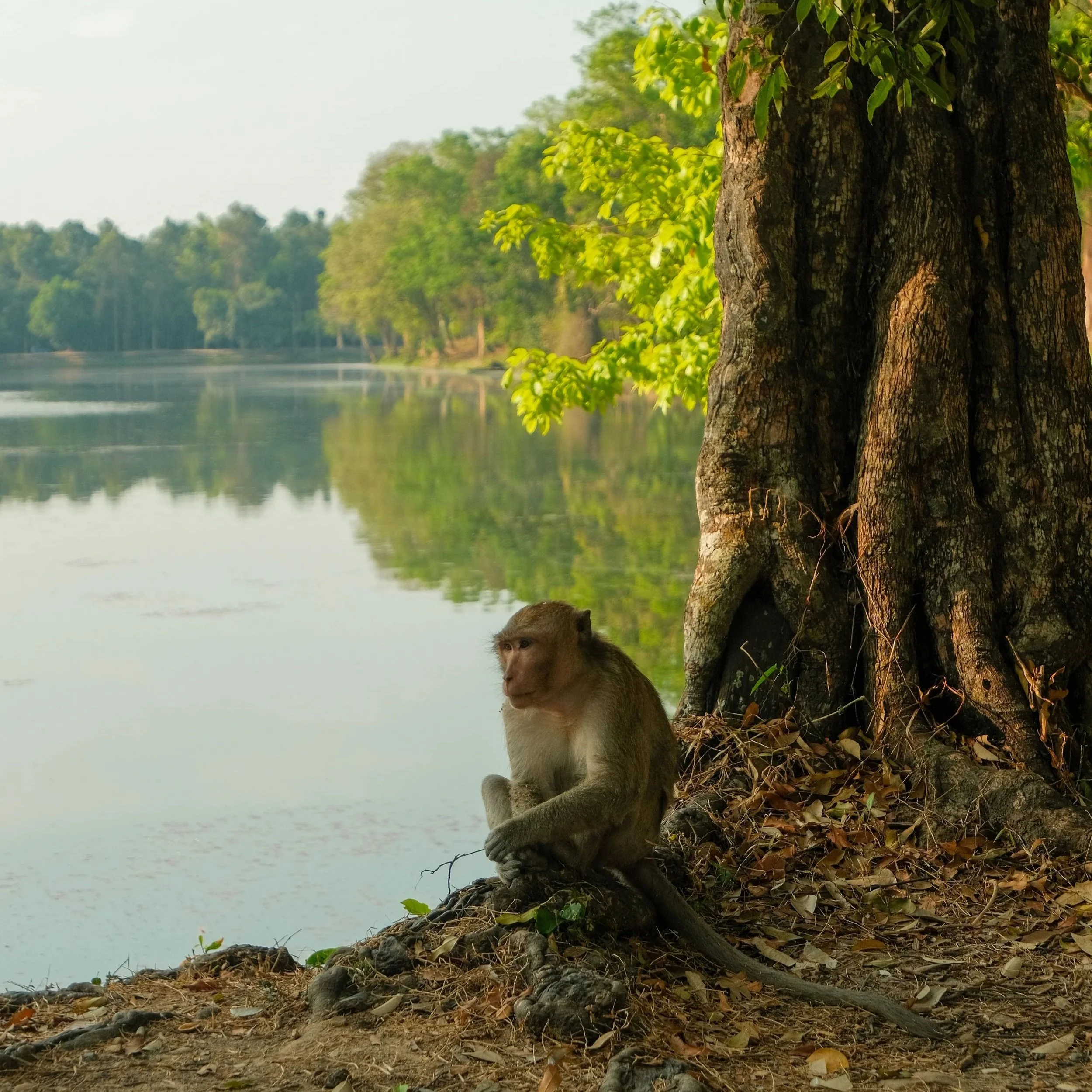
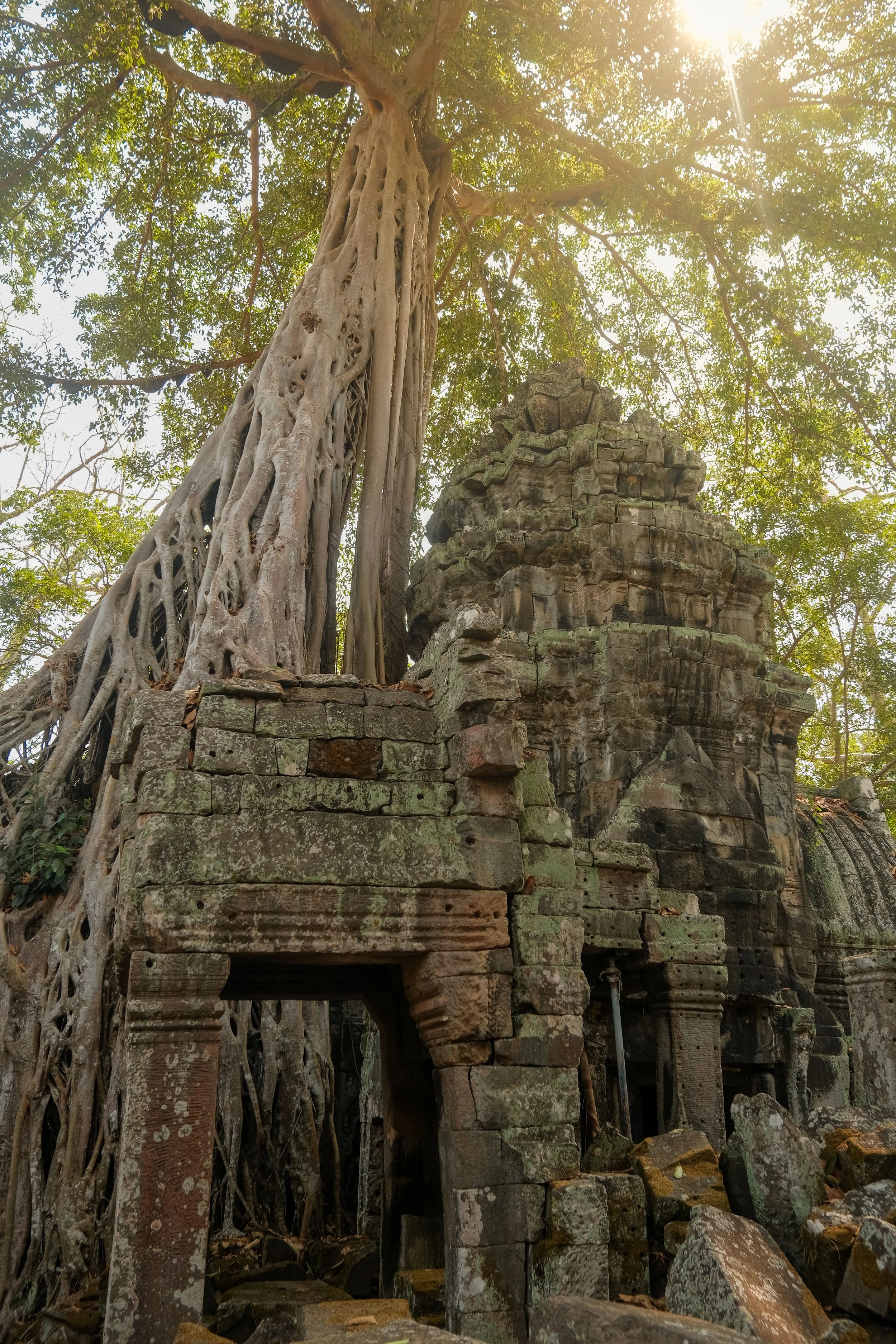
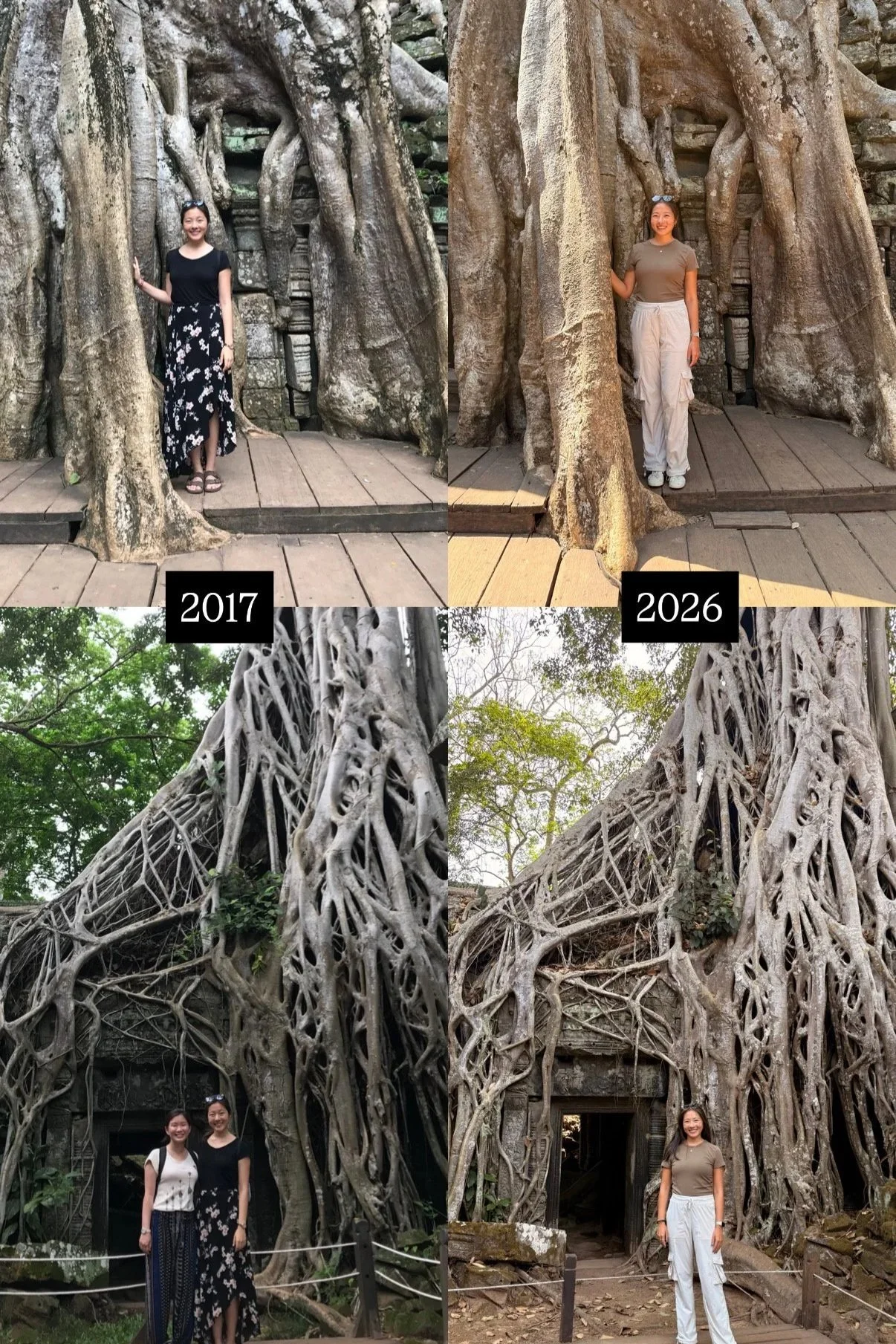
After a much-needed air-conditioned breakfast break, we visited three more temples: Ta Keo, Bayon, and Ta Prohm. My favorite was Ta Prohm, a 12th-century Buddhist monastery intentionally left partly overgrown, its stone walls and towers wrapped in enormous tree roots. It’s also known as the “Tomb Raider temple,” after appearing in the 2001 Angelina Jolie film. I pulled up photos from my 2017 visit, and Pheap helped me match them to their exact spots. A few of the trees I’d posed next to were gone - removed after dying or threatening the structure. Preserving the site is a constant balancing act: maintaining the wild jungle atmosphere while preventing the temple from literally being consumed by it.
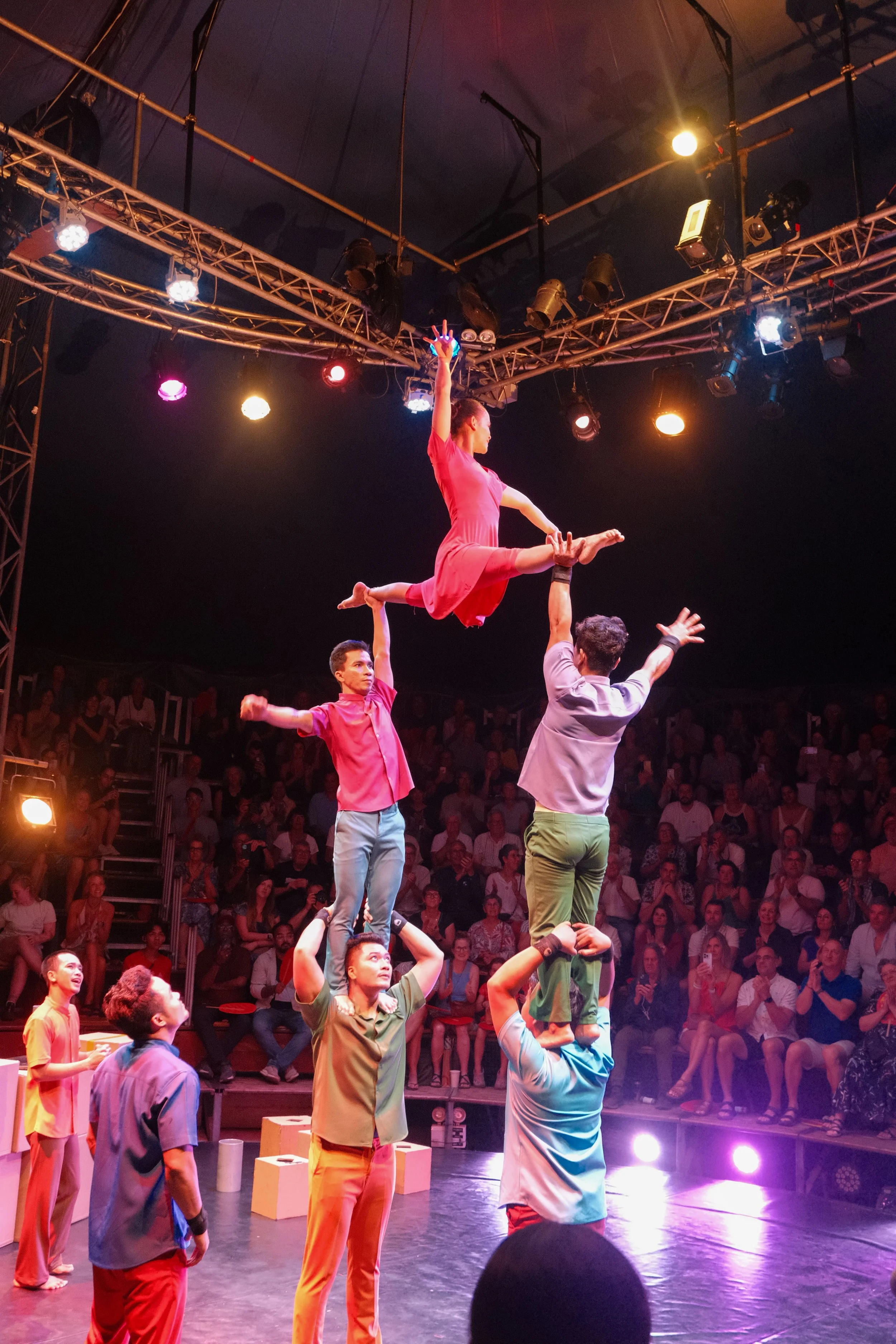
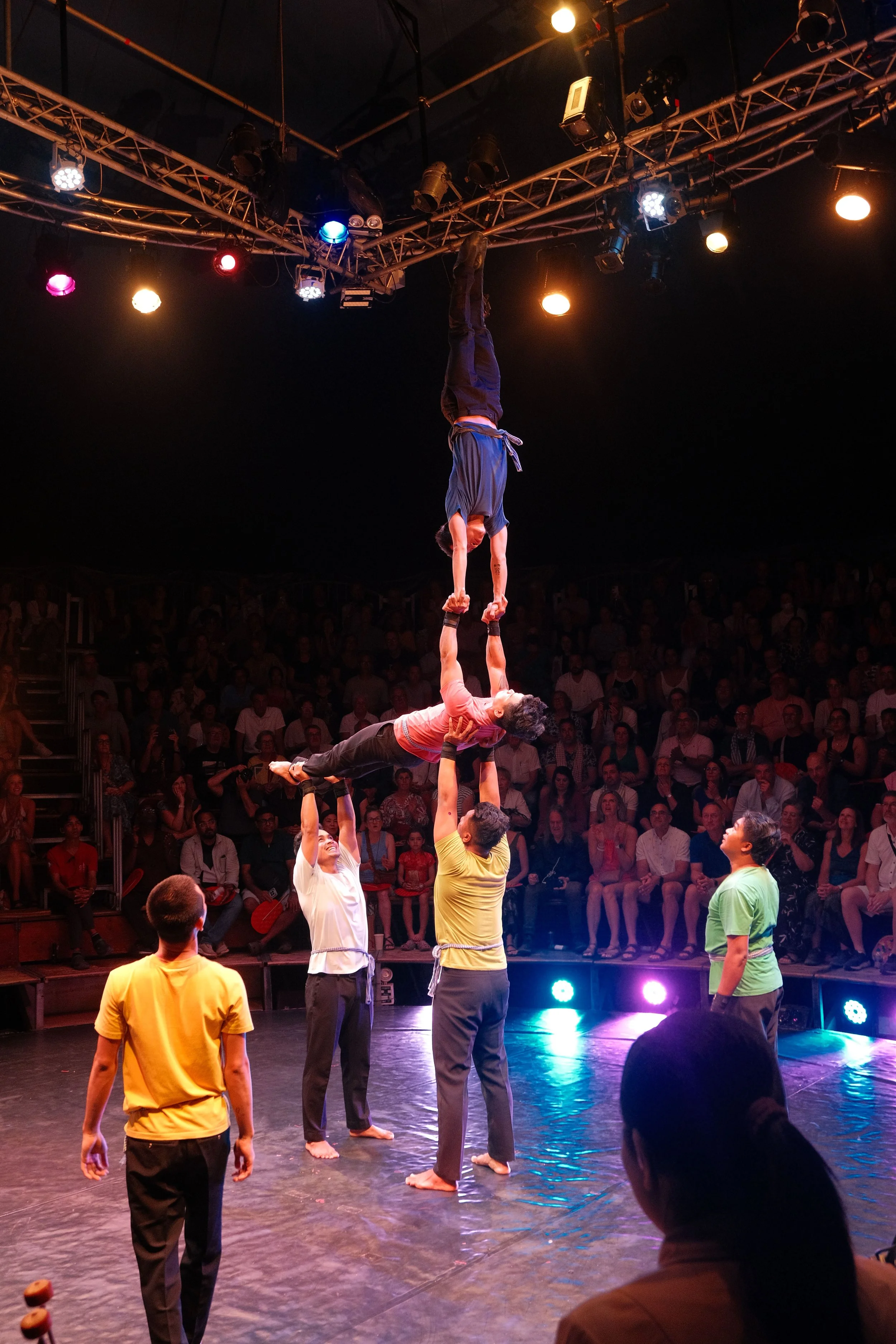
The following evening we went to Phare, The Cambodian Circus, which, despite the name, is not a traditional circus with animals or clowns. It's a theatrical performance blending acrobatics, dance, theater, and live music to tell Cambodian stories. The show we saw followed Sokha, a child haunted by memories of surviving the Khmer Rouge, who finds healing through art as she grows up. The performers were incredibly talented - flipping, balancing, and tumbling across the stage while also carrying the story forward.
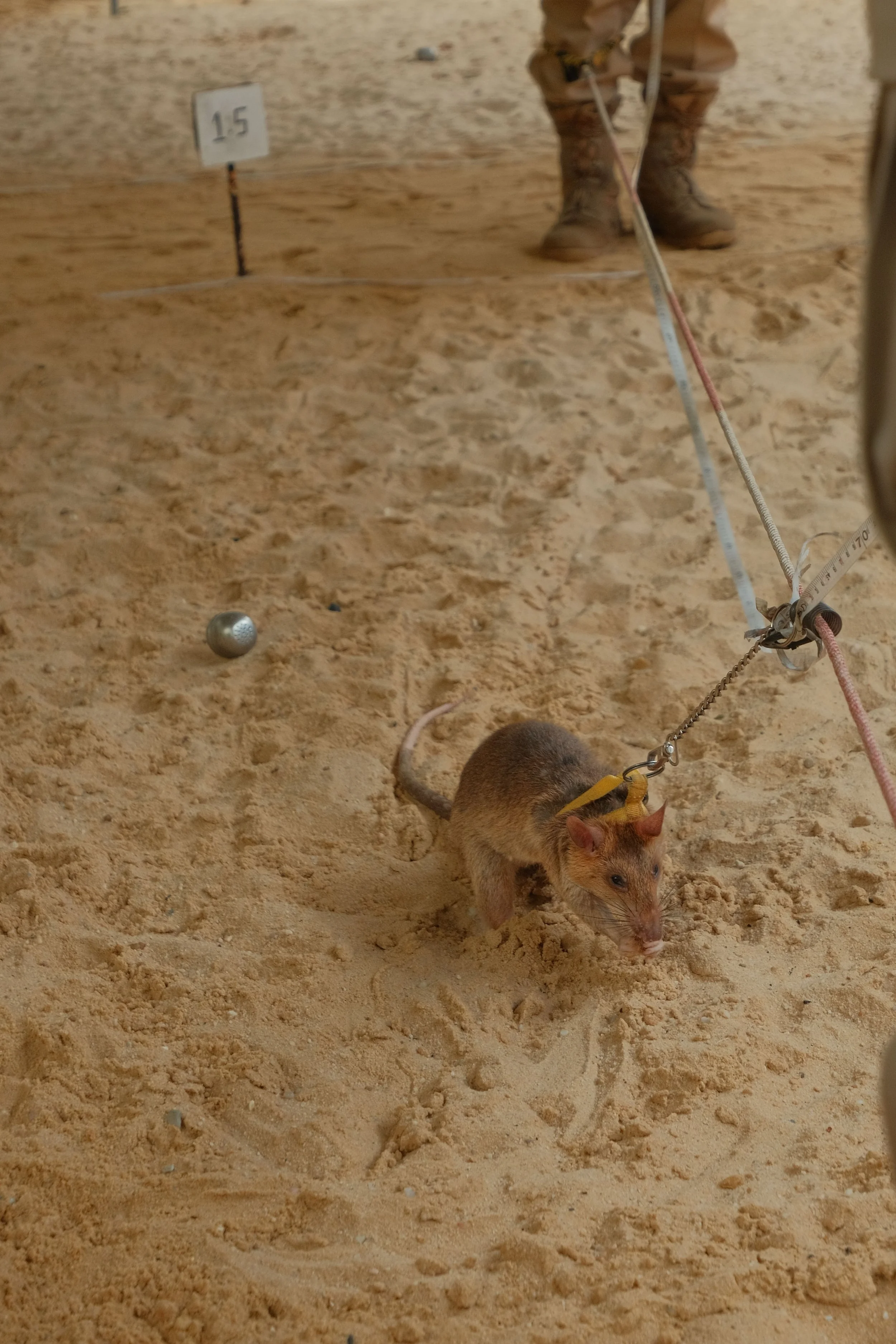
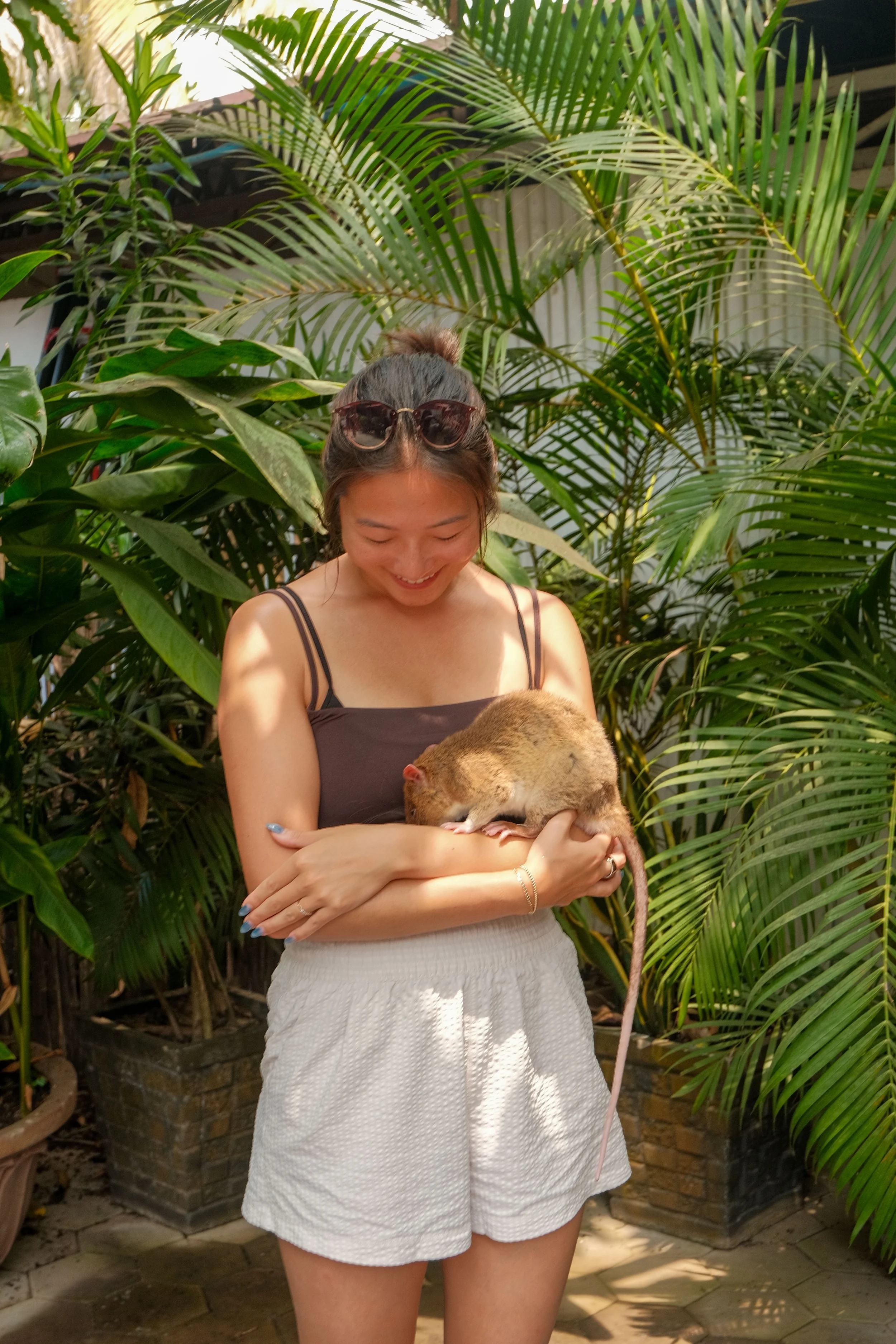
One of the most unexpected highlights in Siem Reap was visiting the APOPO Center. APOPO is a nonprofit that trains giant African pouched rats, known as HeroRATs, to detect landmines and unexploded ordnance left behind from conflicts including the Cambodian Civil War and the Khmer Rouge era. The rats are light enough not to trigger mines and can search a field far faster than traditional methods like metal detectors.
They start training as young as a few weeks old and spend about a year in the program. Before being cleared to work in the field, they must pass an exam with a perfect score by locating every explosive hidden in a designated test area - no partial credit. Once deployed, they work three hours a day, five days a week, starting early to avoid the heat, with handlers applying sunscreen to their ears and tails to prevent sunburn. After a few years, when they start showing signs of slowing down, they receive full retirement benefits - unlimited food, unlimited rest, no more exams.
We watched a demonstration of how they signal their handlers when they detect explosives, and then we got to hold one. They were surprisingly sweet and cuddly. It was a fascinating look at an ingenious humanitarian solution and a quiet reminder of the long legacy of war that Cambodia is still working to overcome.
Laos
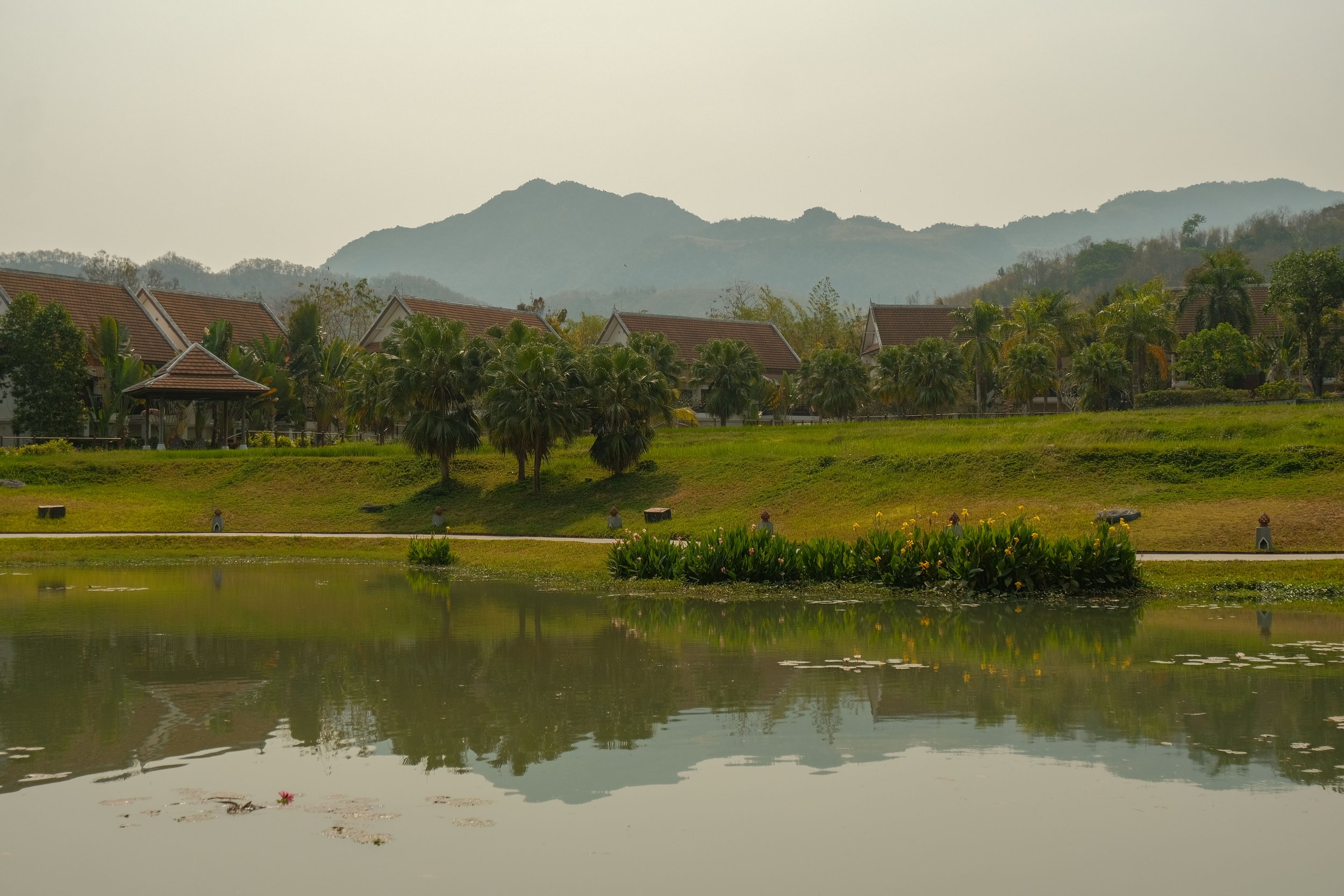
Before we knew it, we were off to Luang Prabang. Our hotel sat in the secluded countryside just outside the city center, built on and around lush rice paddies. We arrived at night and couldn’t see much, but the next morning we woke up to bright green fields stretching toward hazy blue mountains in the distance. It was a striking contrast to the flat plains around Siem Reap.
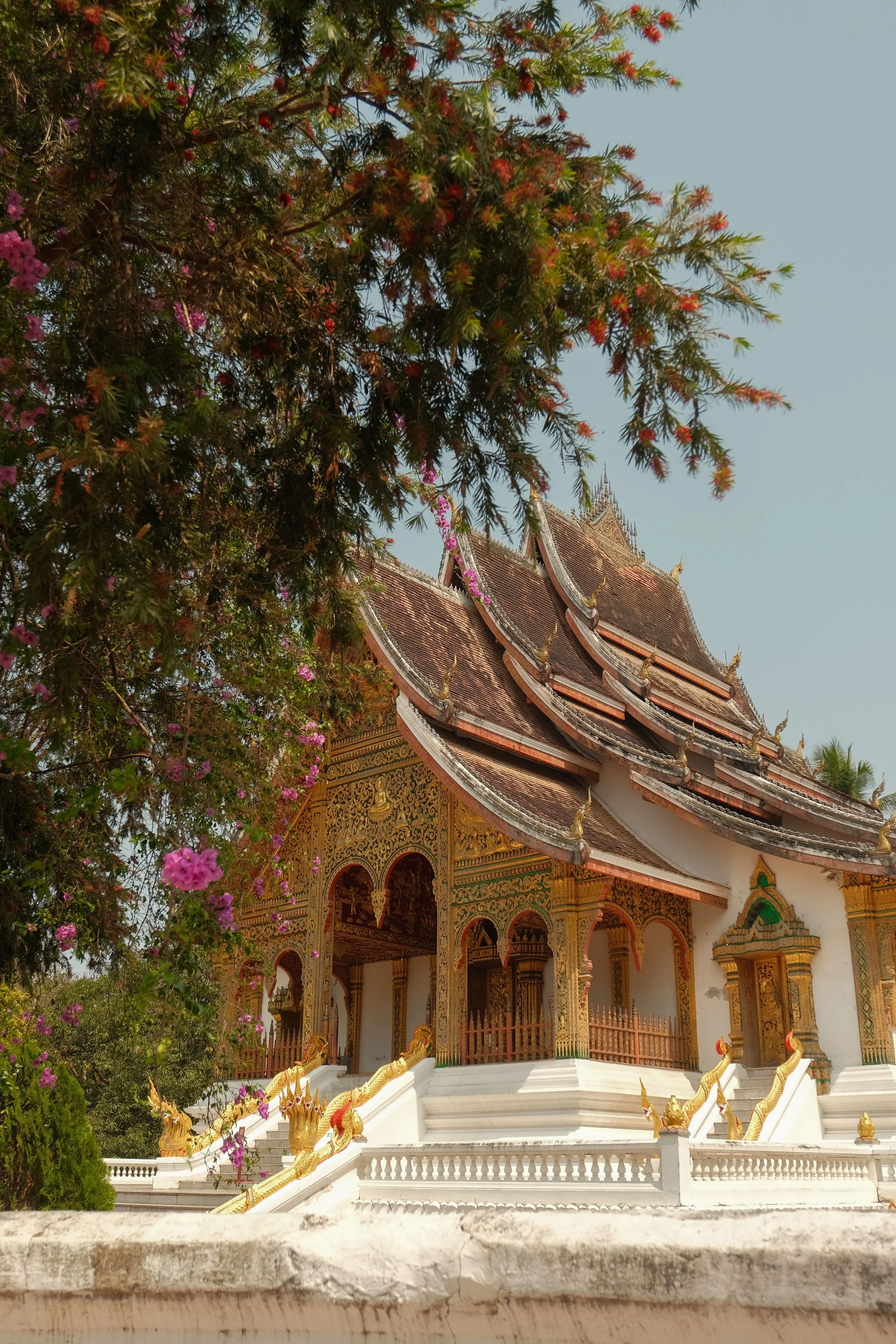
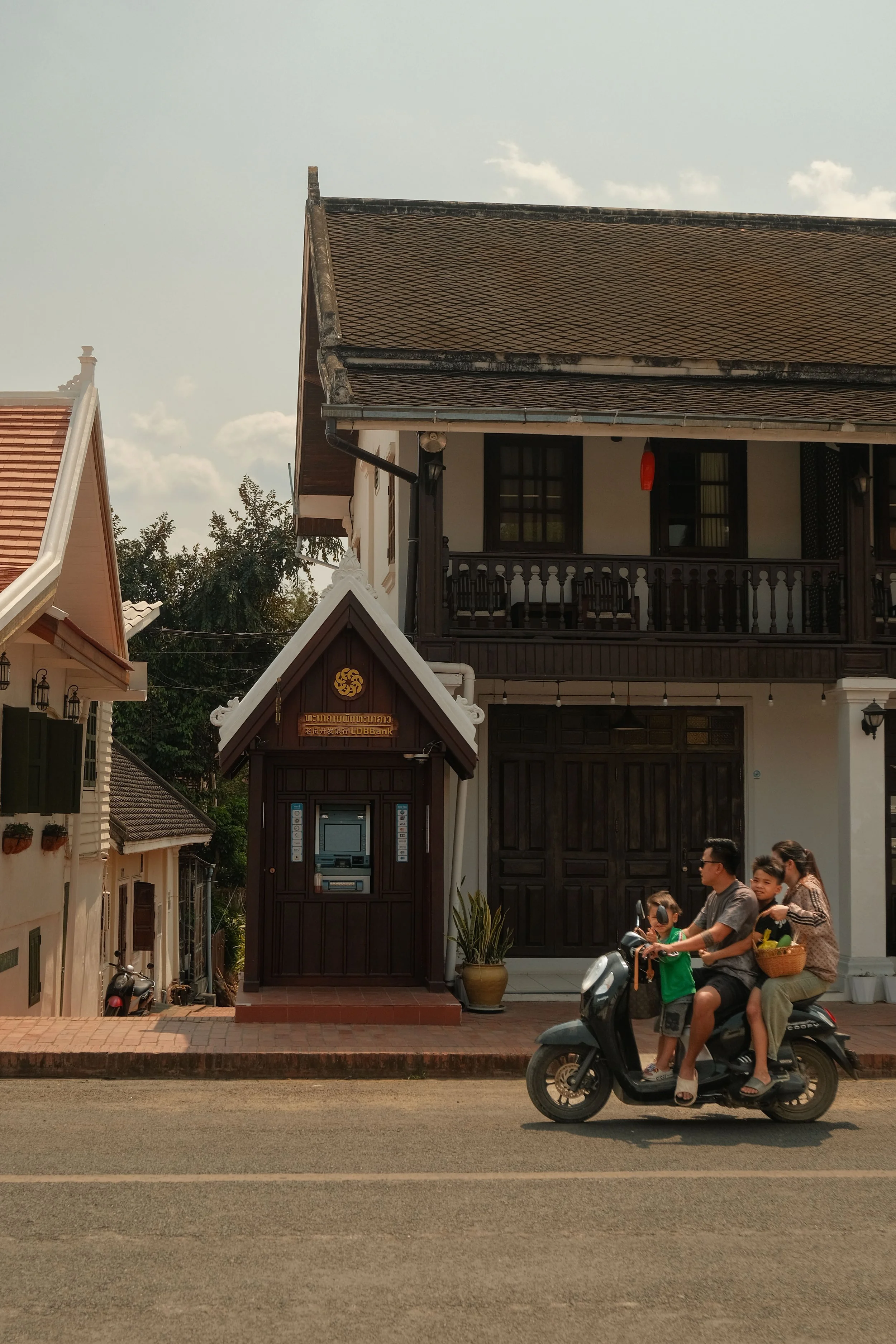
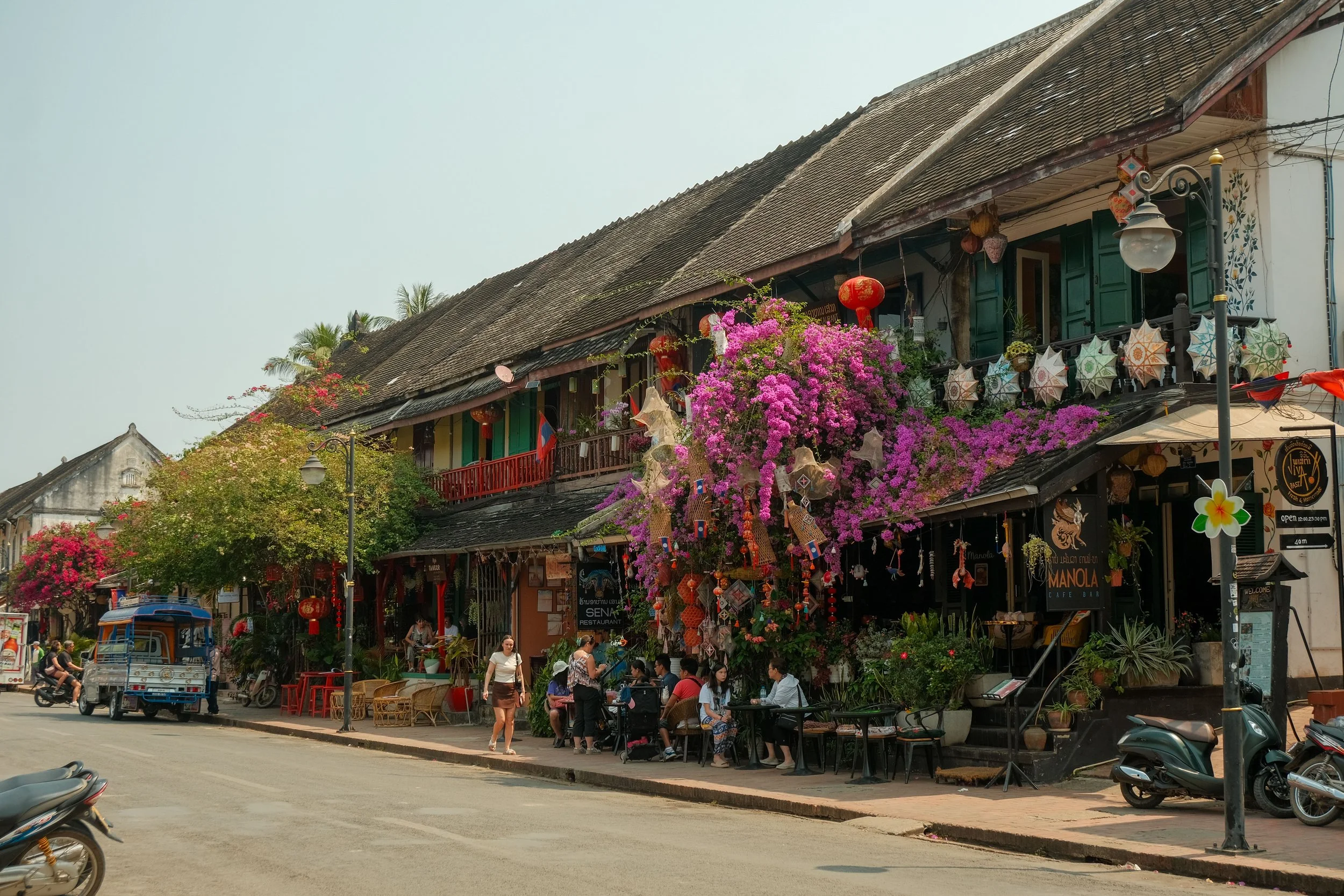
After breakfast, we took a shuttle into the historic center, and I was immediately charmed. Thanks to its history as part of French Indochina, the architecture is a blend of traditional Lao and French colonial styles. Ornate Buddhist temples with intricate gold detailing sit beside pastel colonial buildings housing cafés, bakeries, and guesthouses. Magenta bougainvillea spills over balconies, monks in saffron robes move quietly along the sidewalks, and motorbikes buzz down the main street, sometimes balancing an entire family of four. Even the ATMs are picturesque, tucked inside small wooden booths designed to blend into the town’s traditional architecture.
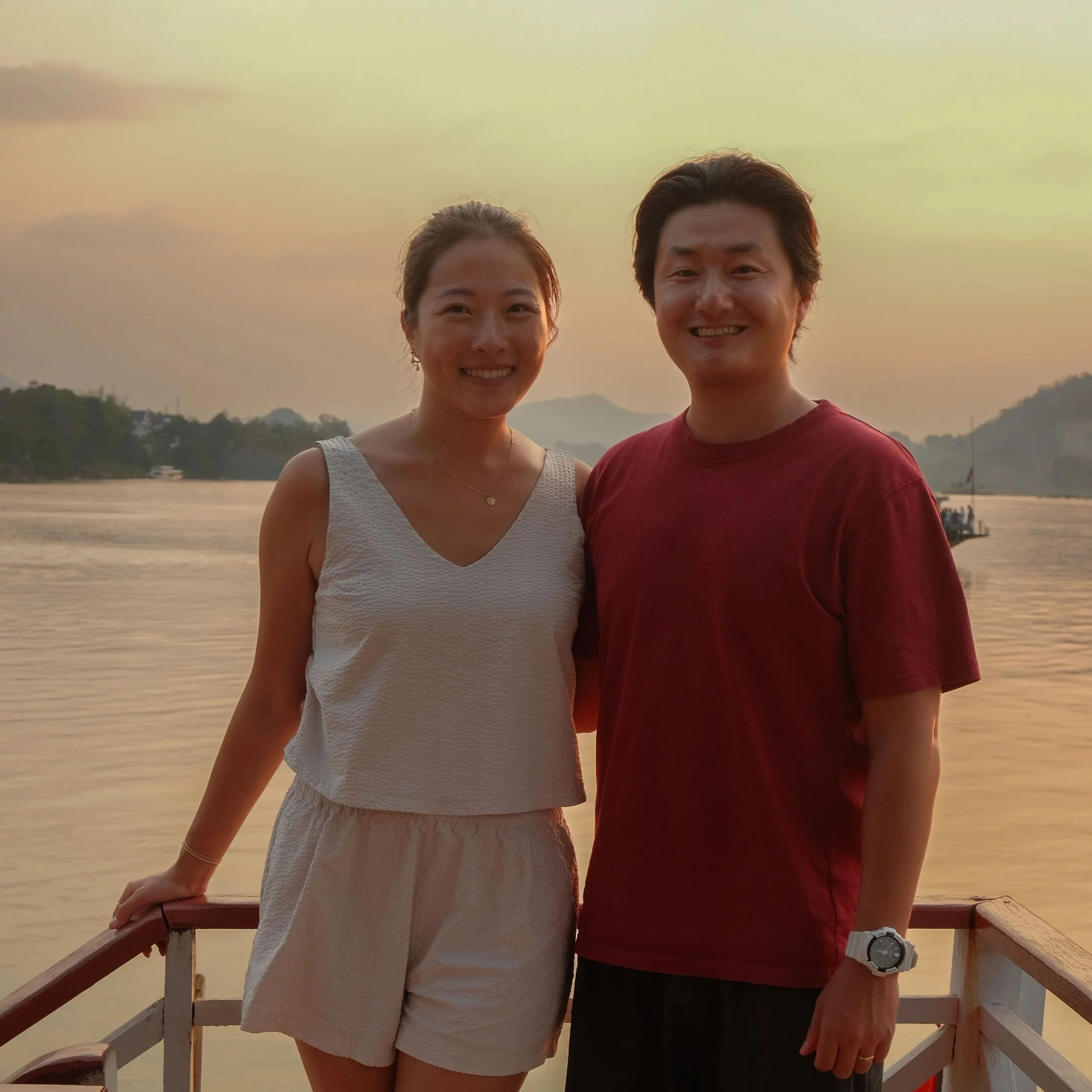
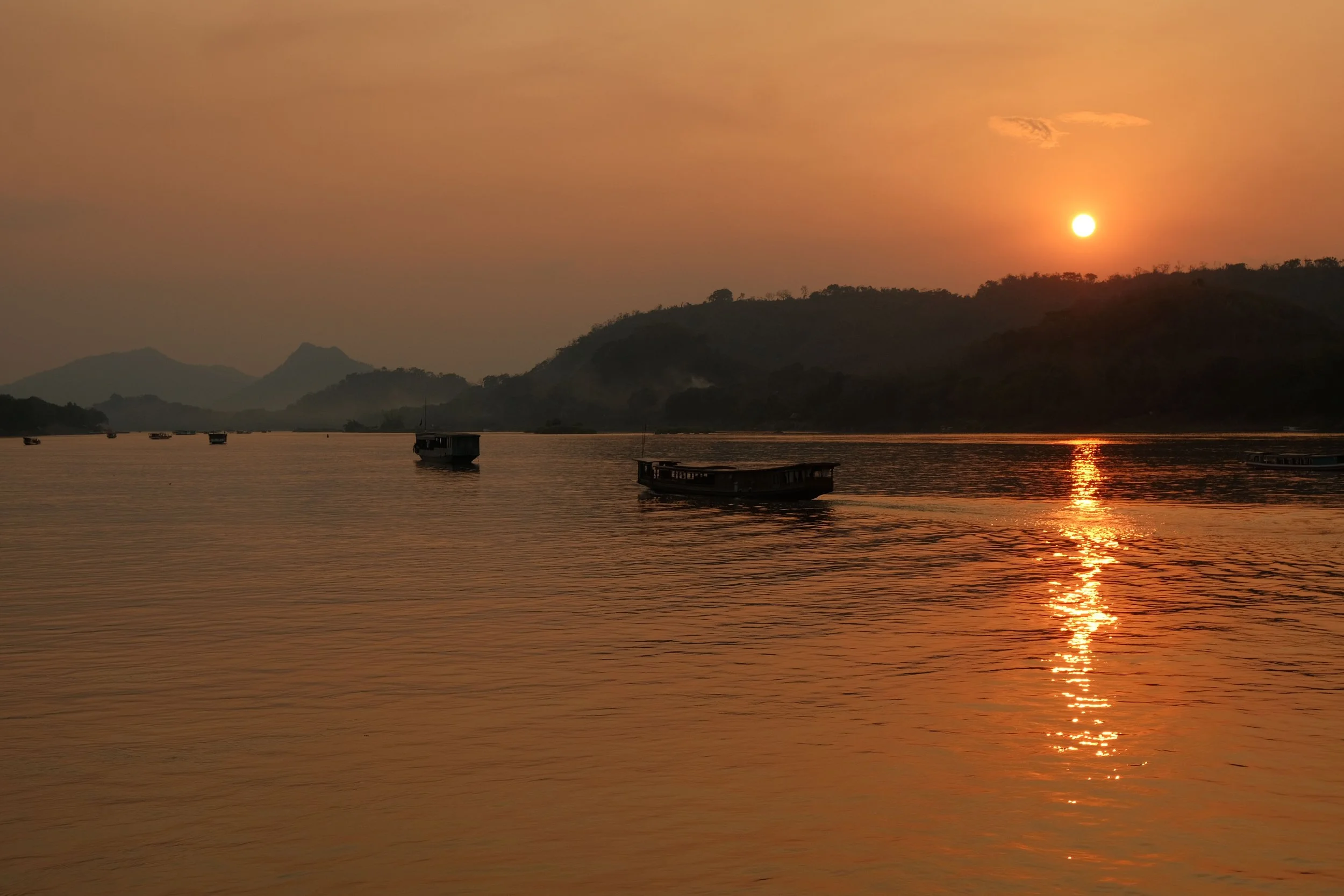
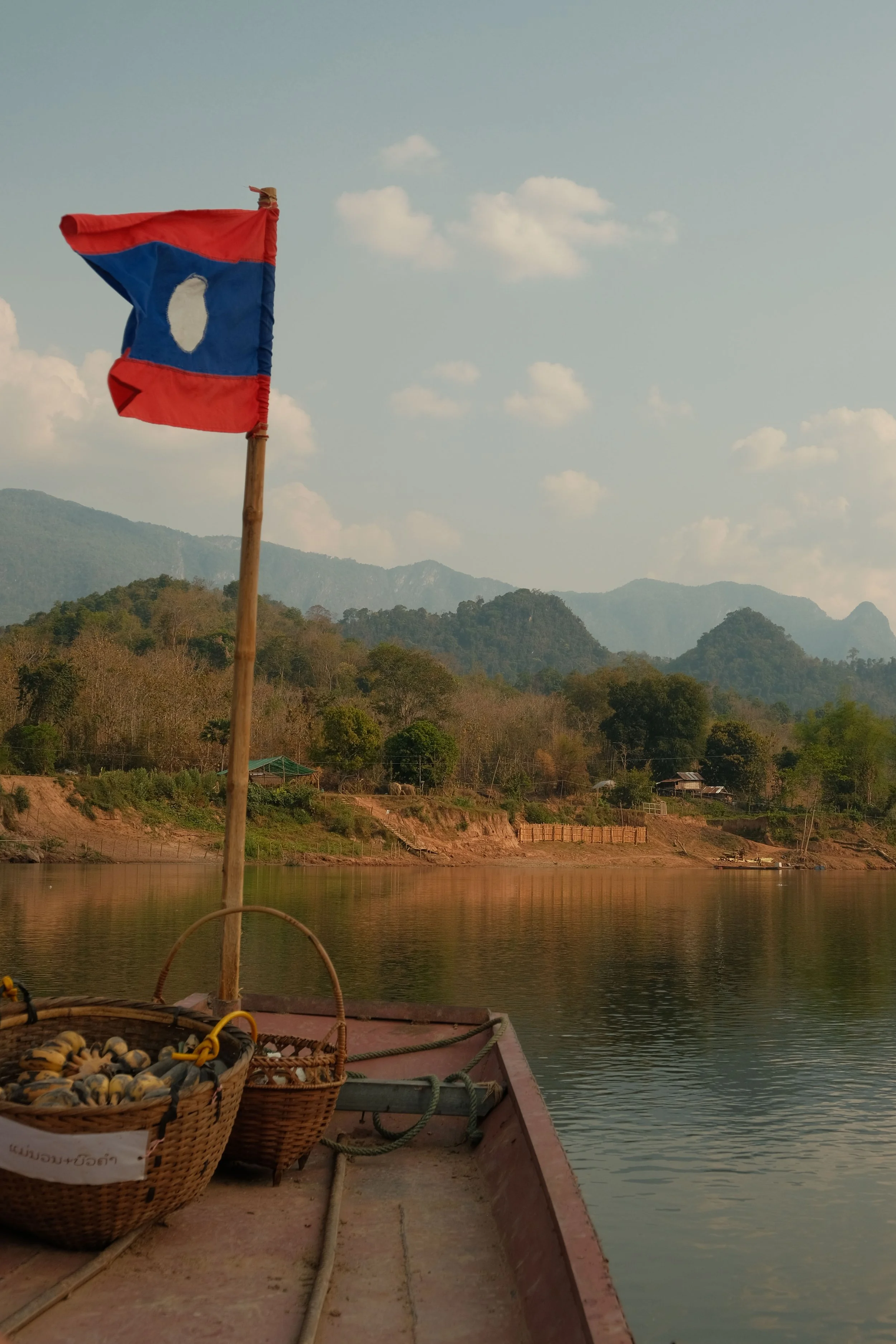
After a day of wandering through town, browsing small shops and admiring temples, we boarded a traditional wooden boat on the Mekong River for a sunset cruise. We were delighted to discover only four other passengers on board that night - one of the crew told us there had been sixty the evening before. We had an entire upper deck to ourselves, where we kicked back and sipped on cold beers. For the next two hours, we drifted slowly upstream and watched as the sun dipped low, the sky turning deep shades of orange and pink against the mountain silhouette.
Luang Prabang sunsets are especially vivid during the dry season, partly because of the regional haze from agricultural burning. Across northern Laos and neighboring countries, farmers use slash-and-burn techniques to clear fields, releasing smoke into the air. The haze intensifies the reds and oranges and softens the sunlight enough that you can see the full outline of the sun. The result is beautiful, though it’s also the same pollution that contributes to poor air quality across the region. By the end of the week I could definitely feel the effects in my slightly scratchy throat.
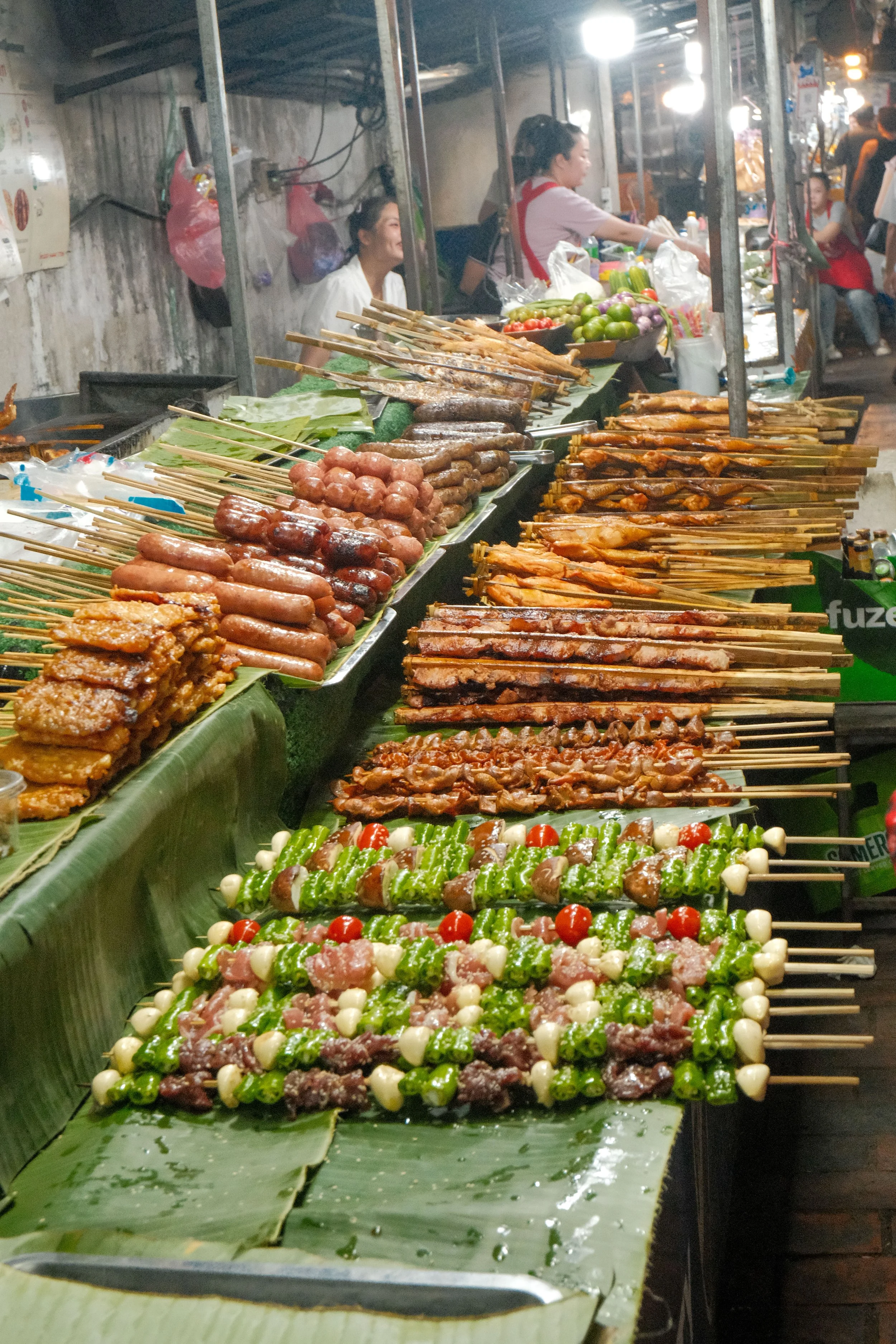
After the cruise, we made our way to the night market. Every evening, vendors set up canopy tents along the main street, transforming it into several blocks of handicrafts, clothing, and street food. Earlier in the day the road had been filled with motorbikes and tuk-tuks, but by nightfall it was closed to traffic and packed with people wandering through the stalls.
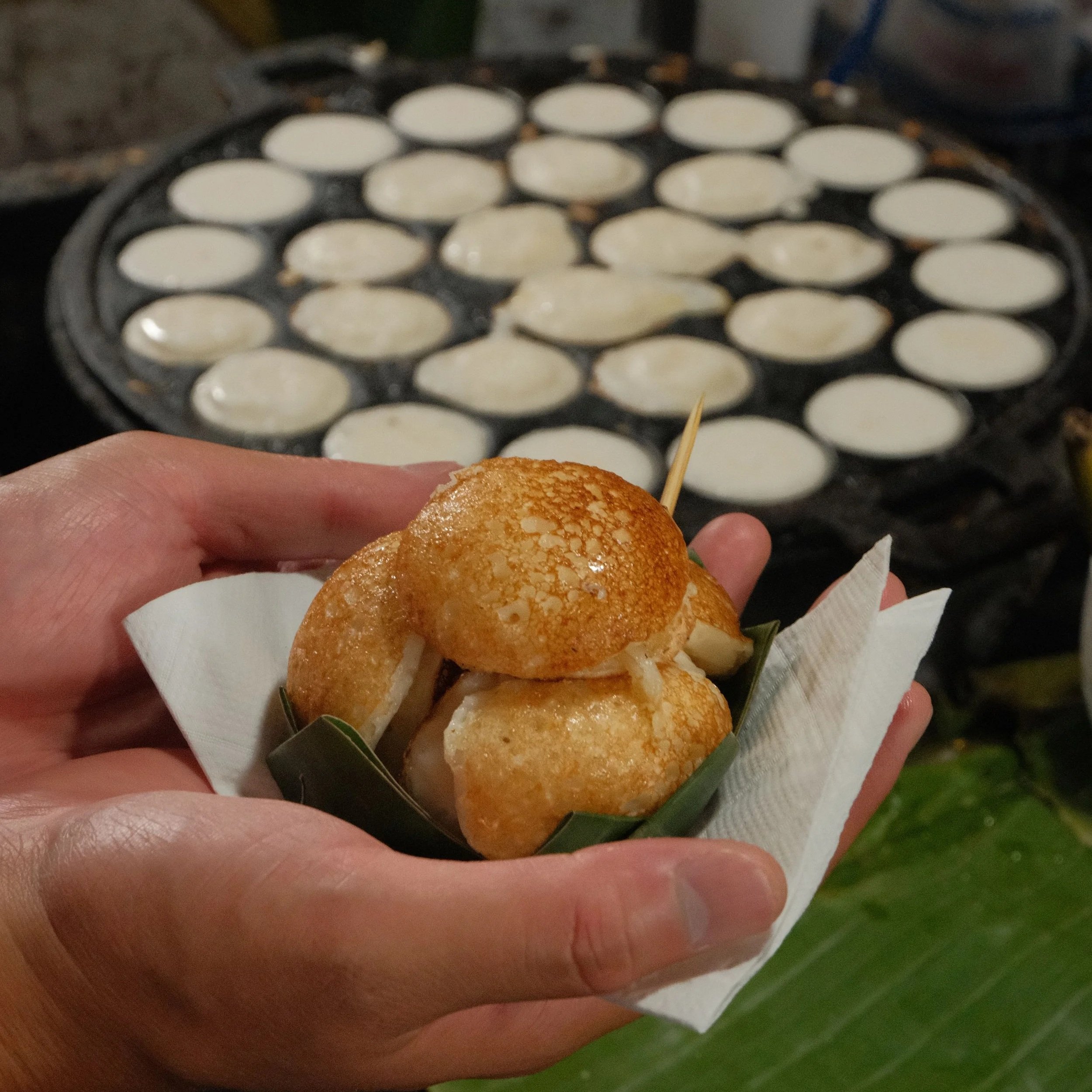
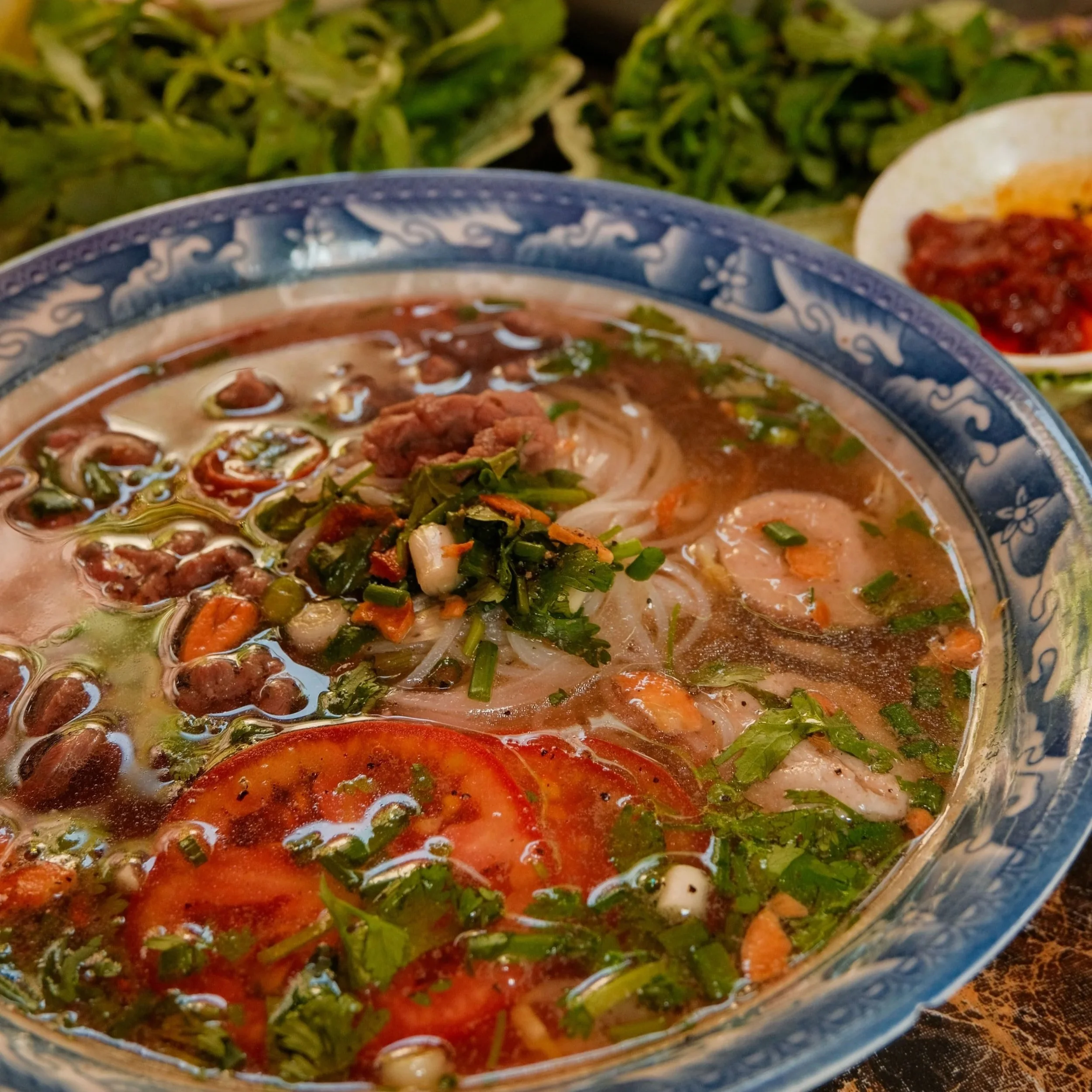
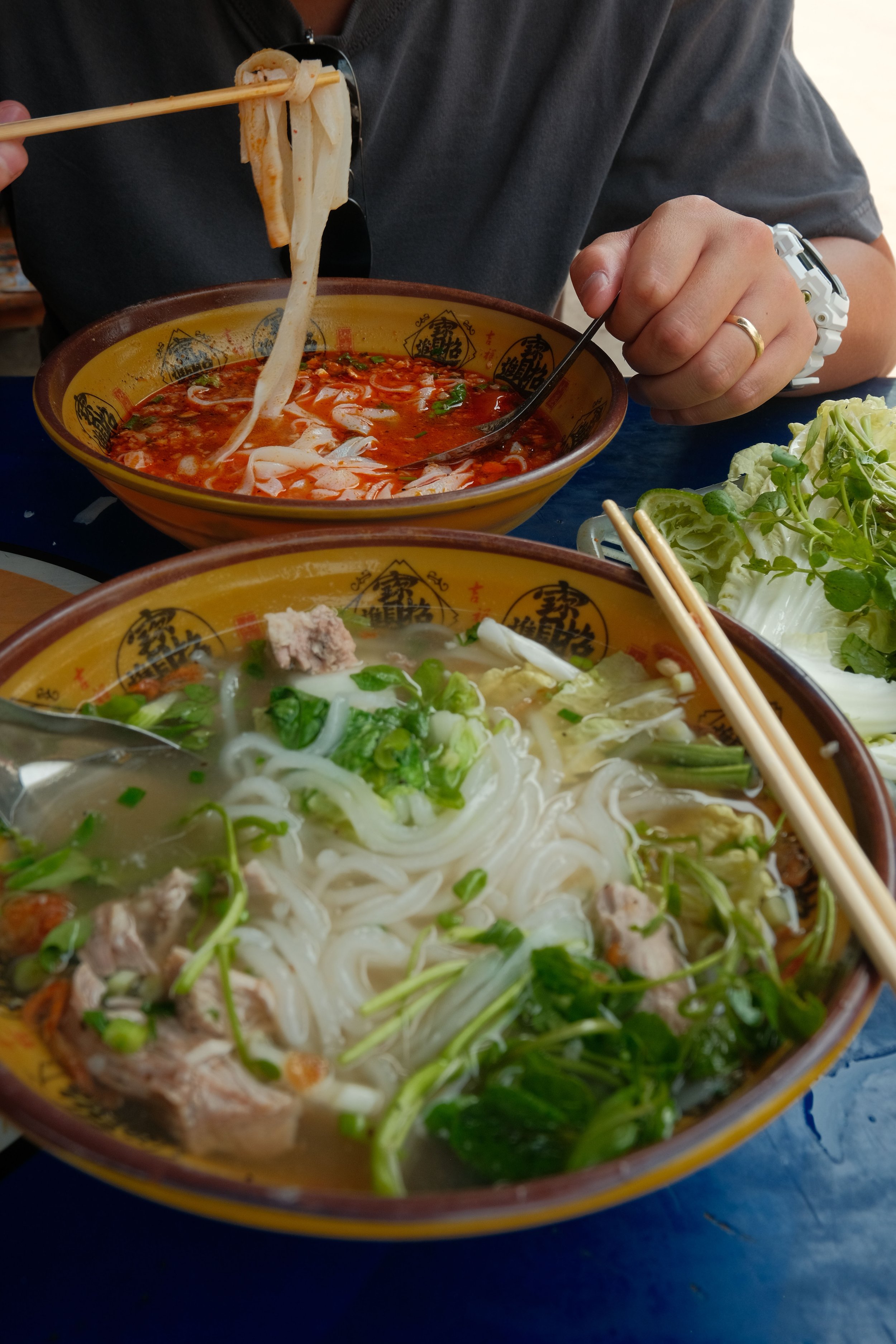
We browsed bamboo lamps, elephant-print pants, and handwoven textiles before eventually gravitating toward the food section, with rows of stalls serving grilled meats, noodle bowls, and more for just a few dollars. We ended up going back every evening for dinner. Over the course of a few nights we tried Lao khao soi (a comforting noodle soup topped with a rich pork and tomato sauce), spring rolls, grilled skewers, Lao sausage packed with herbs, and stir-fried rice noodles. For dessert, Hanqing got small coconut cakes from the same stall every single night - crispy on the outside, soft and custardy inside, always piping hot. I typically finished dinner with freshly cut mango or pineapple.
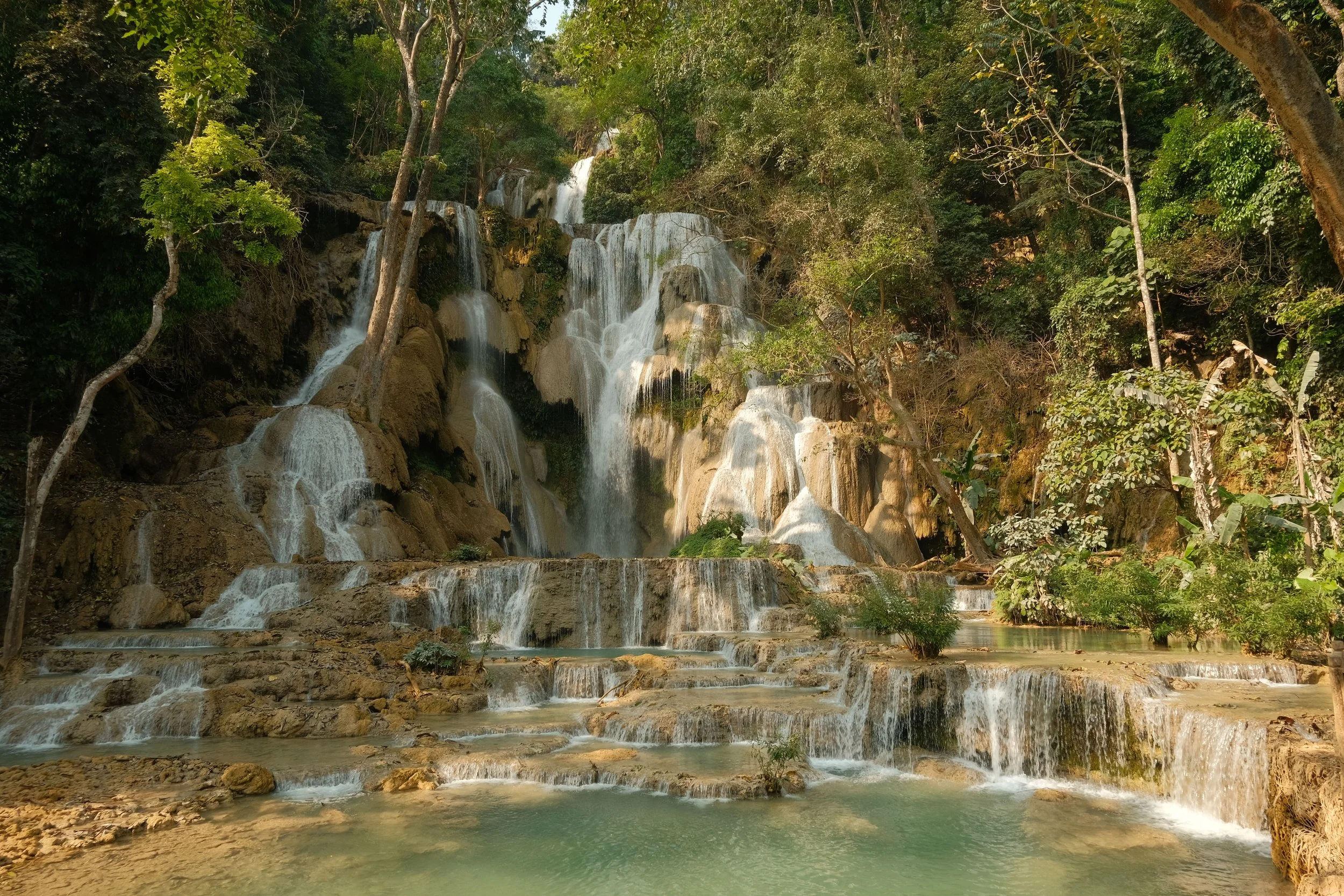
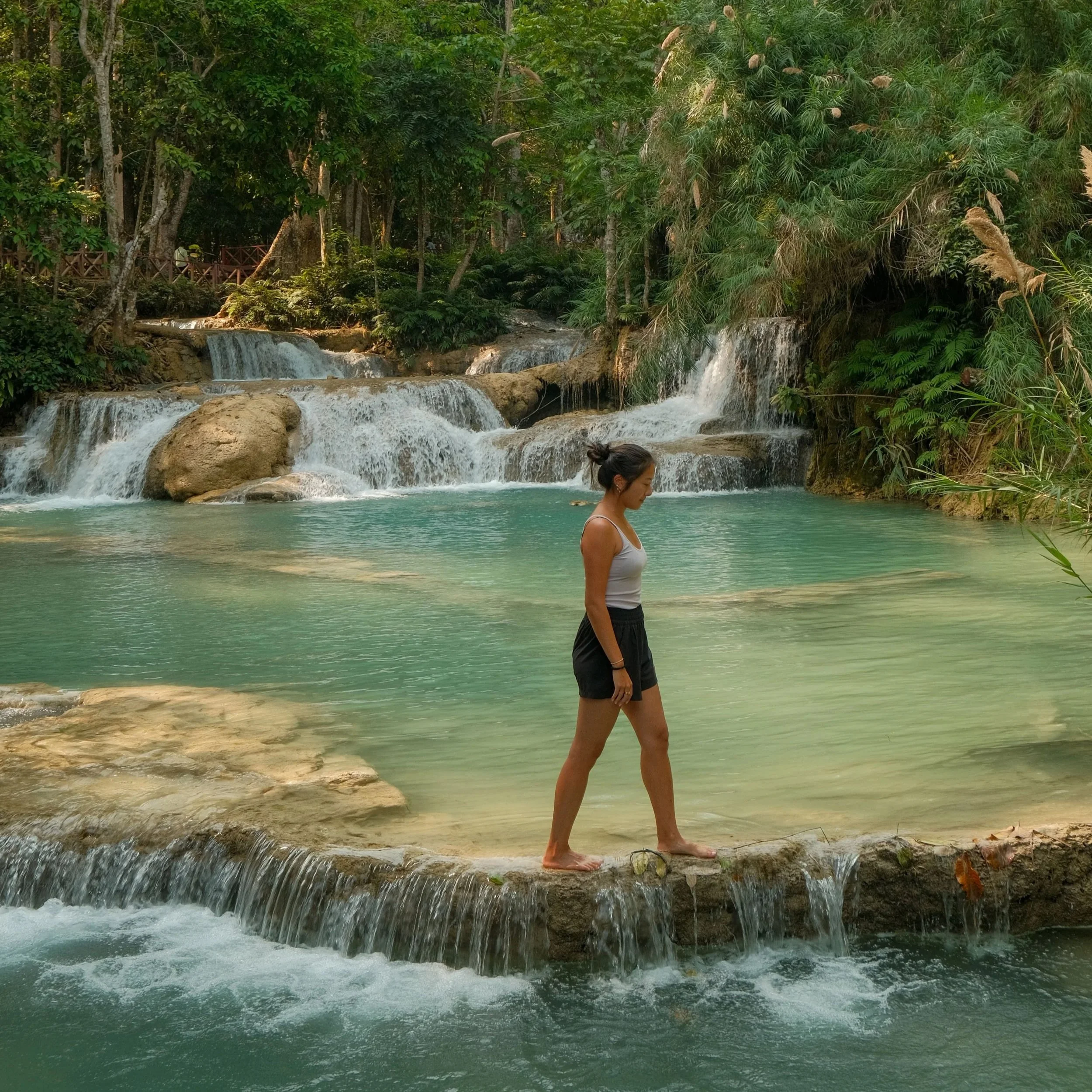
One of the most popular day trips from Luang Prabang is Kuang Si Falls, known for its bright turquoise pools. Rather than joining a tour, we arranged a ride with a driver I found on Facebook so we could get there right when the park opened. It worked out great - we were one of the first cars in the parking lot. After entering the park, we followed a shaded forest path that brought us first to the Tat Kuang Si Bear Rescue Centre, where rescued Asiatic black bears climbed around their spacious enclosures and lounged in hammocks.
From there, the trail wound past a series of tiered pools in an almost implausible shade of turquoise. Mineral-rich water flowing over limestone deposits calcium carbonate as it moves, gradually building up the terraces that form each tier and giving the pools their vivid blue-green color. The cascades grew larger as we climbed, until we reached the main waterfall - a tall curtain of white water dropping through the trees into a wide basin. It wasn’t as massive as Niagara or Iguazu, which we visited in Argentina a few months ago, but it was one of the most quietly beautiful waterfalls we've seen. On the way back down, we waded into one of the lower pools for a quick dip before heading back to the hotel.
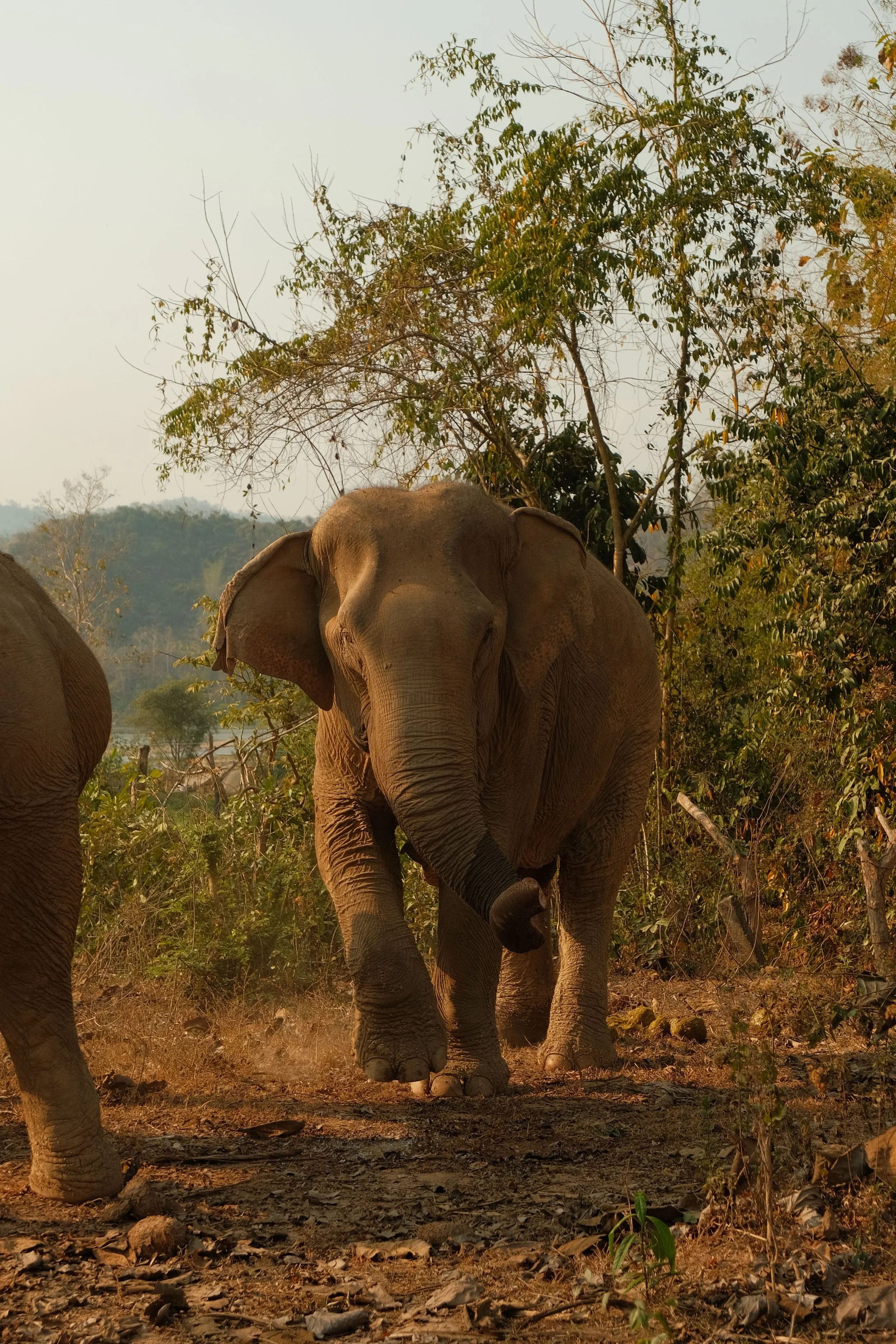
My favorite experience in Laos came on our last day: a visit to MandaLao Elephant Conservation, one of the few ethical elephant sanctuaries near Luang Prabang. Elephants have long been central to life in Laos. Once known as the "Land of a Million Elephants," the country relied on them for logging and transportation for centuries. As the logging industry declined, many owners turned to tourism instead, giving rise to elephant camps offering rides and performances. Unfortunately, the welfare conditions at many of these operations are poor. Ethical sanctuaries like MandaLao take a different approach, focusing on observation in natural settings rather than performance or rides.
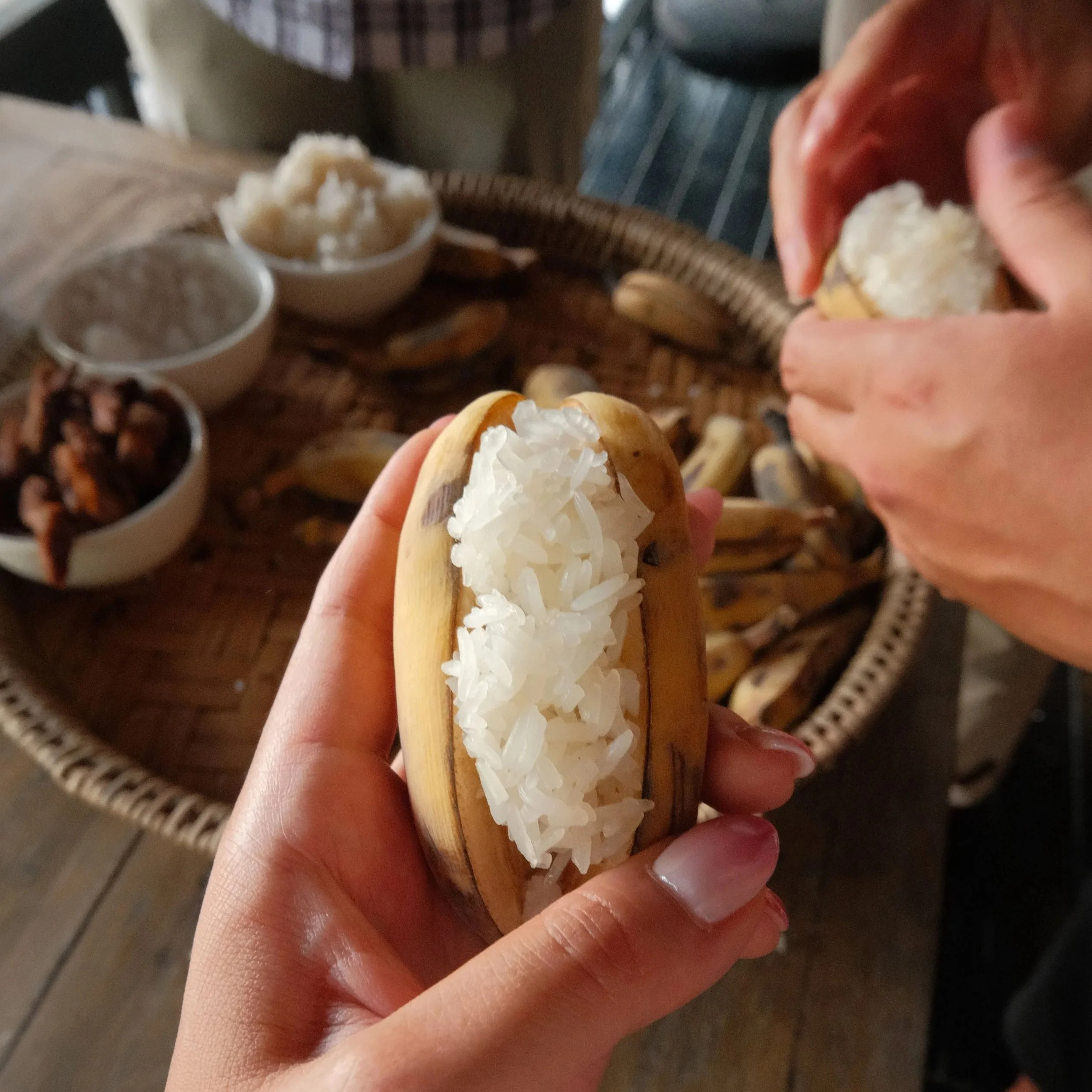
After arriving, our guide gave us an introduction to the history of elephants in Laos and the conservation work the sanctuary is doing today. We prepared snacks for the elephants - bananas stuffed with tamarind, sticky rice, and salt, which honestly looked good enough to eat ourselves - before crossing the river by longtail boat to meet them.
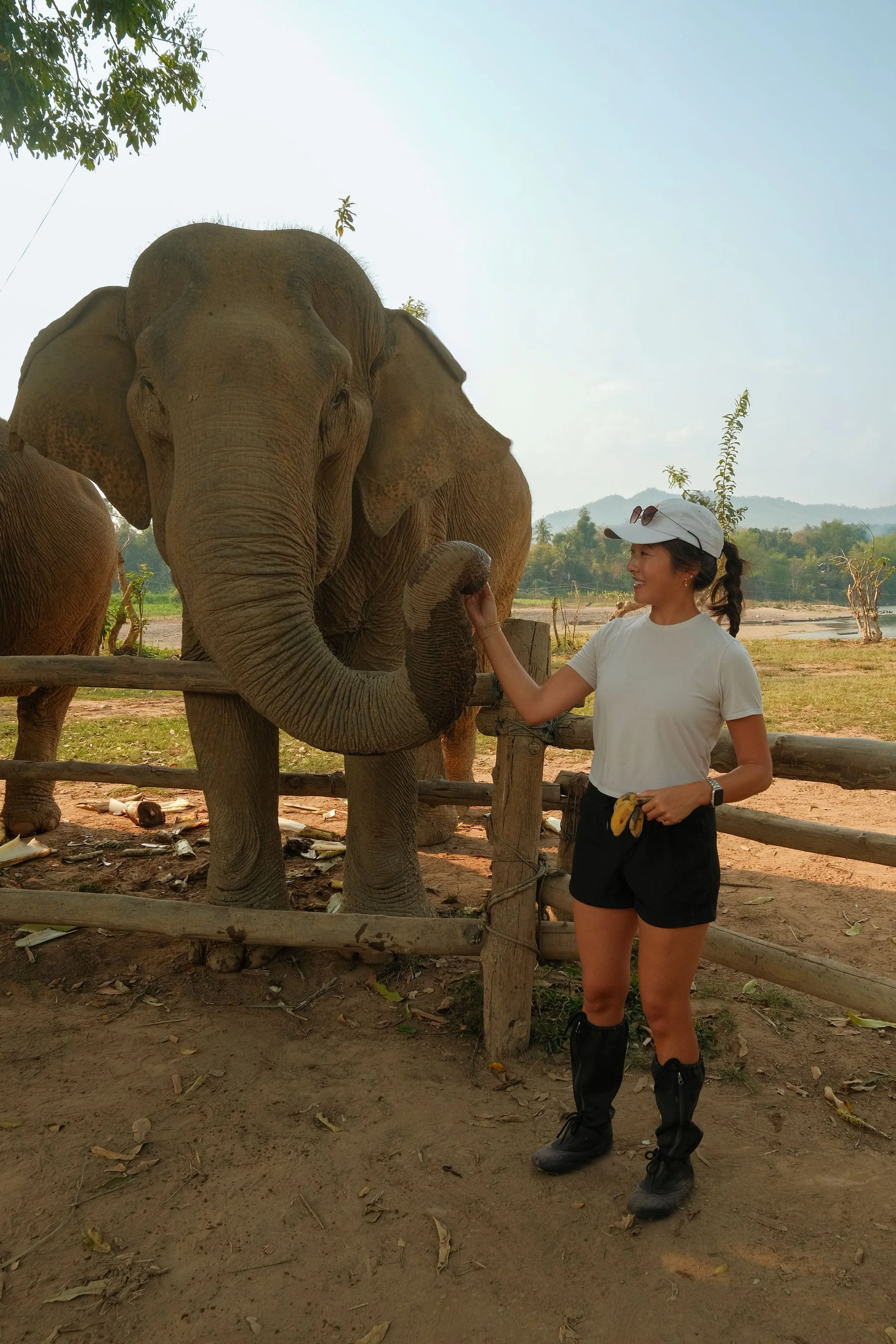
Waiting on the other side were Term and Van, 45 and 51-year-old female elephants who, we were told, are best friends. They were beautiful and surprisingly gentle. We fed them the bananas one by one as they curled their trunks around our hands and popped the entire thing - peel and all - straight into their mouths. Almost immediately, their trunks would stretch back out again asking for more.
Our guide explained that an adult Asian elephant eats around 330–440 pounds of food a day, spending up to 18 hours eating. He joked that one banana for them was like a grain of rice for us - maybe a slight exaggeration, but the point landed.
After snack time, we followed the elephants and their mahouts along a short forest trail to help them digest. We kept a respectful distance, simply watching them move slowly through the jungle. Being able to see them freely in their natural environment felt incredibly special - easily one of my top experiences of the trip so far.
And with that, our time in Laos came to a close. The country completely took me by surprise with its beauty, culture, and warmth. If you’re reading this, consider it your sign to add Laos to your bucket list.
Next up: Vietnam.
Talk soon,
Tanya
