
Sizzling in Singapore
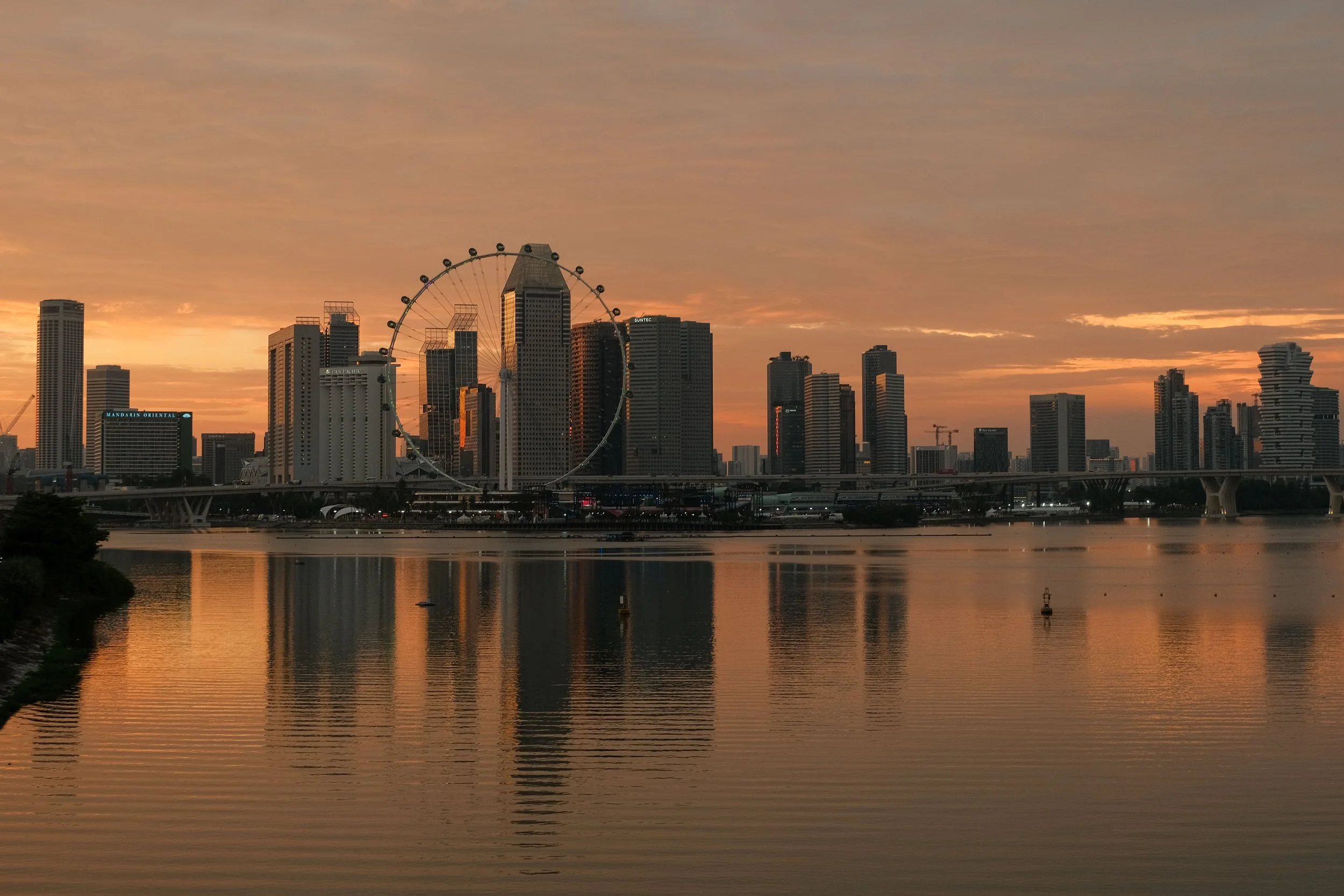
We've officially made it to the Asia leg of our trip! For the next five months, we'll be working our way through Southeast, South, and East Asia. We're kicking it off Crazy Rich Asians style (minus the rich part) in Singapore for six days.
Growing up in the US as the daughter of Chinese immigrants, I've sometimes felt like I live in limbo between two cultures. I was lucky to grow up around plenty of other Asian Americans, but I still at times feel like an outsider in my own country. And whenever I visit China, the language gaps and cultural blind spots are a quick reminder of how much I've grown up outside of it. Singapore had always seemed like an interesting case study: a majority-Chinese country where English is the dominant language, and where Chinese identity and Western influence have coexisted for generations. I was curious what that looked like up close.
Singapore’s melting pot of cultures didn't happen by accident. Long before modern Singapore existed, it had been a small trading settlement connecting cities across Southeast Asia, thanks to its strategic position at the southern tip of the Malay Peninsula. In 1819, the British established it as a trading post and declared it a free port, meaning ships of any nationality could dock and trade there without paying tariffs on goods passing through. That attracted more merchants, laborers, and entrepreneurs from across Asia, particularly from China and India, many of whom settled permanently there. While British influence gave Singapore its administrative backbone, common language, and early infrastructure, the culture that emerged was always a hybrid shaped just as powerfully by its Chinese, Malay, and Indian communities.
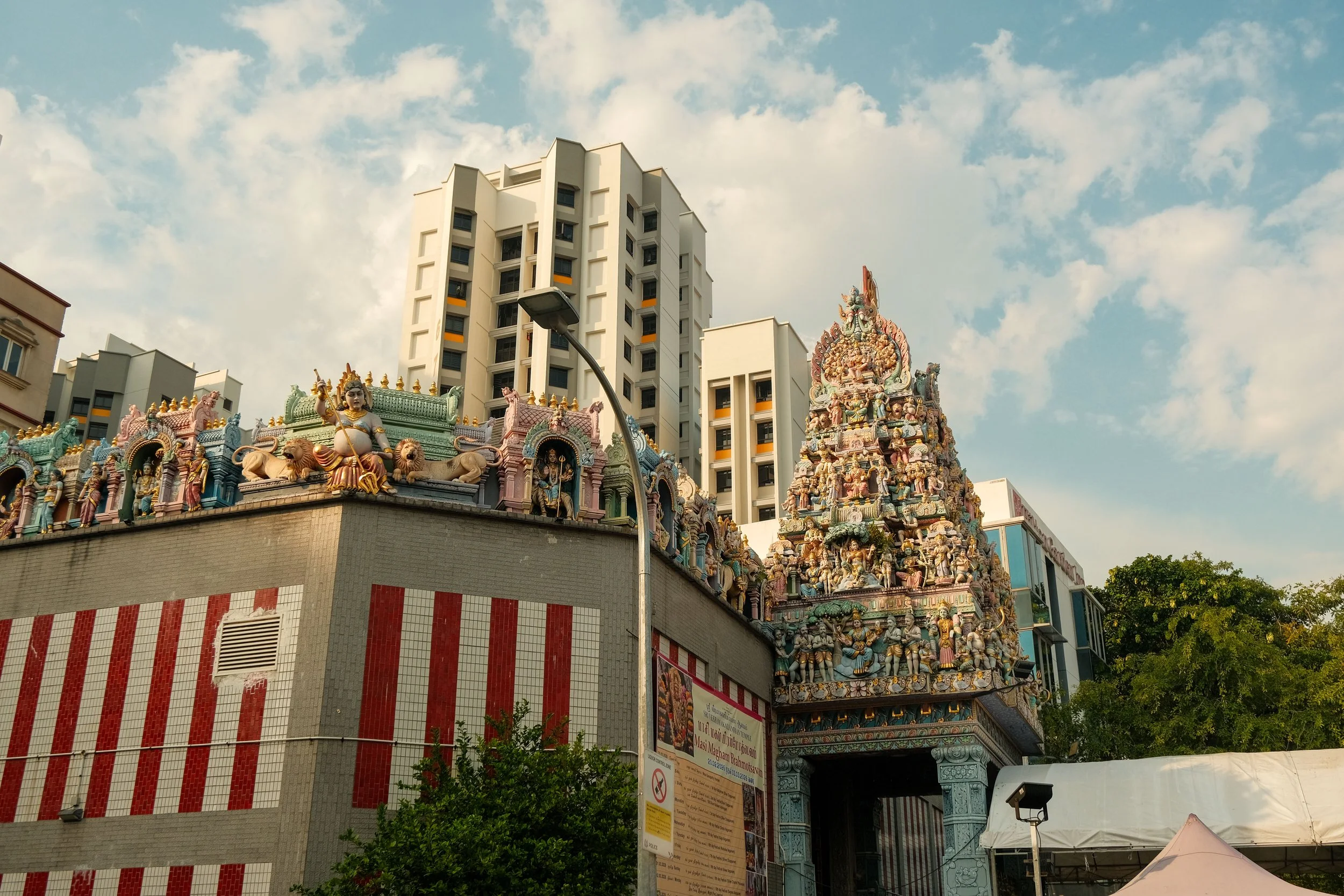
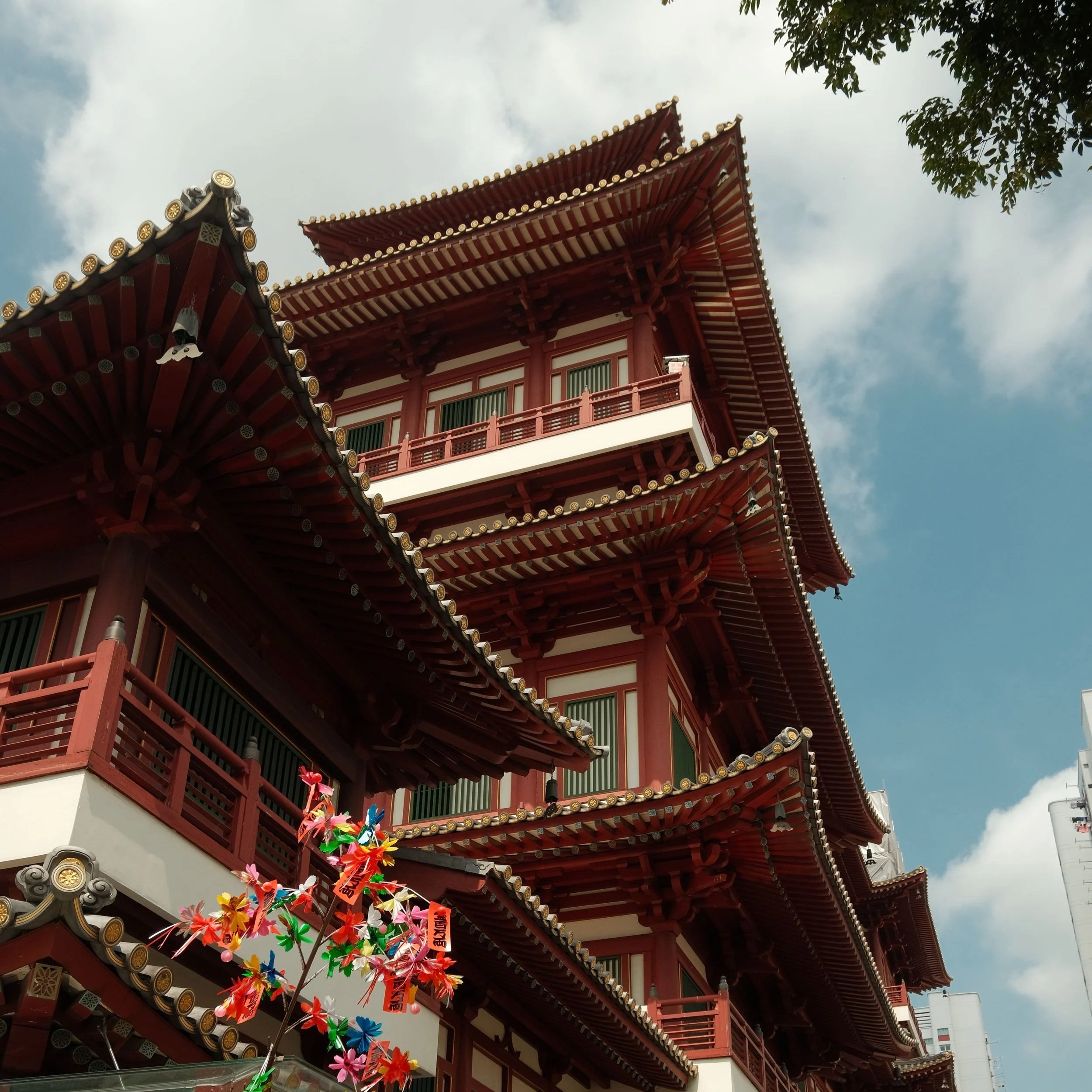
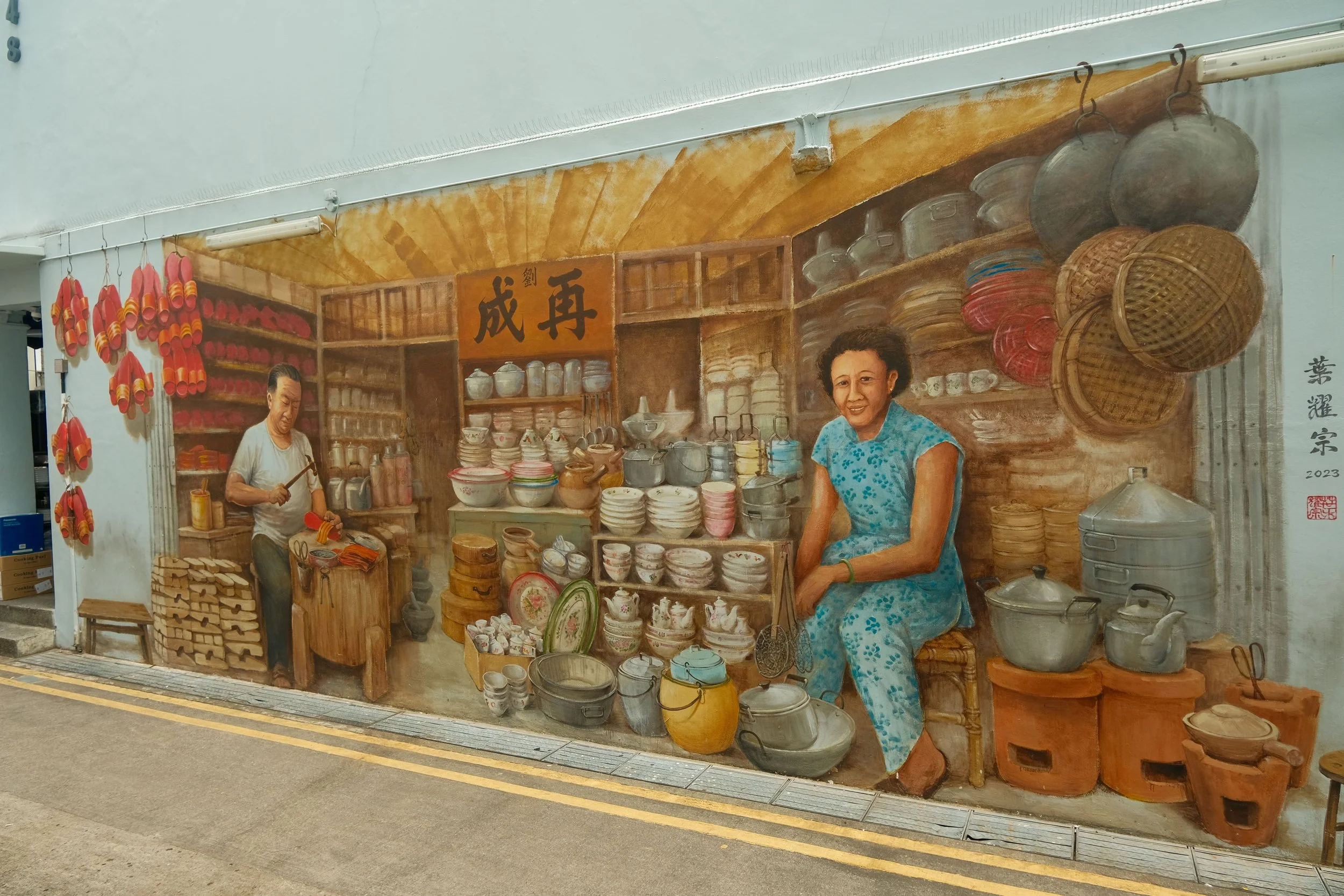
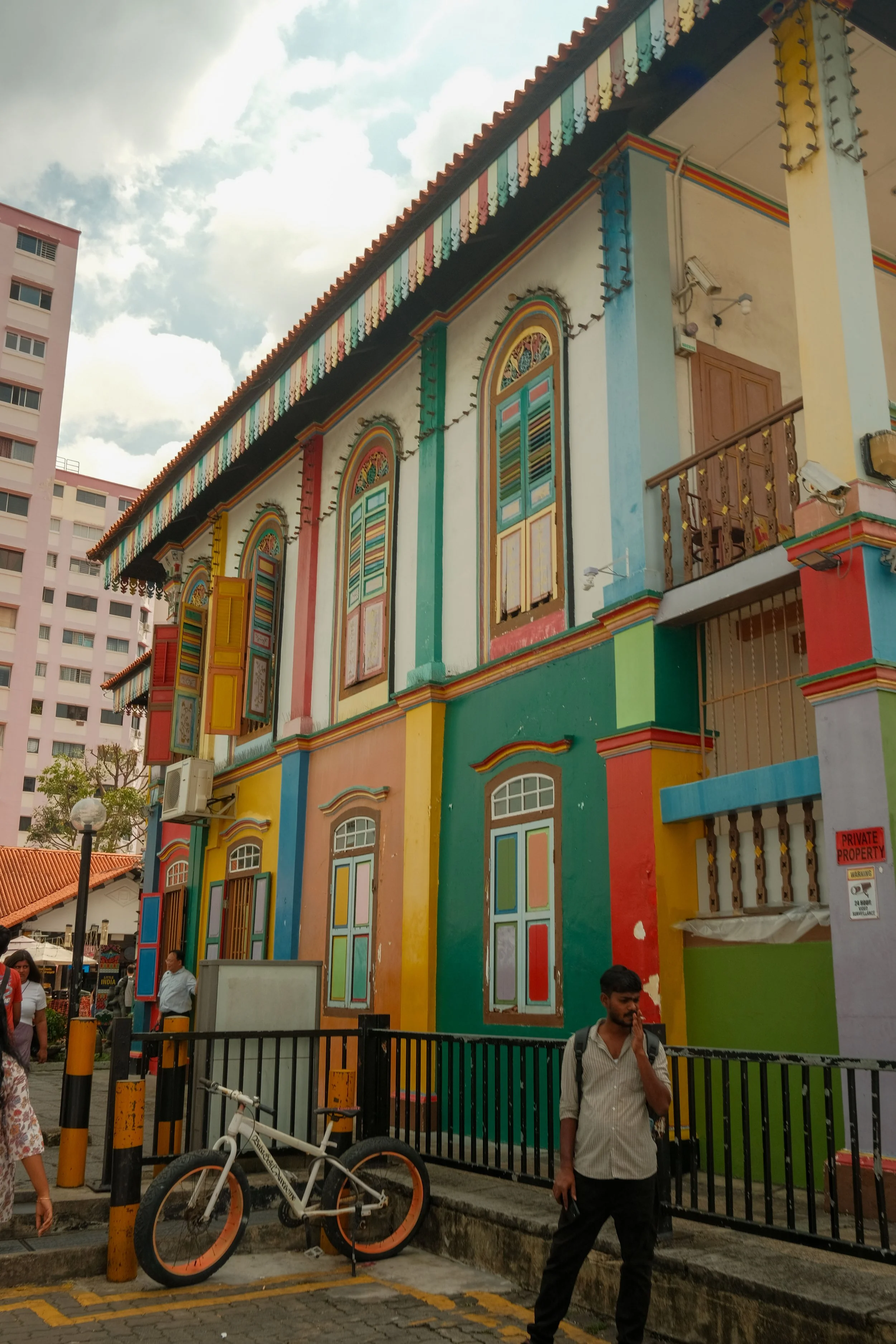
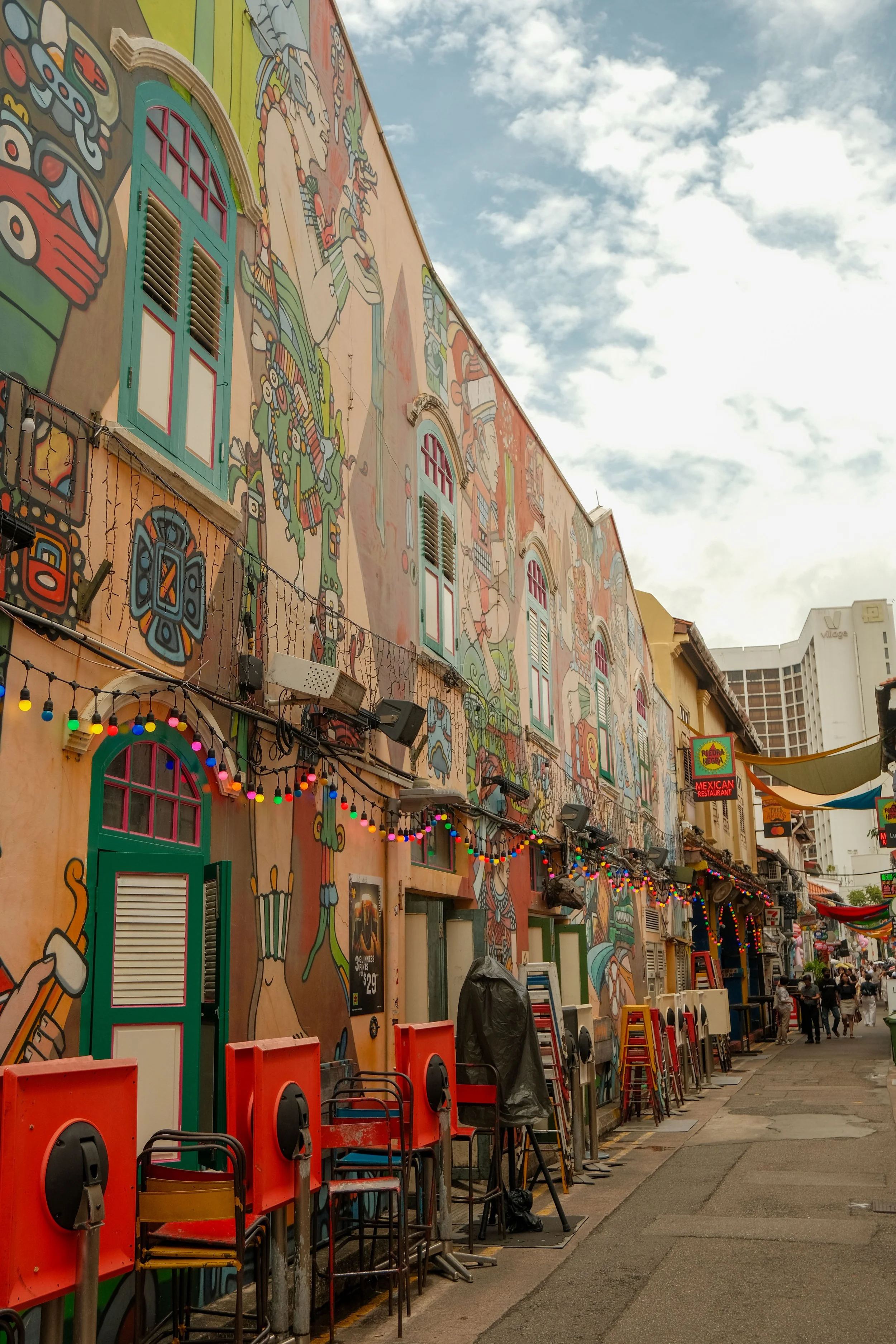
We got a taste of that multiculturalism the moment we stepped out of our hotel in Little India. Ornate Hindu temples rose between colorful shophouses, jasmine garlands decorated roadside stalls, and the scent of curry leaves and incense hung in the air. A quick ride on the MRT later, we emerged in Chinatown, which had a completely different energy. Bright red lanterns were still strung overhead from Lunar New Year, and the streets were lined with souvenir shops, medicinal herb stores, and Chinese restaurants. Large murals depicting scenes of everyday life (families gathered around tables, husband and wife working in a shop) covered the sides of buildings. Somewhere nearby, someone was selling durian; the smell made sure we knew about it (fragrant to me, putrid to Hanqing).

Never a Hungry Moment in Singapore
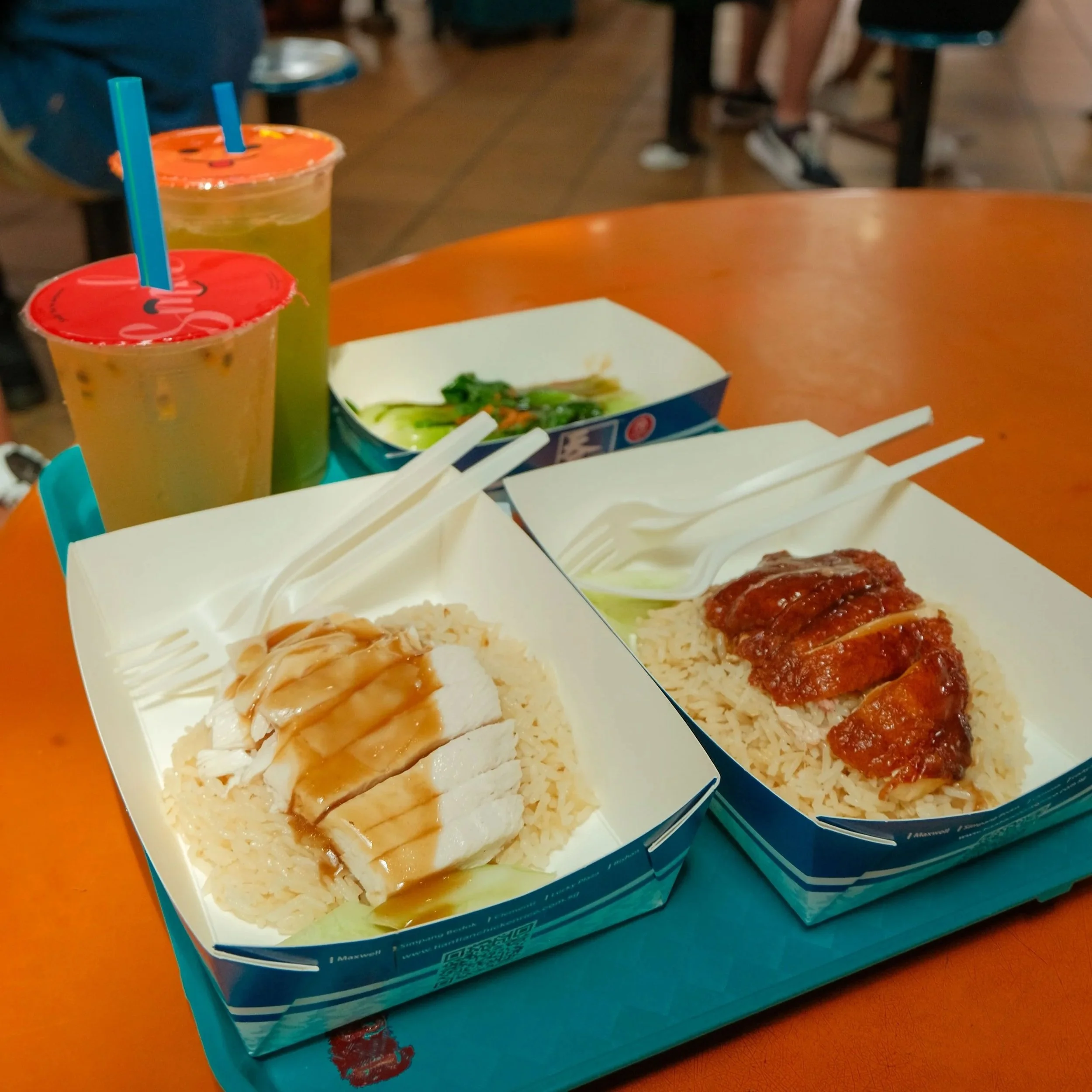
In Chinatown, we stopped by our first hawker center. These open-air food complexes house dozens of individual stalls, many specializing in just one dish - and typically for just a couple of dollars. When a stall only does one thing, you know it has to be good. We got lunch at Tian Tian Hainanese Chicken Rice, possibly the most famous chicken rice stall in Singapore. Anthony Bourdain and Gordon Ramsay have both visited, and it's earned a Michelin Bib Gourmand. The dish is deceptively simple: poached chicken, rice cooked in chicken fat and broth, and a light chicken soup, served alongside chili sauce, ginger paste, and dark soy sauce. We ordered one traditional poached (no skin) and one roasted with skin. Both were incredible - the chicken impossibly tender and silky, the rice rich and fragrant. I usually like eating things the traditional way, but I had to admit, the roasted version won me over.
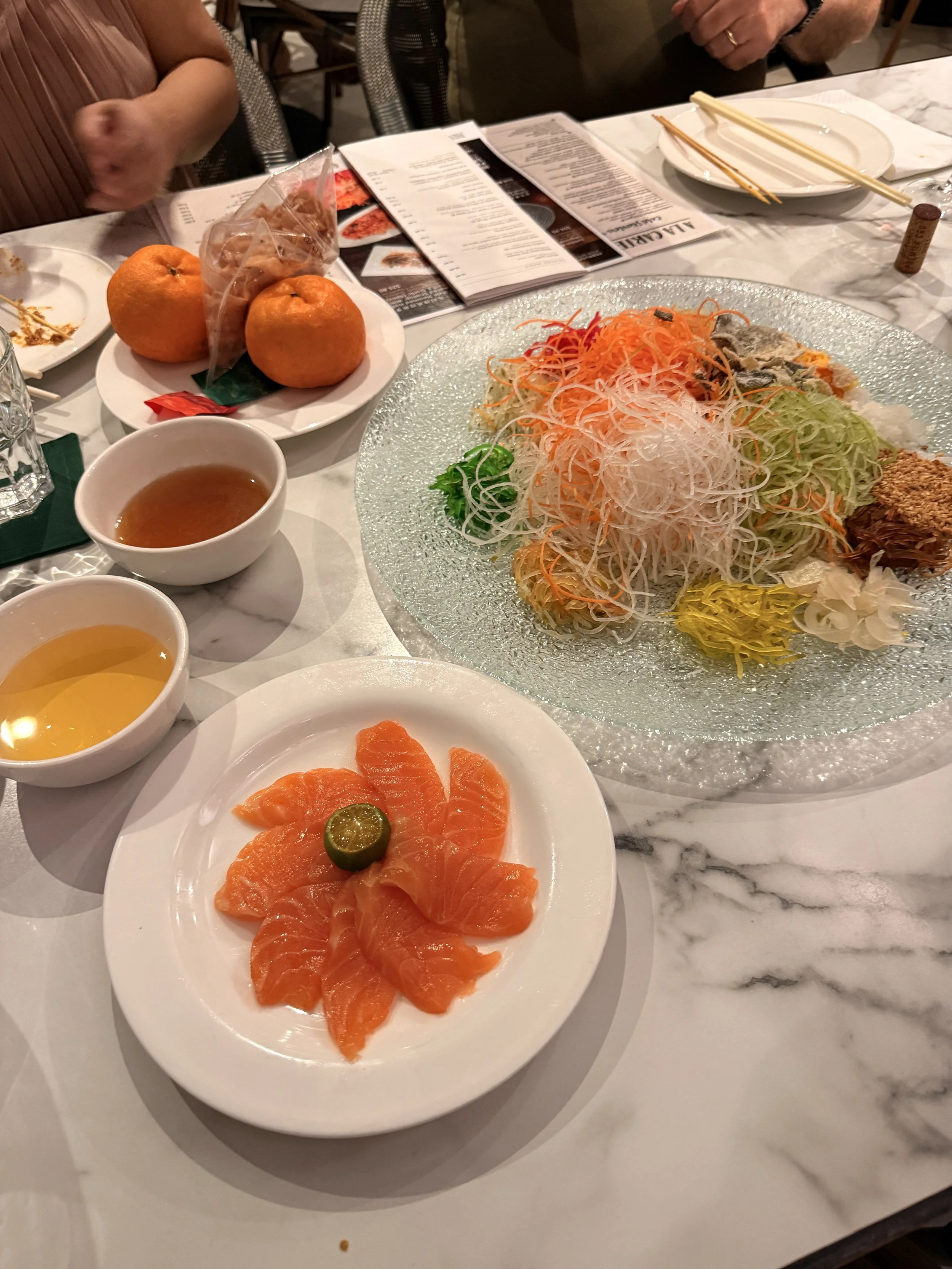
That evening, we had plans to meet up with Hanqing's mom's friends, Uncle Mark and Aunt Dianne, for dinner at Newton Food Centre - the hawker center featured in Crazy Rich Asians where Rachel and Nick eat with their friends at the start of the film. But the rain had other ideas. We pivoted to the nearby Tanglin Club, where they introduced us to yusheng, a festive raw fish salad eaten during Chinese New Year, where everyone gathers around the table with chopsticks and tosses the ingredients high into the air while shouting auspicious wishes in Chinese - "prosperity!" "good health!" "more money!" It was a fun, delicious glimpse into Singaporean tradition. After dinner, the rain finally let up, and we swung by Newton Centre for chendol, a refreshing shaved ice with green rice flour jelly, coconut milk, and red beans.
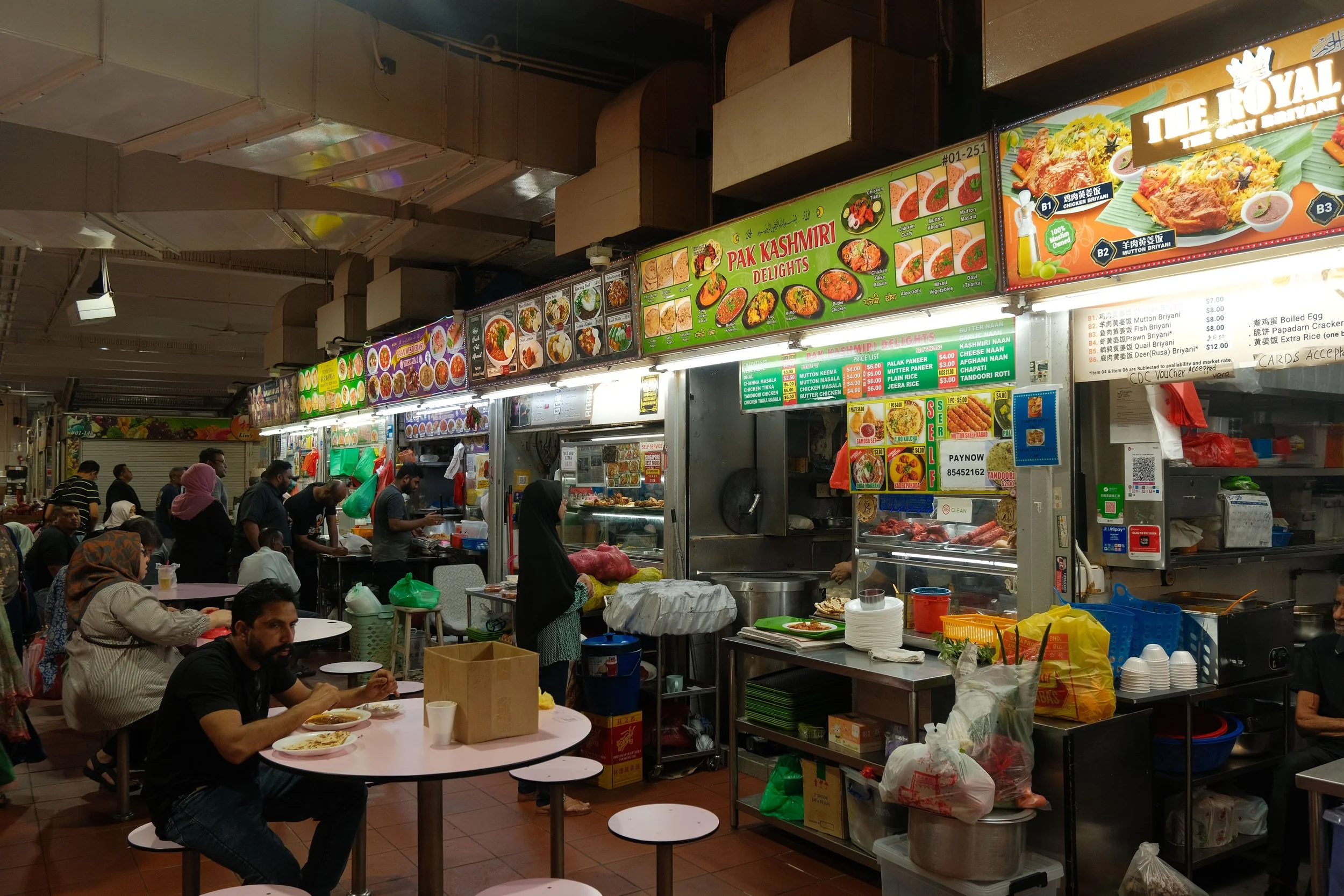
We ended up eating about 80% of our meals in Singapore at hawker centers. Near our hotel in Little India, Tekka Centre became our regular stop for Indian food. Unlike the North Indian food I’m more familiar with in the US (like naan, tikka masala, saag paneer), Indian food in Singapore is predominantly South Indian, reflecting the origins of most of Singapore's Indian immigrant community. Over the course of a week, we worked our way through roti prata (chewy, unleavened flatbread with a texture not unlike scallion pancakes), butter chicken, biryani, and lamb curry. But the unexpected star was the mango lassi, which tasted like pure, rich mango juice - so good we went back for another the next day.
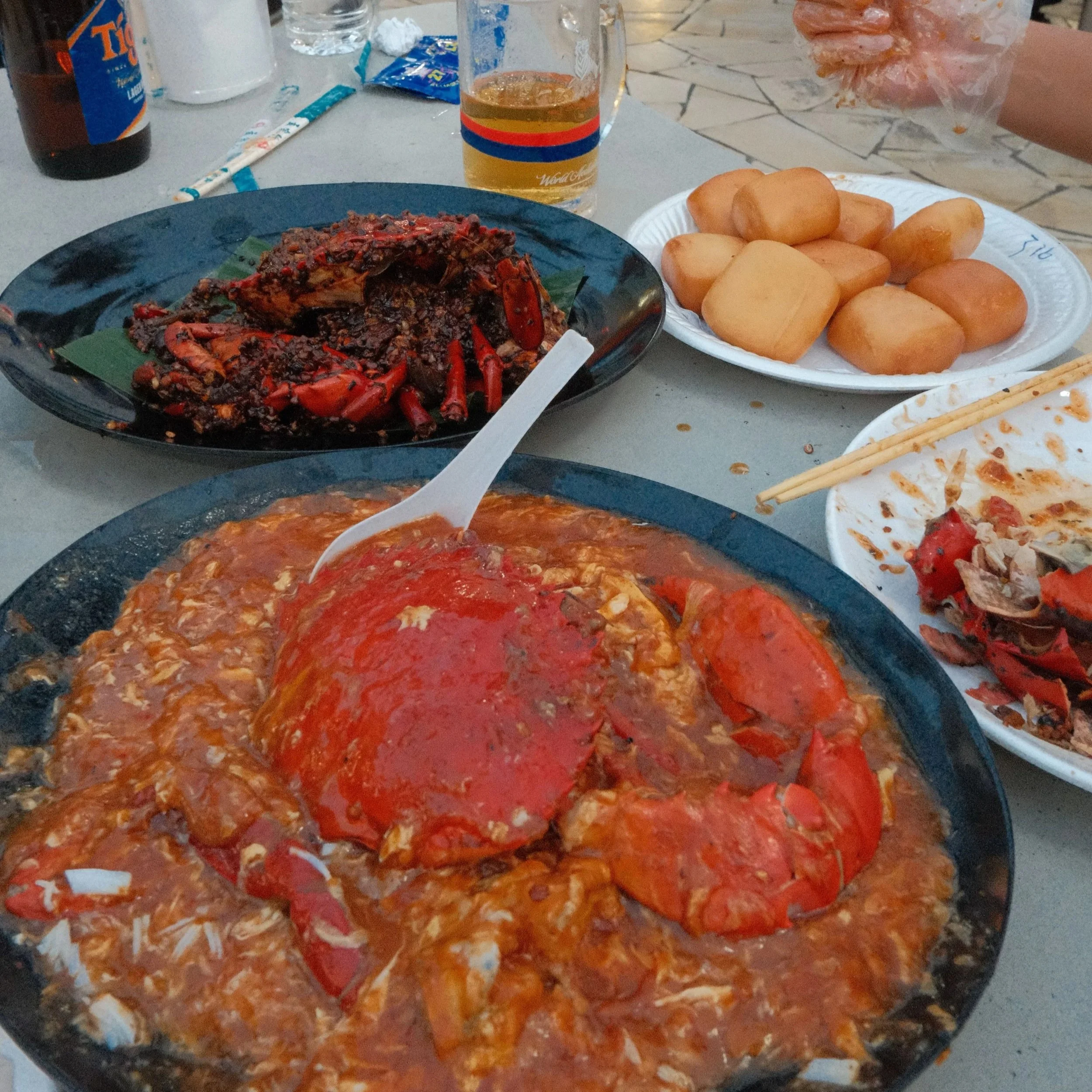
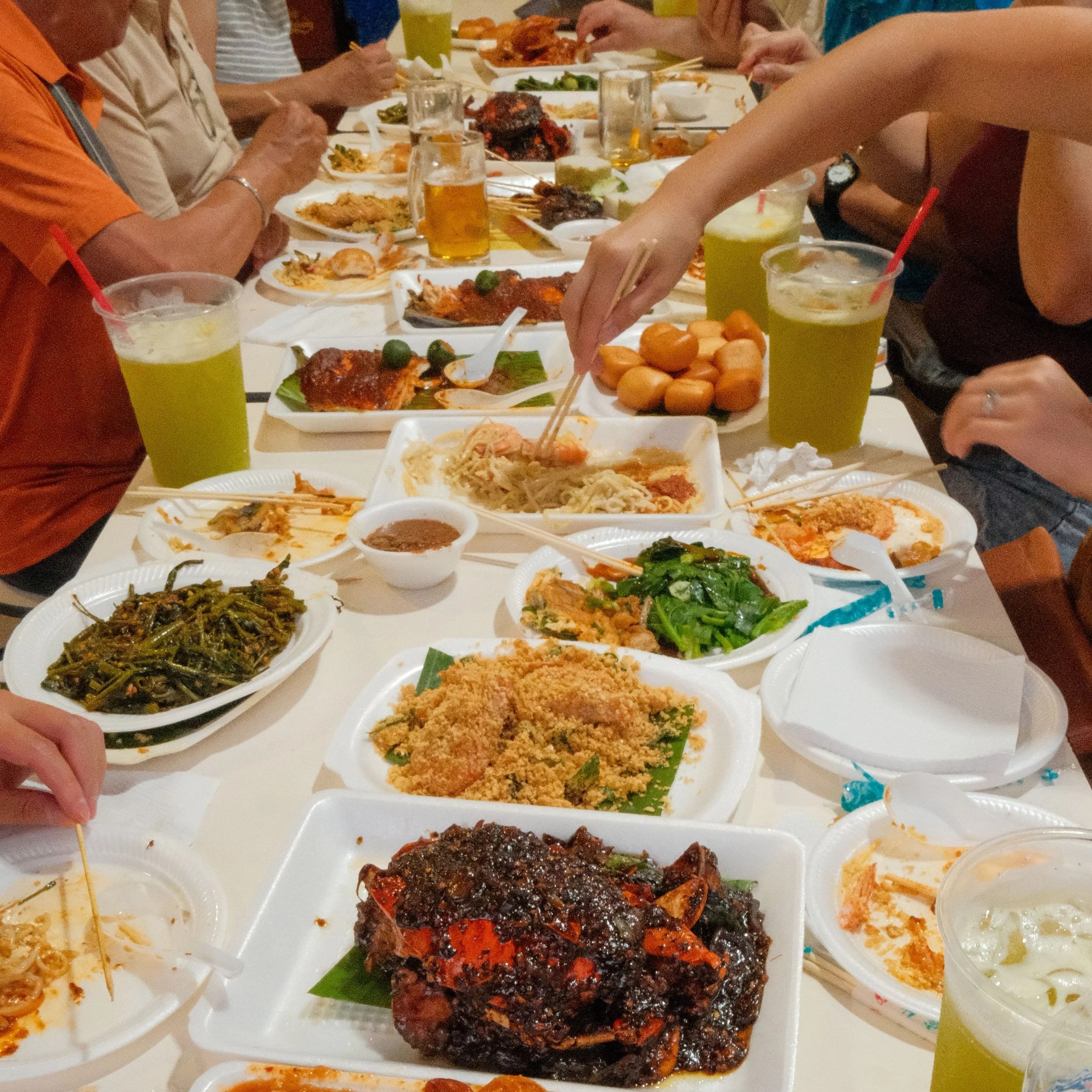
We returned to Newton Centre later in the week to try two of Singapore's most famous seafood dishes: chili crab and black pepper crab. Both are made with mud crab, but they couldn't be more different. Chili crab comes in a rich, thick, sweet-savory tomato-chili sauce; black pepper crab is drier and delivers a sharp, aromatic heat. My favorite part was eating the chili crab with mantou (soft steamed buns) to soak up every last bit of sauce.
On our final evening, Uncle Mark and Aunt Dianne invited us back to Newton Centre with their nephew Brandon, his wife Mel, and Mel's family visiting from the US. It was a different experience eating with locals who know what to order and don't need to look at a menu. Brandon told us he's been coming to one particular stall since he was a kid - not by name, but by the owner, a man whose hair is dyed bright red. Sure enough, a few minutes later, a man with unmistakably red hair appeared and started bringing food. Then more food. Then more. Our table of eight disappeared under plate after plate, and we didn't move for three hours. It was an evening of great food and even better company.

Getting Around and Cooling Down
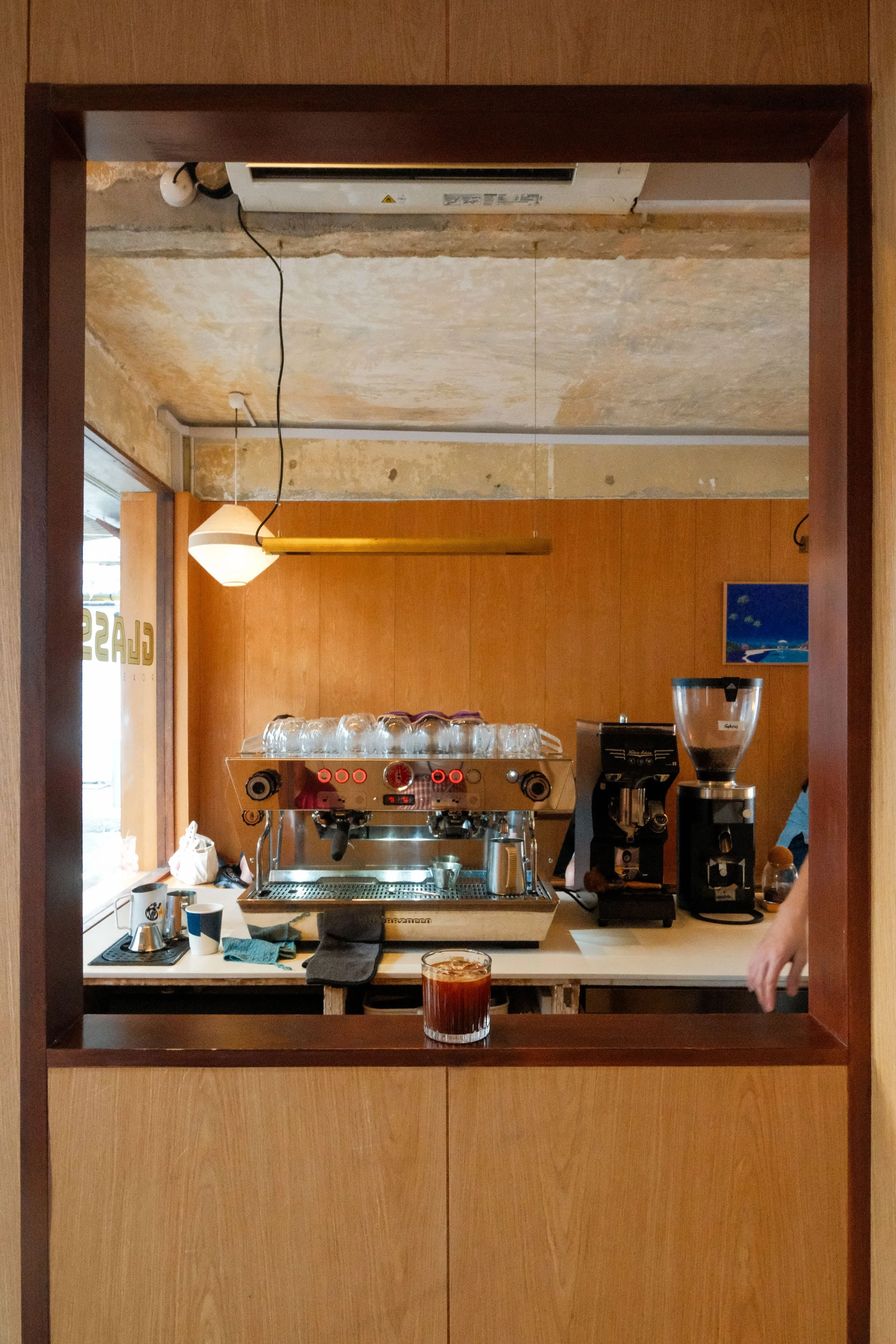
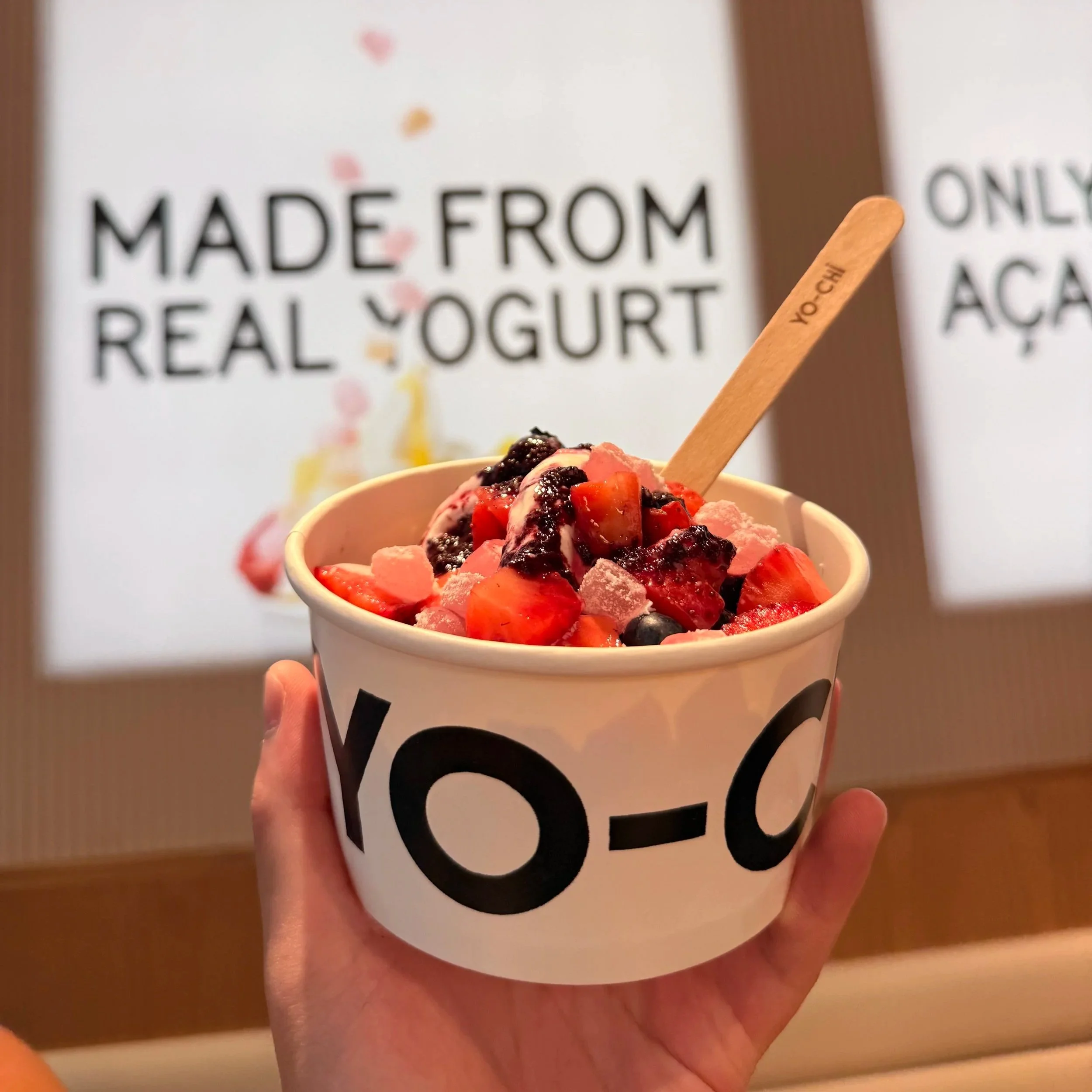
Despite how it may sound, we did more in Singapore than eat. We spent a lot of time exploring and wandering between neighborhoods, though we quickly learned that walking in 85 degree heat and 90% humidity has its limits. To survive, we developed a routine: walk a bit, duck into a museum, café, or mall to cool down, repeat. Malls here are more than just shopping destinations - they're air-conditioned social hubs where people eat, hang out with friends, and wait out the heat. Our favorites lined Orchard Road, Singapore's iconic retail strip, where we also stumbled upon a familiar friend from Australia: Yo-Chi Frozen Yogurt. It's the only location outside of Australia, so of course the line snaked out the door. We waited alongside a pack of high school students and finally got our tart froyo fix after more than a month.
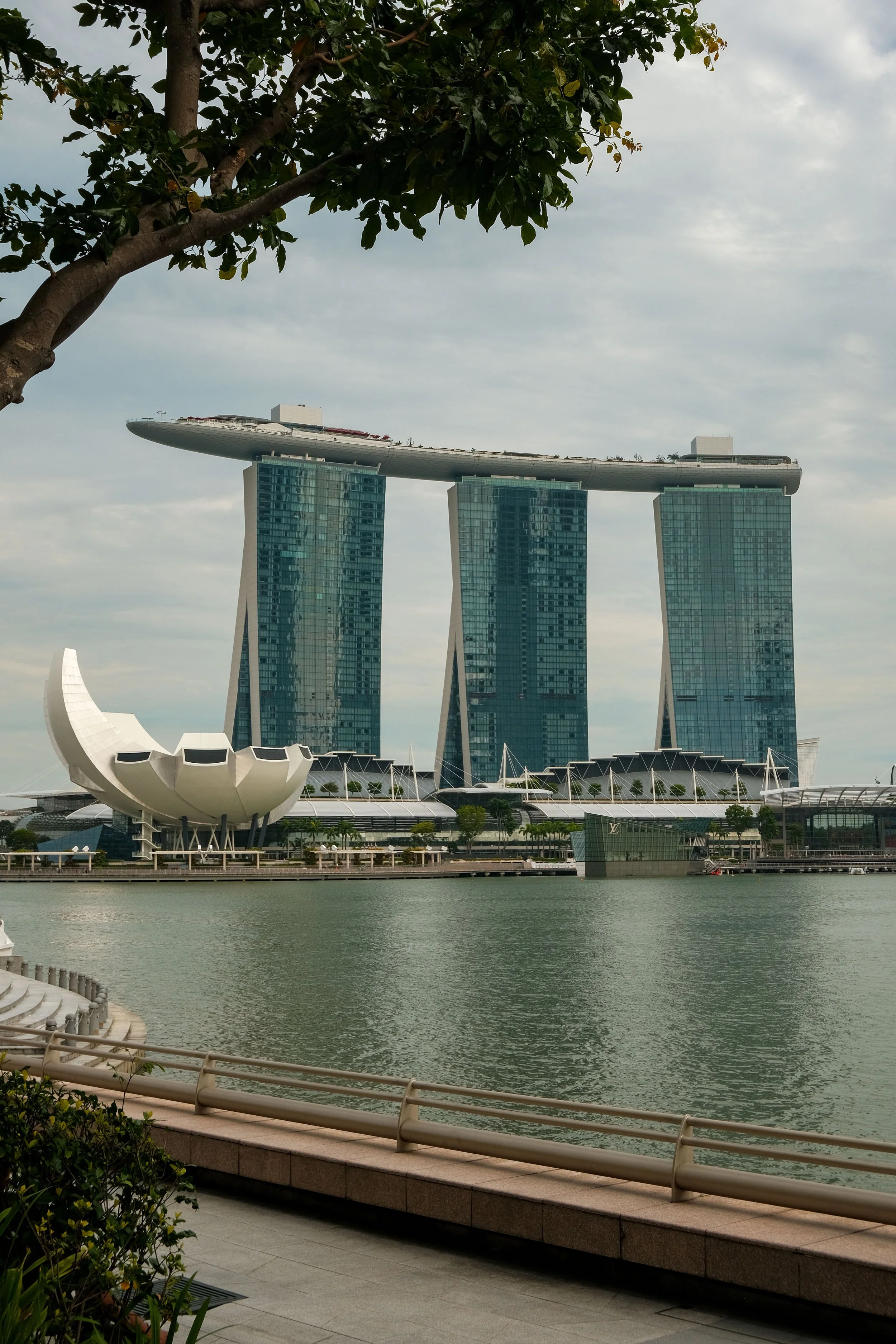
Singapore is compact and futuristic, and nothing captures that more than Marina Bay Sands, the iconic three-towered resort with a hotel, mall, casino, and infinity pool at the top, featured at the end of Crazy Rich Asians during Rachel and Nick's engagement party. We'd been catching glimpses of it from a distance nearly every day, and on our second-to-last evening, we finally made it over for the nightly light and water show: a choreographed spectacle of fountain jets, colorful projections, and lasers set against the glittering city skyline.
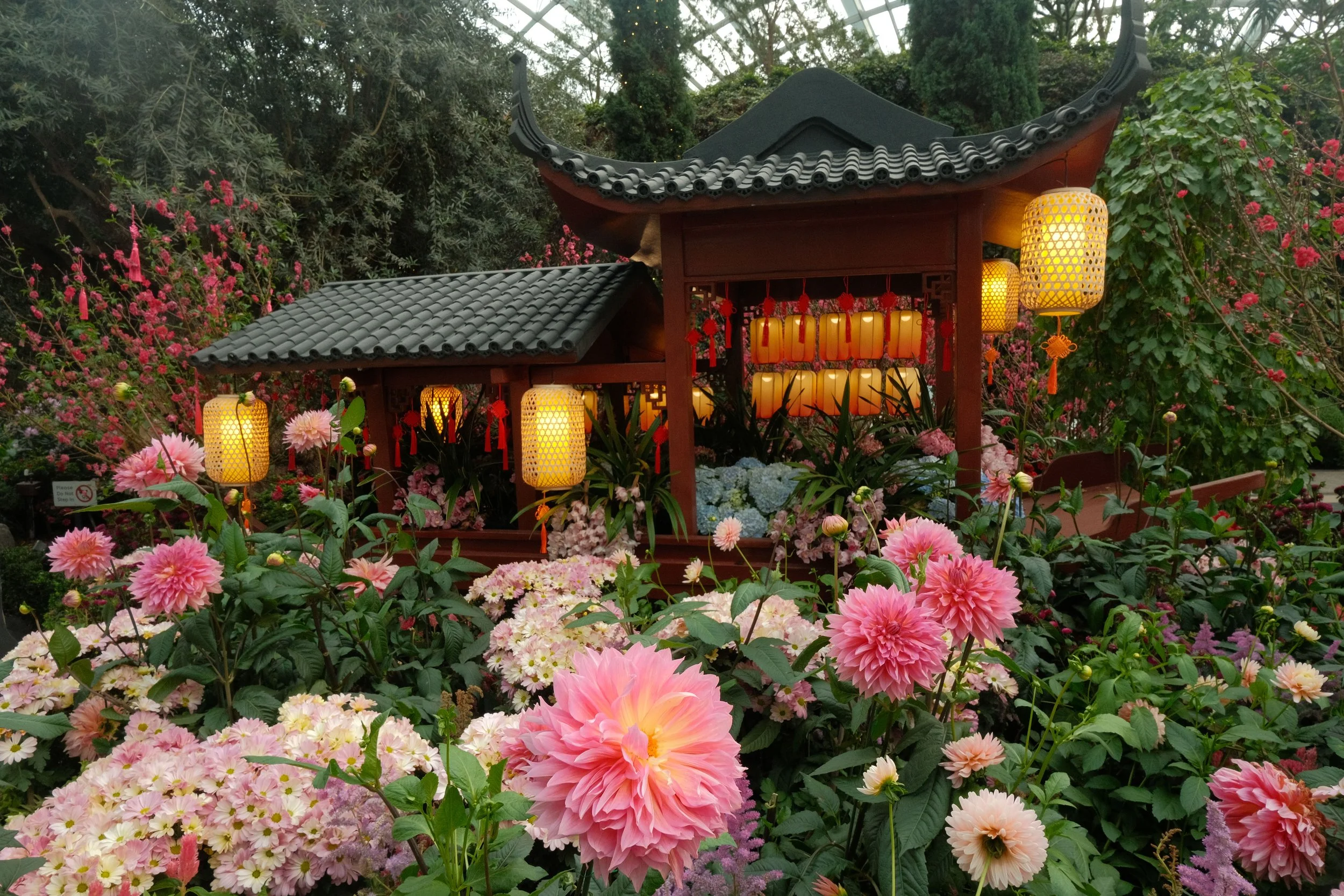
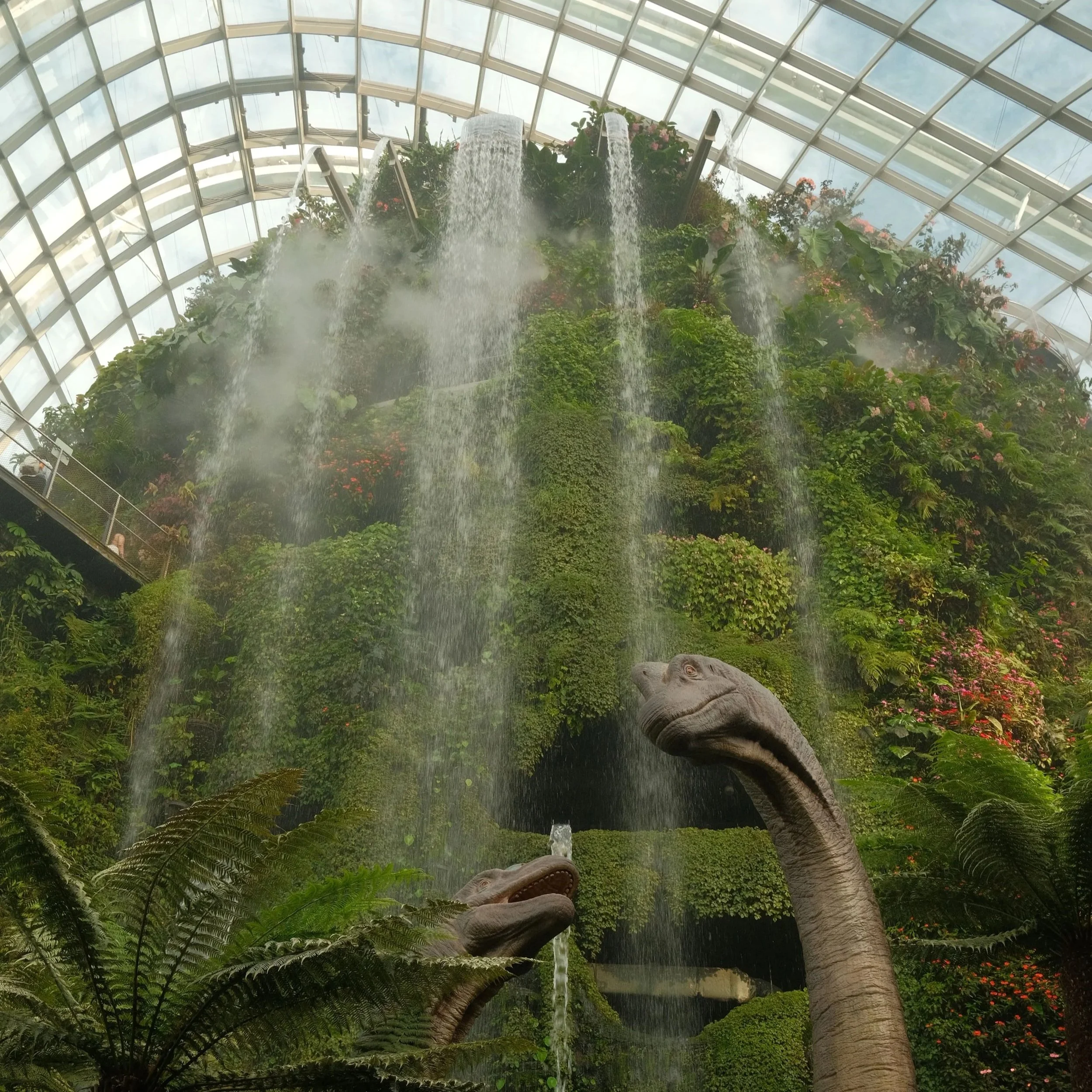
A short walk away is Gardens by the Bay, a sprawling futuristic garden complex that's somehow both over-the-top and genuinely beautiful. We spent an afternoon wandering the indoor, air-conditioned conservatories. The Flower Dome is a massive botanical garden housing plants from Mediterranean and semi-arid climates (olive trees, baobabs, succulents), dressed up with Chinese New Year decorations during this time of year. But the real highlight was the Cloud Forest, which recreates a cool, misty mountain environment under an enormous dome. Walking in felt like stepping into another world: a towering indoor waterfall, a lush "mountain" blanketed in ferns, orchids, and mosses, and life-size Jurassic World dinosaurs lurking in the mist. In the middle of Singapore's relentless heat, wandering through that lush, air-conditioned rainforest felt like heaven.
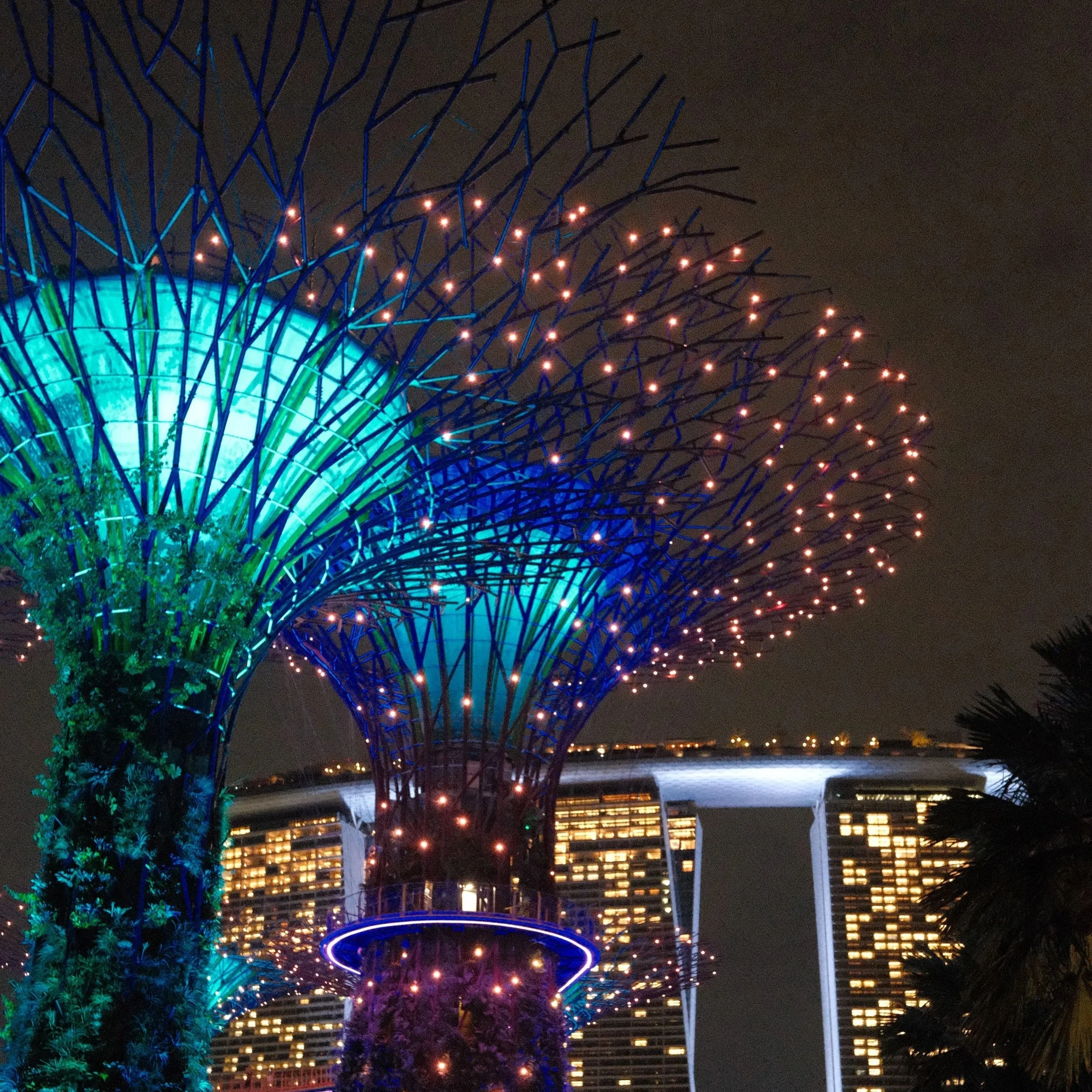
We ended the day at the Supertree Grove, a cluster of towering tree-like structures wrapped in lights and living plants. After dark, we watched them come alive during Garden Rhapsody, a synchronized light-and-music show where the Supertrees glow and pulse against the skyline. It was mesmerizing, and a fitting encapsulation of Singapore’s vision of being a "city in a garden," blending advanced urban technology with sustainability.
With that, we wrapped up our time in Singapore: countless hawker stalls, not a single bad meal, and enough steps in the heat to justify every last bite. Next stop: Cambodia.
Talk soon,
Tanya
