
From Grape Vines to Glaciers: Argentina Part 1
We’ve made it to the final stretch of the first leg of our trip! Argentina, country number thirteen, is quickly becoming one of my favorites. It’s incredibly varied: the vineyards of Mendoza, the dramatic peaks of Patagonia, the cosmopolitan energy of Buenos Aires, and the tropical wonder of Iguazú Falls. We’ll be here for nearly a month and still only skim the surface, so I’m splitting this recap into two parts - this one covering our time in Mendoza and Patagonia, and the next focusing on Buenos Aires and Iguazú.
We started in Mendoza, a region famous for Malbec and other bold red wines. Normally when we arrive in a new country, we track down a fee-free ATM and withdraw enough cash for non-cardable expenses like tips, street food, etc. But getting cash in Argentina has been a unique, complicated situation. ATM fees are steep (over $10), and the withdrawal limit is just $40 at a time. On top of that, with inflation constantly shifting the value of the Argentine peso, there are multiple exchange rates, including the official bank rate, the credit card MEP rate, and the informal “blue dollar” rate (essentially the black market rate for street exchanges, anchored to the US dollar). Nearly every traveler recommended Western Union for the best rate, which felt strange because I’ve only associated it with scams, but the process was surprisingly smooth. I transferred money to myself through the app (the first transfer is free), then breathed a sigh of relief when we picked it up in person. Even the small victories are worth celebrating.
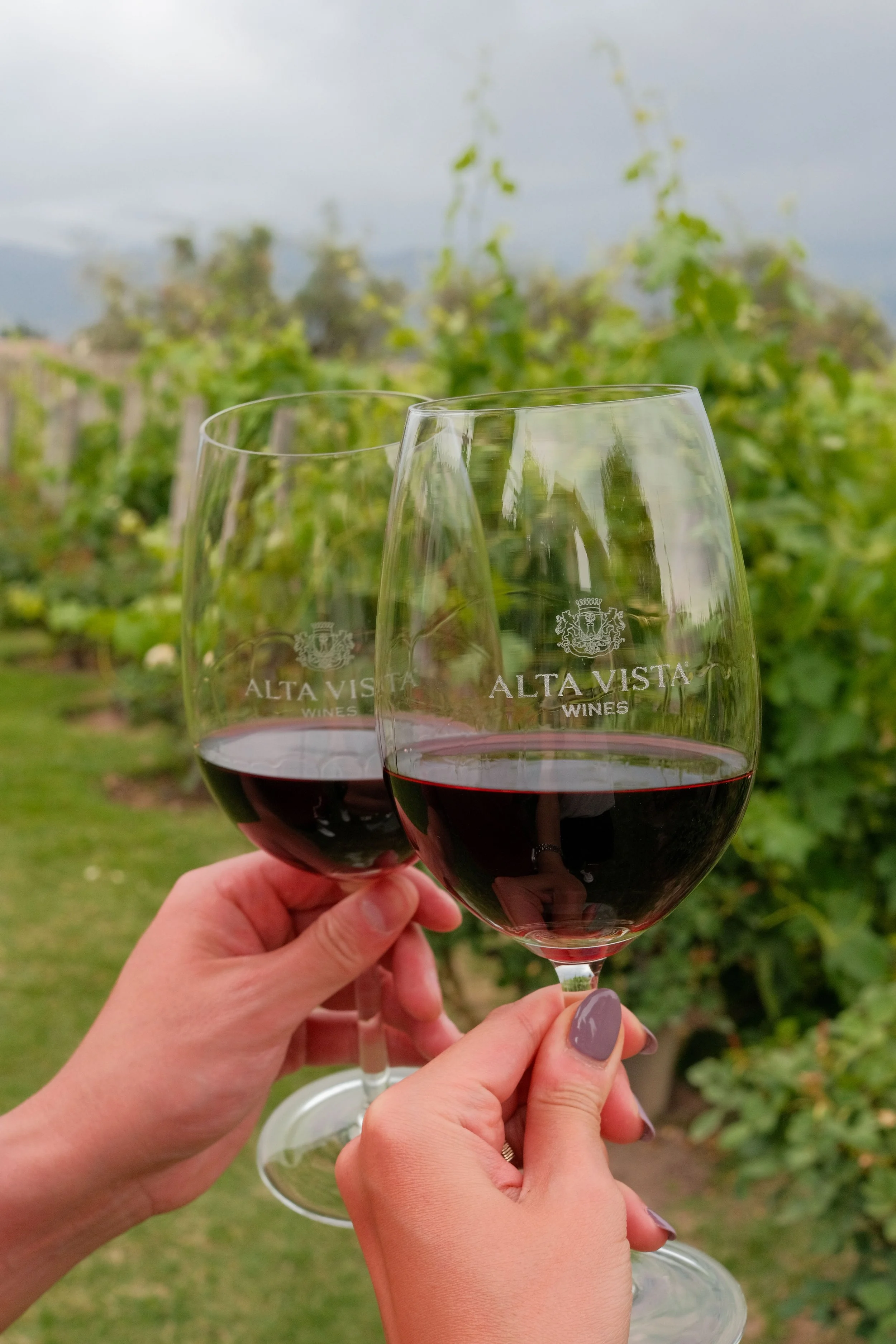
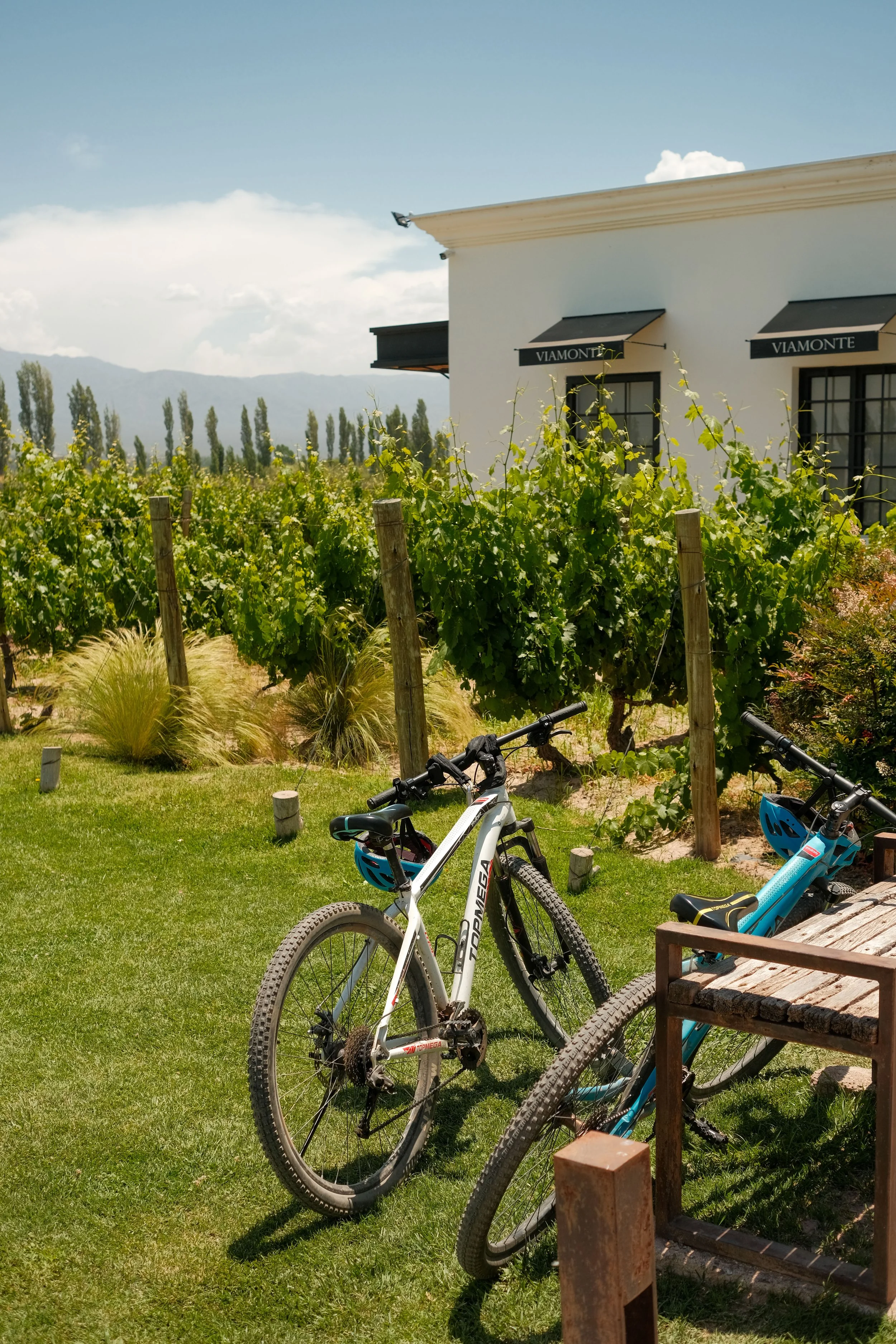
With only three full days in Mendoza, we wasted no time. After settling into our Airbnb, we decided to squeeze in a few wineries. Because Argentina has a strict zero-tolerance policy for drinking and driving, we rented bikes for a self-guided wine tour. To be honest, I’m not sure biking after drinking is much safer, but we survived unscathed. After a week of high-altitude hiking in Peru, it felt amazing to sit in the sunshine with a glass of Malbec, overlooking endless vineyards framed by the Andes. After lunch and a few very generous pours, we biked to a second winery to wrap up the day. Over the next couple of days we kept the wine theme going with more tastings and tours, learning about how Mendoza’s high altitude, dry climate, and mountain water create Malbecs that are juicy, dark-fruited, and incredibly smooth.
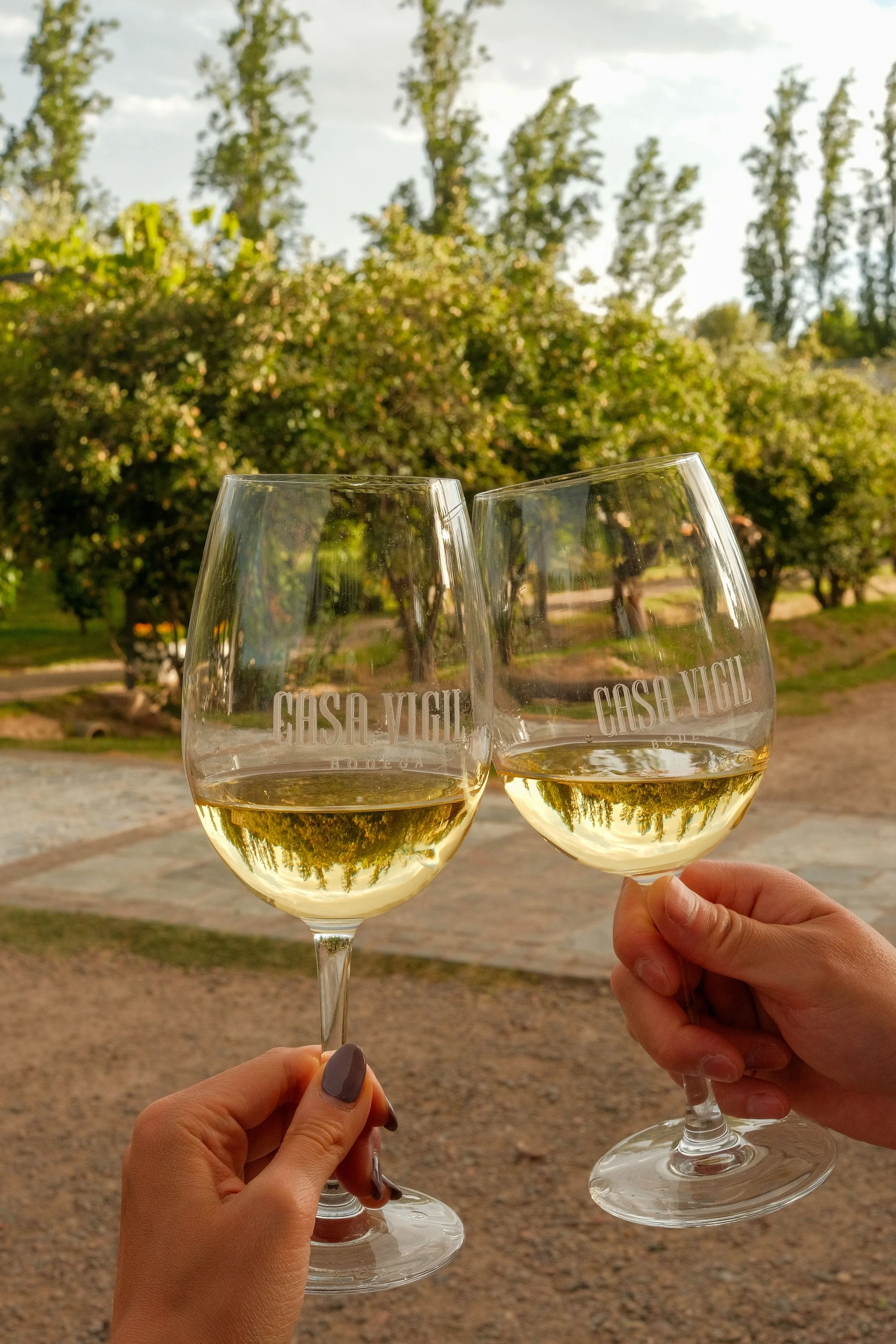
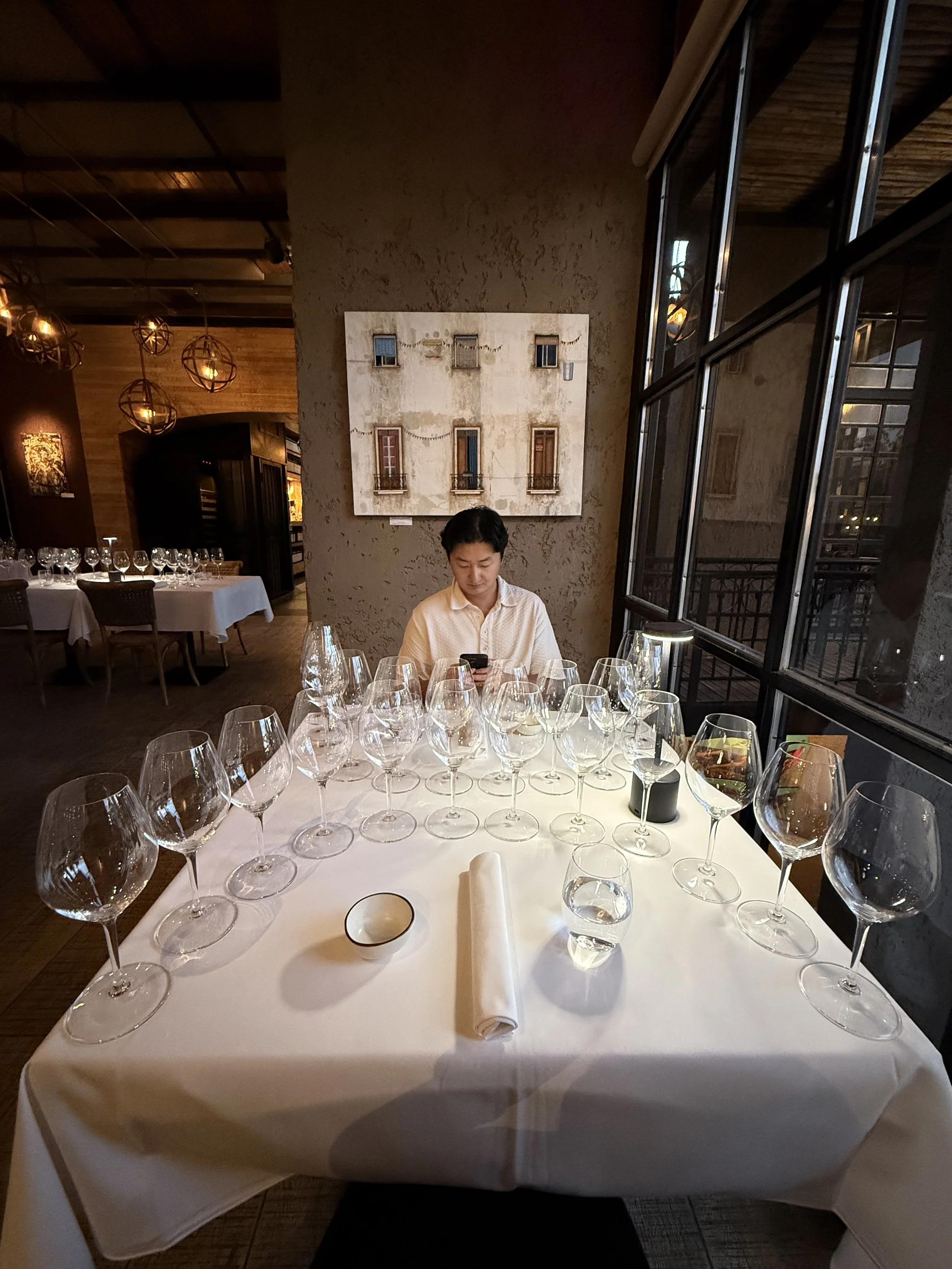
The highlight was a 10-course tasting menu at Casa Vigil. We haven’t splurged on many fancy meals during this trip, but since it was Thanksgiving - our first away from home - we treated ourselves. When we sat down and saw twelve empty wine glasses at each place setting, I genuinely thought they were storing extras on our table, until it hit me that they were for our pairings. The meal was phenomenal. We managed to make it through about 75% of the food and wine before we hit a wall, and honestly, I count that as a win.
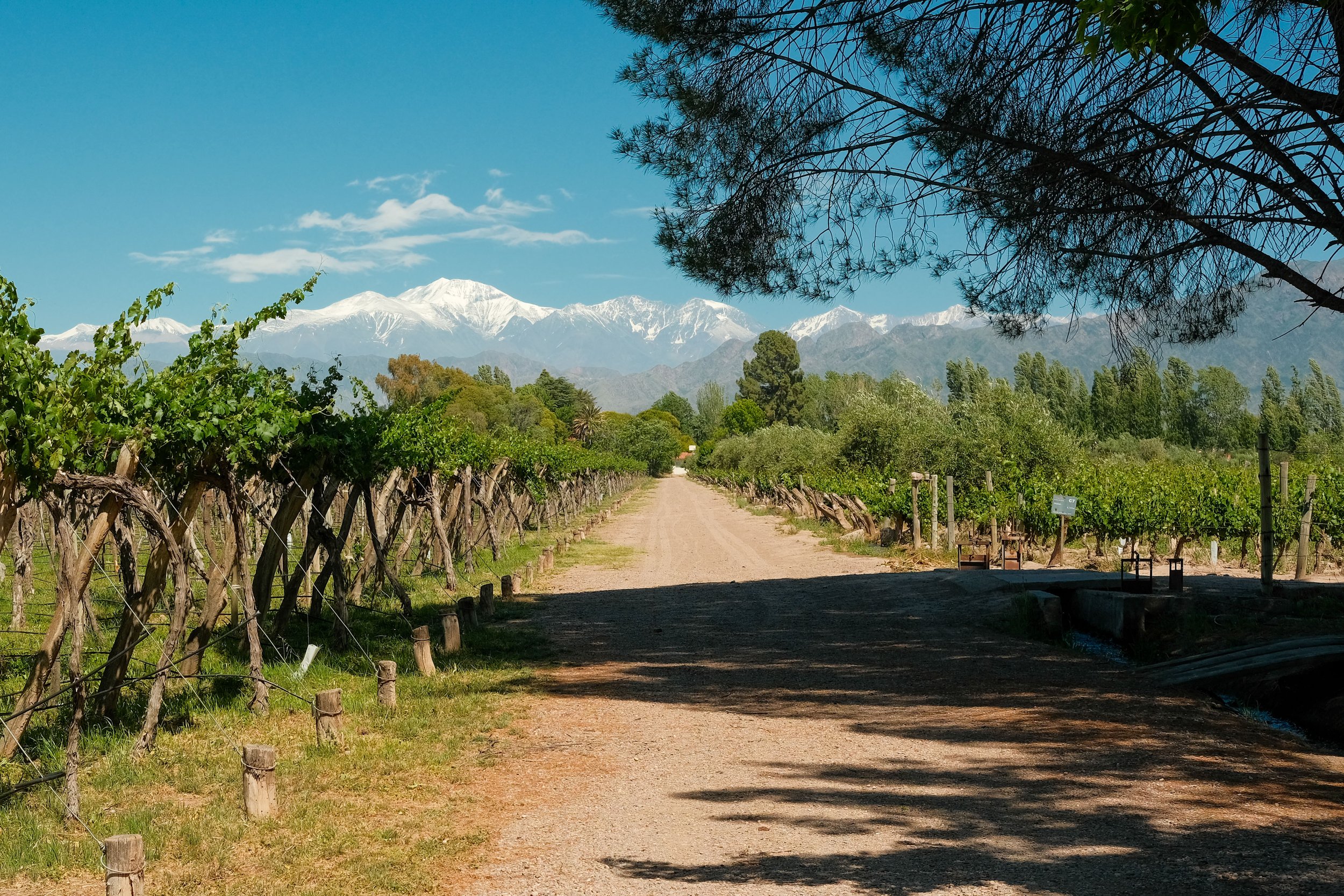
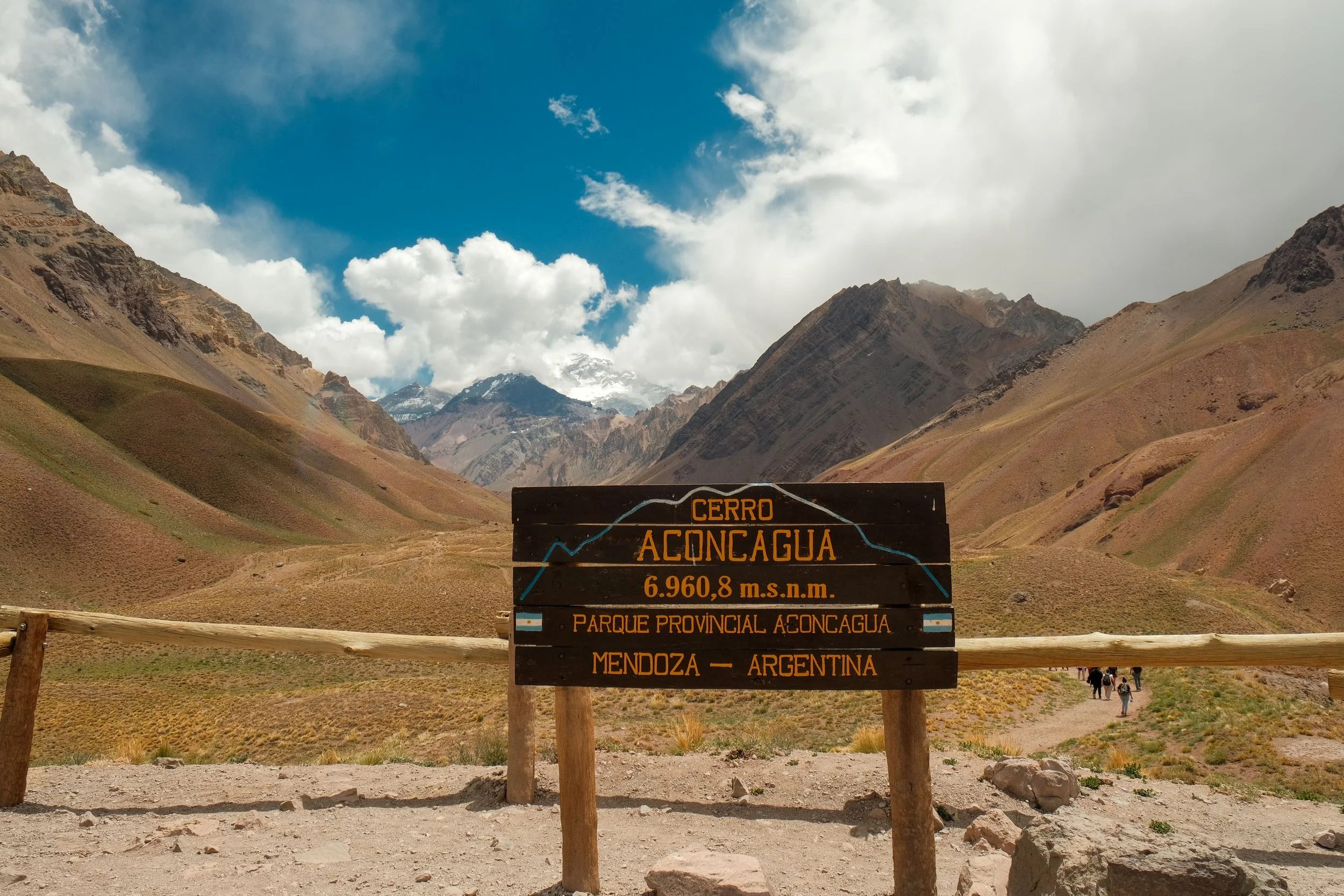
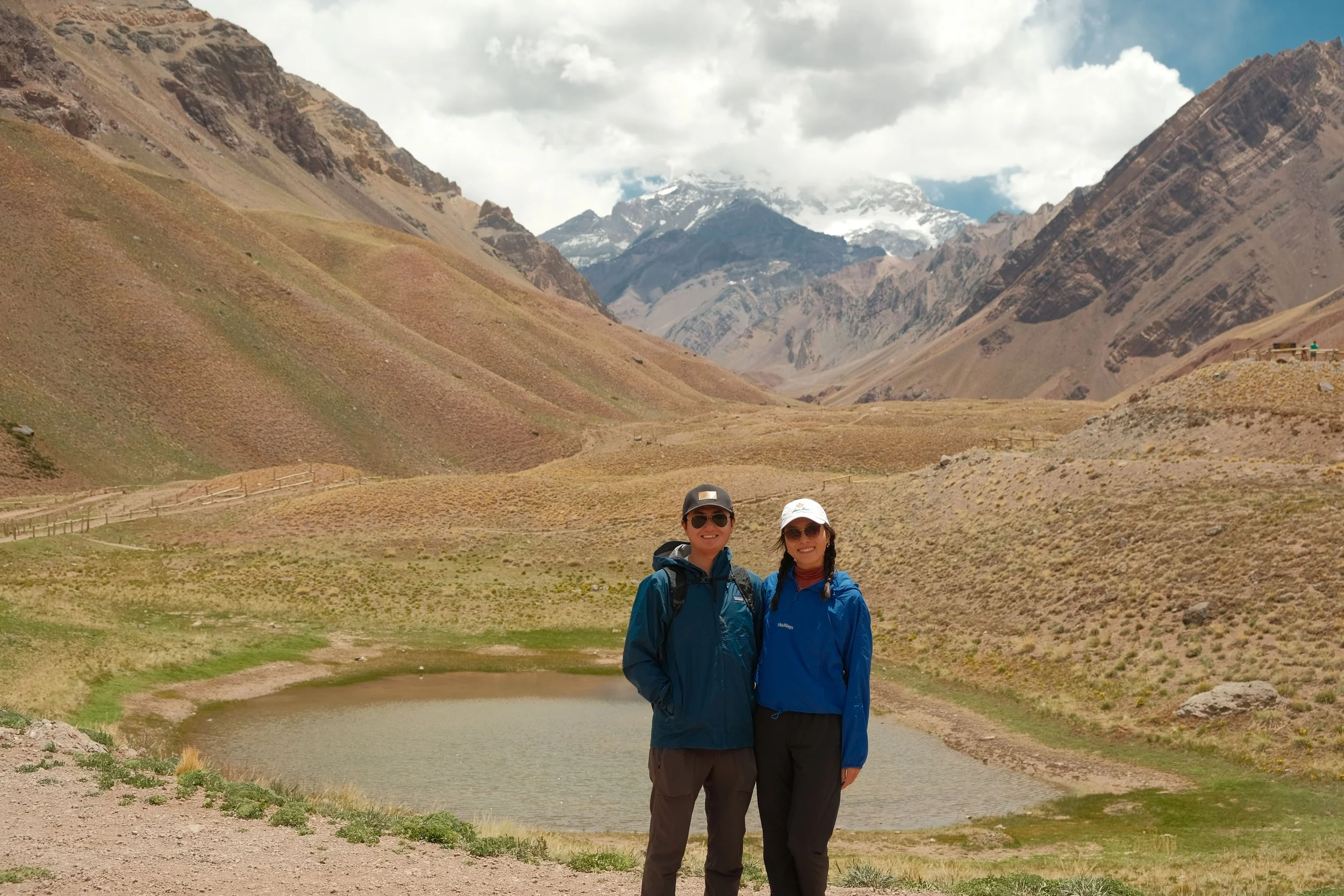
One day we took a break from wine and visited Aconcagua, the highest mountain in South America and one of the Seven Summits (the highest peak on each continent). The drive there was stunning - snow-capped peaks, desert landscapes, and a huge cerulean-blue lake. Aconcagua rises to 6,960 m (22,837 ft) and is considered a “non-technical” climb, but that doesn’t mean it’s easy. Extreme altitude, brutal cold, and unpredictable winds make it a serious undertaking. I’d read a gripping New York Times long-form piece last year about the mysterious deaths of two American climbers there in 1973 (“Ghosts on the Glacier” - highly recommend), so needless to say, summiting wasn’t anywhere near our radar. After arriving, we walked to a viewpoint that showcased everything except the peak, which was hidden by clouds. We decided to wait it out and ate our sandwiches while watching hikers pass by. An hour later, the clouds finally began to peel away, revealing the dramatic outline of Aconcagua. Absolutely worth the wait.
After Mendoza, we flew to San Carlos de Bariloche, a lake-and-mountain paradise at the foothills of the northern Patagonian Andes. The drive from the airport was breathtaking, with deep blue lakes, Swiss chalet-style architecture, and hillsides covered in golden shrubs and blooming lupines in shades of purple and pink. It reminded me a lot of the Austrian and Italian Alps, just with more wildflowers.
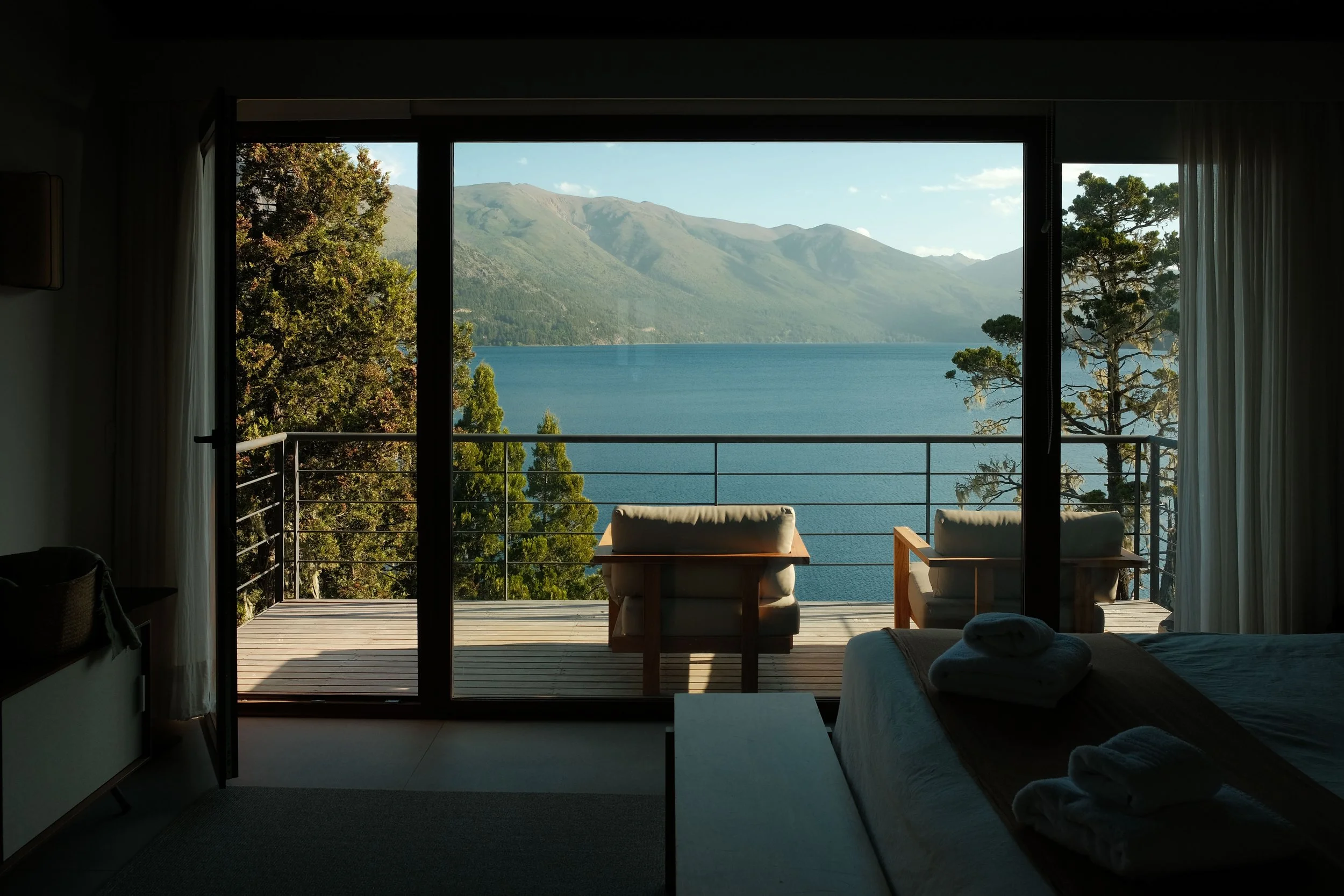
Unfortunately, after three months on the road, it finally happened: I got sick. Nothing serious - a mild fever, body aches, and chills - but enough to force me to slow down. Thankfully, Bariloche was the perfect place to recover. Our Airbnb was a dreamy two-story cabin right on the lake, with floor-to-ceiling windows and a balcony that opened straight onto the water and mountains. It might have been our favorite stay of the entire trip so far, and I swear the view itself was healing. Since we had a kitchen, Hanqing made a big pot of chicken noodle soup, and for a moment it felt like we were back home.
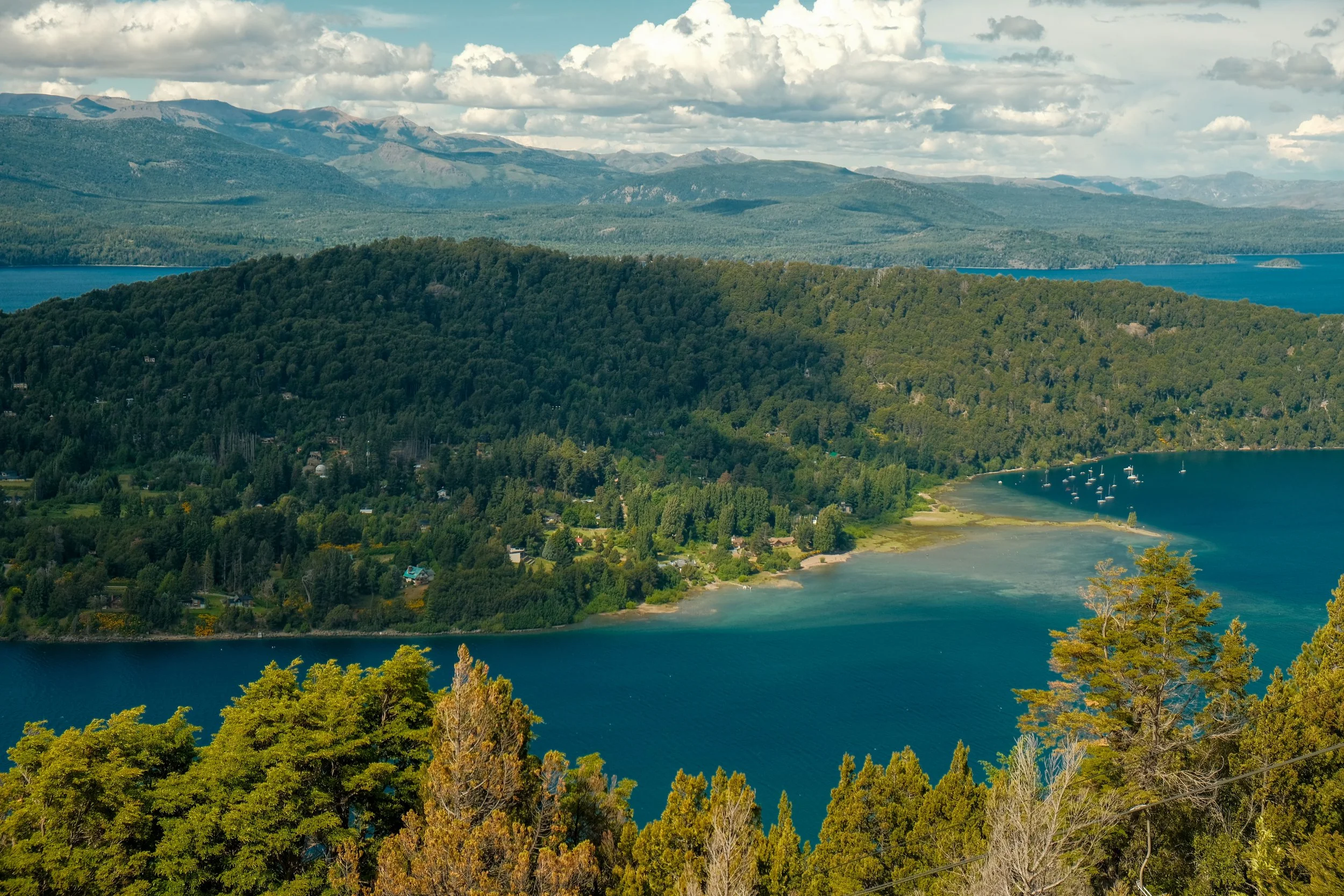
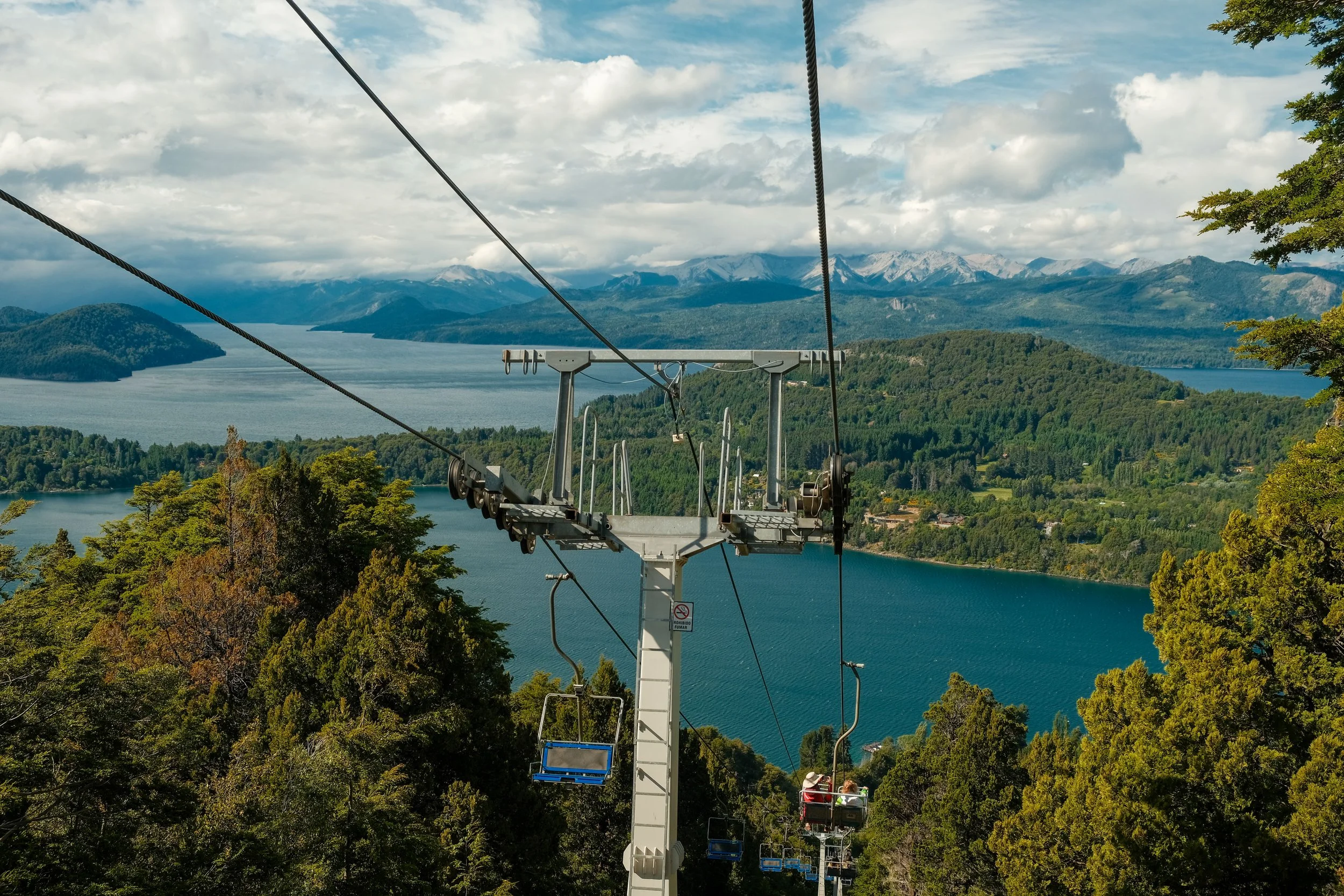
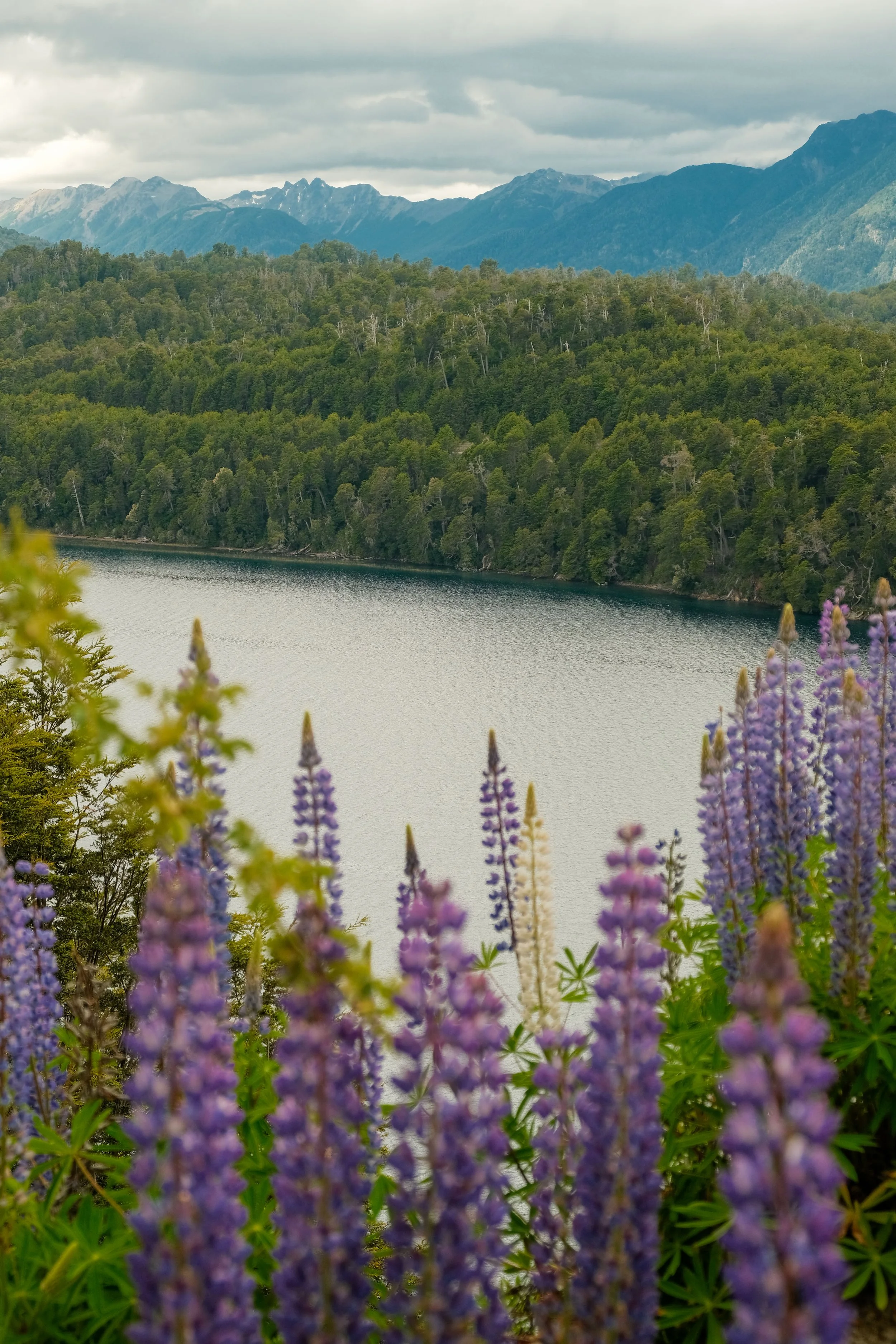
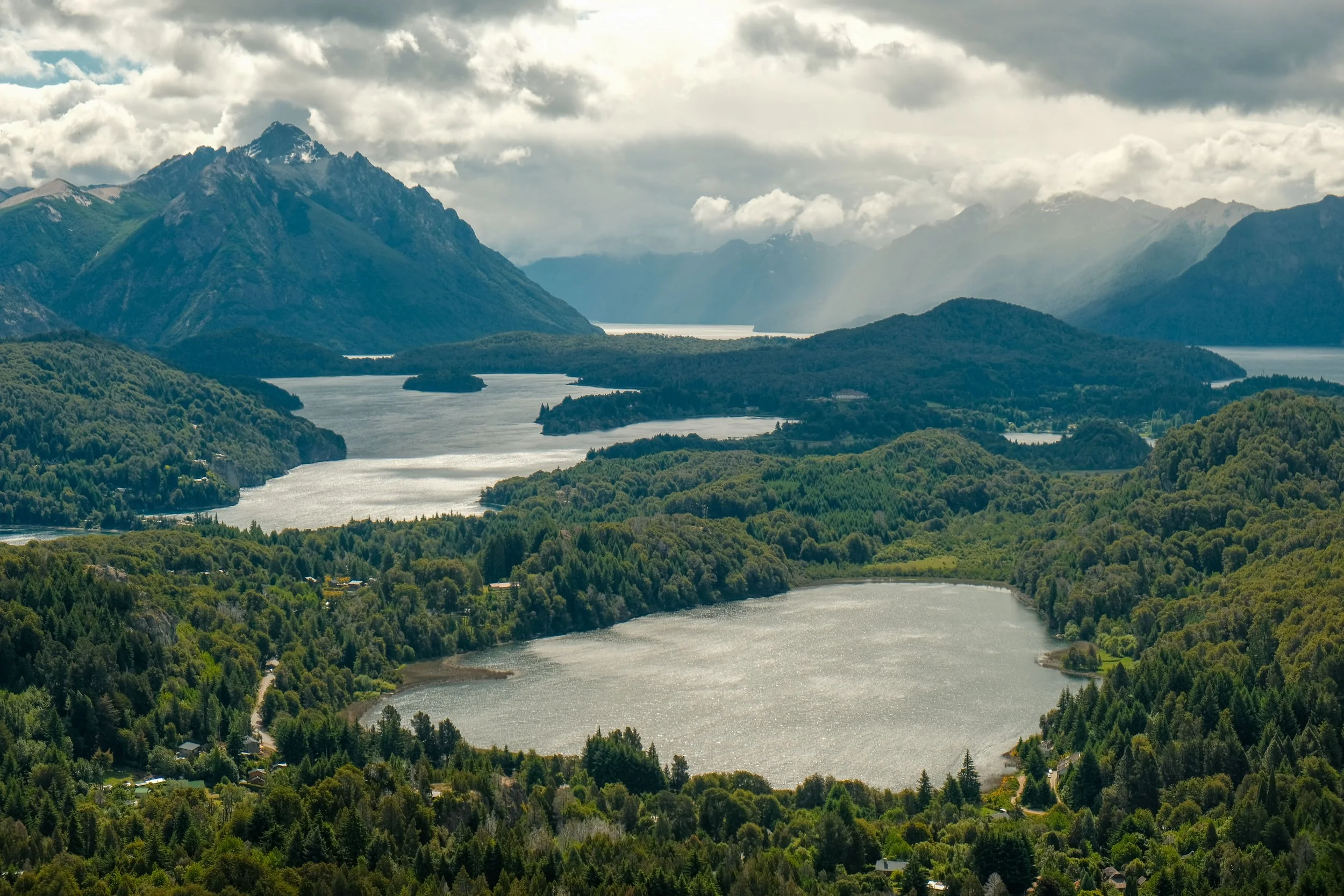
Once I started feeling better, we spent the rest of our time exploring the area. We took the chairlift up Cerro Campanario and were met with one of the most breathtaking views we’ve seen so far - lakes stretching in every direction, deep blue water, and mountains stacked into the horizon. National Geographic once named it one of the “Top 10 Views in the World,” and it’s easy to see why. We lingered for a while, partly for the view and partly because we serendipitously ran into a friend from home (hi Nate!). Afterwards, we drove the Circuito Chico loop along the shores of Nahuel Huapi, a crystal-clear glacial lake, and continued on to the quieter town of Villa La Angostura, stopping constantly for photos of blooming lupines. Nature really does heal.
After four days in Bariloche, we continued south to El Calafate, the gateway to Patagonia’s glaciers. Shortly after landing, we stopped by the Glaciarium Ice Museum to learn more about glaciology. I knew glaciers were essentially giant hunks of ice, but I hadn’t realized how they form - decades (or even centuries) of snow compressing into dense, recrystallized ice that slowly flows downhill like a frozen river, carving out valleys and storing huge amounts of freshwater along the way.
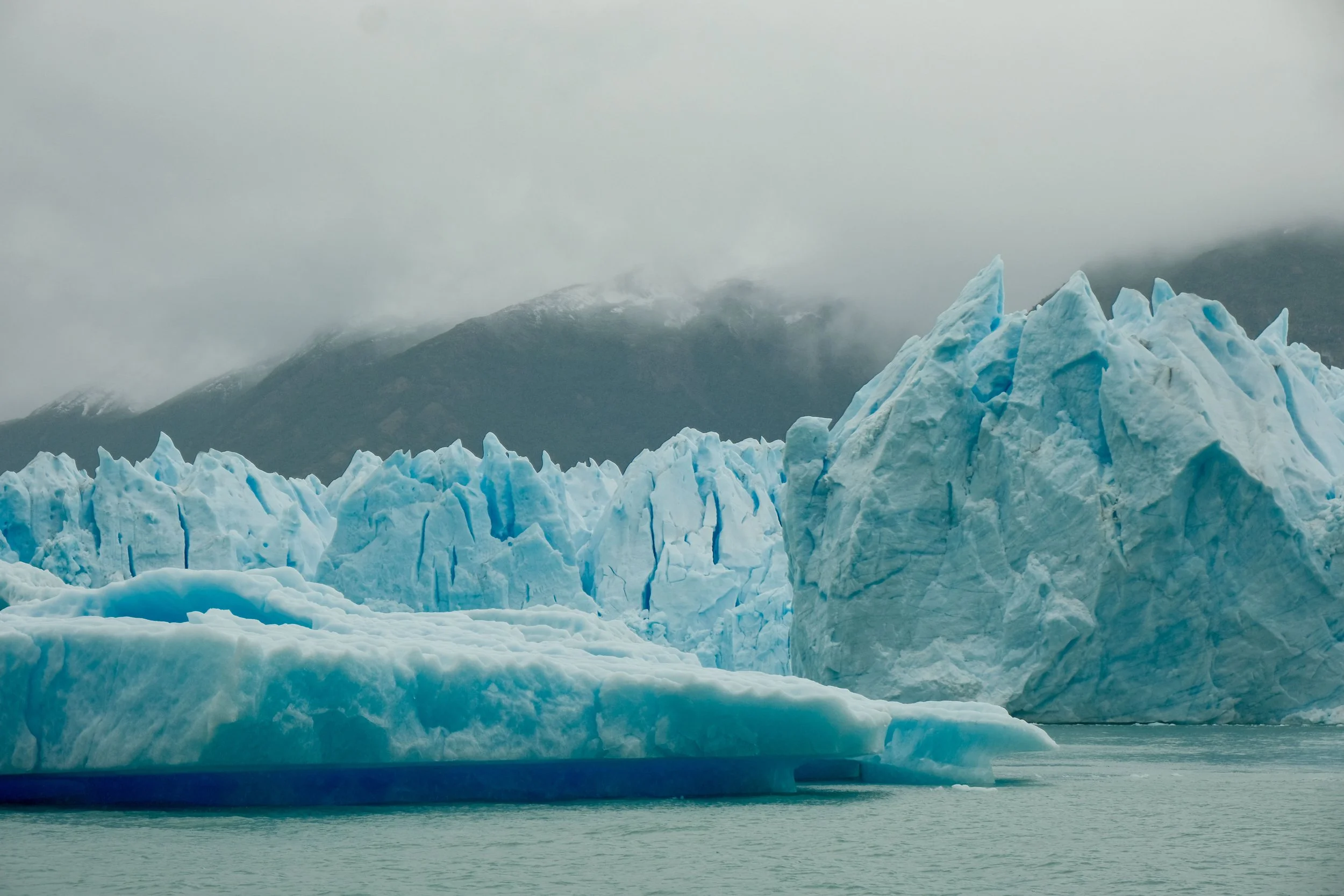
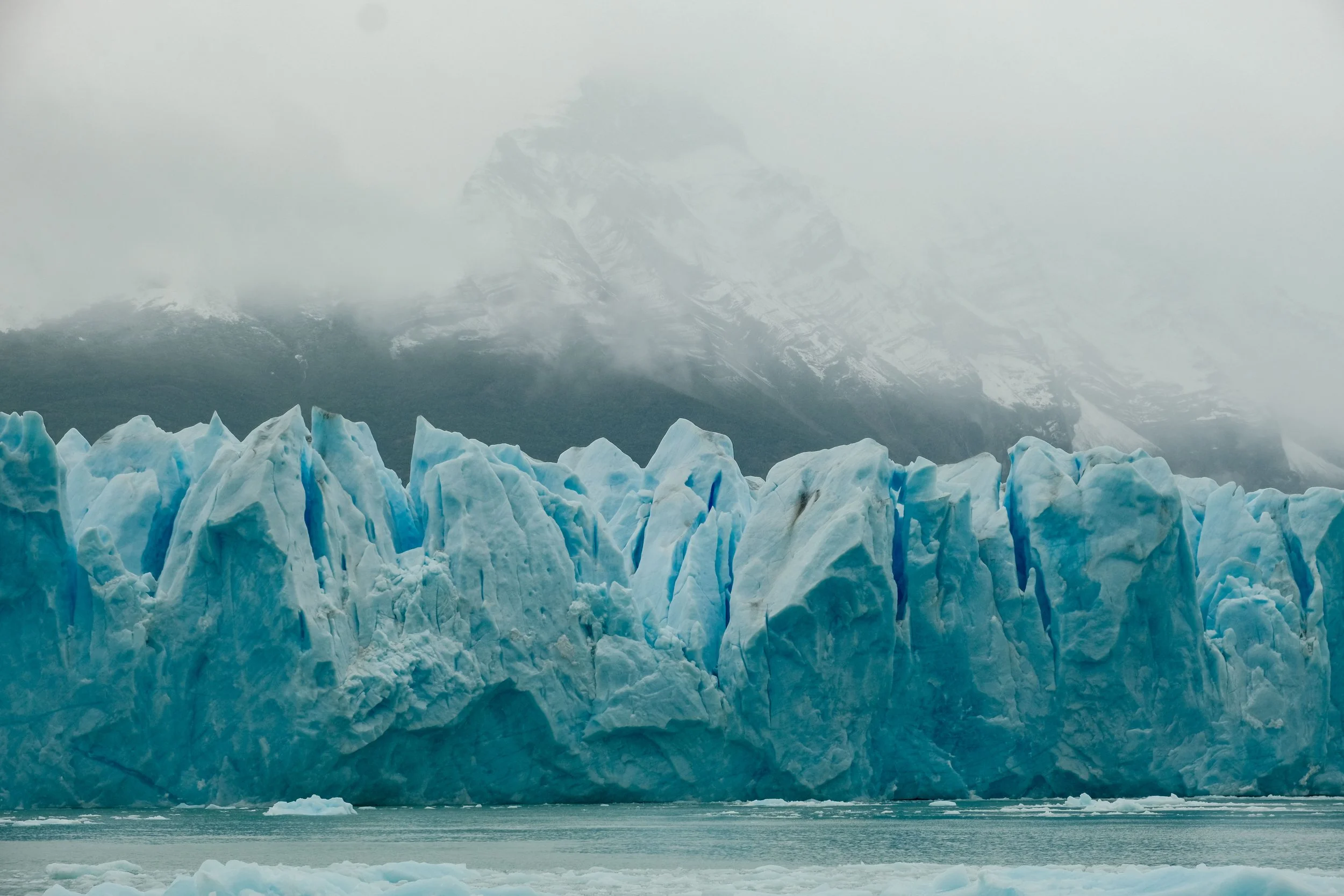
The next day, we went to see the star of the region: the Perito Moreno glacier. We took a boat to get close to the 70-meter-tall ice wall, glowing an unreal electric blue. Perito Moreno was long considered stable, defying the trend of glacial retreat, but recent studies show it has begun losing mass since around 2019 due to climate change. As it shrinks, its contribution to nearby rivers and lakes will decrease, affecting water resources, agriculture, and hydropower in the area - a sobering reminder of how widespread the impacts of climate change have become.
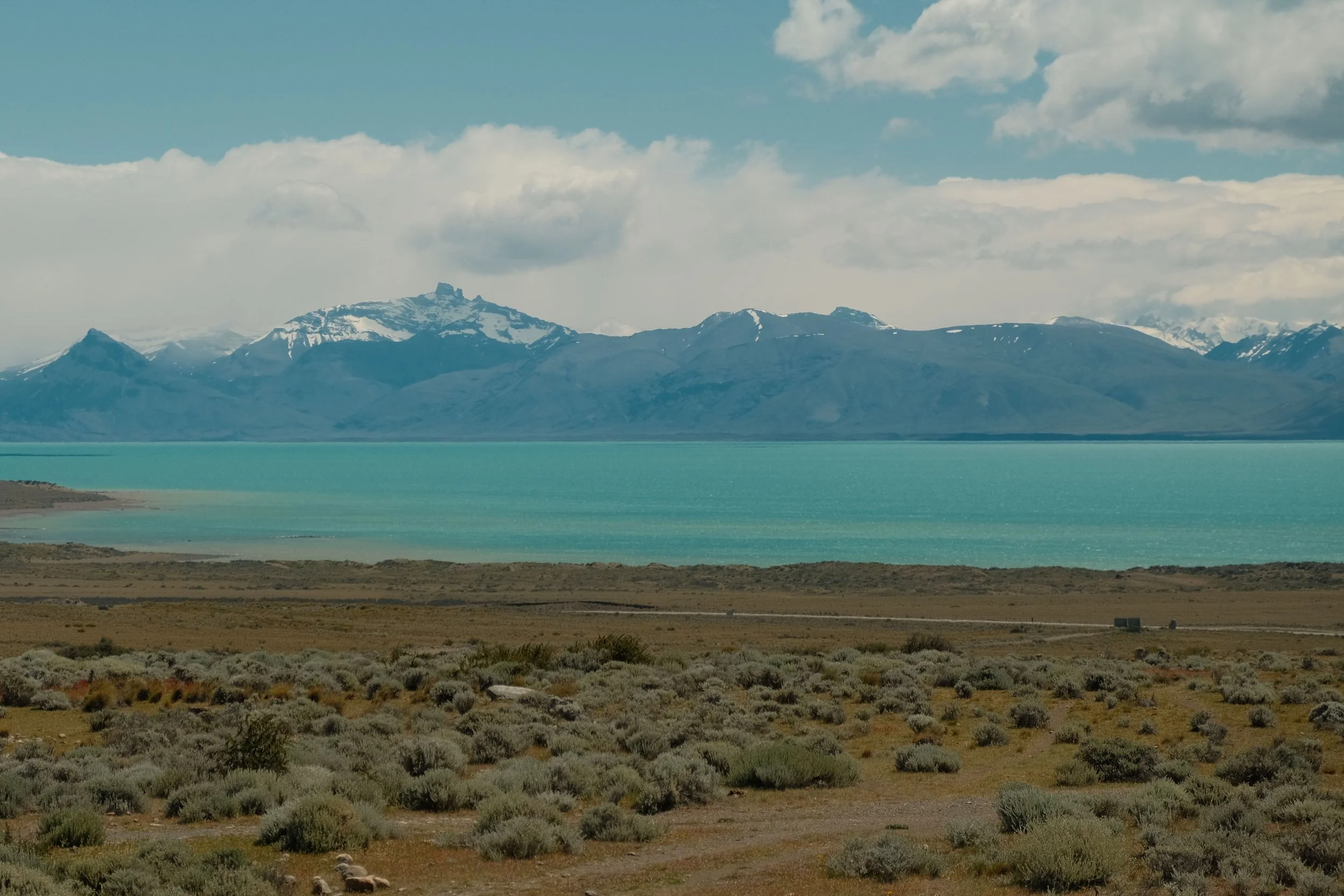
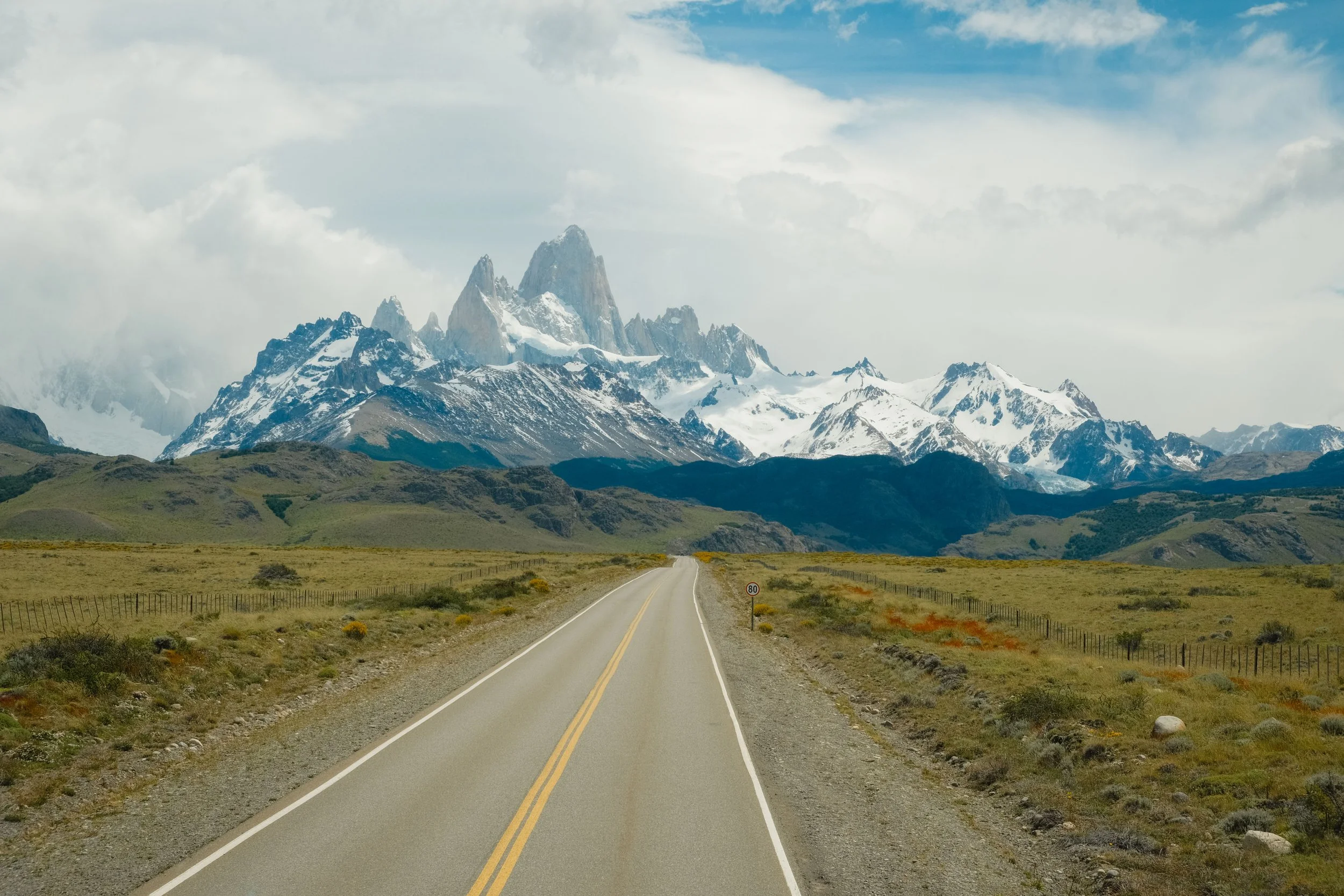
And now we’re in El Chaltén, the grand finale of our Patagonia adventures. The bus ride here from El Calafate was maybe the most beautiful we’ve ever taken. Because Hanqing booked early, we snagged the front-row seats on the top deck, giving us panoramic views as the scenery shifted from glacial lakes to wide plains to the dramatic reveal of Mount Fitz Roy rising above the valley.
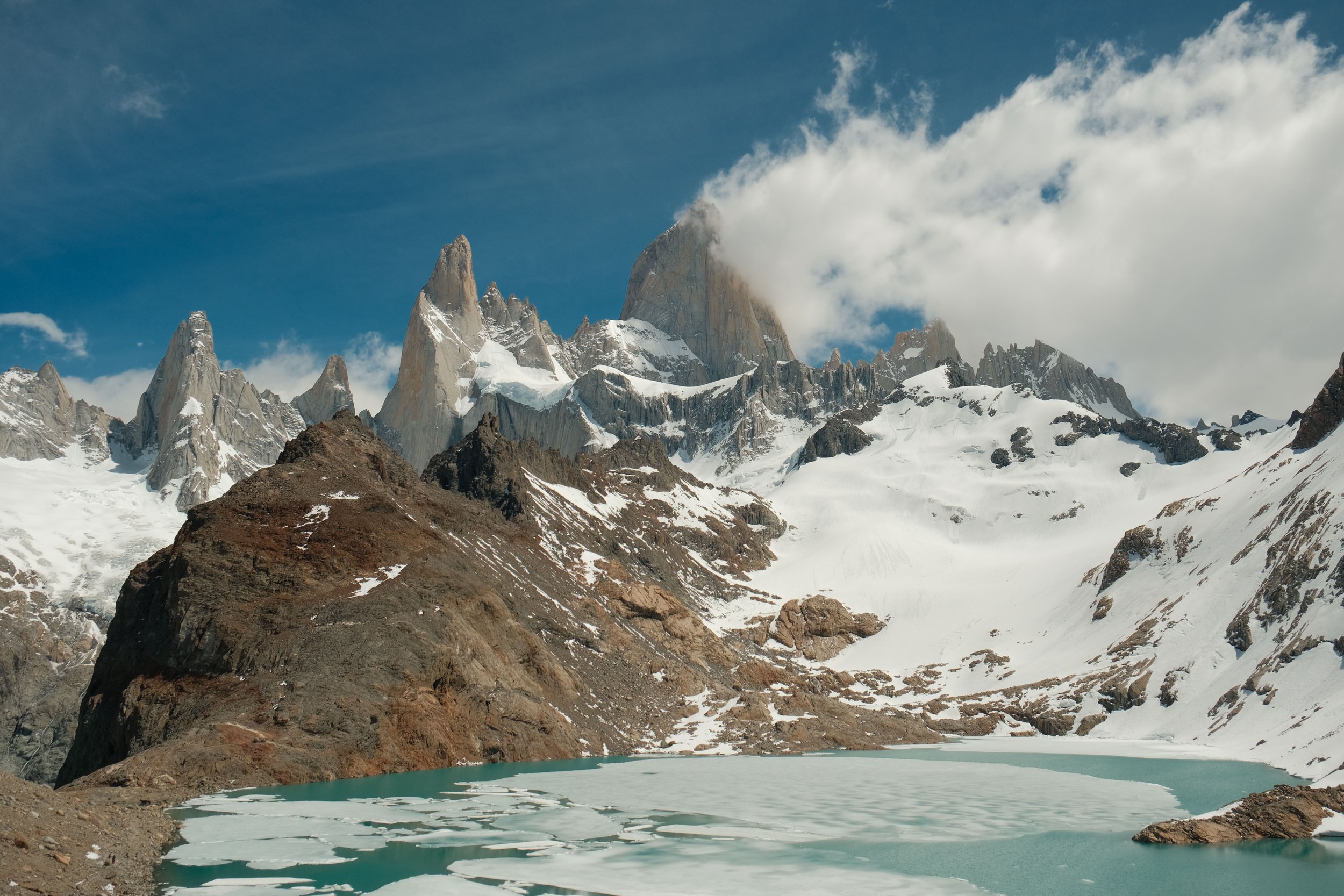
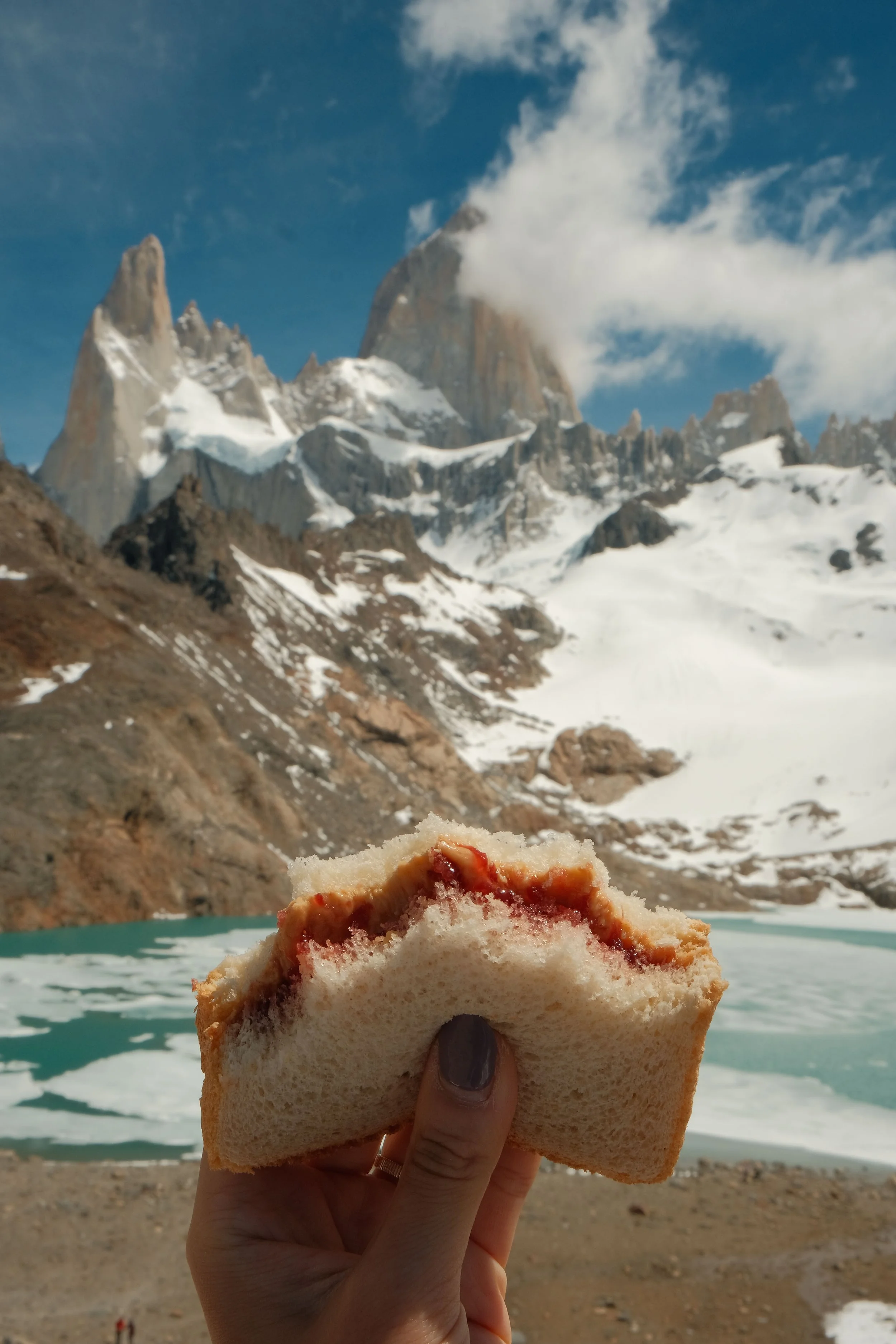
On our first full day, with perfect weather, we tackled the famous Laguna de los Tres hike to the base of Fitz Roy - the jagged skyline you might recognize from the Patagonia clothing brand logo. The first seven miles were mostly flat and gentle, but the final ascent was a steep, rocky grind. The payoff, though, was amazing: Fitz Roy’s granite peaks rising above a bright turquoise glacial lake. We parked ourselves on a boulder, ate our PB&J sandwiches, and soaked in the view. A stubborn cloud clung to the highest peak at first, but after about half an hour, it finally drifted away. We felt extra lucky when a guy nearby mentioned he’d started at 5 a.m. and waited three hours at the top for the clouds to clear. After taking it all in (and snapping the requisite Patagonia-gear-in-Patagonia photo), we made the long seven-mile trek back. I was completely exhausted by the end, but it was one of the most rewarding hikes I’ve ever done.
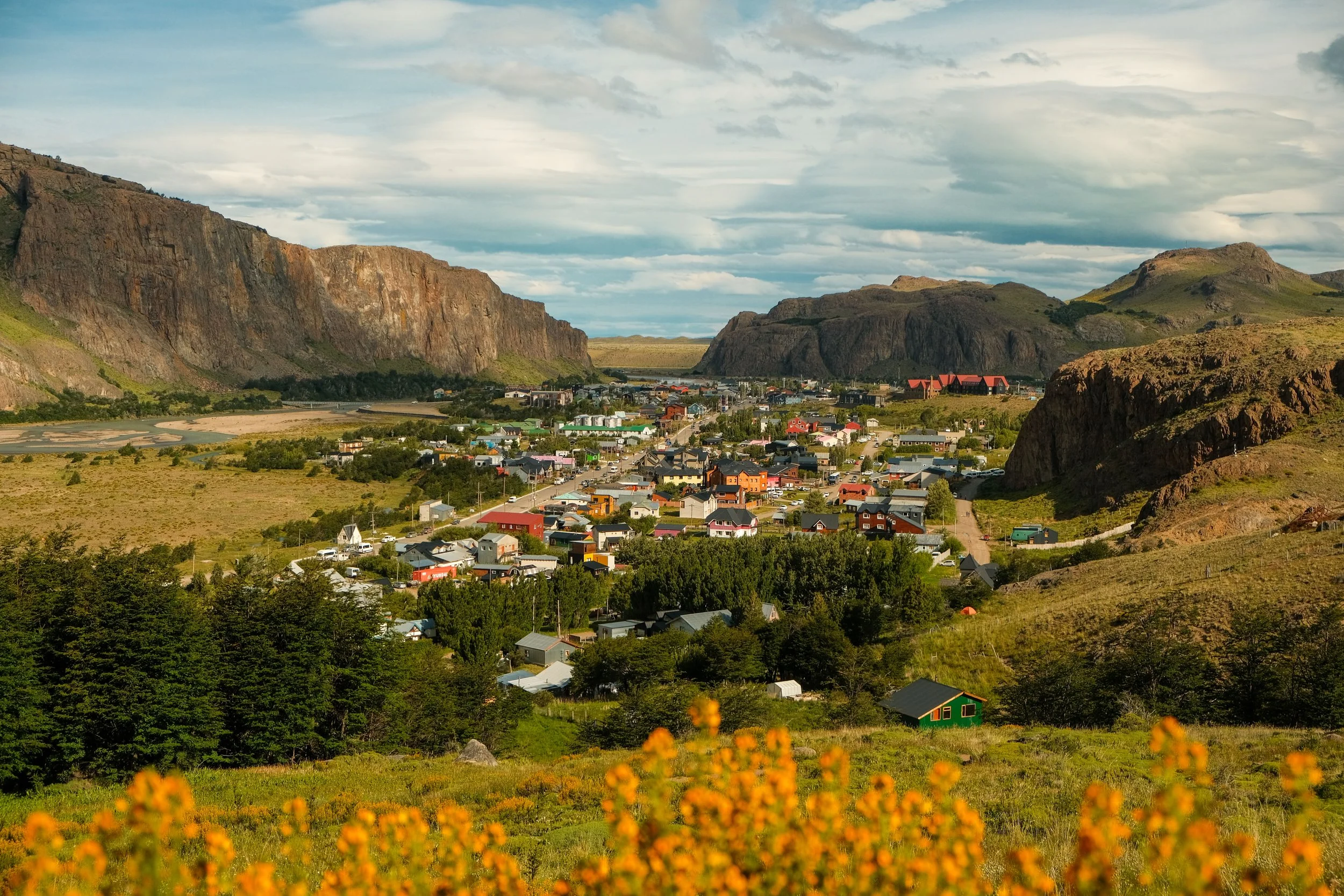
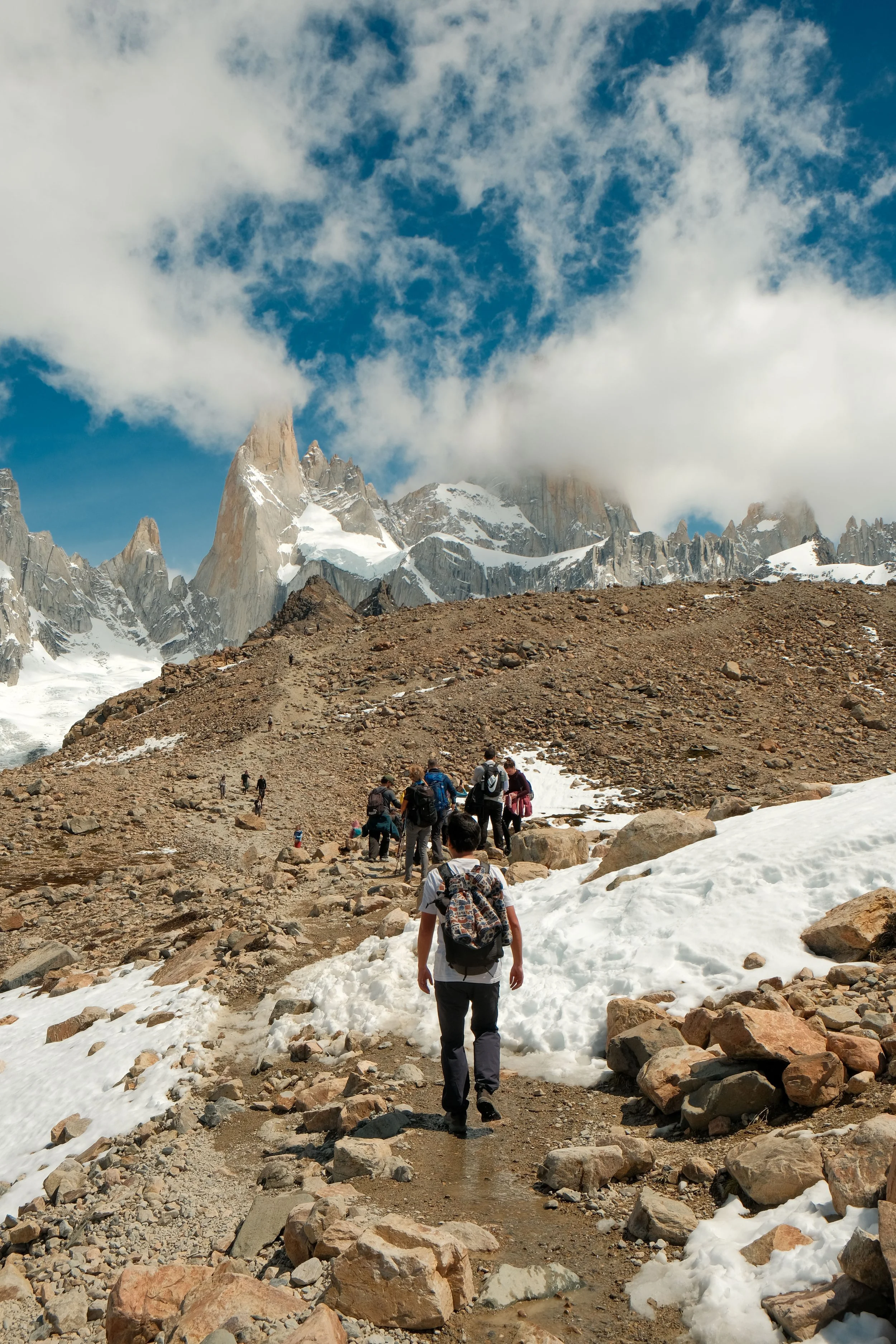
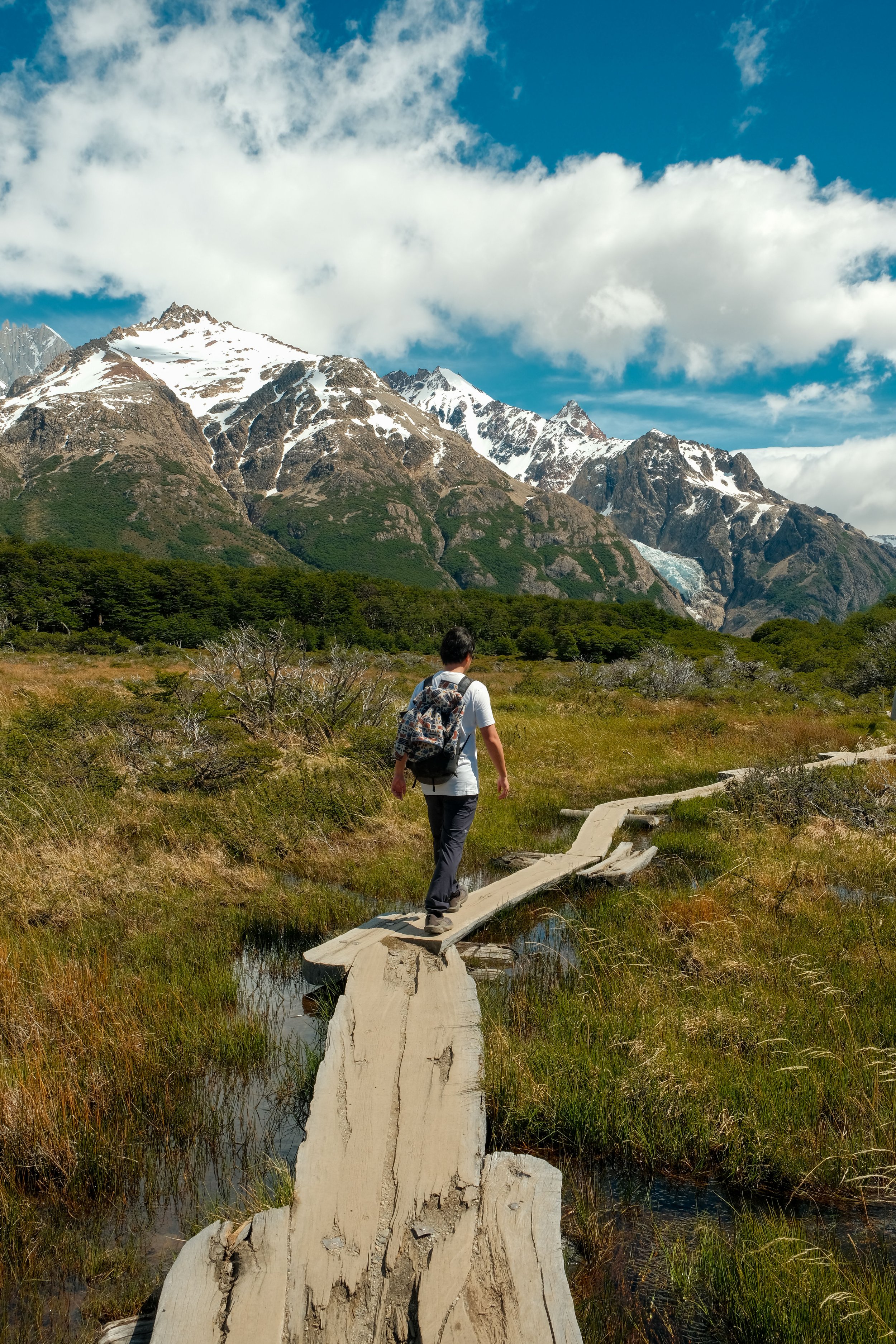
After a much-needed rest day, we squeezed in a couple more hikes, including a relatively short walk to Chorrillo del Salto, a waterfall tucked into a quiet, forested corner of the park. On our final full day, we set out on the Laguna Torre hike to a glacial lake at the base of Cerro Torre - another one of Patagonia’s iconic peaks. Sadly, we didn’t get as lucky with the weather this time; the summit stayed hidden behind thick clouds for the entire hike (you win some, you lose some). But the trail still delivered in other ways, with views of a massive glacier, meadows sprinkled with yellow wildflowers, and a coursing river winding through the valley.
Despite a few hidden peaks, Patagonia was absolutely unforgettable. Next stop: Buenos Aires!
Talk soon,
Tanya
