
A Grand Slam Finale: Australia Part 2
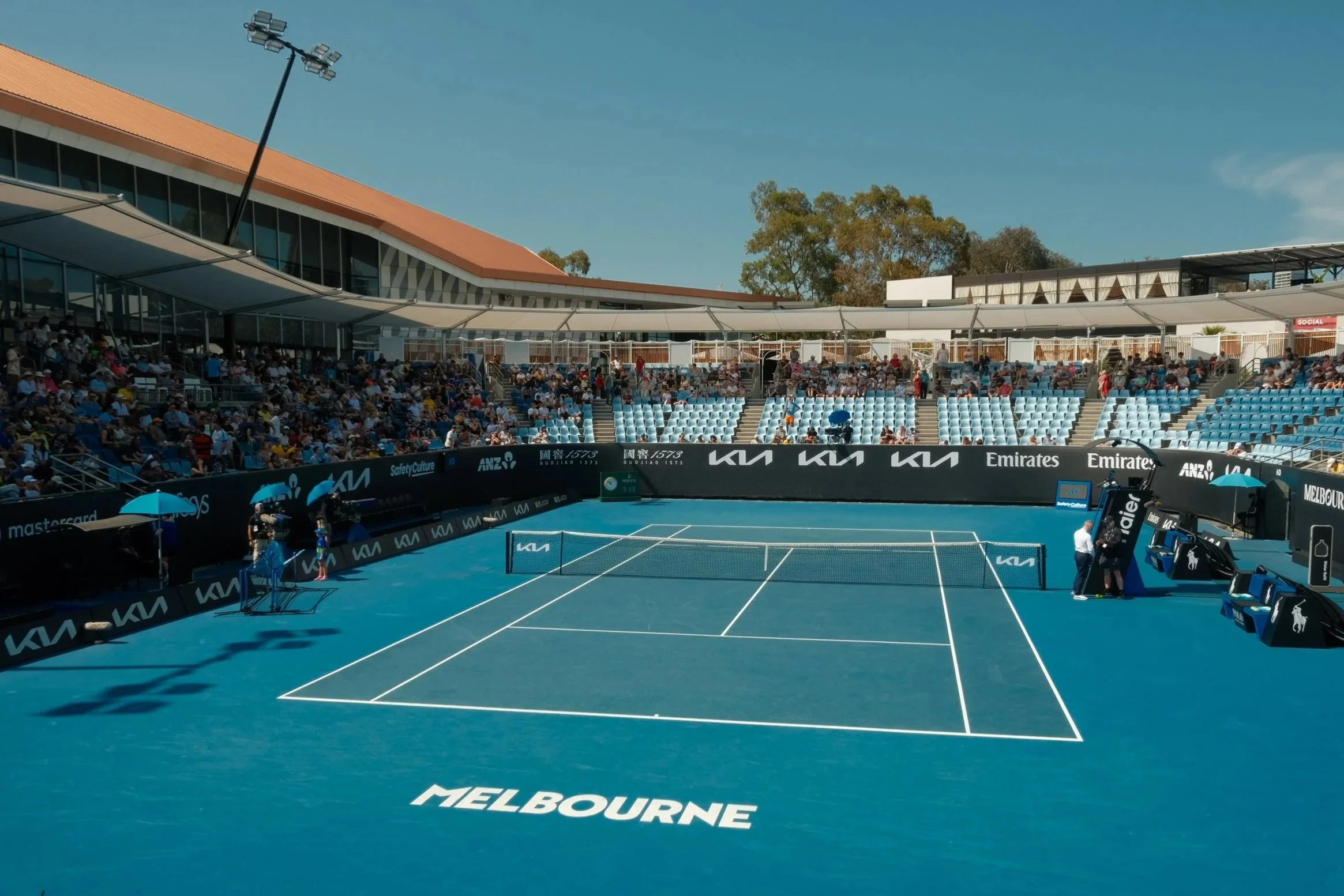
G’day mate! After starting out the year in Sydney and Perth, we continued our Australian adventures in Melbourne. Our visit was timed around something very exciting: the Australian Open. Hanqing grew up playing tennis, and I grew up watching the Grand Slams with my dad, who is a devoted tennis fan, so attending the tournament had been on our bucket list for years. When Hanqing first mapped out our world trip, he anchored the itinerary around a few, time-specific “can’t-miss” experiences, and the Australian Open was high on that list. All of our other plans fell into place around it.
Melbourne
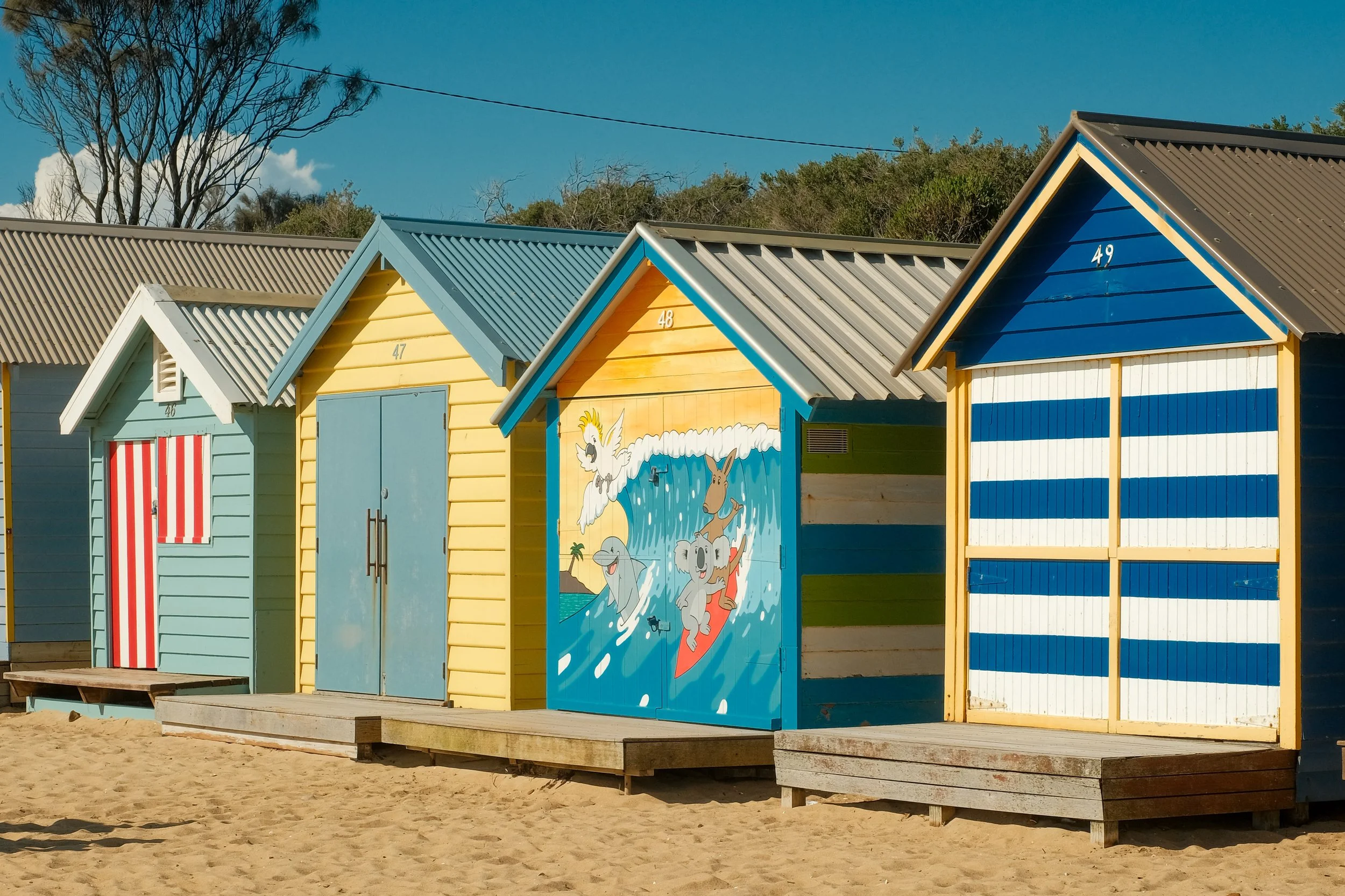
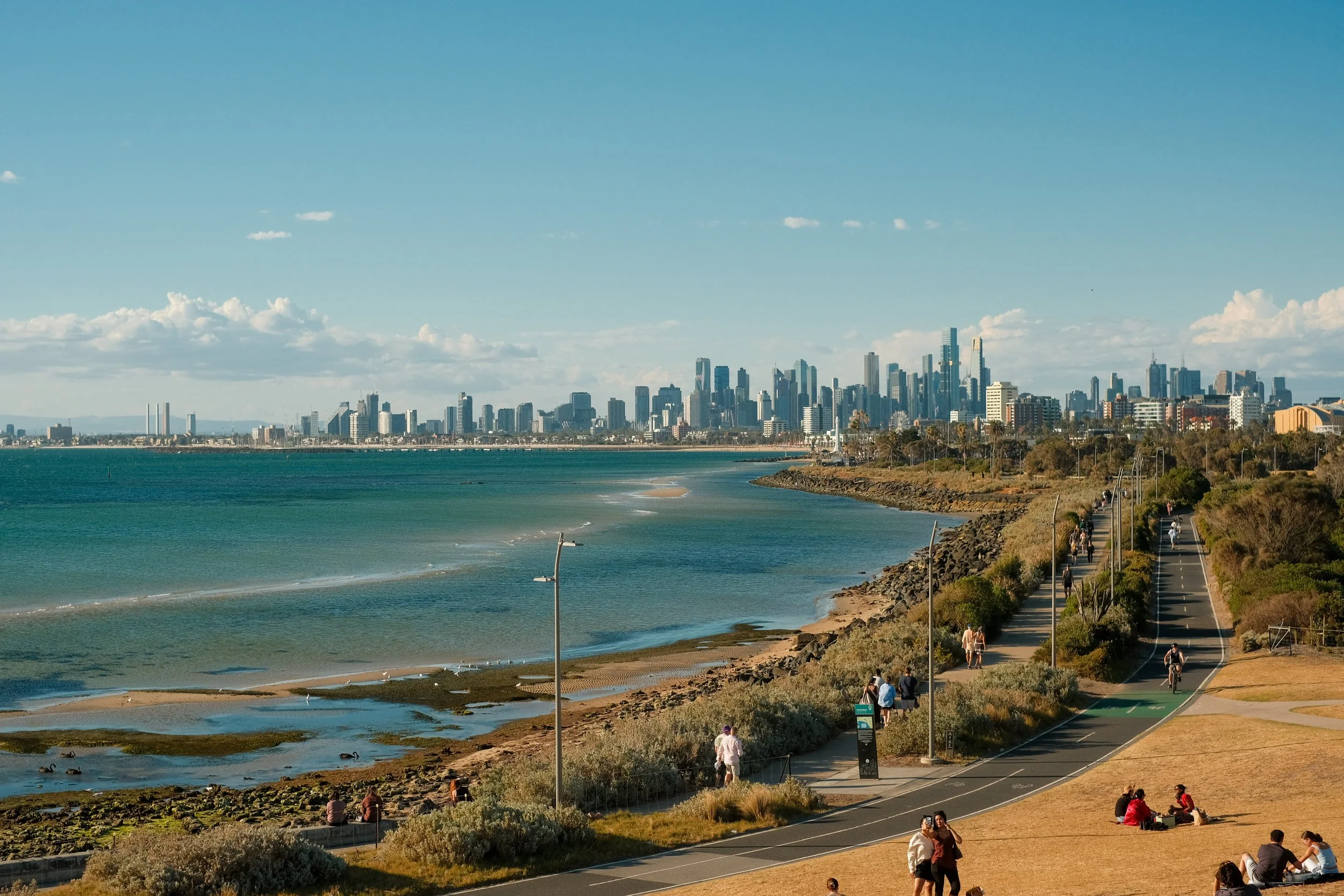
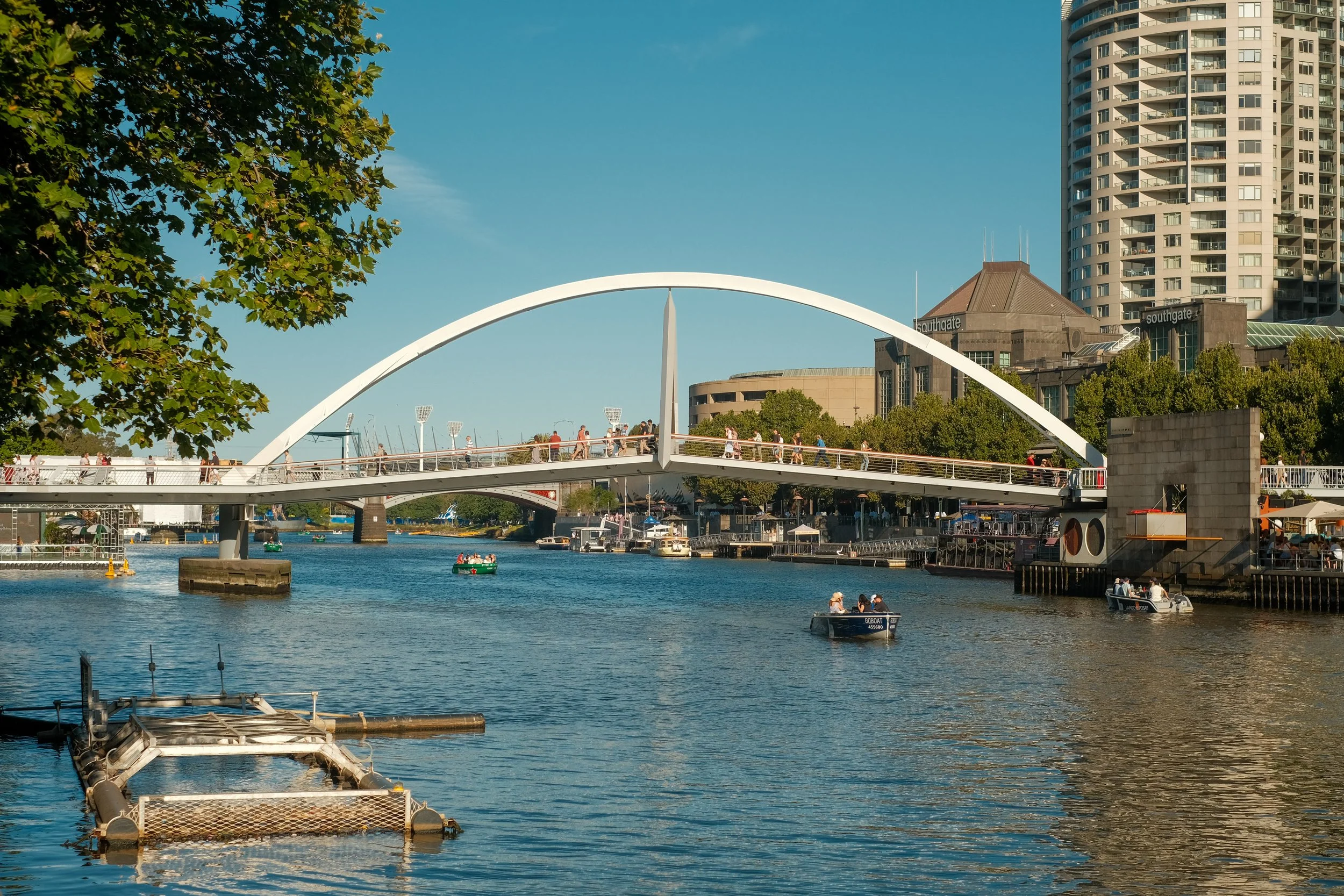
But before the Australian Open took center stage, we spent a few days settling into Melbourne itself. Carrying over the beach theme from Sydney and Perth, we kicked things off with the Brighton to St Kilda walk, a scenic five-mile stroll along the coastline, with views of the Melbourne skyline in the distance. The highlight was the Brighton Bathing Boxes: 90 small, colorful wooden huts lined up neatly along the beach. Dating back to the late 1800s, they were originally used as private changing rooms, back when it was considered improper to change into swimsuits out in the open. Each hut was individually painted with its own bold, creative design, making the whole row feel like an outdoor art gallery. My favorite one featured a mural of a koala and kangaroo sharing a surfboard, riding a wave together. I also spotted a few “for sale” signs, which naturally led me down a brief Google rabbit hole. Turns out the huts are typically passed down through families, and only rarely sold. When they are, the prices are eye-popping, with one recently going for around $300,000 USD. All that for ~50 square feet of space, with no electricity, running water, or bathroom. Locals jokingly call them some of the most expensive “sheds” in the world.
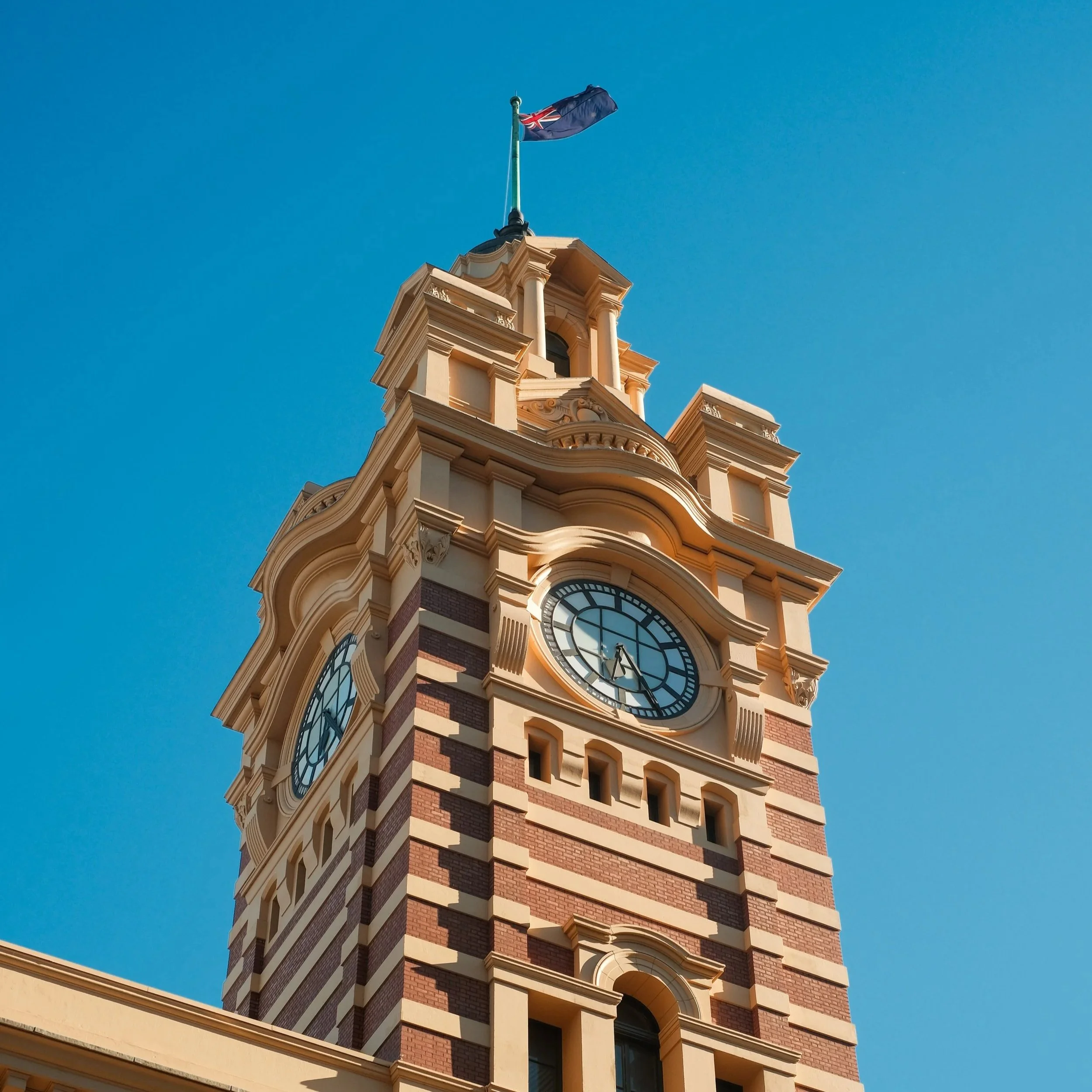
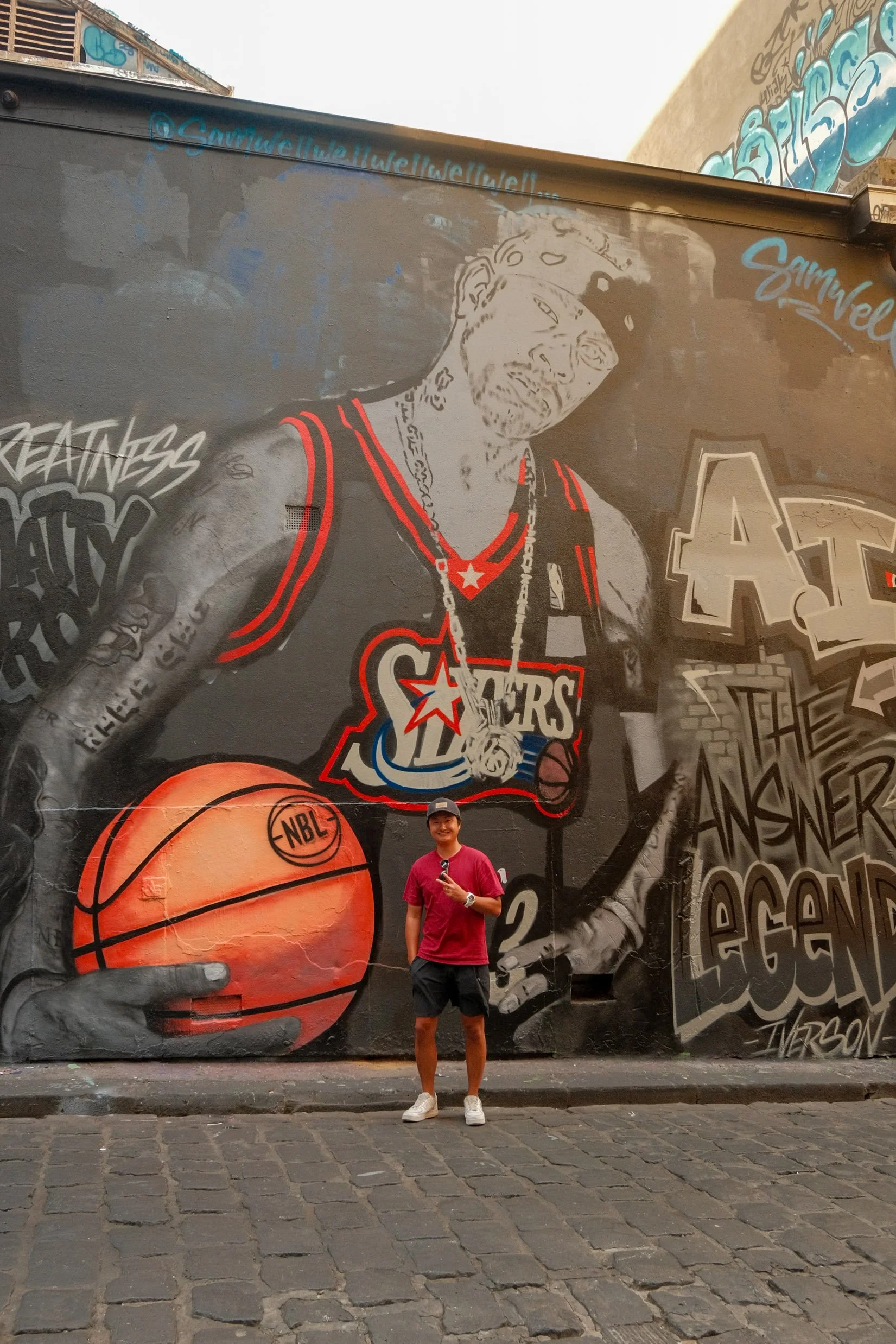
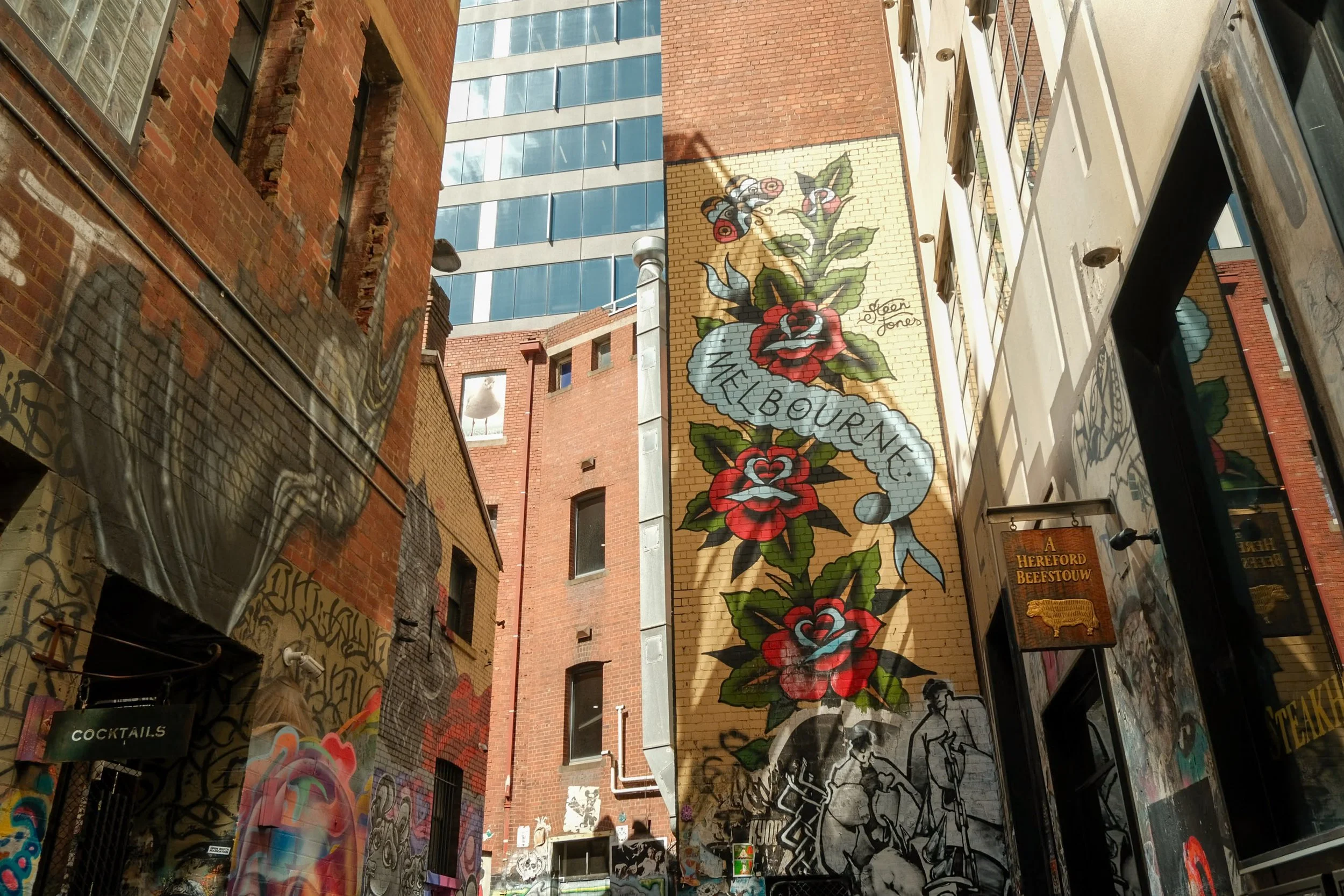
We spent the next few days getting to know Melbourne by hopping between different neighborhoods. Much of our time naturally pulled us back toward the Central Business District (unsurprisingly, very centrally located). There, we wandered through historic shopping arcades and modern malls, fueled ourselves with coffee from specialty roasters, and ate our way through Queen Victoria Market, the city’s sprawling produce and food hub. Melbourne’s Chinatown, right in the heart of the CBD, felt refreshingly authentic compared to some Chinatowns we’ve seen back home (ahem, DC), with one block lined with multiple malatang hot pot restaurants clustered together like car dealerships. We also wandered the CBD’s laneways, many adorned with vibrant street art - including a massive mural of Hanqing’s childhood basketball idol, Allen Iverson.
Our last three days in Melbourne were all about the Australian Open. We had grounds passes for two of those days, which ended up being such a fun way to take it all in. We wandered freely, watching players warm up on the practice courts and popping into matches that caught our eye. The vibe reminded me a bit of Coachella, but a bit more civilized and family-friendly. There was music playing throughout, trendy food and drink stalls, plenty of merch shops, and even some fun brand activations like full-on Barbie Dream House offering sunscreen and makeup touch-up (courtesy of Mecca, Australia’s Sephora).
Going in, I knew the top players, like Djokovic, Alcaraz, Sinner, Sabalenka, Swiatek, and I was especially excited to see the American players like Coco Gauff, Jessica Pegula, and Frances Tiafoe (a fellow Marylander!). But some of my favorite moments came from watching matches with players I didn’t know at all. What I love most about sports is following the storylines: learning where players grew up, how they got started, what their journey has looked like, what they do off the court. Once I’ve skimmed a Wikipedia page or two, it’s easy to find someone to root for, and that background made each match feel more personal and engaging.
I was also unexpectedly fascinated by the ball kids - most of them just 12-15 years old, yet incredibly focused and disciplined. They sprinted across the court with precision, picking up balls and then tossing them to players in what felt like a perfectly choreographed routine. During one match, rain briefly interrupted play before the roof fully closed, and the ball kids rushed out with towels, mopping the court at lightning speed. I’d never fully appreciated how much they contribute to the rhythm of the game until seeing it up close.
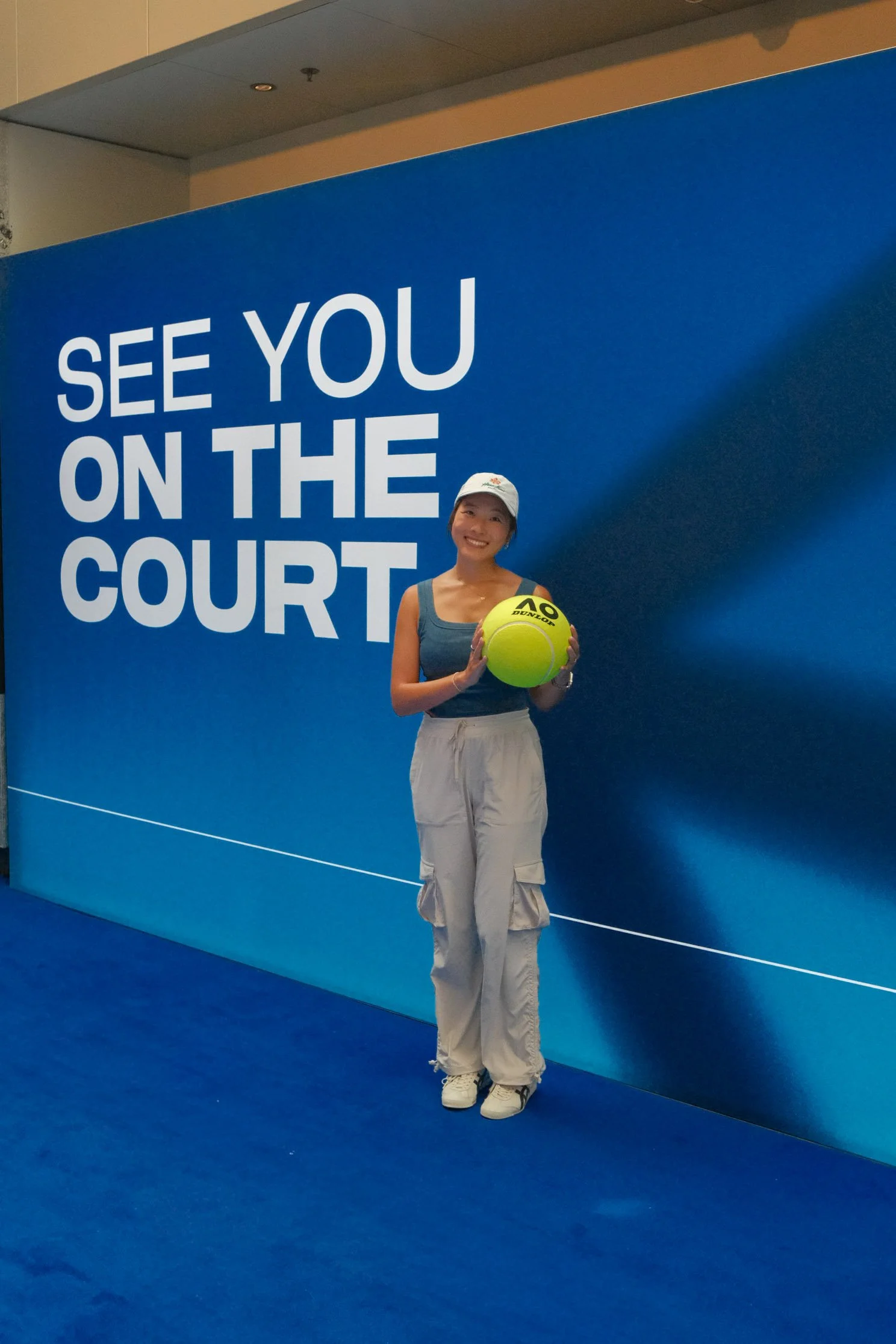
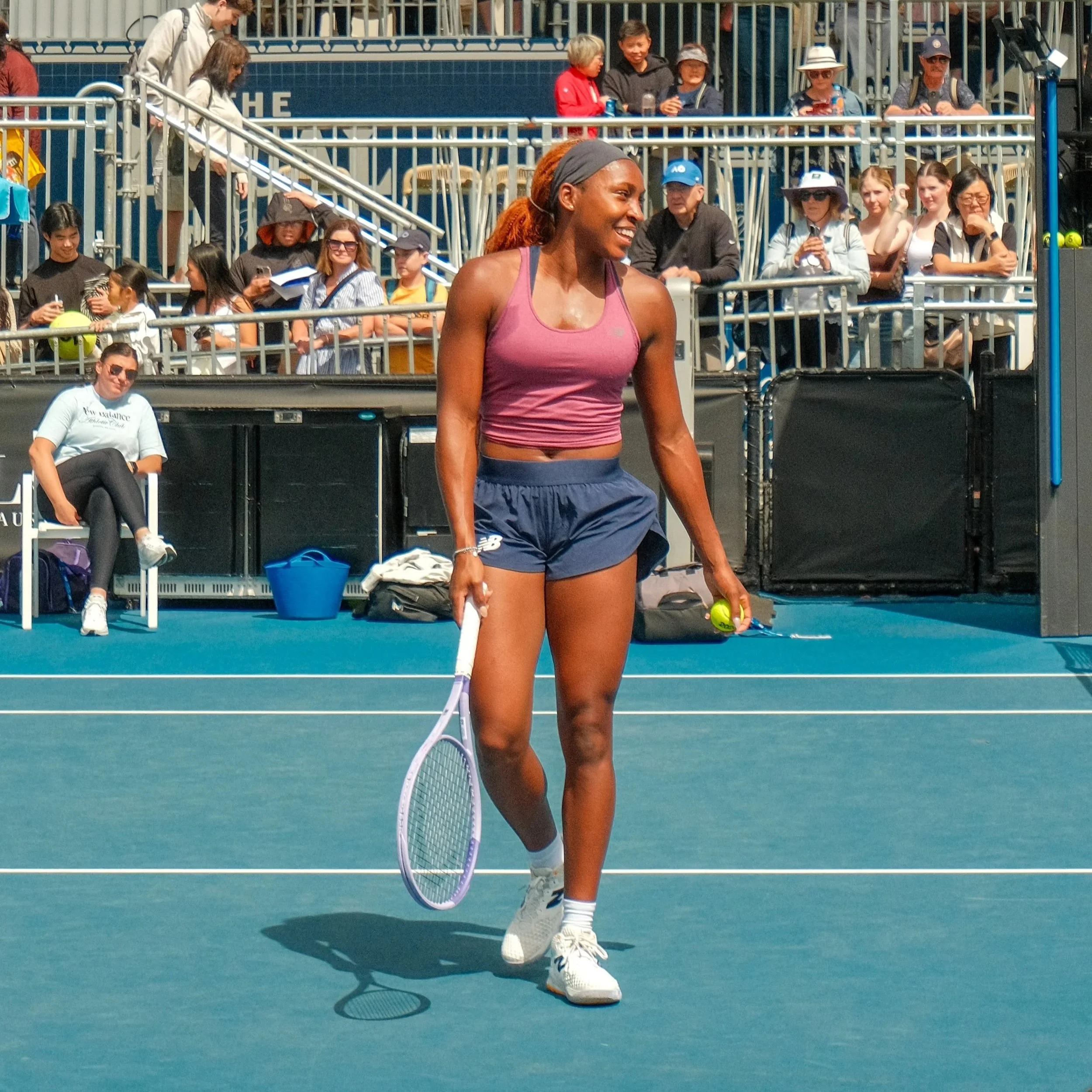
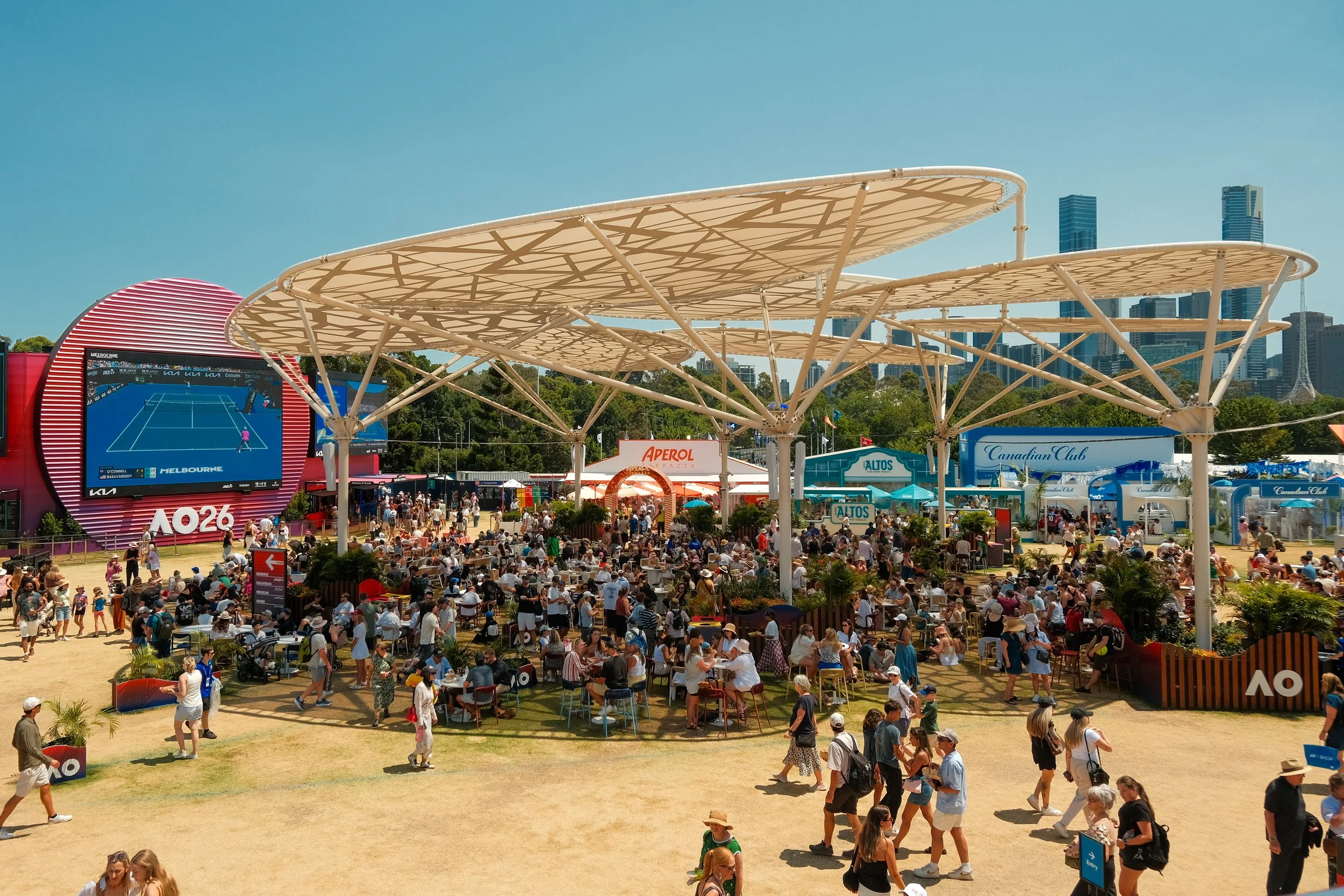
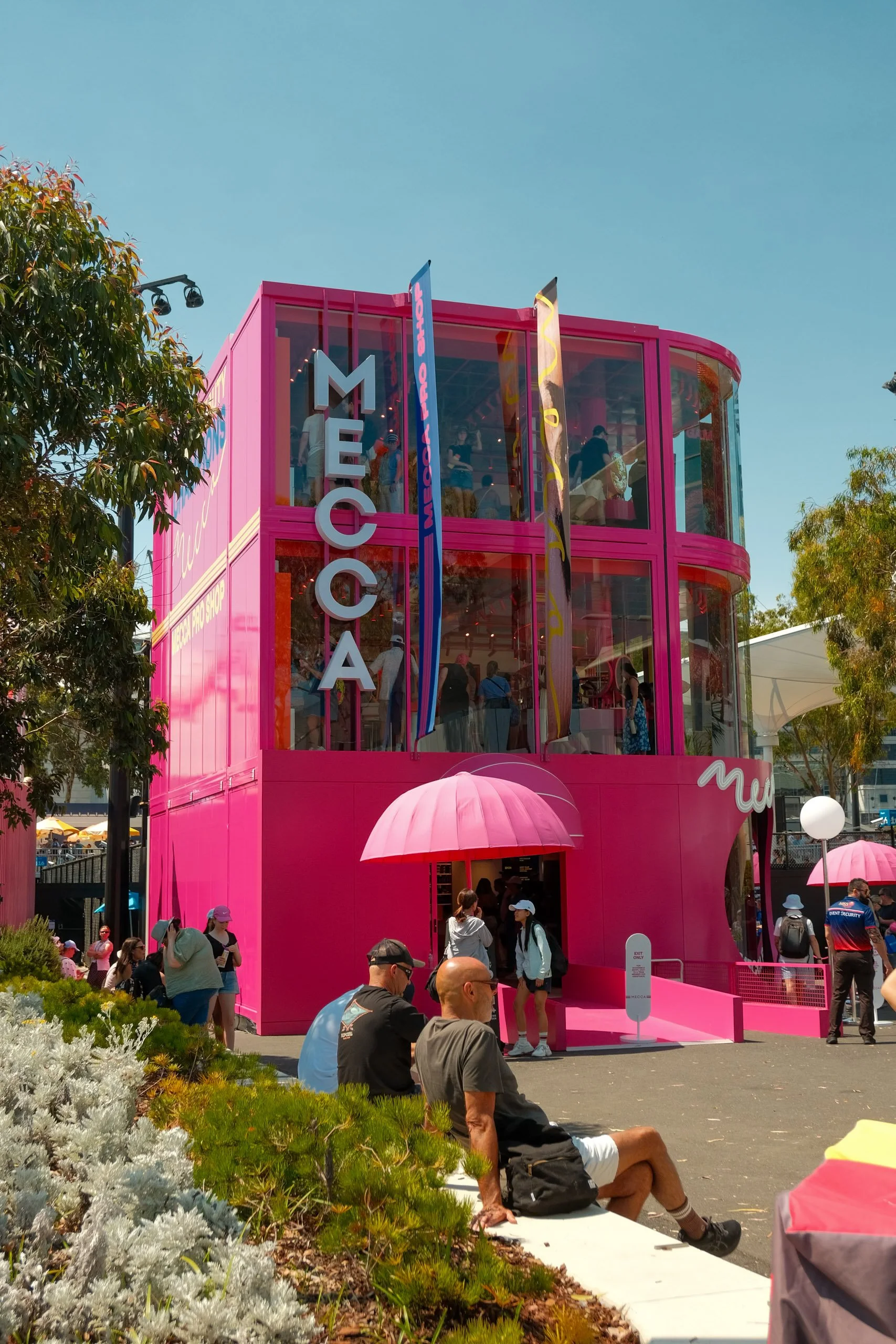
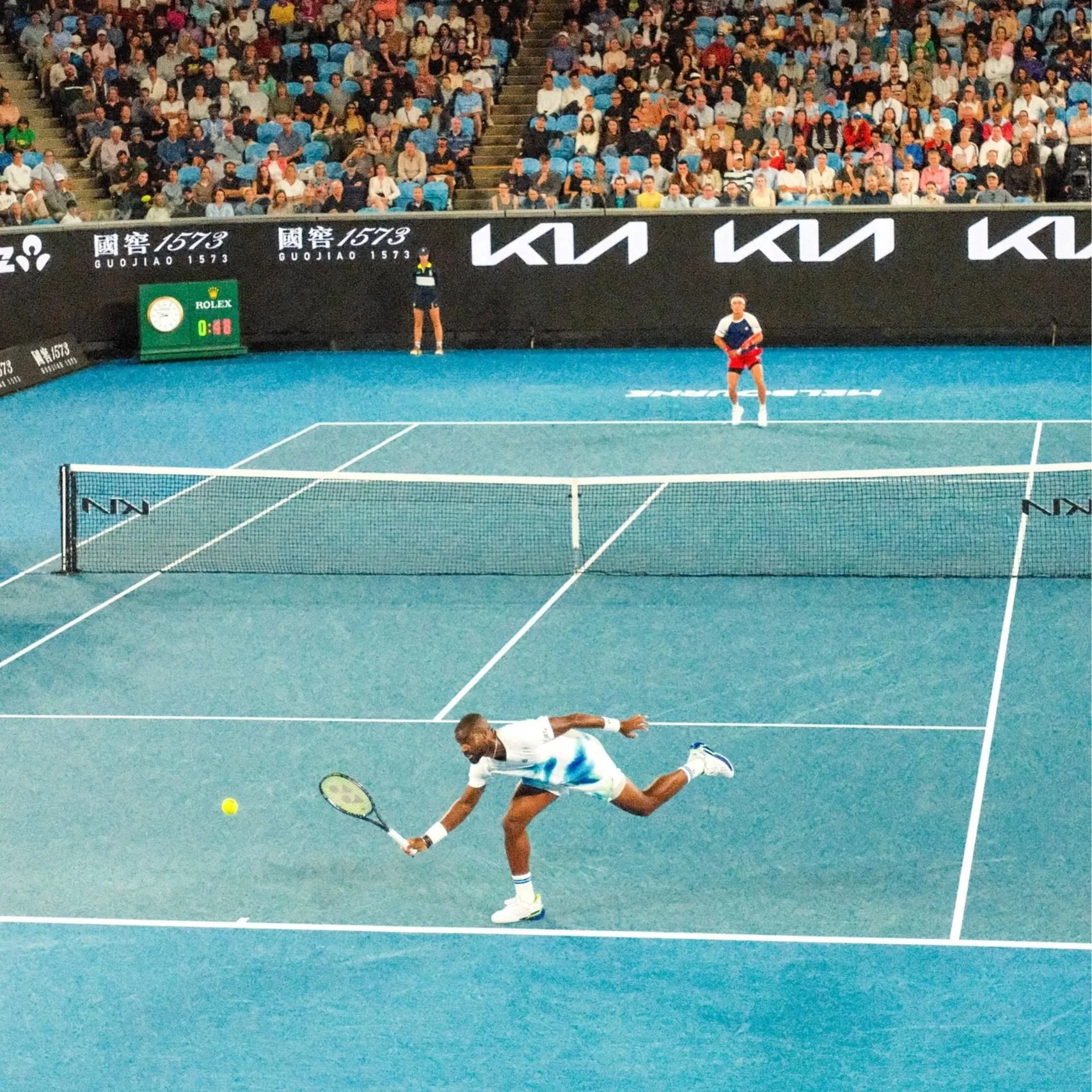
We also attended two primetime sessions, which became clear highlights of the experience. On our second night, we watched Frances Tiafoe win his second-round match - a happy surprise given that we’d bought the tickets months earlier, long before the schedule was released, and he was one of the players I’d most wanted to see. We’d originally planned to attend the tournament for just two days, but we were having such a good time that we started talking about adding a third. When the next day’s schedule dropped and we saw that Djokovic was playing in the afternoon slot, we bought tickets almost immediately.
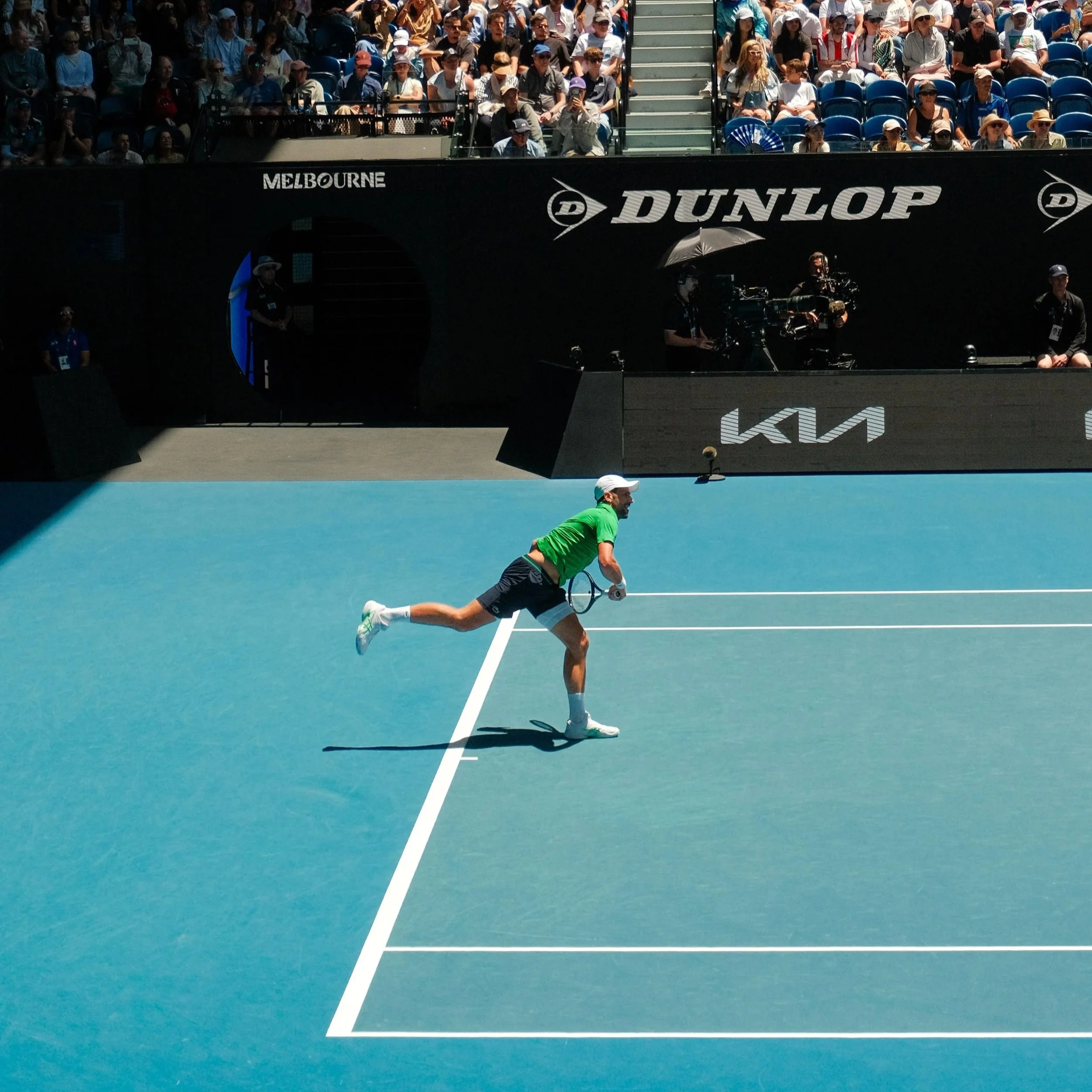
At 38, Djokovic is around 15 years older than his top competitors and chasing a record-breaking 25th Grand Slam title. We knew this might be our last chance to see one of the greatest tennis players of all time compete live, so it felt like a no-brainer. He cruised to a straight-sets victory, and it was almost unbelievable to see how agile and flexible he still is at this stage of his career. My knees could never. My favorite part was hearing how loudly the crowd cheered for him, after so many years cast in the “villain” role opposite Federer and Nadal’s superhero status. You could see how much that meant to him and it was genuinely so heartwarming.
Great Ocean Road
We wrapped up our month in Australia with a three-day road trip along the Great Ocean Road, a 150-mile stretch of coastal road tracing the southern edge of Victoria. I’ll admit, I’d never heard of the Great Ocean Road before coming to Australia. But when Hanqing described it as a dramatic seaside drive, kind of similar to California’s Pacific Coast Highway and Maui’s Road to Hana, I was immediately intrigued. The route begins just an hour and a half south of Melbourne, and while some people tackle it as a long day trip, we opted to slow down and explore it over a few days.
Hanqing had booked our accommodations months in advance, but until just days before we left, we weren’t entirely sure the trip would even happen. Two weeks prior, an intense thunderstorm dumped record rainfall along parts of the coast, washing away cars and caravans and forcing road closures. Complicating things further, sections of the Otway Ranges, near where our Airbnb was tucked away, had already been under threat from bushfires earlier in the month, sparked during a heatwave and still burning during our stay. Thankfully, the road reopened just in time, and while the fires were ongoing, they appeared relatively contained. With cautious optimism, we set off as planned.
This road trip also marked our first time driving on the left side of the road. We were hyper-focused at first, double-checking every turn and lane placement, since our spatial awareness felt completely scrambled. The hardest adjustment, surprisingly, wasn’t the road itself but the turn signals, which are flipped. Hanqing accidentally turned on the windshield wipers at least a few times when preparing to turn. After an hour or so, though, he started getting the hang of it and the drive began to feel almost normal.
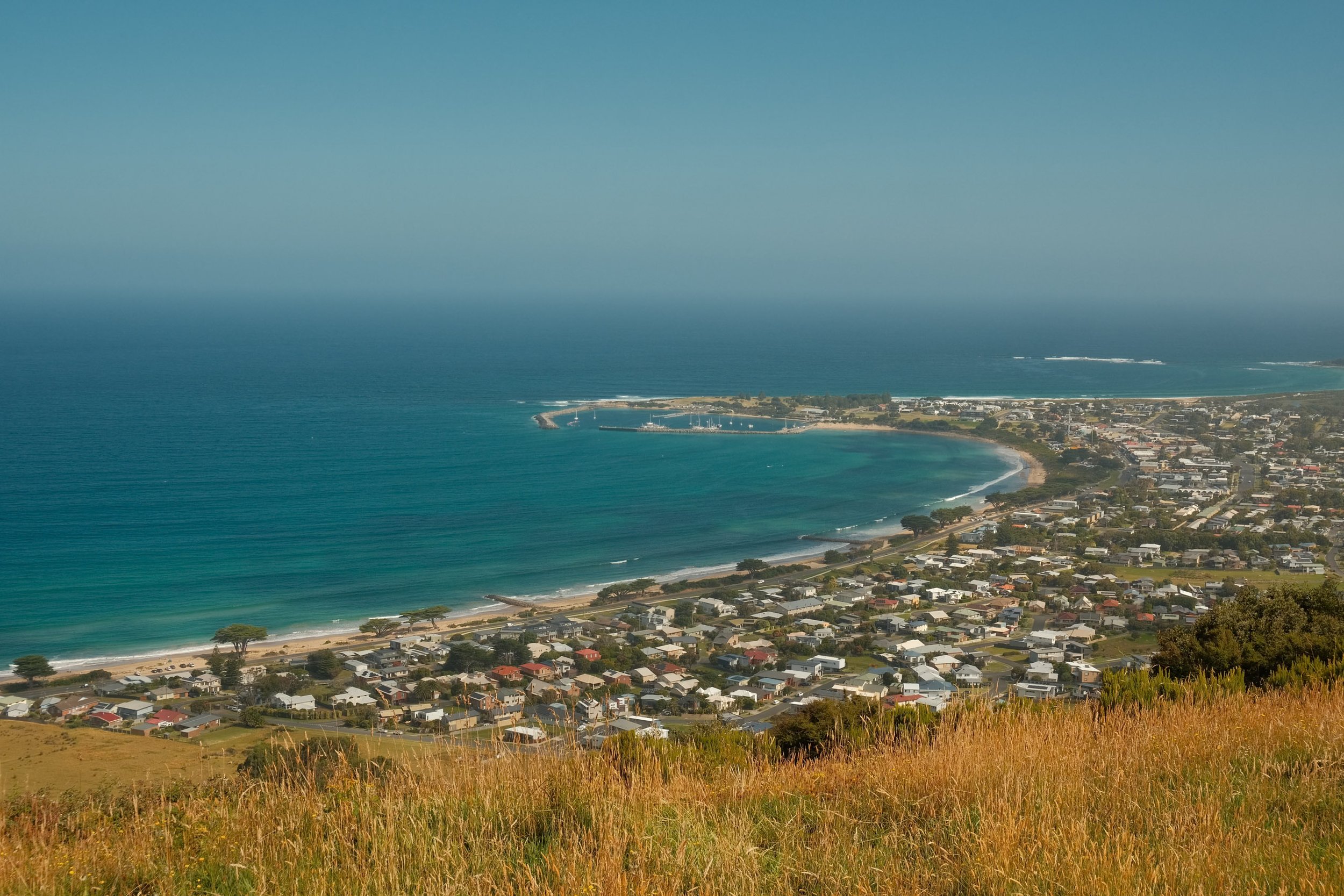
Not long after, the scenery shifted. The ocean suddenly came into view and then stayed with us, running alongside the road. With every curve, the coastline opened up a little more, revealing dramatic rock formations, crashing waves, and stretches of bright blue water.
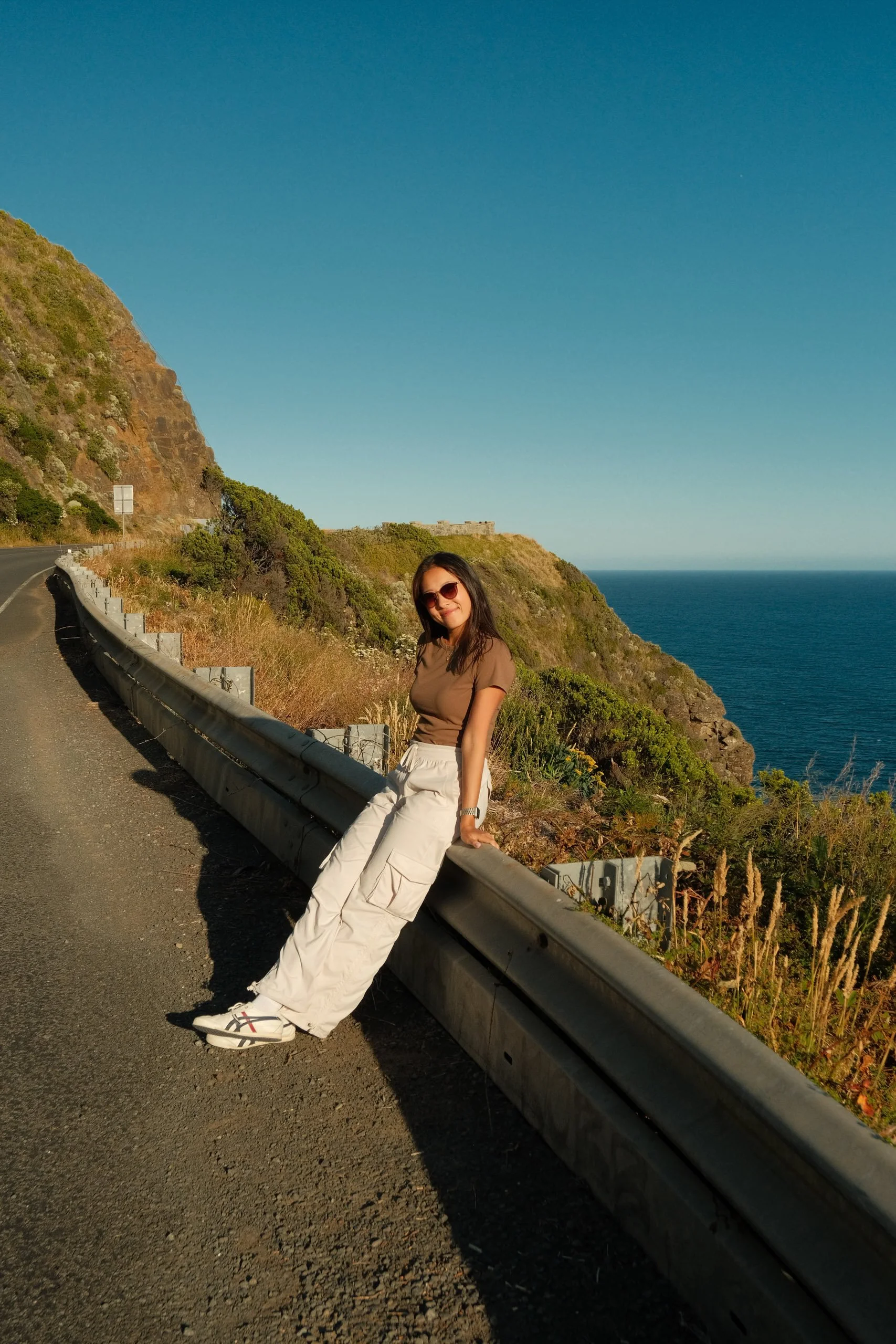
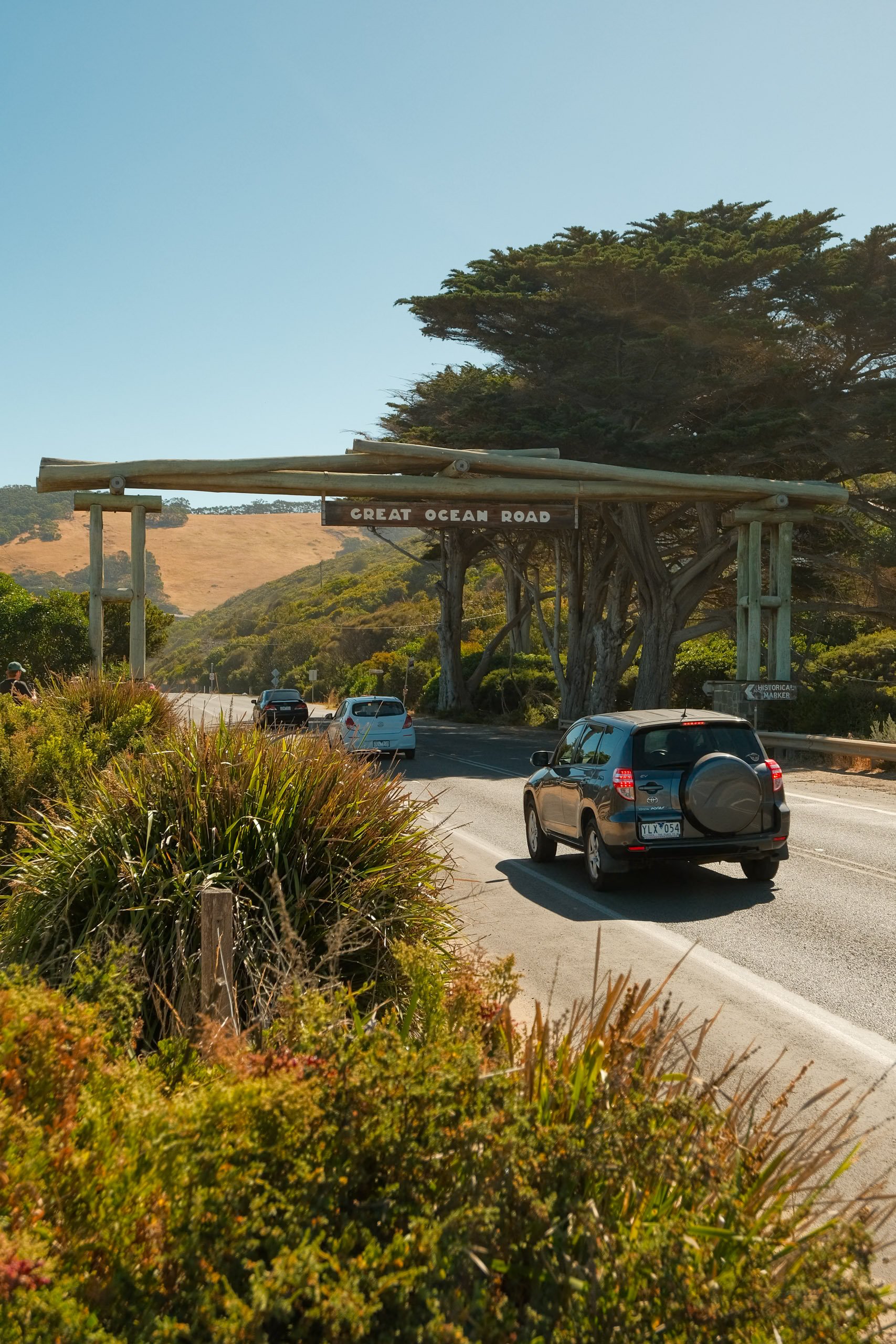
Over the next three days, we stopped at several of the Great Ocean Road’s most iconic landmarks. First was the Great Ocean Road sign itself, a classic photo op marking the start of the drive. Nearby stands a monument honoring the World War I soldiers who built the road between 1919 and 1932 after returning from the war. The road itself is considered the world’s largest war memorial, dedicated to those who served and died during the war.
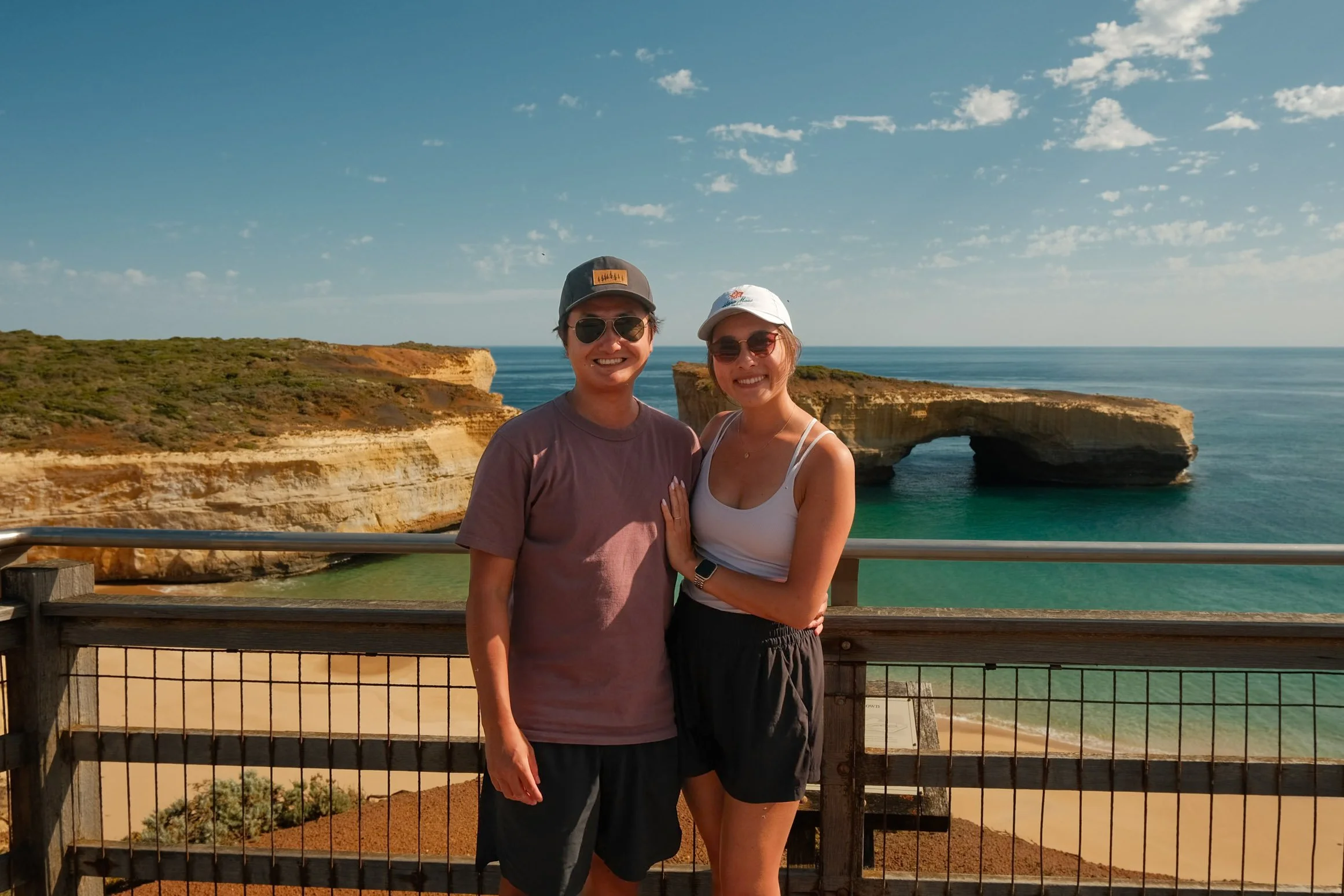
Further along the coast, we visited the London Bridge, which was once a double-arched rock formation connected to the mainland. In 1990, one of the arches suddenly collapsed without warning, leaving two people stranded on the remaining outer section (a fate perhaps foreshadowed by the name). Thankfully, no one was hurt, but standing there, it was impossible not to be reminded of how powerful and ever-changing this coastline still is, constantly shaped by wind, rain, and the relentless ocean waves.
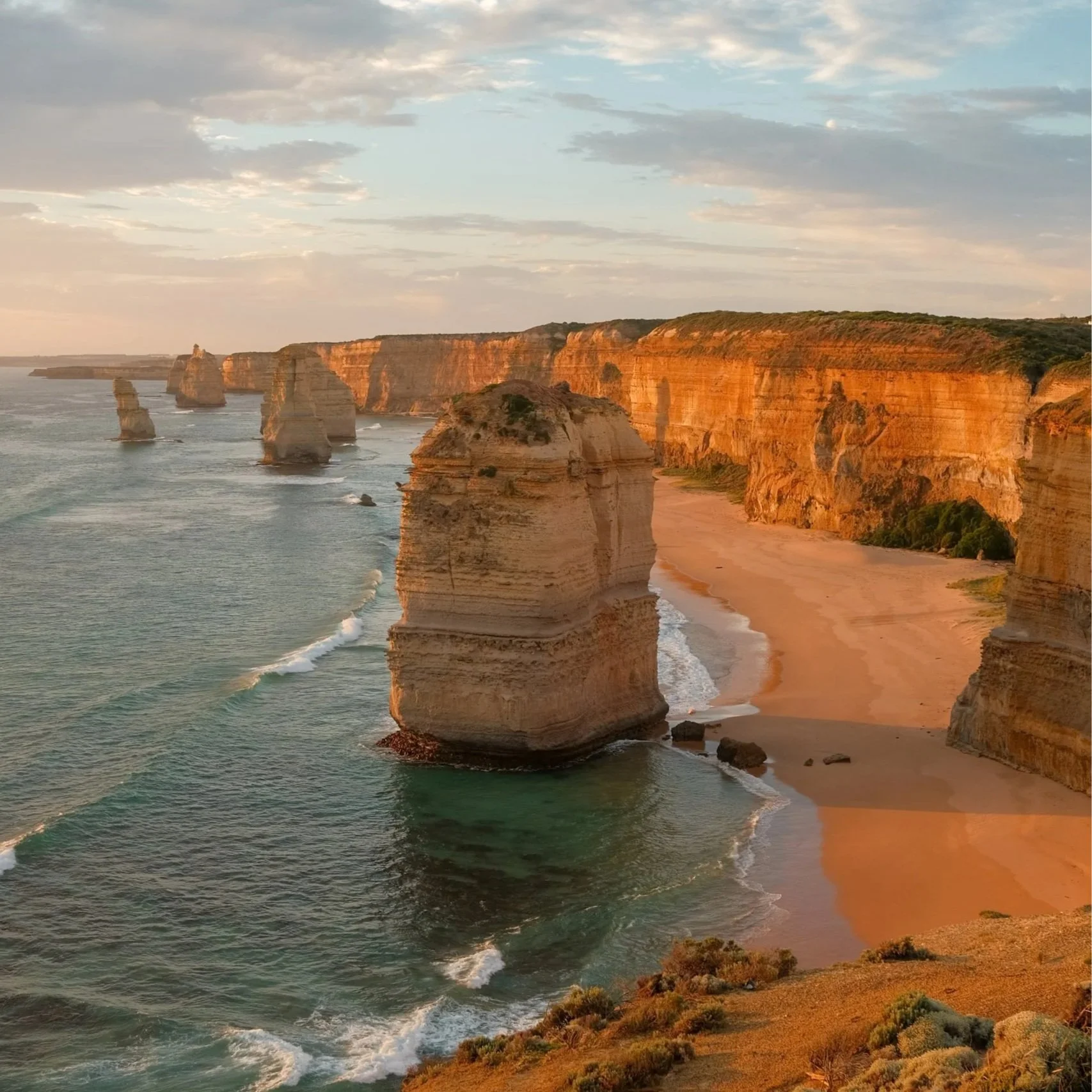
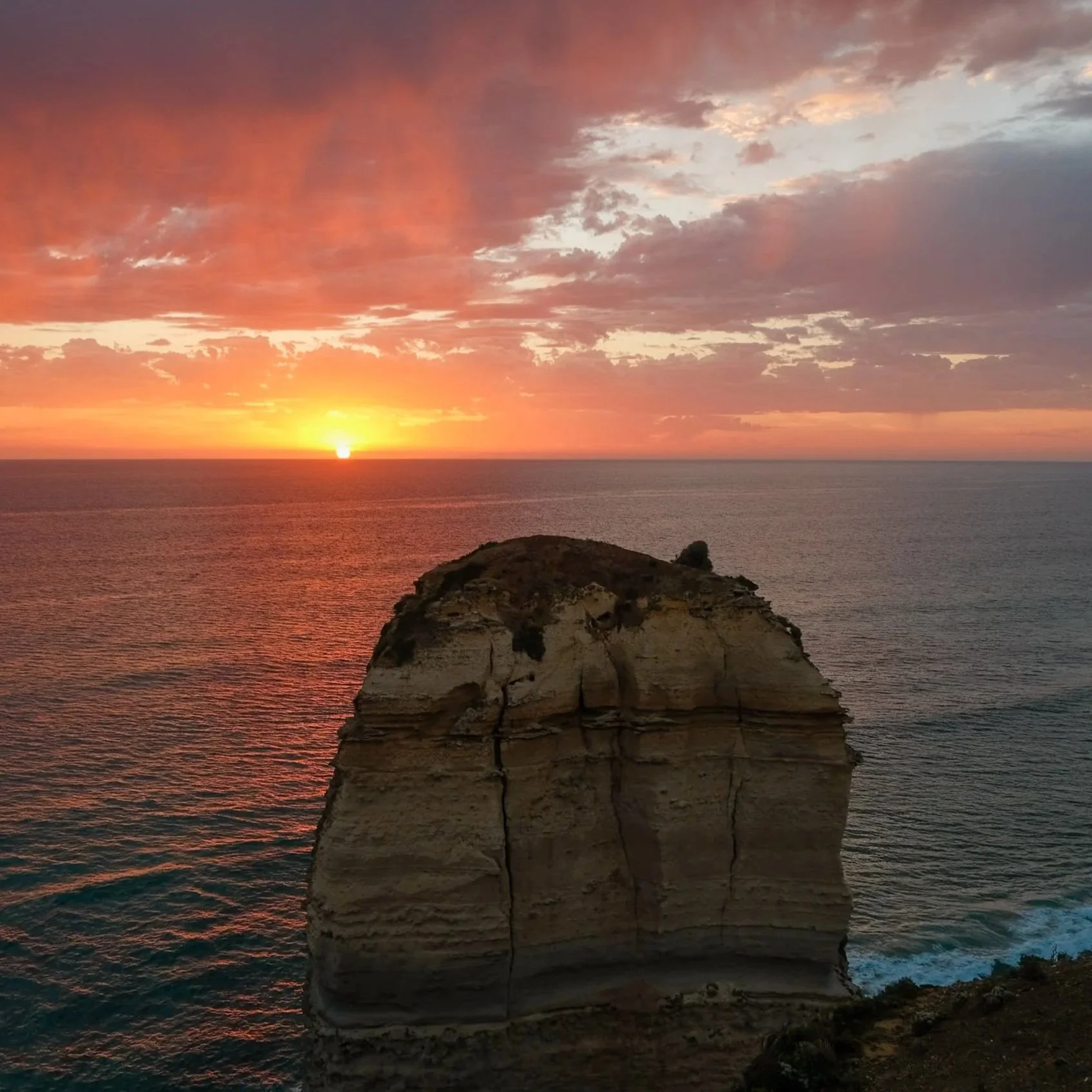
The most famous stop along the drive was the Twelve Apostles, a group of towering limestone stacks rising straight out of the ocean. Despite the name, there were never actually twelve - originally there were nine, and erosion has since whittled that number down to seven. We timed our visit for just before sunset, when the soft golden light made the limestone formations glow. As the sun dipped below the horizon, the sky briefly erupted into deep reds and oranges, lingering for a few magical moments before quietly fading away.
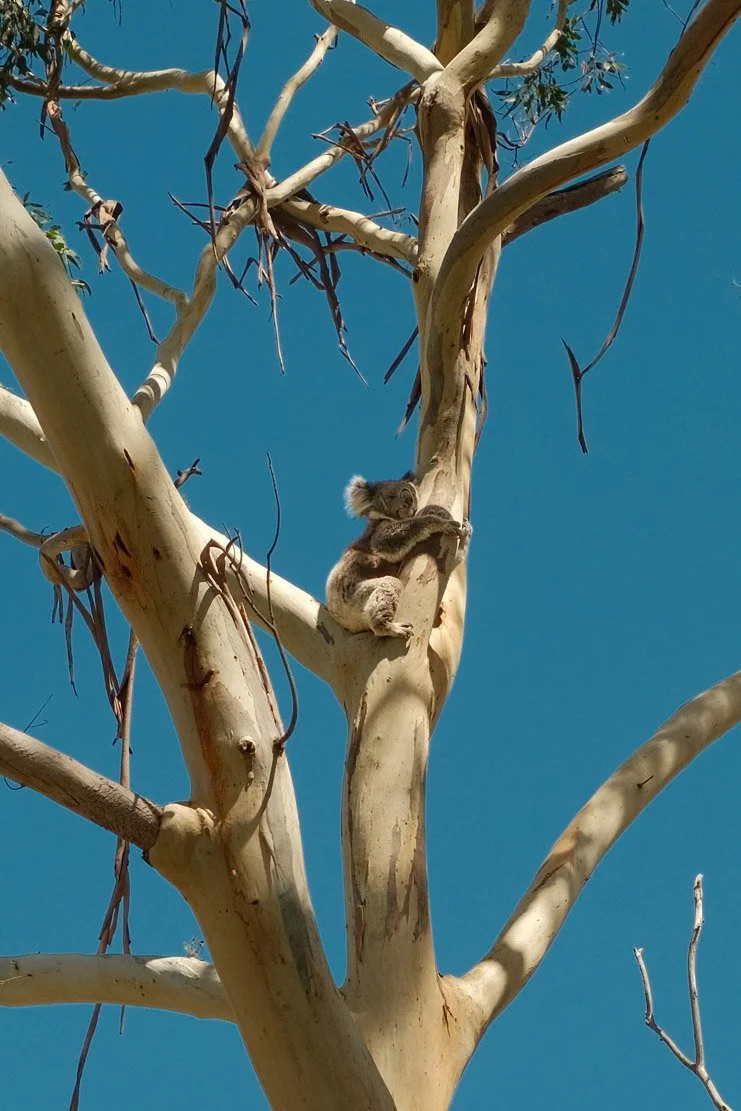
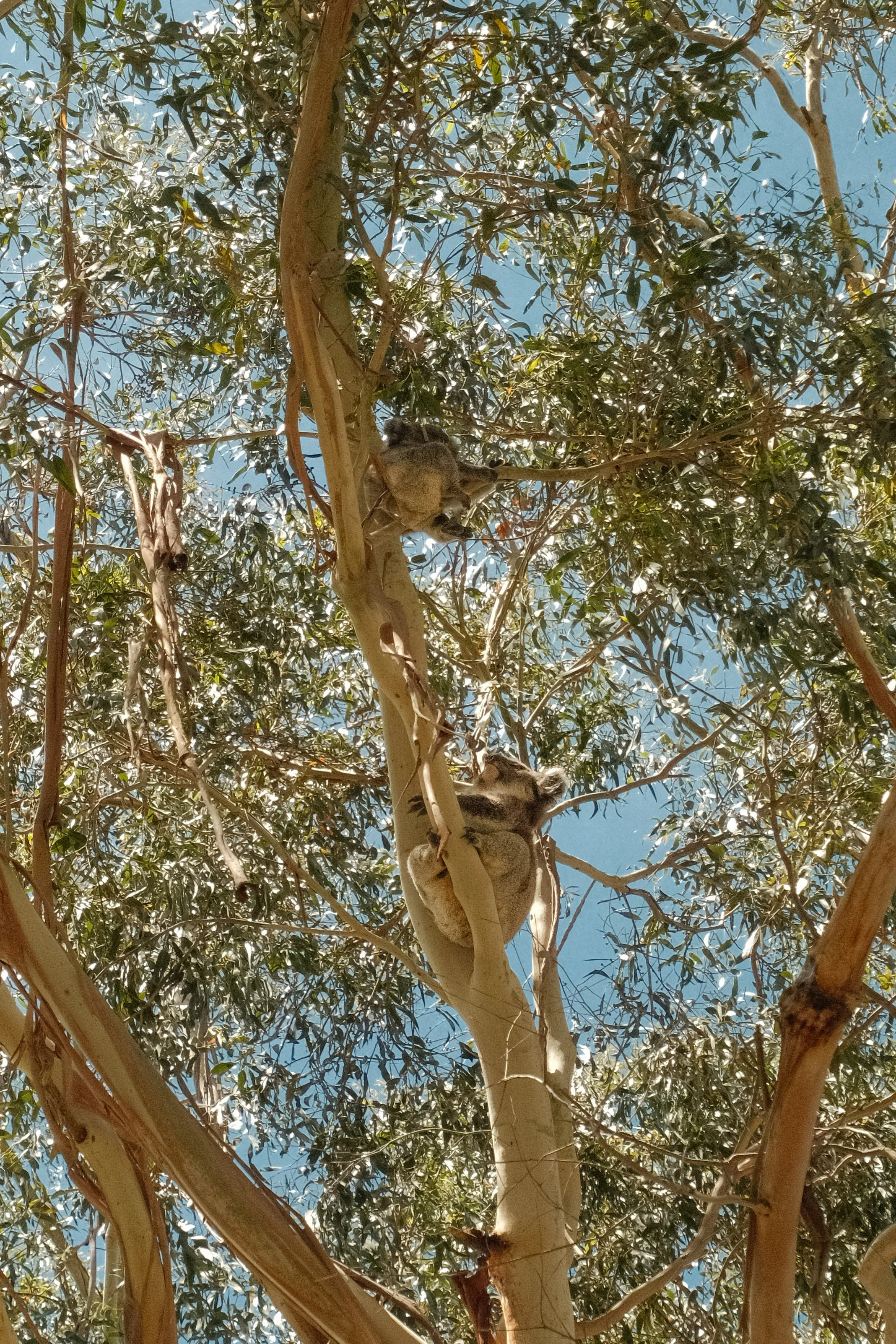
One of my favorite parts of our road trip was the wildlife we encountered, both in the wild and up close. We stayed in a cozy cottage within Great Otway National Park, and one morning, while driving out, I noticed what looked like fluffy bundles tucked high into the eucalyptus trees lining the road. We pulled over and stepped out of the car, and to our delight, realized they were koalas - wild ones, fast asleep in the crooks of the branches. As we scanned the trees, we spotted more and more. That stretch of road quickly became a mandatory stop every time we left or returned, just so we could check in on our koala neighbors.
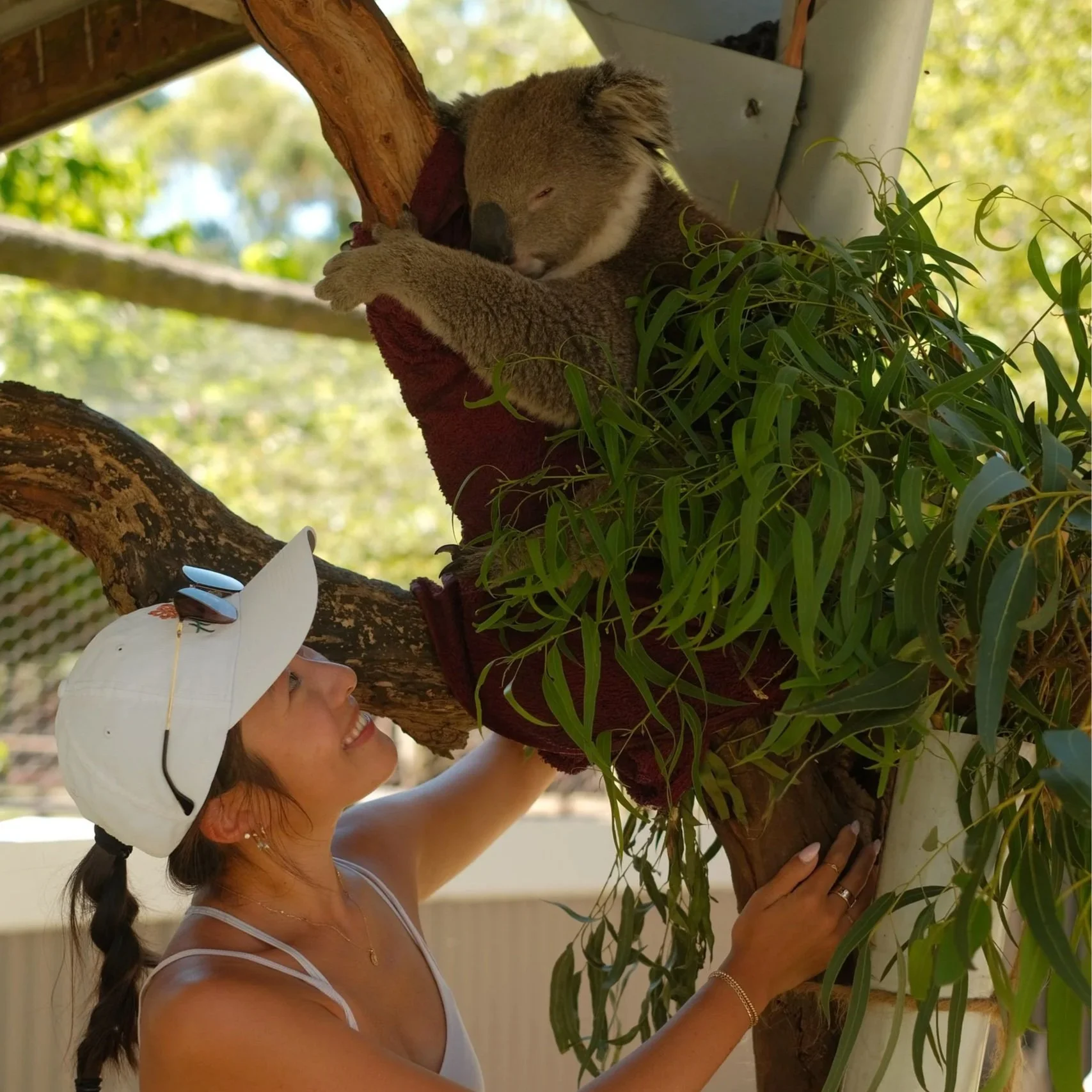
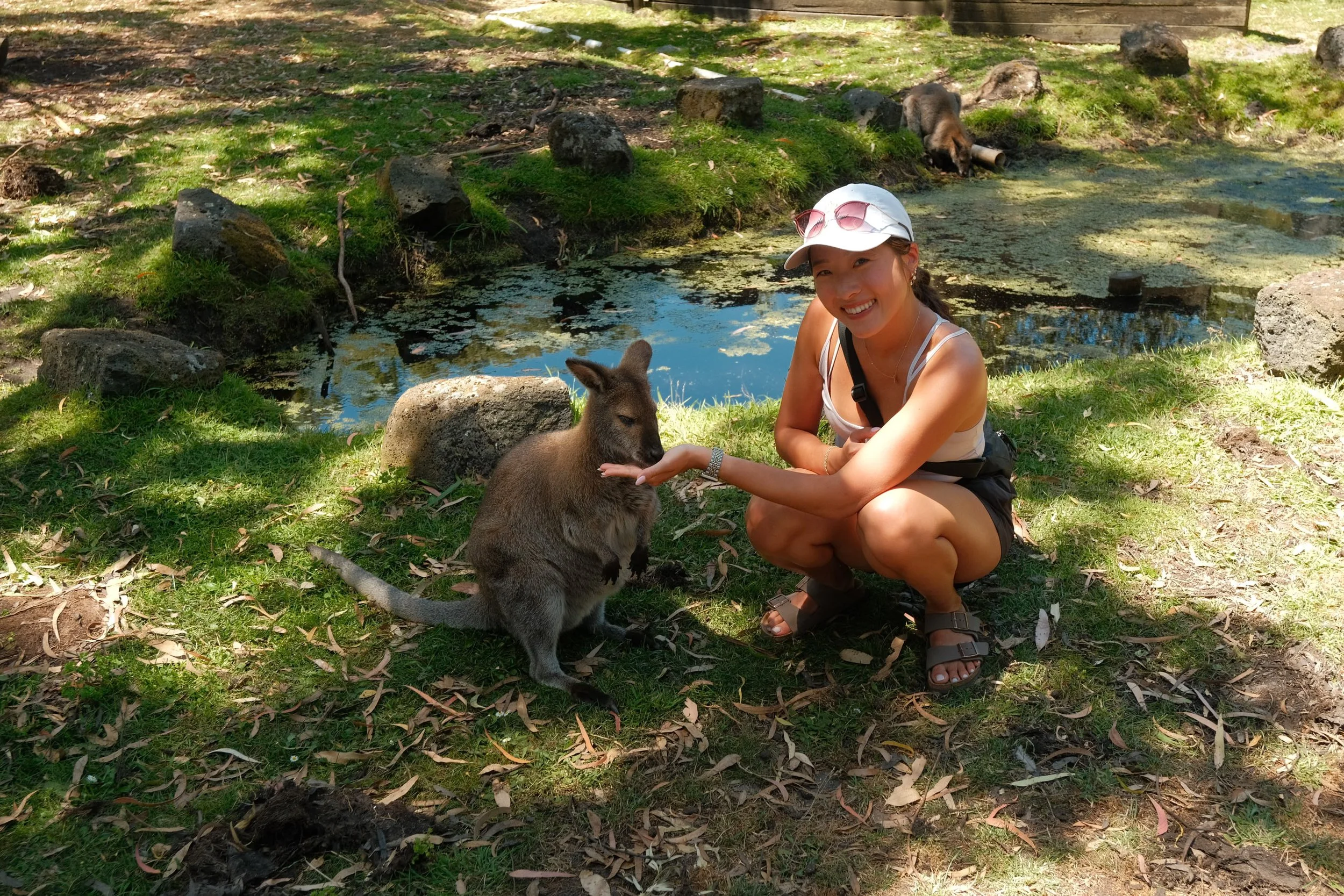
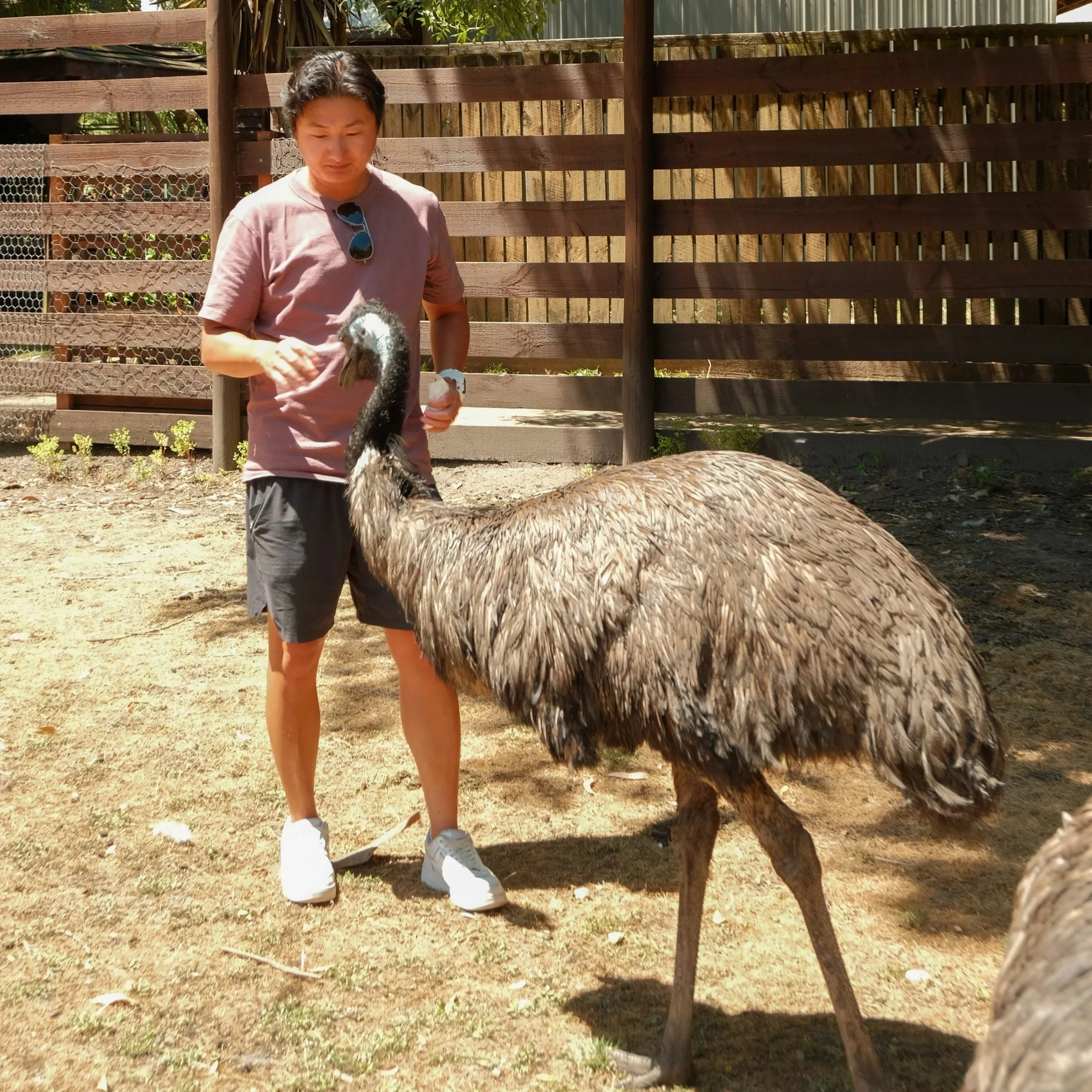
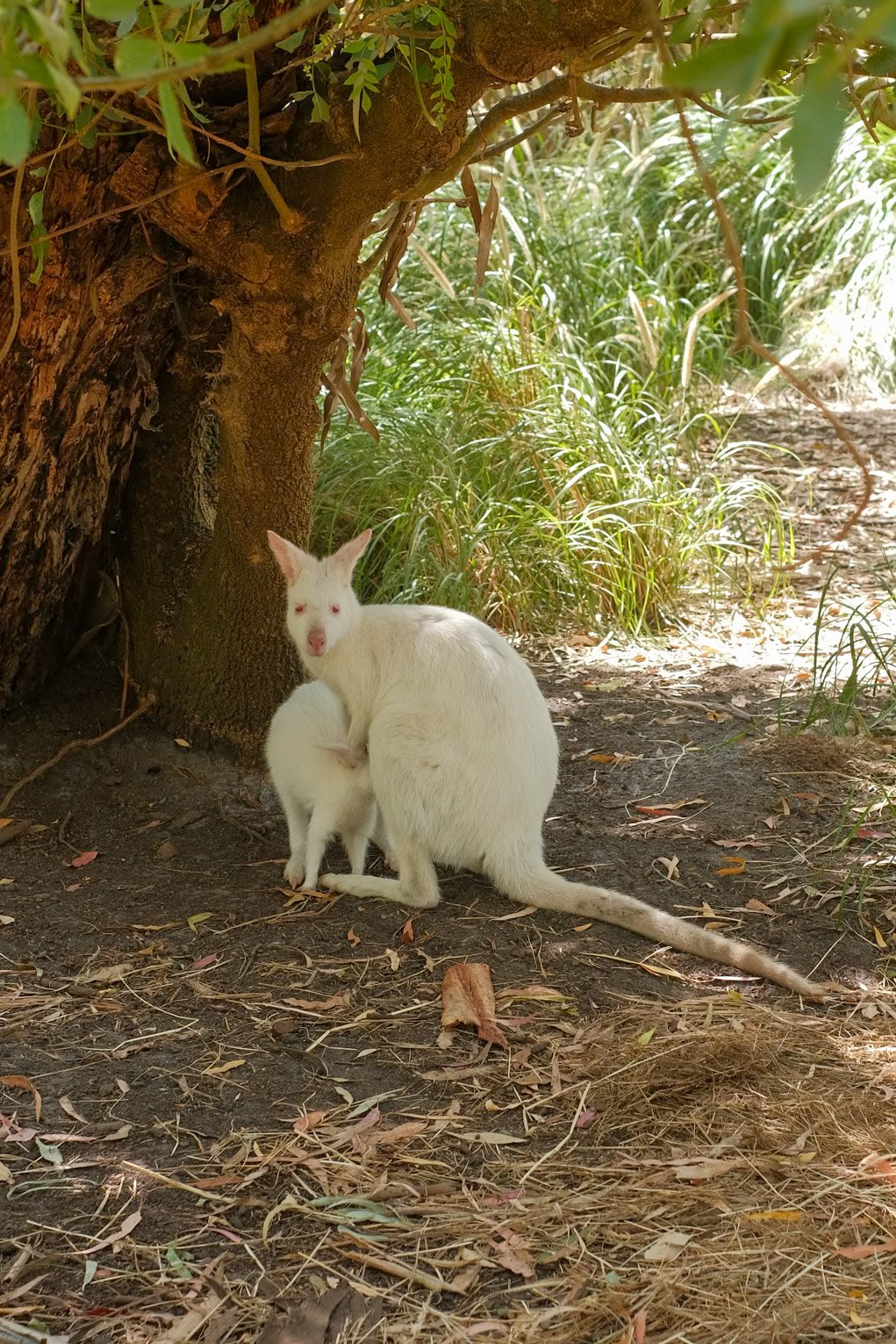
Shortly after, we visited the Great Ocean Road Wildlife Park, where we fed kangaroos and emus and saw other native species up close, including dingoes and wallabies. At the end of our visit, we were introduced to Popeye, the park’s resident koala. While holding koalas is illegal in most Australian states (including Victoria), we were allowed to give Popeye a gentle pat, and his fur was surprisingly very soft. Our guide shared all kinds of koala trivia - like how they eat anywhere from 500 grams to a kilo of eucalyptus leaves each day, yet are incredibly picky, choosing from fewer than 50 of the 700+ species available. Or how they rarely drink water, getting most of their hydration from leaves, with the word “koala” believed to mean “no drink” in an Aboriginal language. After a month in Australia, I can confidently say that koalas have secured a spot in my top three favorite animals.
And with that, our time in Australia comes to a close. Next up: New Zealand, where we’re looking forward to hiking, exploring, and fully embracing life in the land of the hobbits.
Talk soon,
Tanya
