
Hello from country #22, Thailand! When I last visited in 2017, I only made it to Bangkok. At that point in the trip, I’d been bouncing between big cities and remember wishing I had carved out time for the tropical parts of Thailand. This time, I learned my lesson - we’re spending a week in Koh Samui, followed by a few days back in Bangkok.
Koh Samui
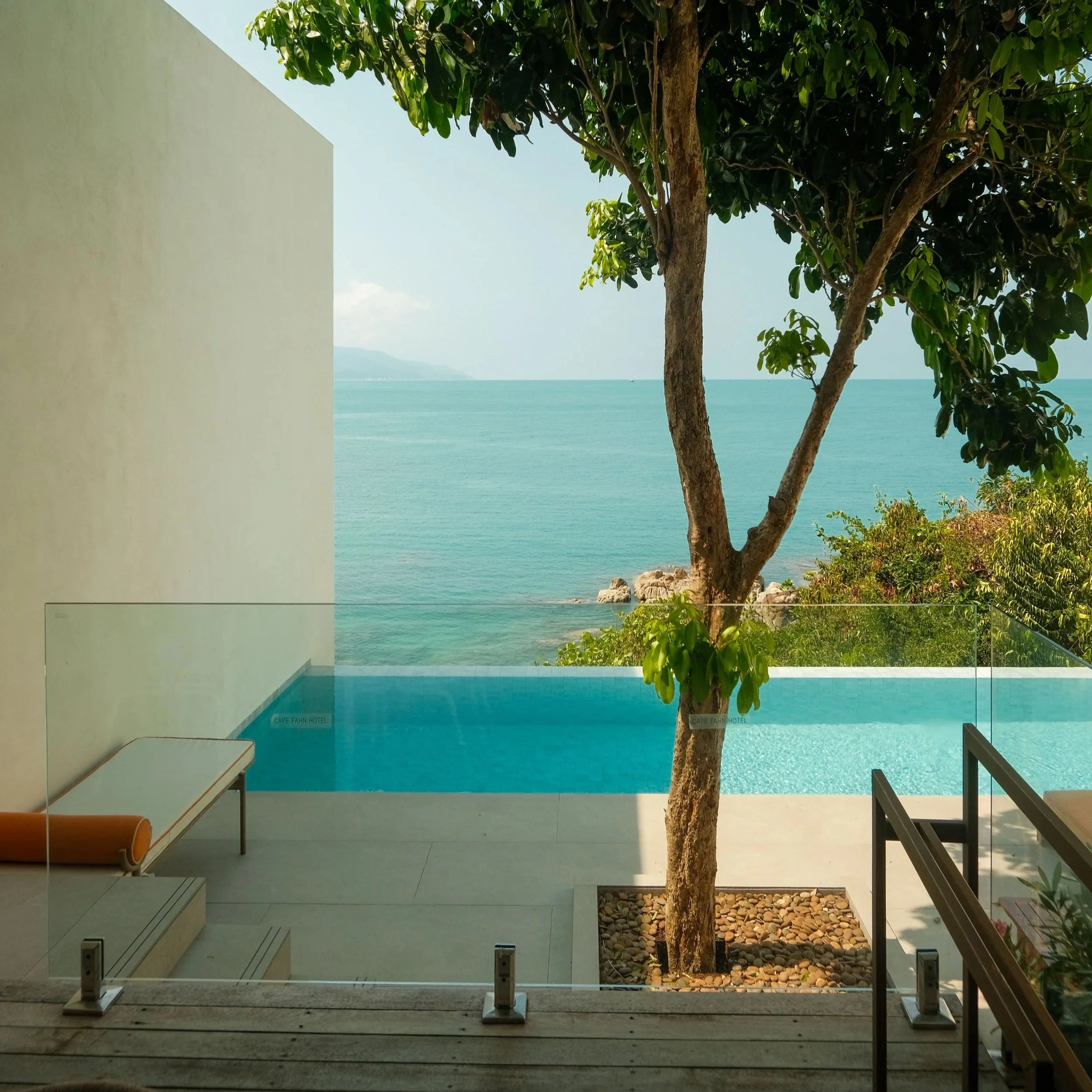
I'll be honest - part of the draw of Koh Samui was that it's where Season 3 of The White Lotus was filmed. If you're not familiar, the show follows a group of wealthy guests and resort staff over the course of a week as things slowly unravel into tension, secrets, and a mysterious death. Staying at the actual White Lotus - the Four Seasons Koh Samui, now reportedly $3,000 a night since the show came out - wasn't exactly in the budget. But following a few nights at a beachfront hotel, we treated ourselves (with our hotel points) to a couple of nights at a resort on a private island, where we stayed in a villa with a private pool overlooking the ocean. It was the kind of place where the room is the destination. We spent hours lounging by the pool, living our best White Lotus life, minus the murder mystery.
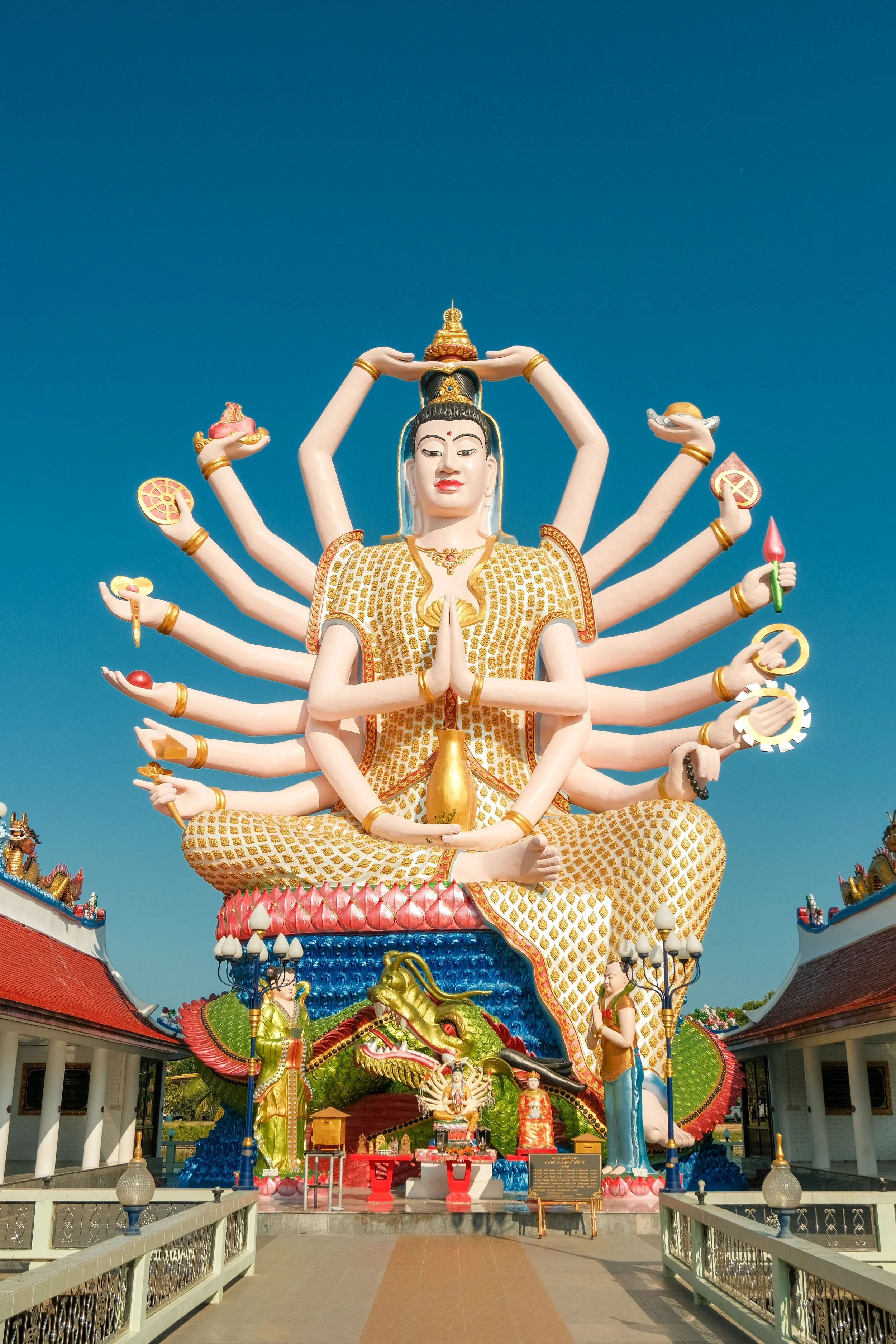
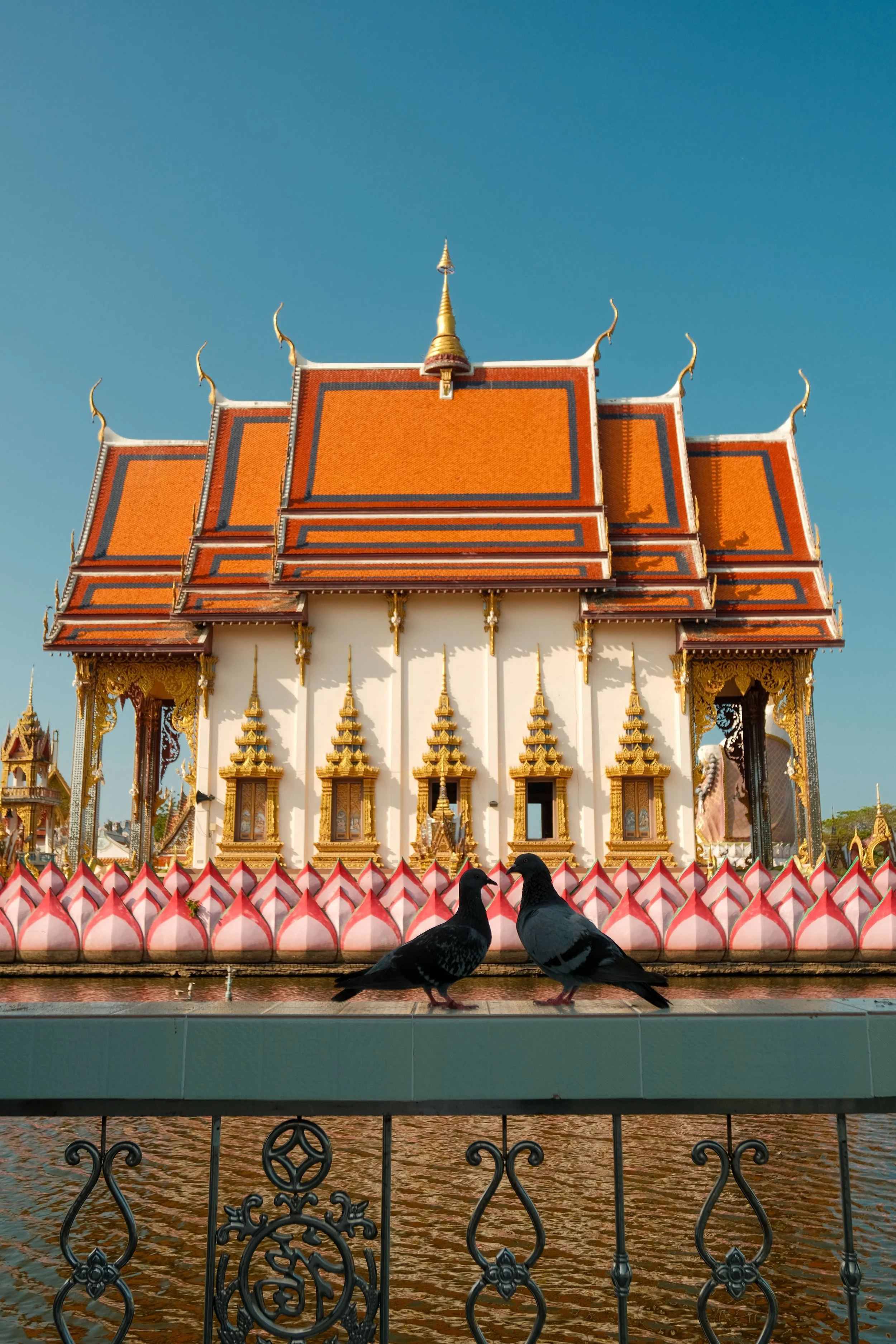
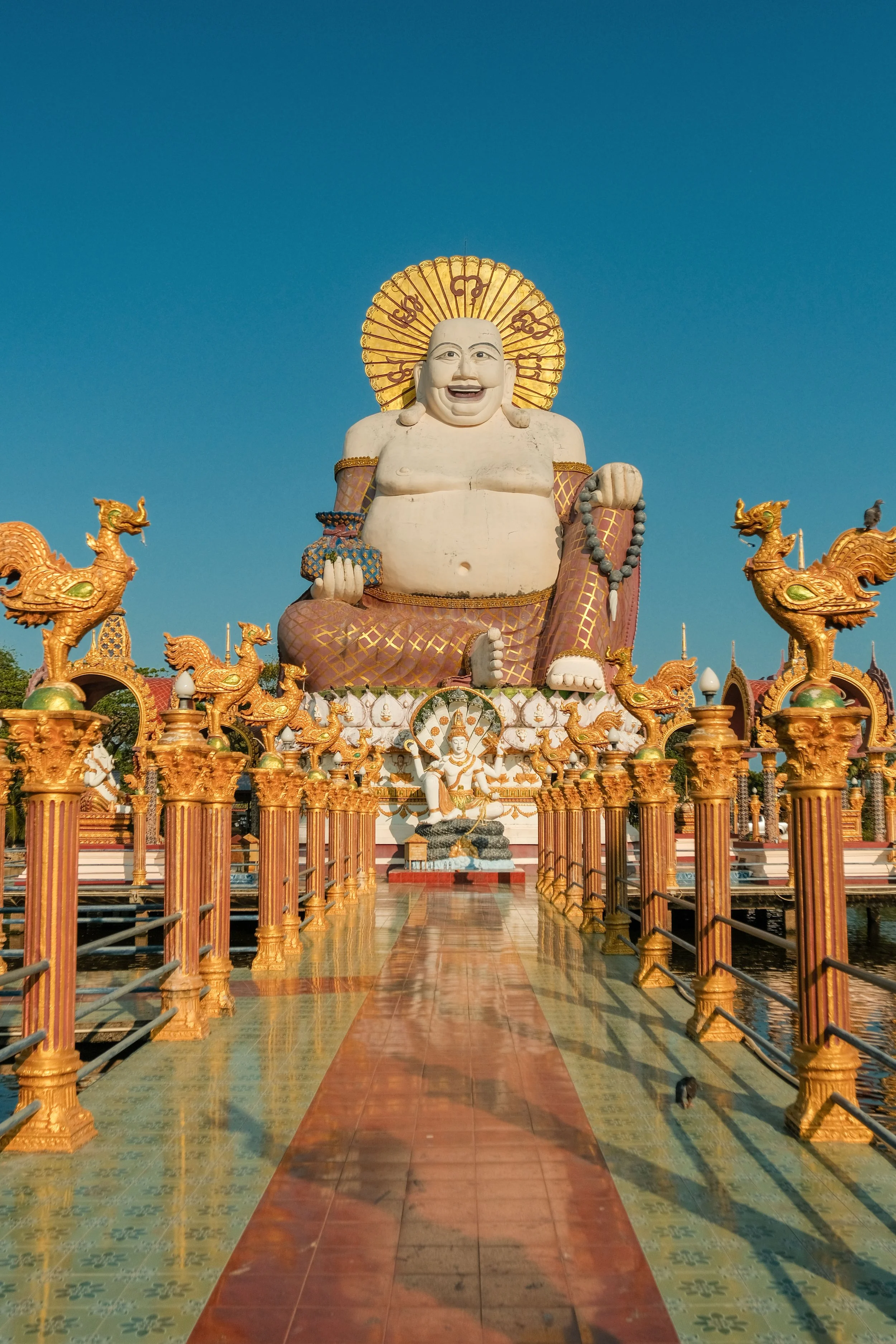
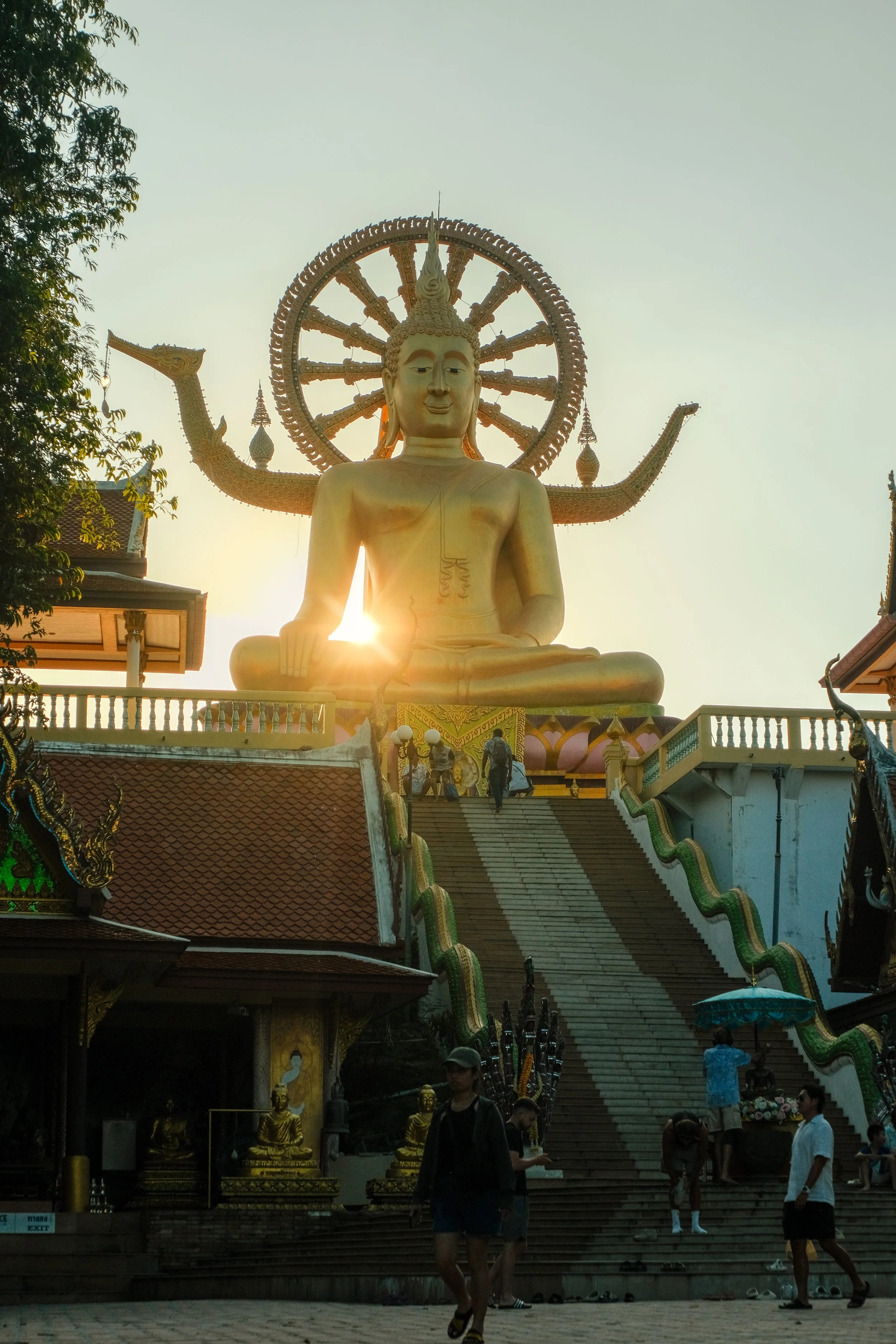
One afternoon, we set out to explore some of the island’s temples. Our first stop was Wat Plai Laem, where we were greeted by a massive, vividly colored statue of Guanyin, the Goddess of Mercy, with 18 outstretched arms. She stands on a lotus platform in the middle of a lake, her many arms symbolizing her ability to help people in countless ways. The whole complex felt bright, ornate, and almost whimsical - quite different from many of the temples we’d seen elsewhere in Southeast Asia. Nearby sits a large statue of the Laughing Buddha, representing happiness and good fortune. Afterwards, we continued to Wat Phra Yai, also known as the Big Buddha Temple. We climbed the long staircase up to the 12-meter-tall golden statue, which felt even more imposing up close. We timed it just before sunset, when the light softened and the coastline stretched out in warm, hazy tones around the temple.
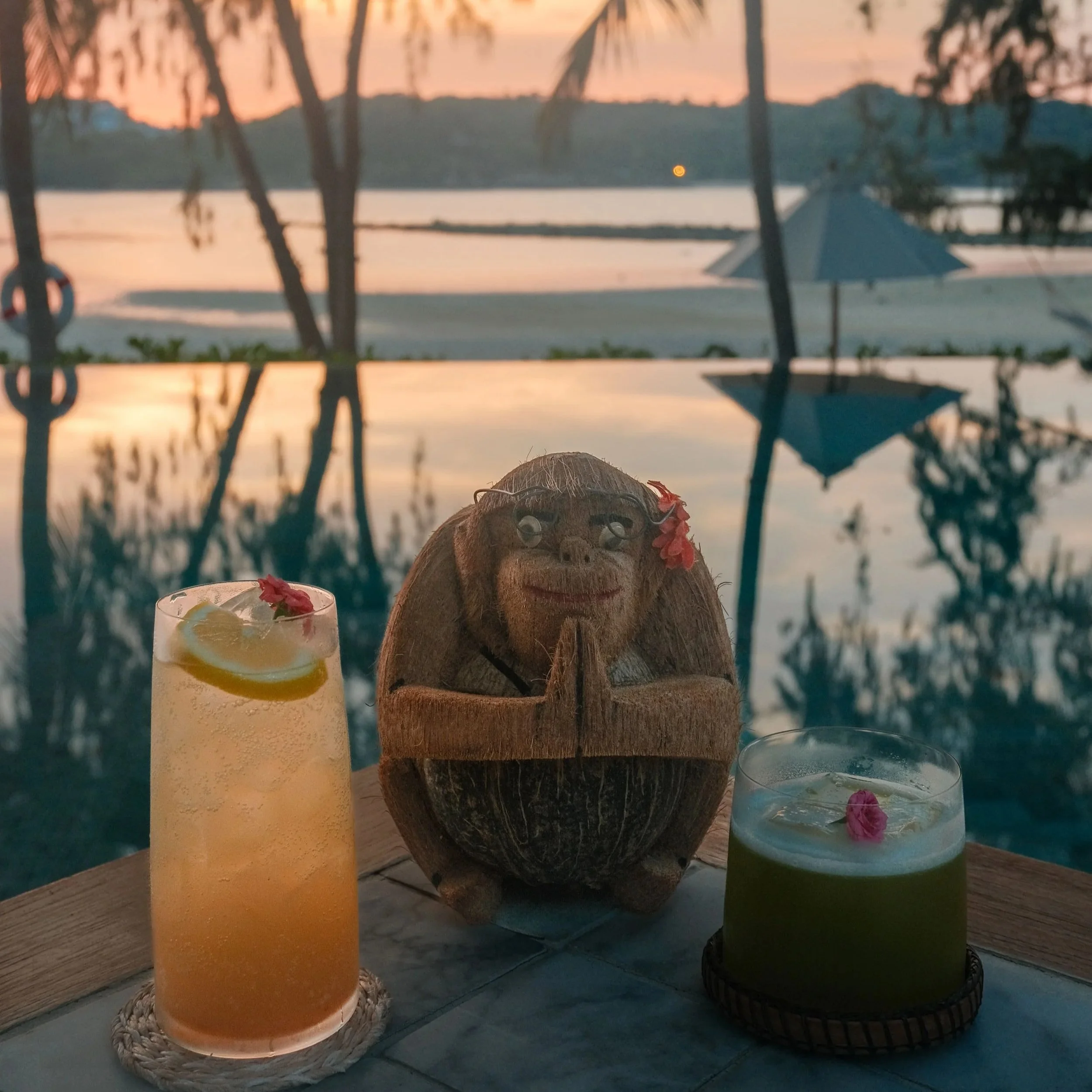
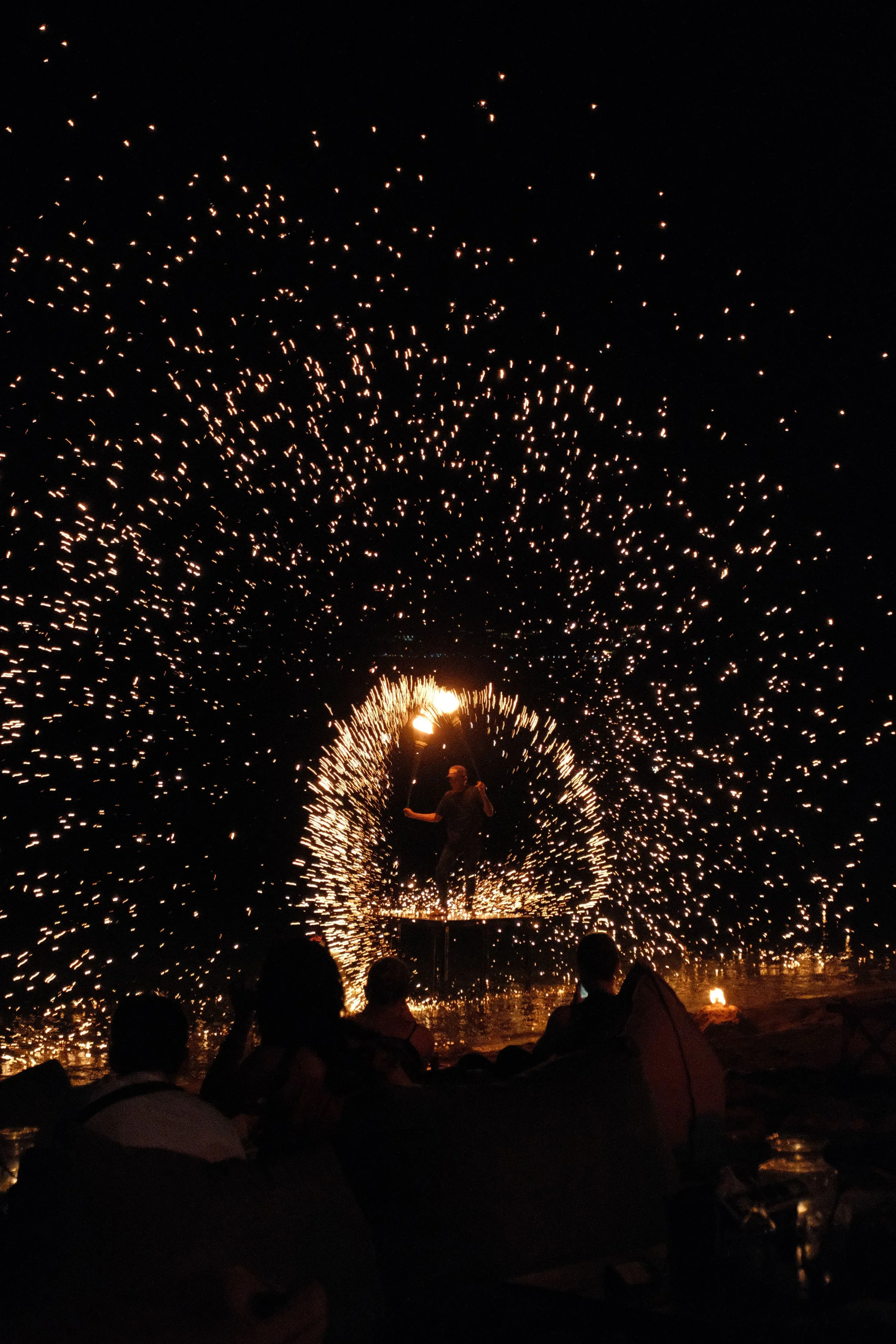
For dinner, we headed to Coco Tam's, a lively beachfront spot where guests lounge on oversized beanbags set directly on the sand. We arrived early enough to snag a spot without a reservation. The beanbags filled up fast, and for good reason. At 7:15pm, just after sunset, a fire show started. Performers spun flaming staffs and chains in fluid, hypnotic patterns, the fire tracing arcs through the dark. At one point, they moved through the crowd, spinning a ring of fire just above people’s heads - mine included. Normally, that would’ve stressed me out, but they were so skilled that I fully trusted them to not burn my hair off.
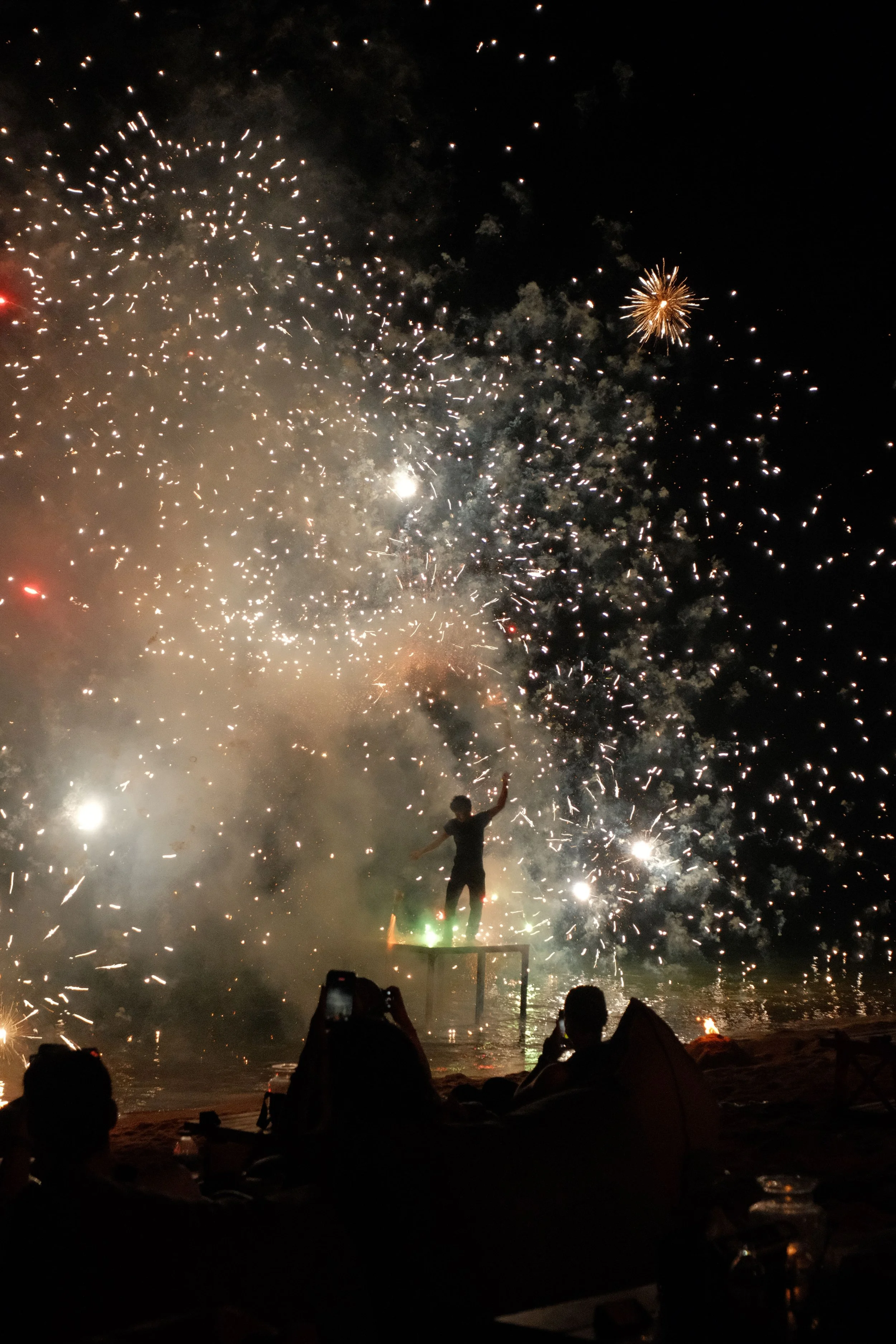
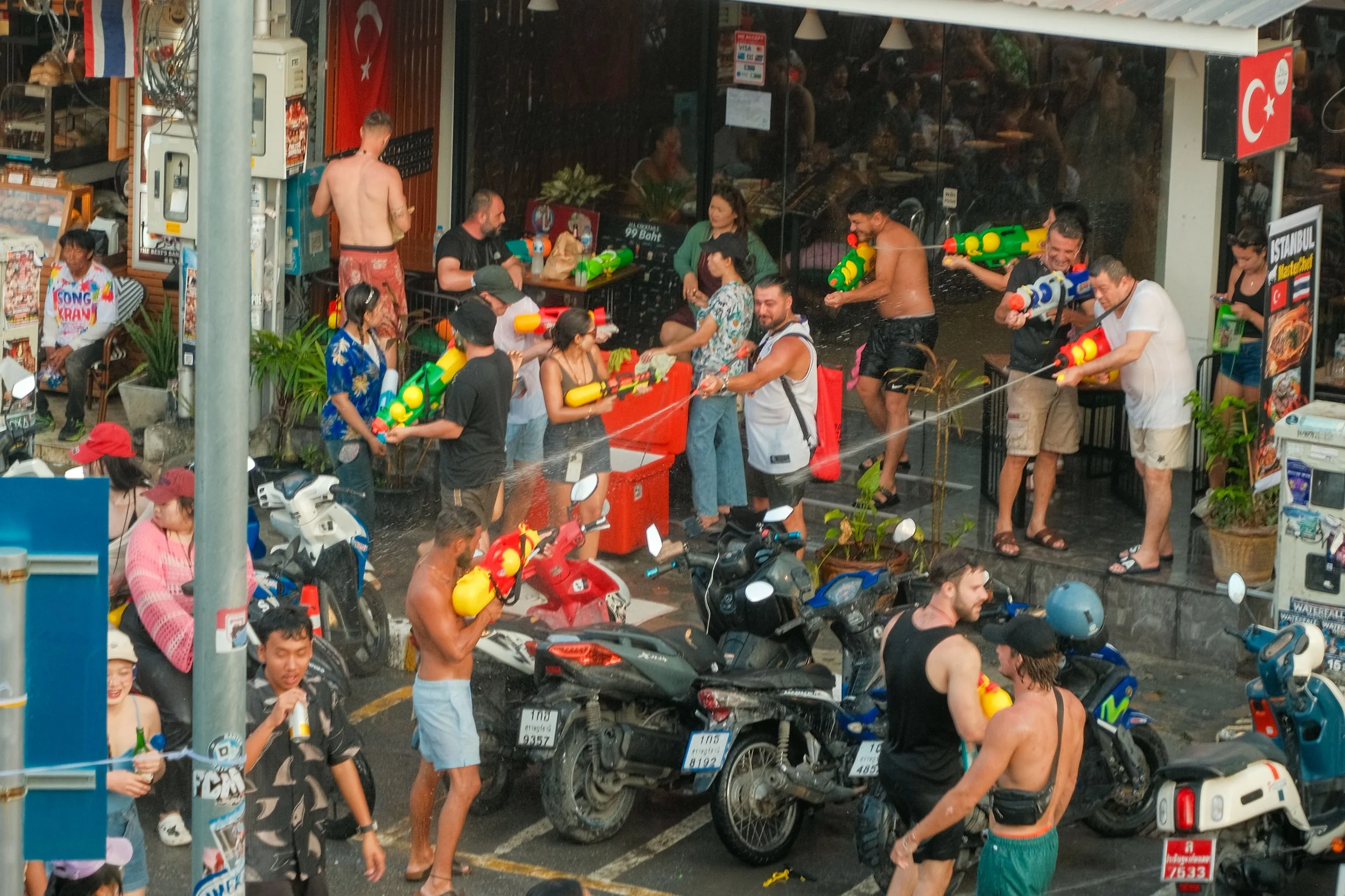
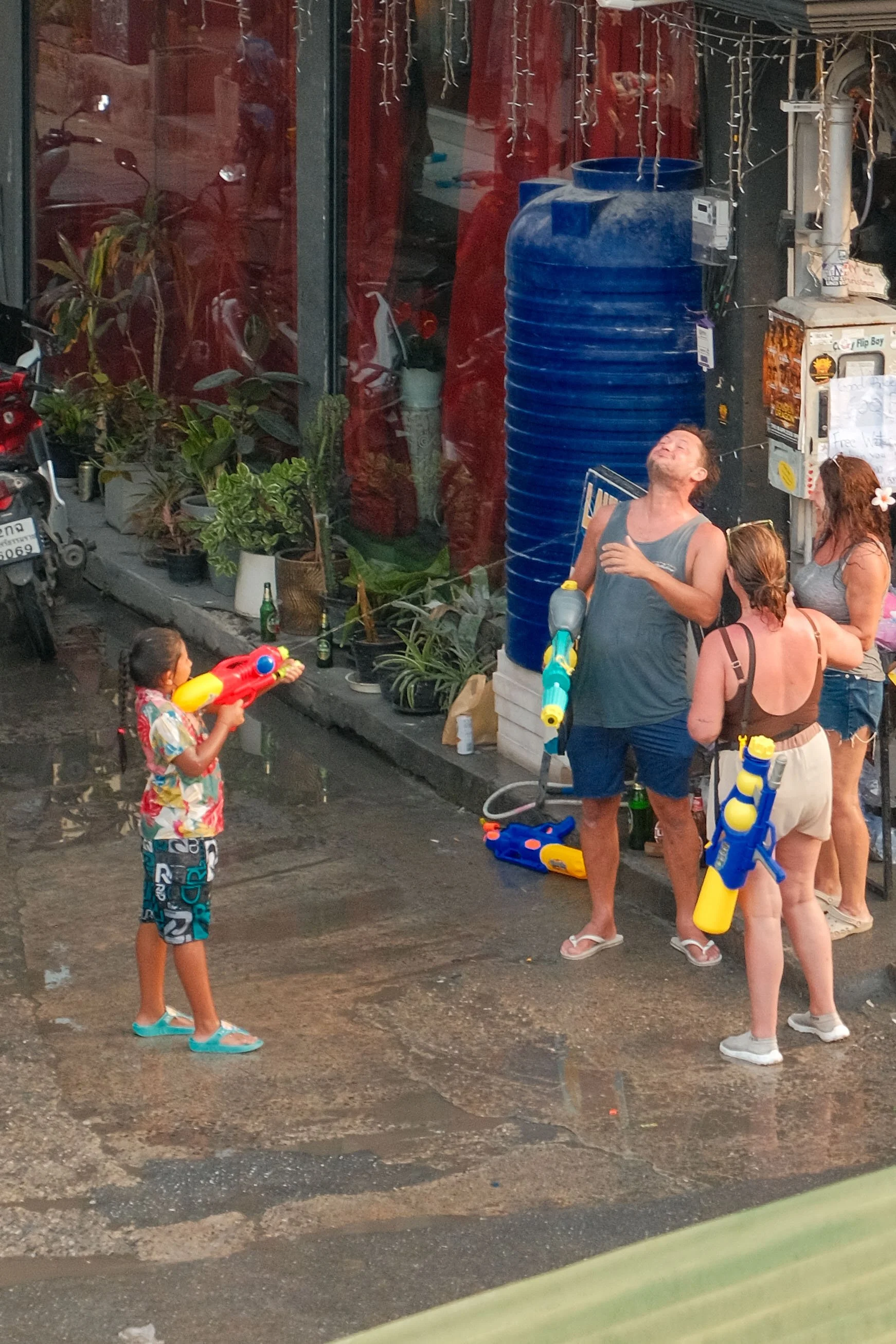
One of the highlights of our time in Koh Samui was celebrating Songkran, Thailand’s traditional New Year. Historically, it’s about washing away bad luck and showing respect to elders by gently pouring water over their hands. In modern times, it’s evolved into a giant nationwide water fight. If you’ve seen The White Lotus, you might remember the scene where the trio of women gets chased through the streets by kids with water guns - that scene honestly wasn’t too far off.
We headed to Chaweng Beach’s main strip and were immediately pulled into the chaos. Within minutes, we were soaked - a kid nailed us with a water gun, and someone else dumped a bucket of ice-cold water down our backs. Thankfully, we’d come prepared with a dry bag and quick-dry clothes. All around us, pickup trucks full of people cruised by, blasting water at pedestrians, who fired back with hoses and water guns. It was loud, messy, and full of joy. After a while, we gave in and bought our own water guns from a street vendor so we could join in properly. It was surprisingly wholesome - just people of all ages running around, laughing, and soaking each other. Not many situations in adulthood where you get a chance to shoot water guns at complete strangers.
Bangkok
After a week in Koh Samui, we made our way north to Bangkok. With only three days here, we decided to skip the usual temple circuit - both of us had seen them on earlier trips - and instead explore parts of the city we hadn’t spent much time in before.
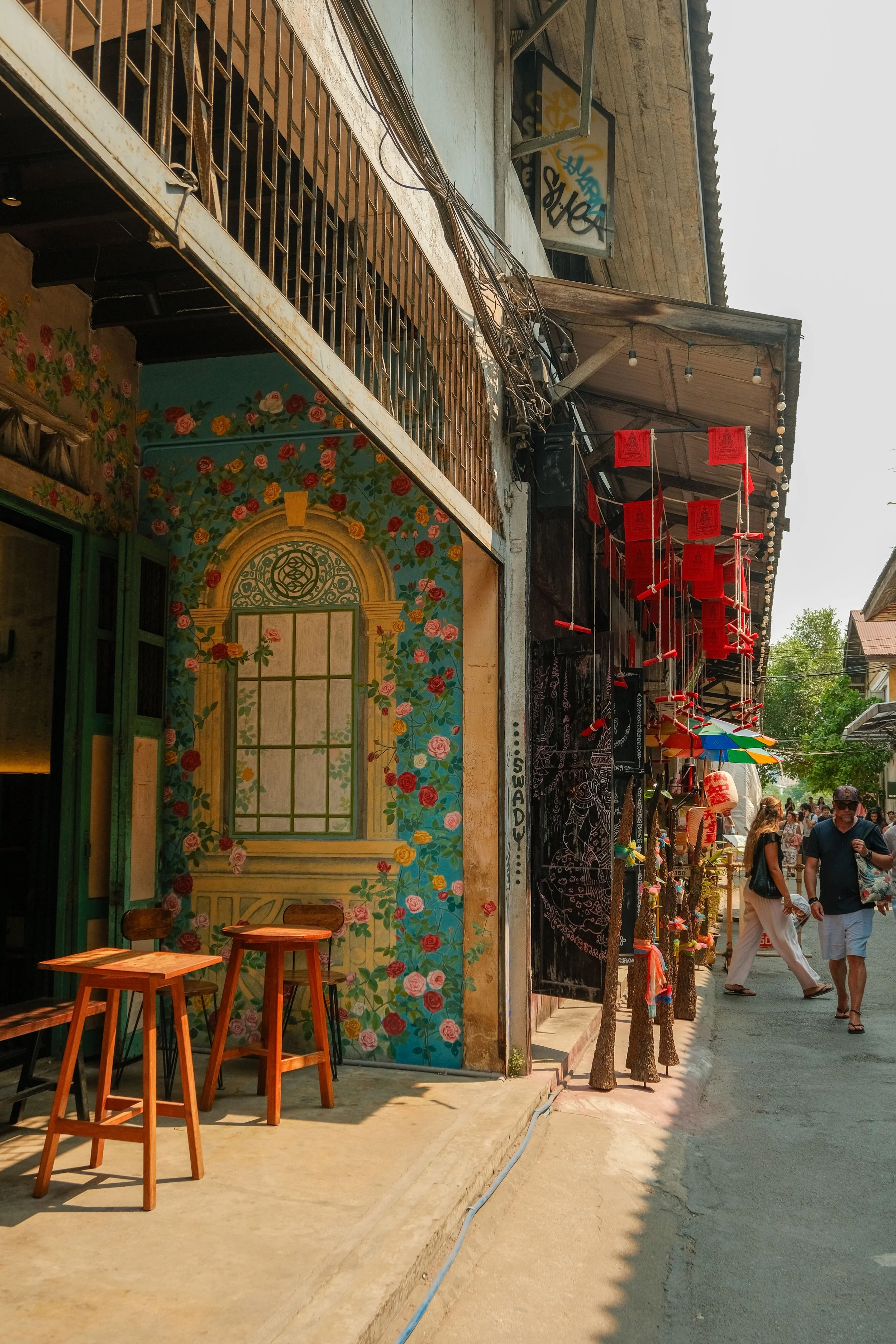
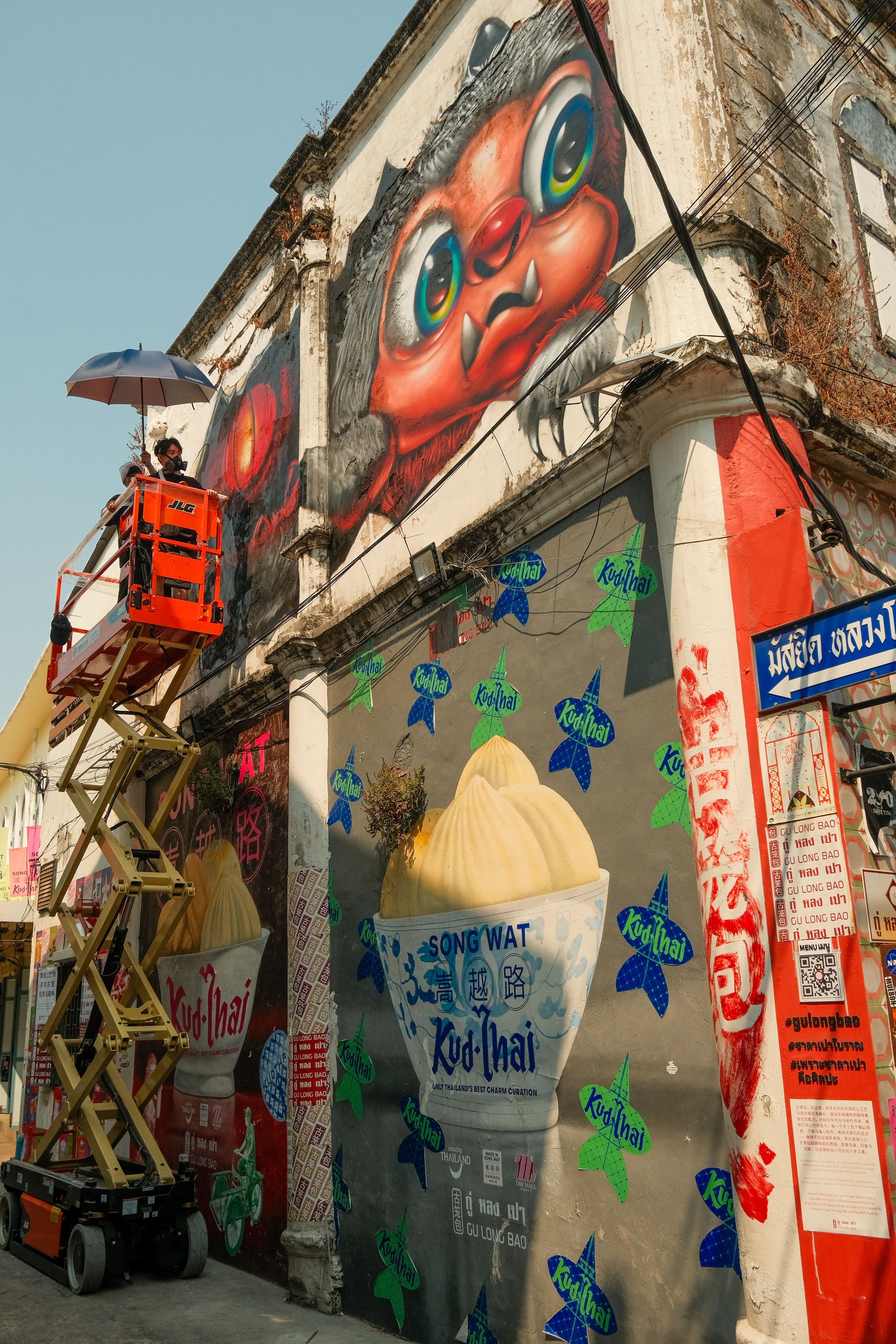
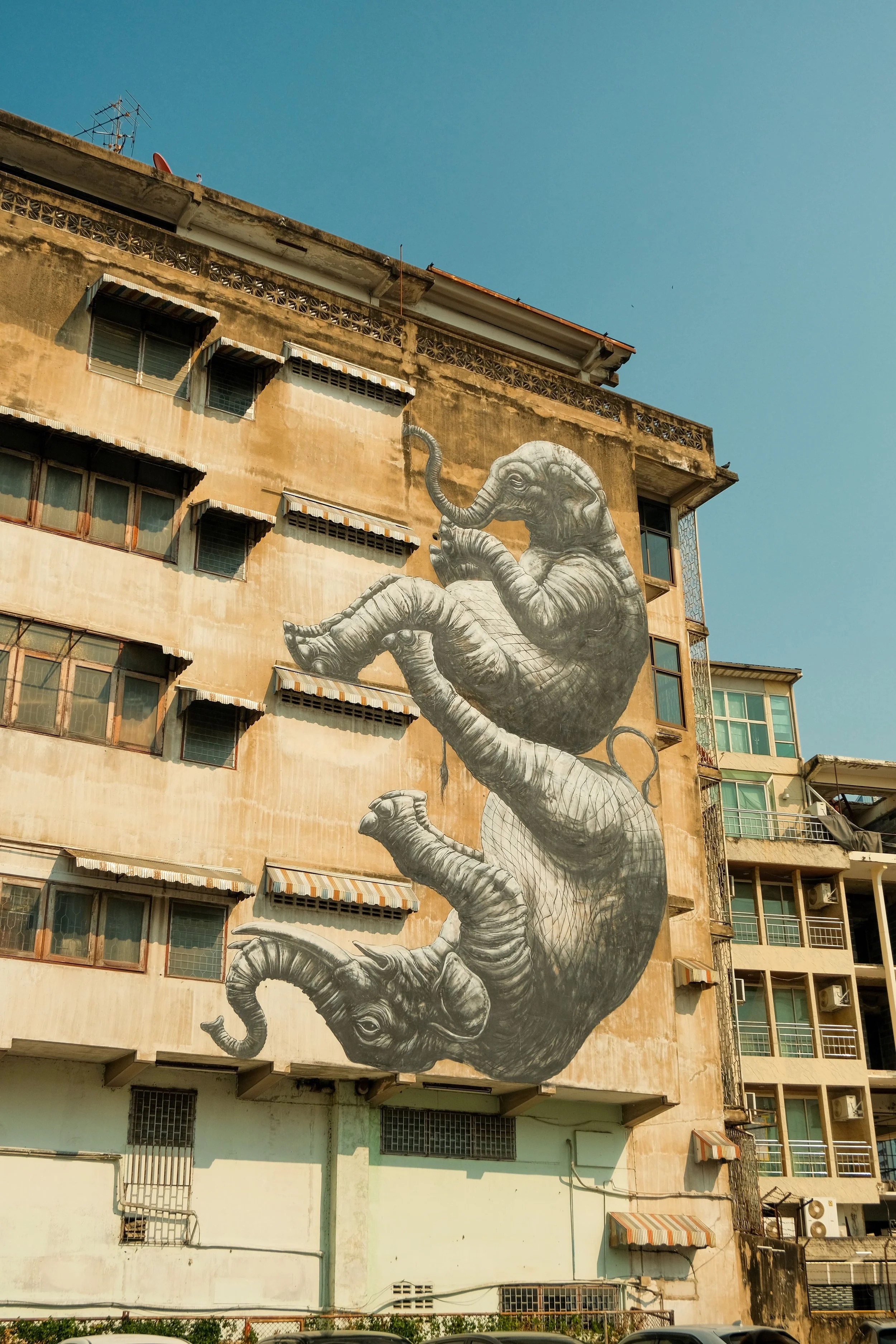
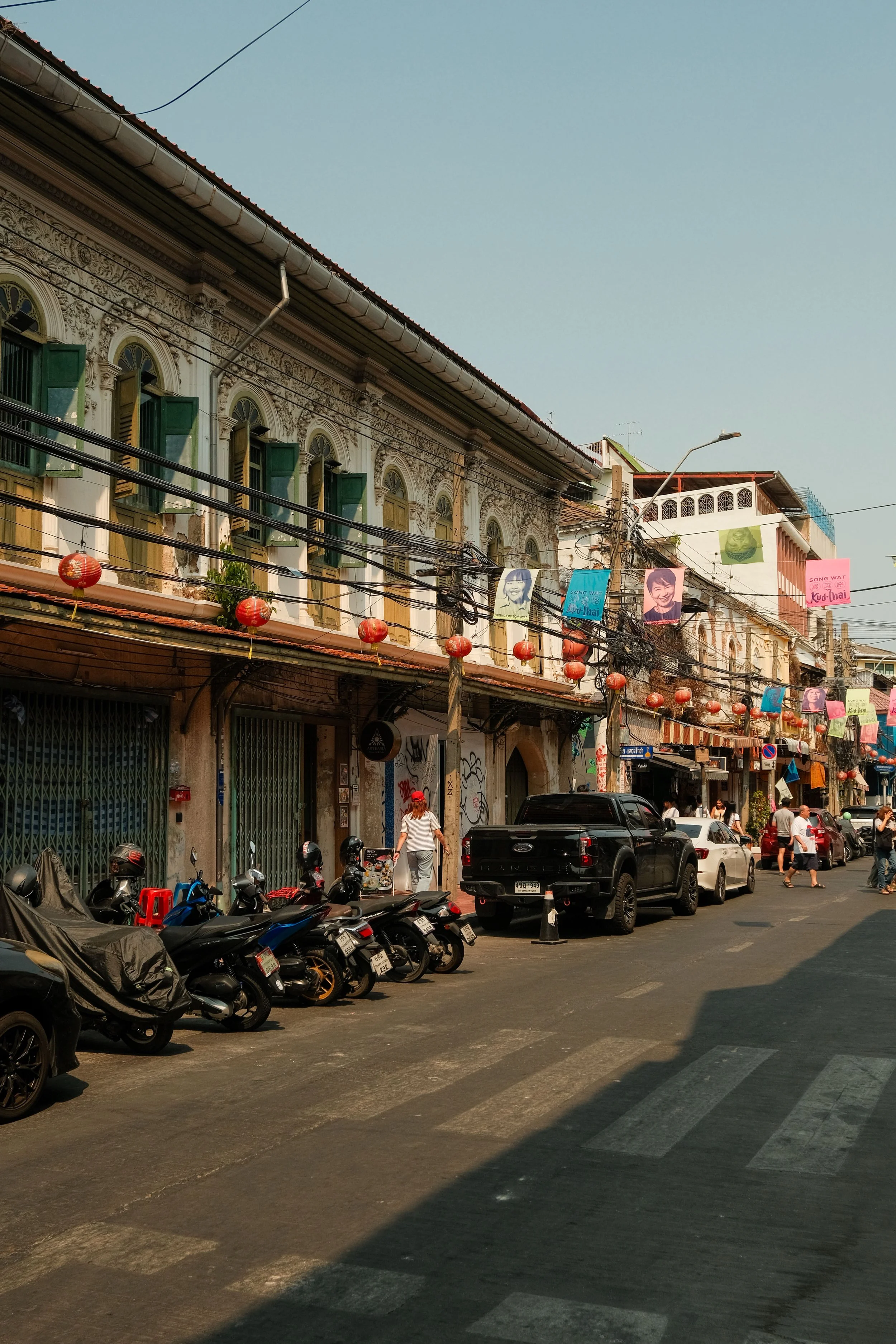
One afternoon, we wandered around Song Wat Road, a historic trading street along the edge of Chinatown. The neighborhood still holds onto its century-old character, with faded wooden shutters, pastel façades, ornate balconies, and tiled walkways, even as the ground floors have transformed into modern cafés, galleries, and vintage shops. It was nearly 100 degrees outside, so we ended up ducking in and out of shops mostly for the AC, which turned out to be a nice excuse to slow down and take everything in. I especially liked the street art murals layered onto the sides of the shophouses - old and new blending together in a way that felt very Bangkok.
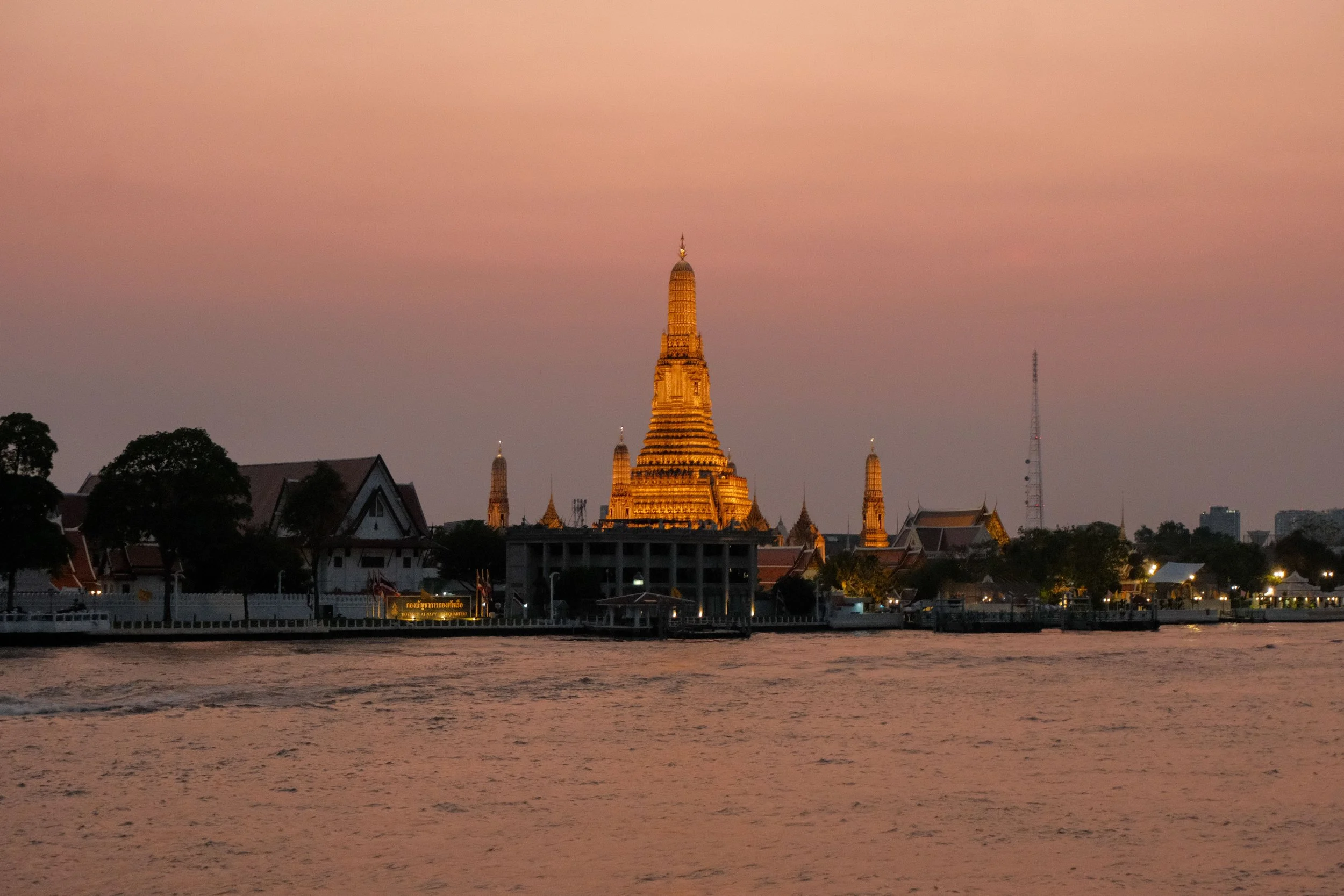
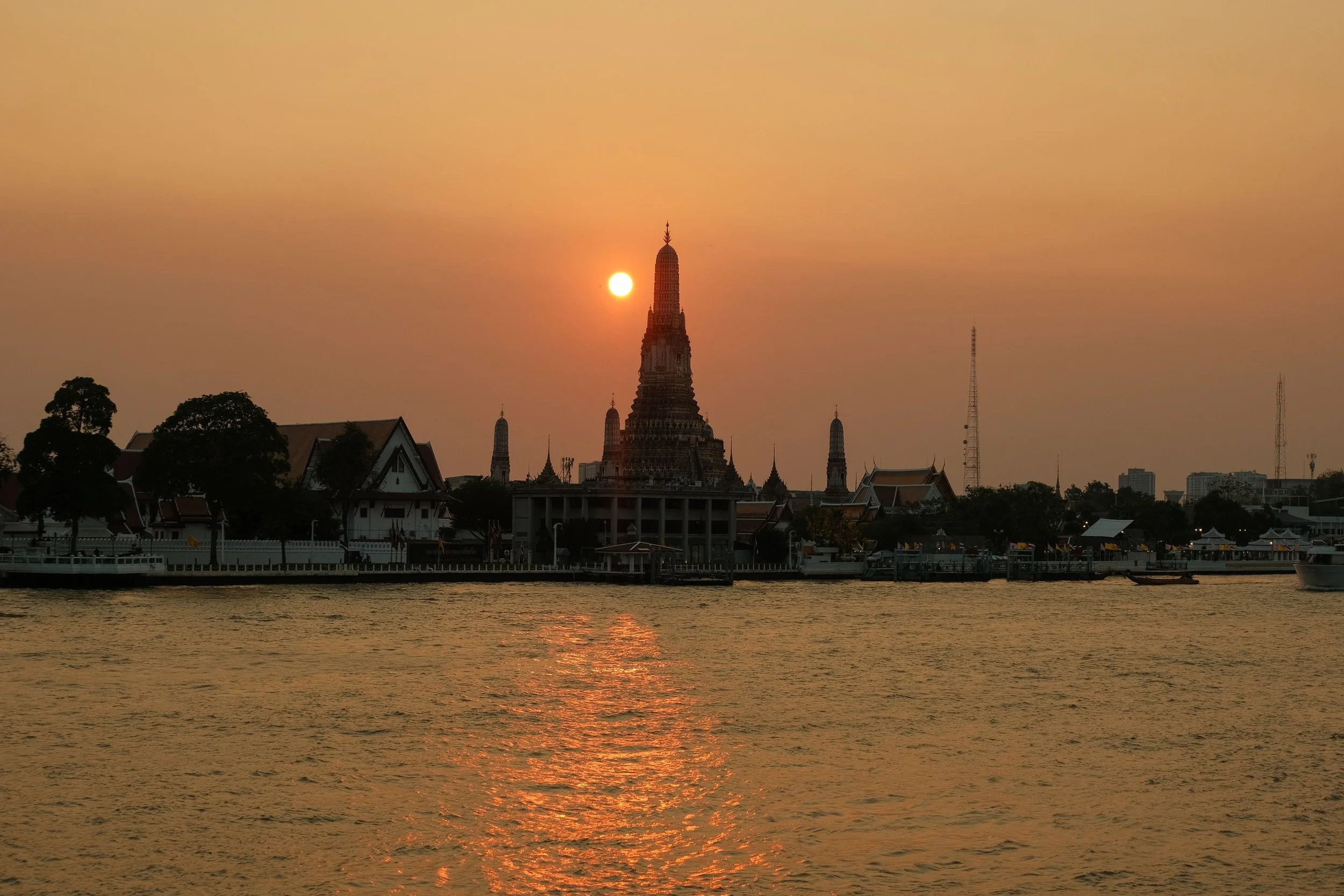
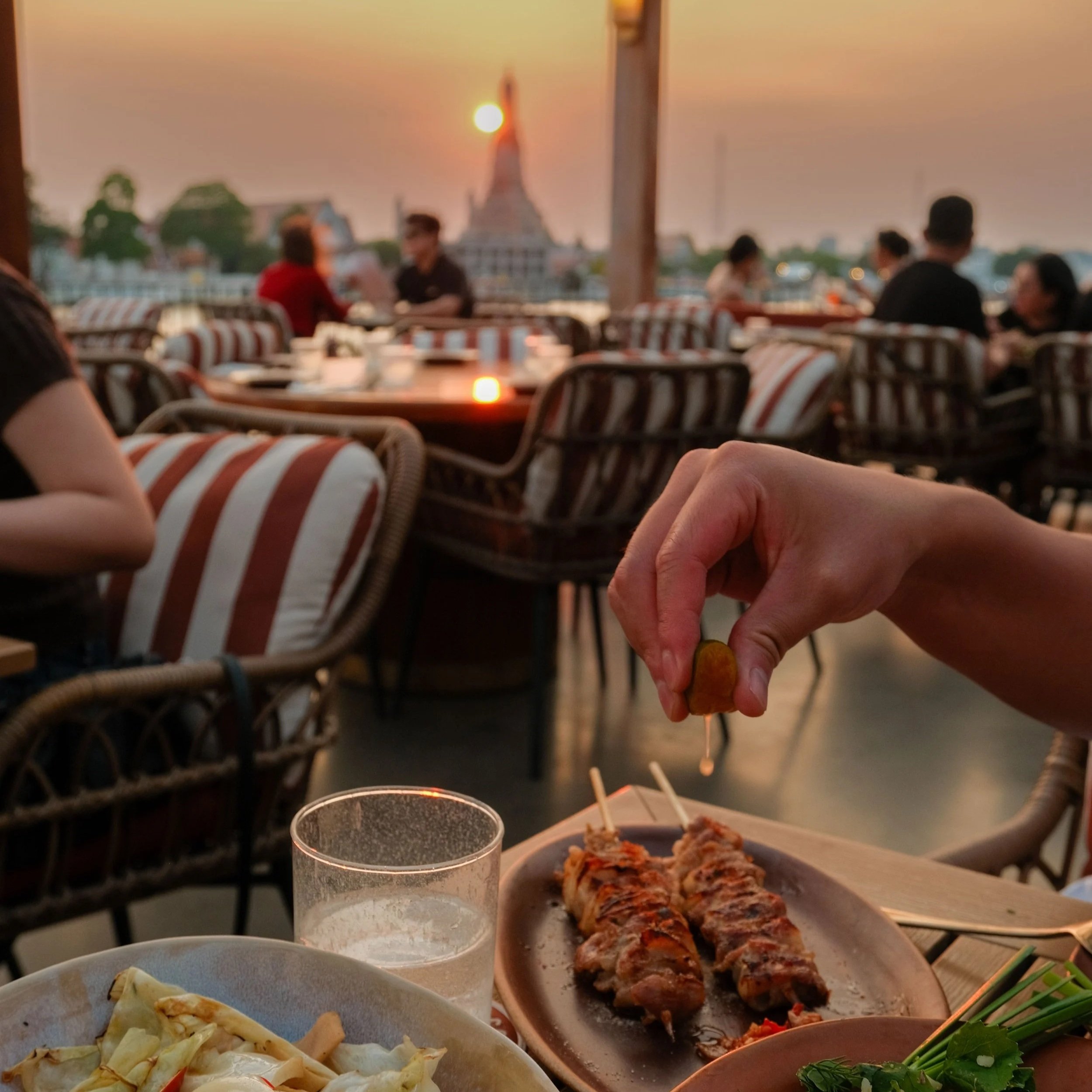
For dinner, we went to Horsamut, a riverside restaurant on the Chao Phraya River. I picked it mostly for the view - it sits directly across from Wat Arun, the Temple of Dawn. It felt like a good compromise for skipping the temples but still getting to admire them from a distance. We sat on the rooftop as the sun set behind Wat Arun, the light shifting from gold to deep orange over the water. The food turned out to be just as good as the view - pork belly skewers with an addictive spicy sauce, crab fried rice, grilled squid, and stir-fried cabbage. One of the best meals we had in Thailand.
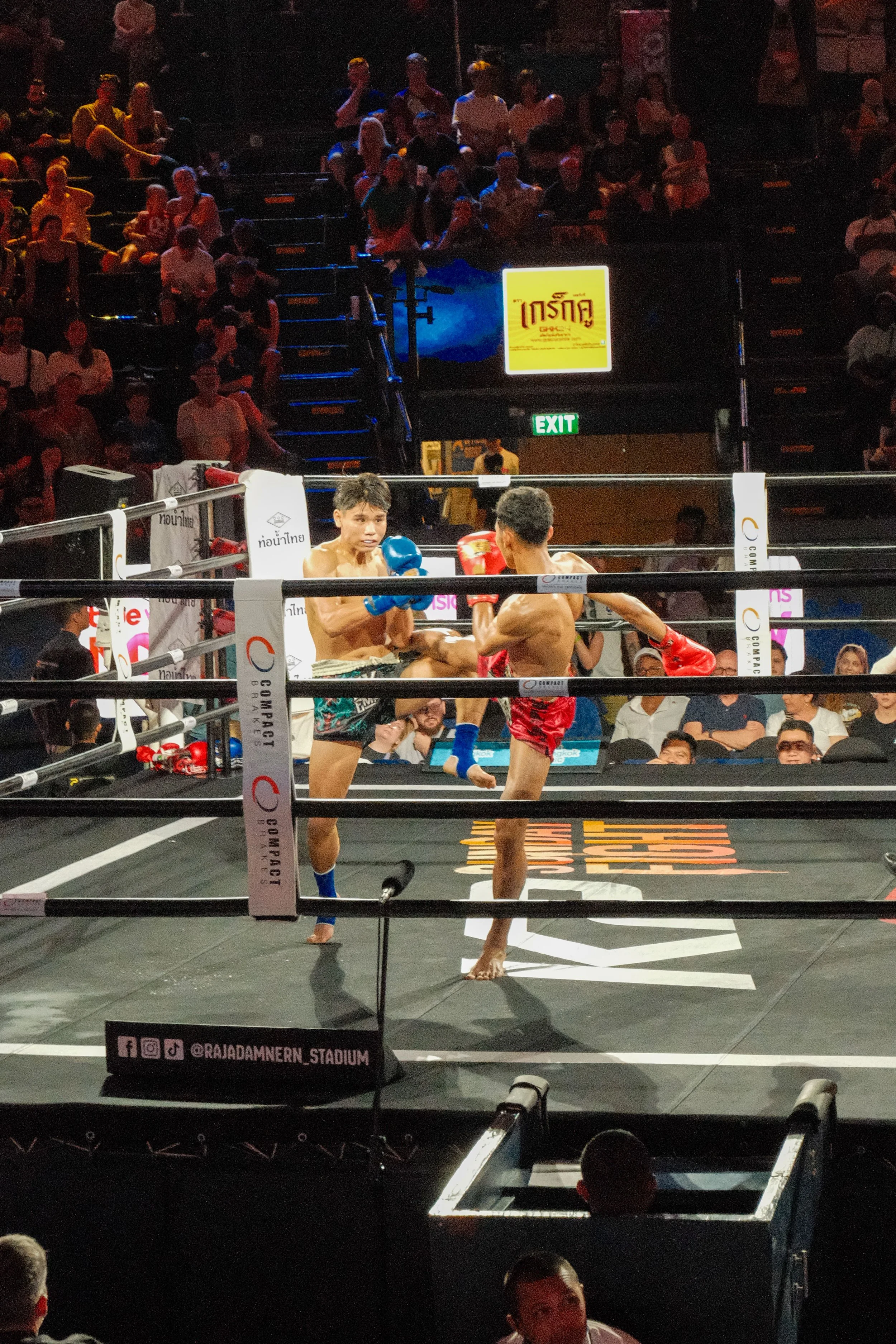
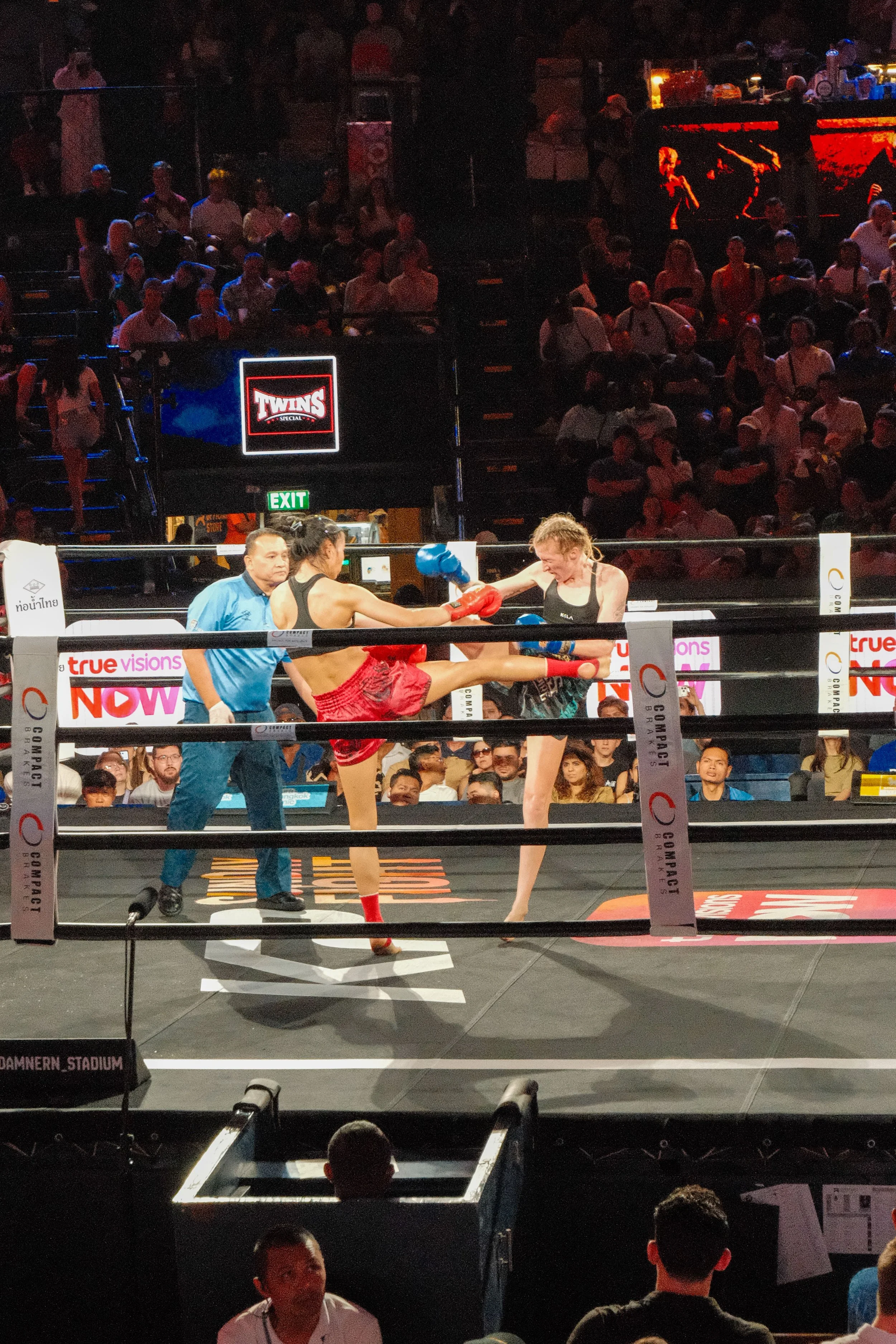
One of Hanqing’s “must do’s” in Thailand was watching a Muay Thai fight. I’ll admit I’m not a big fan of watching combat sports, but it ended up being one of the most memorable nights of the trip. We went to Rajadamnern Stadium, the oldest Muay Thai stadium in Thailand and one of the sport’s most prestigious venues (described by our host as the Madison Square Garden of Muay Thai). Unlike the Lucha Libre show we saw in Mexico City, these fights were fully real, which somehow made it easier to get invested. We watched seven matches, each made up of three to five rounds of a few minutes each. Muay Thai is more technical than it looks - timing and balance matter more than raw strength, and fighters use everything: fists, elbows, knees, shins. We saw a few knockouts, including one where a kick to the lower leg sent a fighter straight to the ground. Nerve shock, apparently.
Between matches, they played a short video on the history of Muay Thai. It developed over centuries as a military skill - a way for soldiers to keep fighting after losing their weapons - before evolving into a national sport and cultural institution. Fights are accompanied by live traditional music, led by a loud double-reed instrument. The tempo shifts in real time with the action - faster when exchanges heat up, slower during pauses - which added an unexpected rhythm to everything unfolding in the ring. I went into the evening skeptical and came out glad we went.
That’s a wrap on our time in Thailand. Next stop: Bhutan!
Talk soon,
Tanya
