
Bhutan: Land of the Thunder Dragon
I’m writing from a very exciting place this week: the kingdom of Bhutan! Tucked into the eastern Himalayas between India and Tibet, Bhutan is a small, landlocked country, nicknamed the Land of the Thunder Dragon for the storms that roll through its mountain valleys. The national flag even features a white dragon clutching jewels, and it might be one of my favorites (after the Maryland flag, of course). Despite its size, Bhutan is one of the most distinctive places we’ve visited so far - culturally, spiritually, and politically.
Getting There
Visiting Bhutan takes some planning. The country deliberately limits tourism, as part of a "High Value, Low Volume" model designed to protect the environment and preserve cultural heritage. It’s nearly impossible to visit without a licensed guide and driver. After some research, we booked a seven-day tour with Breathe Bhutan, a company focused on authentic experiences that support local communities.
There’s also a daily Sustainable Development Fee (SDF) of $100 per person - temporarily reduced from $200, with plans to return to that rate in 2027. It’s not insignificant, but it funds free healthcare, education, and conservation efforts across the country. The results are pretty clear. Bhutan is the world’s only carbon-negative country, meaning its forests absorb more carbon than the country emits. By law, at least 60% of the land must remain forested; today, it’s closer to 70%. Most of the country’s energy comes from hydropower, and the country hopes to reach net zero greenhouse gases by 2030.
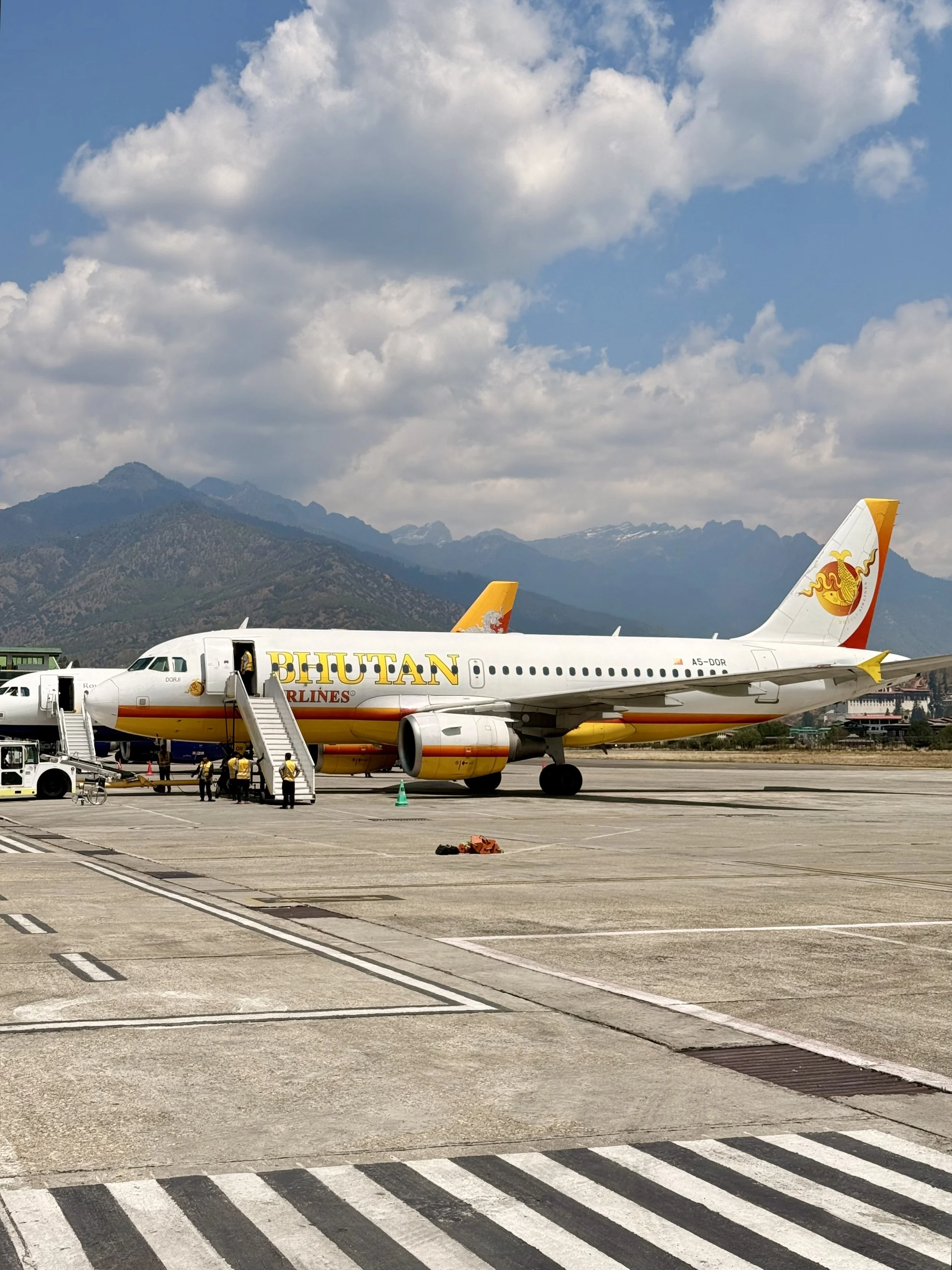
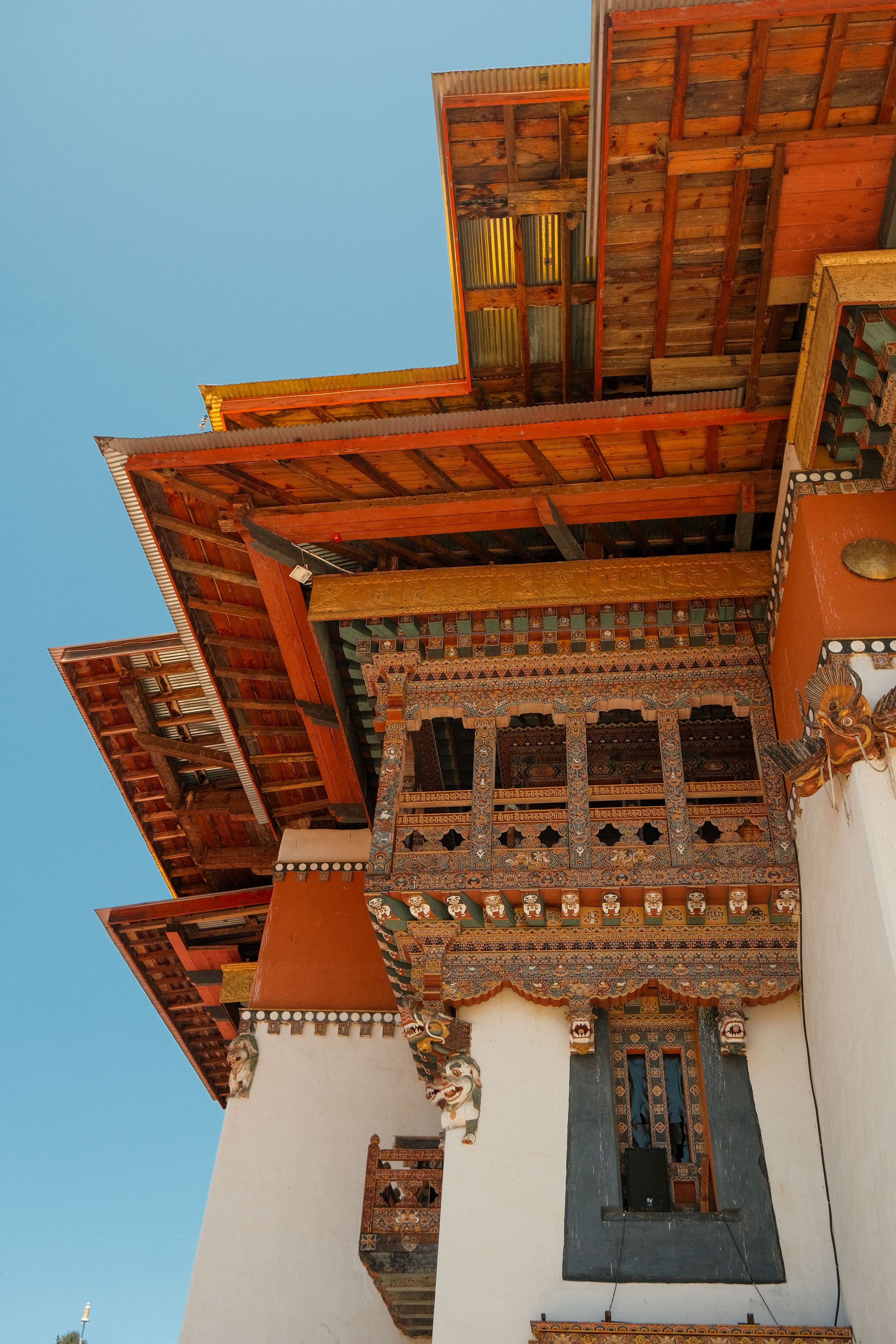
Getting there is part of the experience. Bhutan has just one international airport, in Paro, and the landing is famously tricky. The approach requires flying close to steep mountain walls before touching down on a short runway, and only around 50 pilots in the world are certified to do it. We made it safely, stepped off the plane, and were immediately struck by the airport building itself: intricately carved wooden beams, golden sloped roofs, hand-painted geometric patterns. It turned out to be a preview of what we'd see everywhere in Bhutan - every single structure in the country is built in traditional Bhutanese style. Not one skyscraper, not one generic glass box.
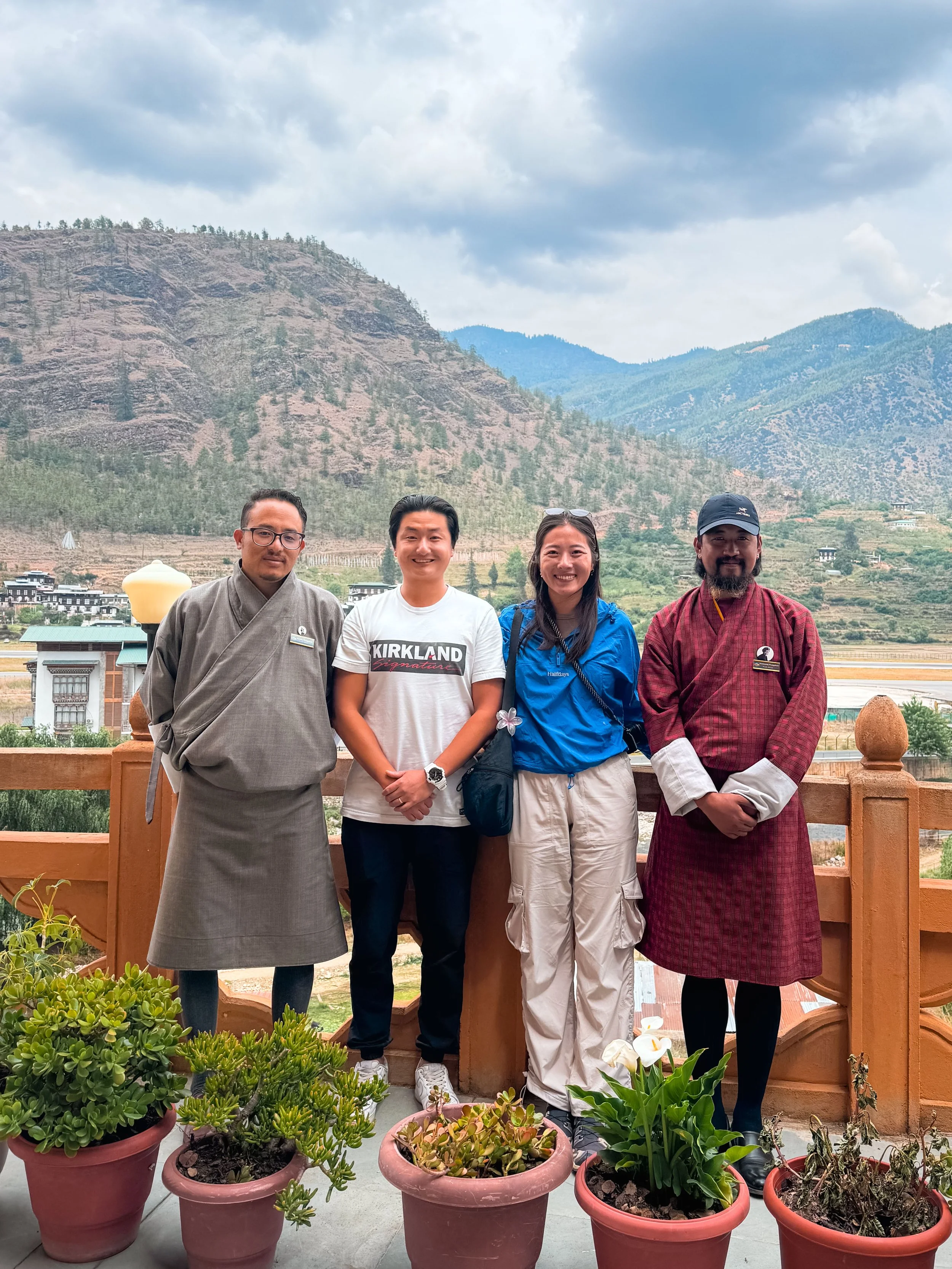
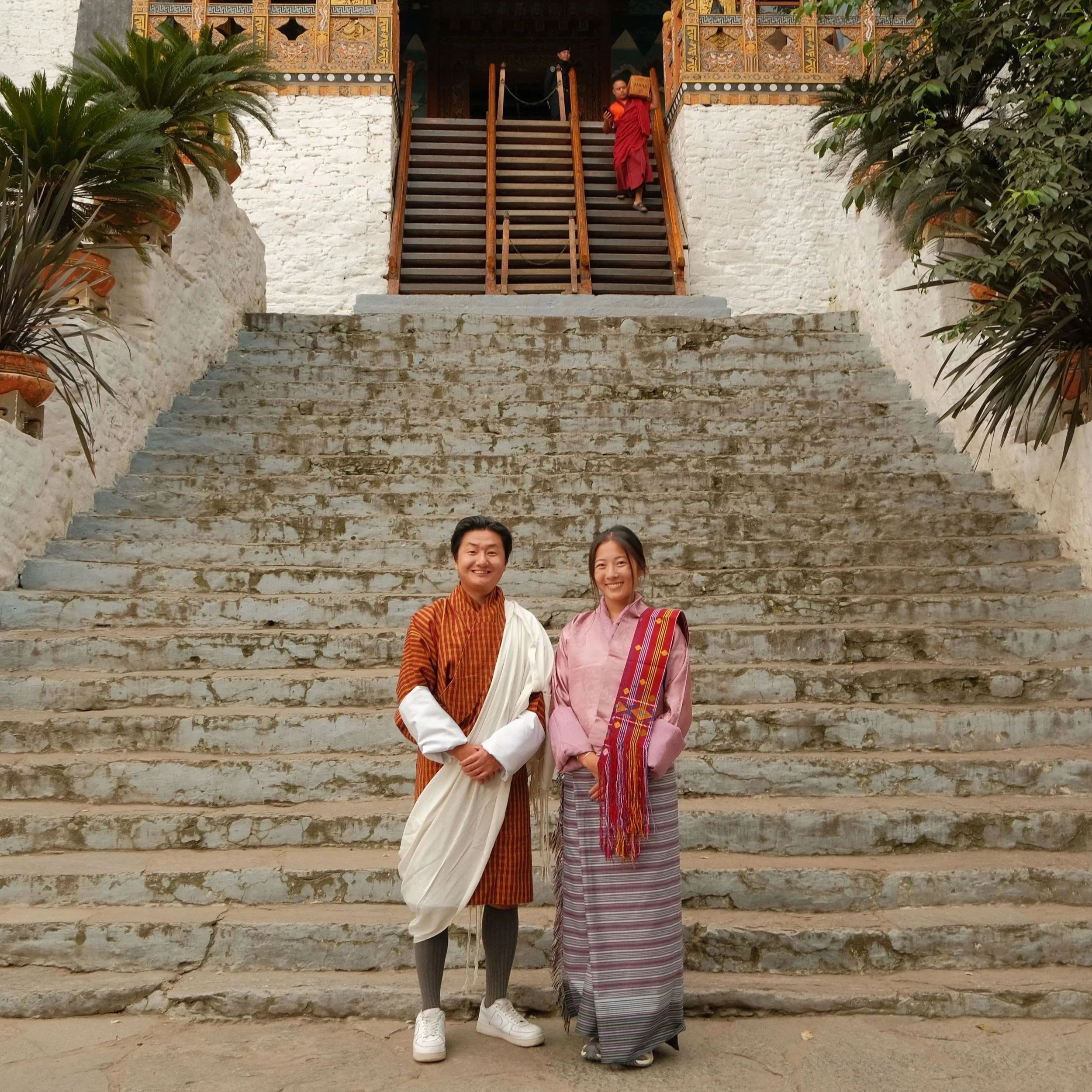
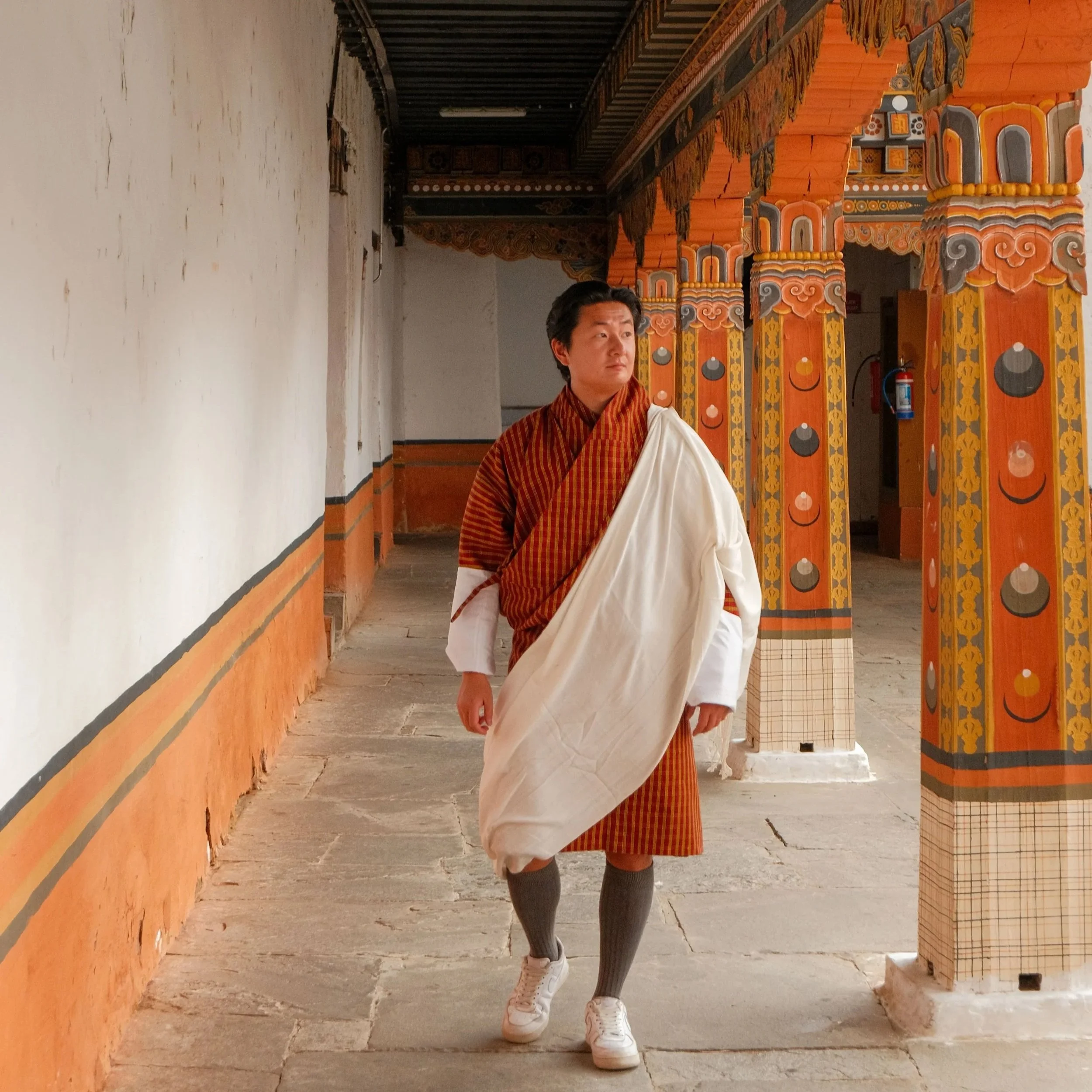
Our guide, Kuenzang, and driver, Karma, met us outside the airport with traditional white scarves called khatas - symbols of purity and respect - along with some gifts and cups of rice wine. From the moment we arrived, it was clear that tradition here isn’t just preserved, but actively lived. Both Kuenzang and Karma were dressed in the gho, the knee-length robe worn by Bhutanese men, paired with tall black socks and a kabney draped over one shoulder. Women wear the kira, an ankle-length patterned skirt layered with a blouse, a fitted jacket called a toego, and a colorful embroidered scarf known as a rachu. While they told us they dress more casually at home, traditional attire is still the norm in public spaces and at work.
A Buddhist Kingdom
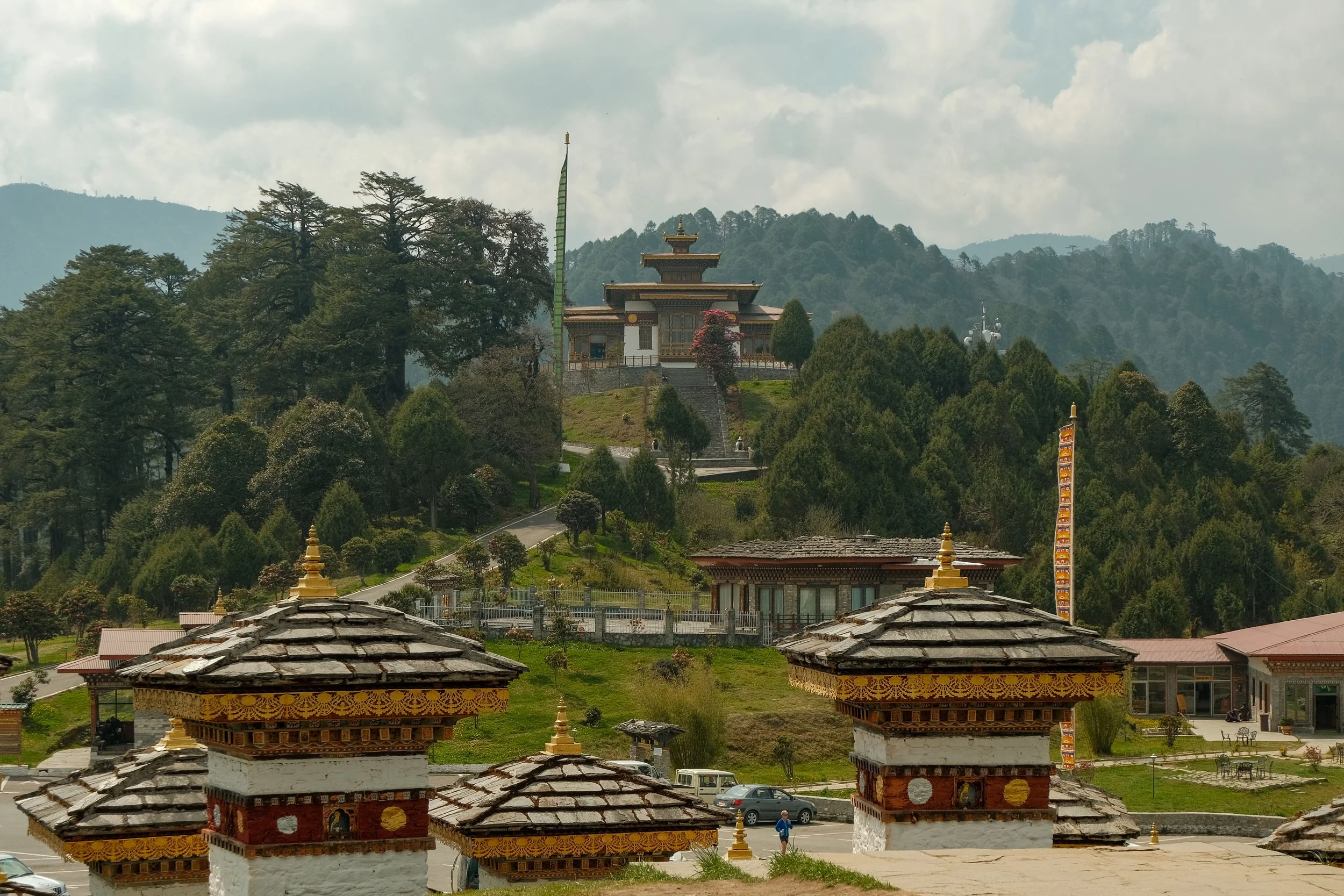
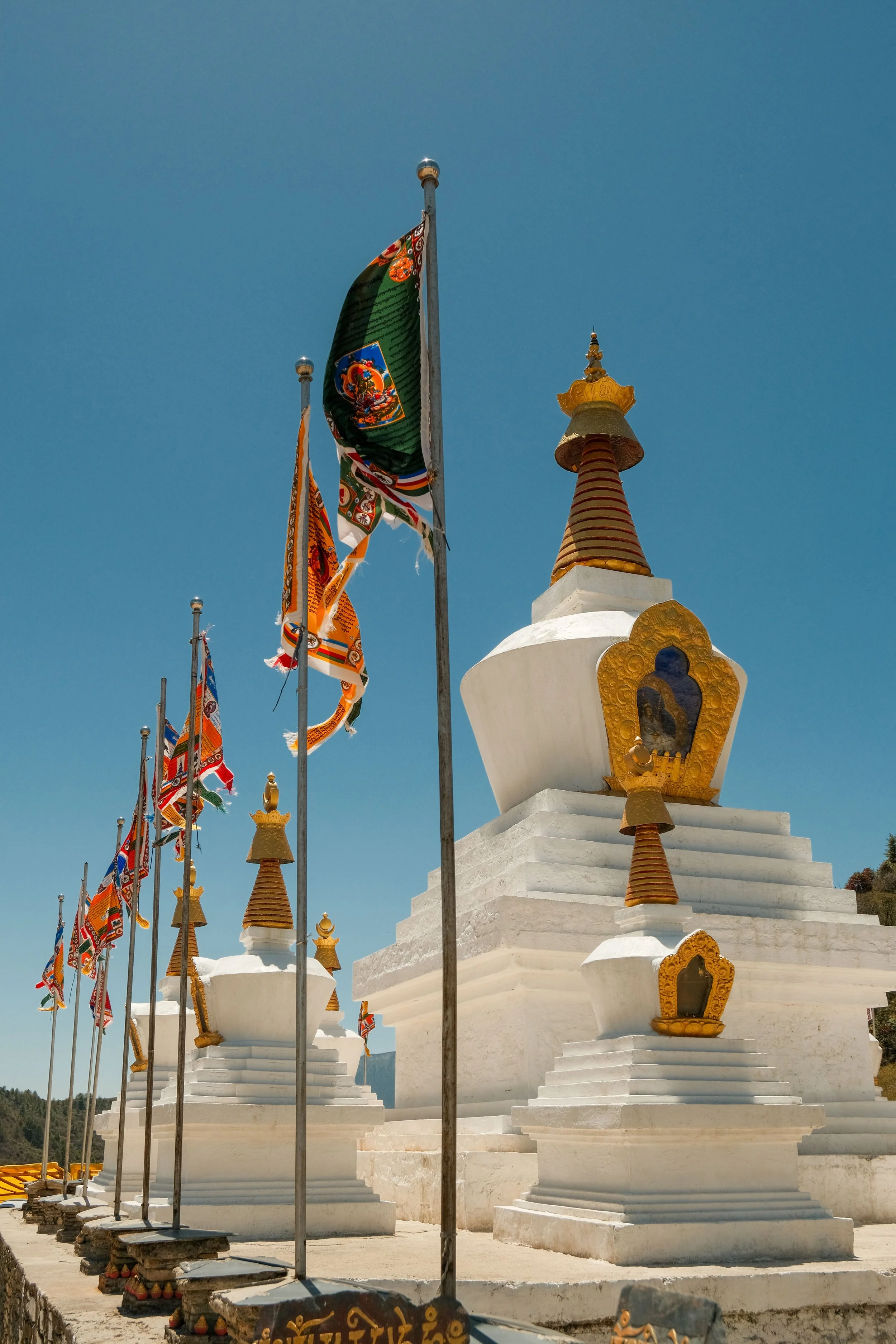
Buddhism is central to life here, practiced by around 80% of the population, and its presence is felt everywhere. One of our first stops was Chimi Lhakhang, one of the country's most unusual temples. It sits on a small hill surrounded by rice fields, and is dedicated to Drukpa Kunley - a 15th-century Buddhist teacher known as the Divine Madman, who used humor and unconventional methods like sexual symbolism in his teachings. Over time, the temple became associated with fertility blessings, and visitors now come from all over to pray for children.
We removed our shoes at the entrance and stepped inside, where monks sat chanting while others accompanied them on long copper horns. Kuenzang pointed out the statue of the Divine Madman, and we made an offering. He also pointed out a large wooden phallus on the altar, used in a fertility ritual that involves carrying it around the temple on your back. One of the coolest details was a photo album near the entrance, filled with pictures of babies born to couples who had visited and prayed there - some families had even returned years later with their children.
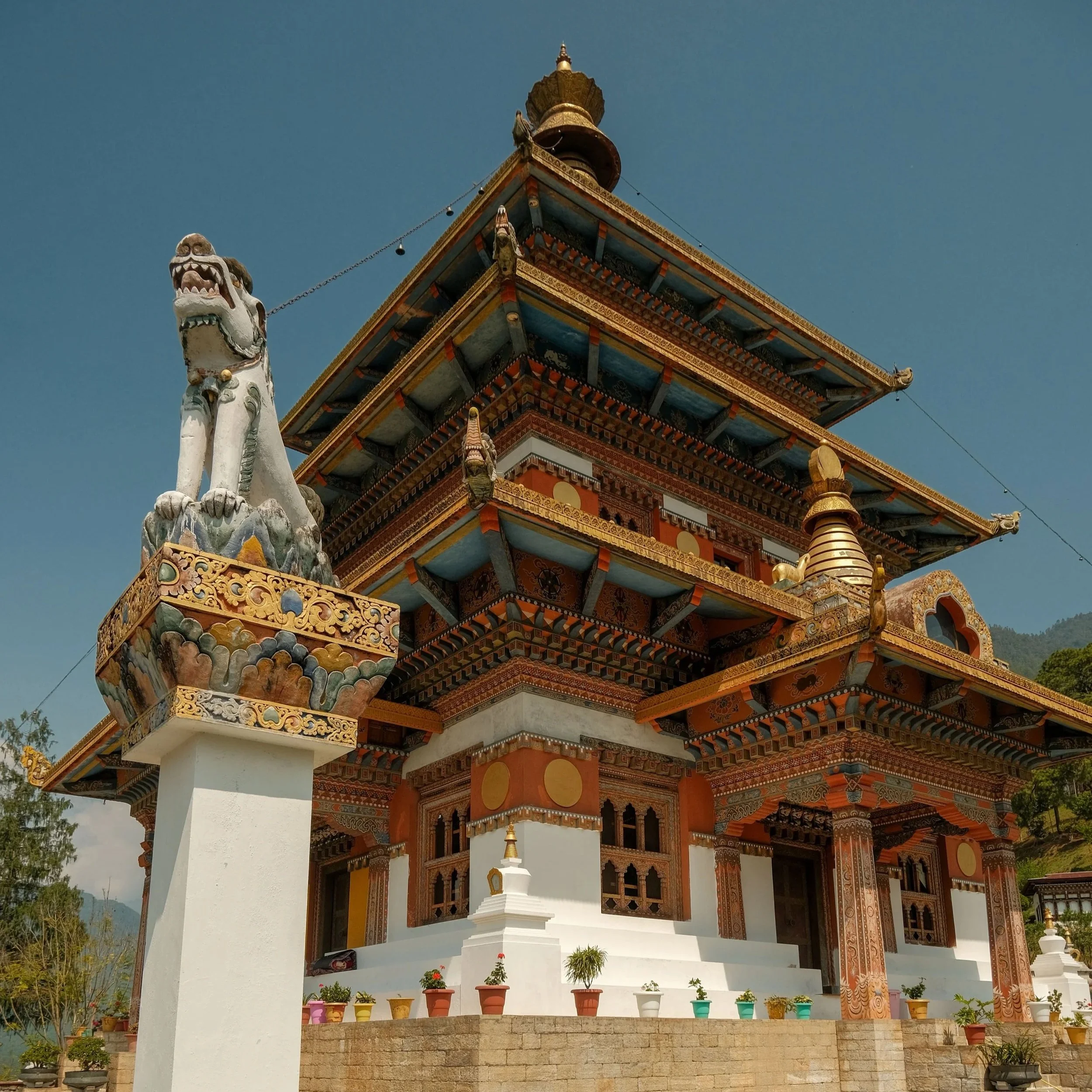
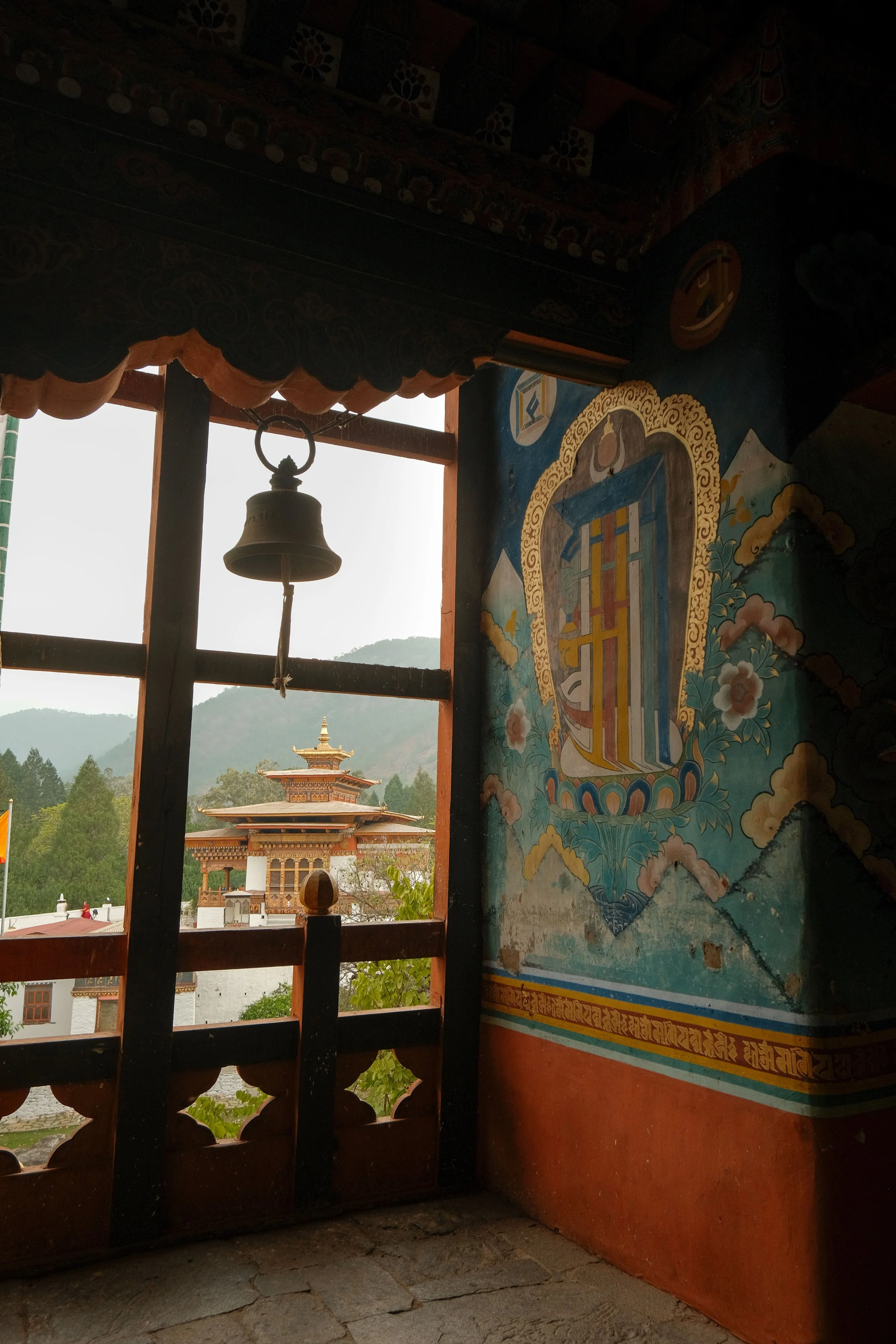
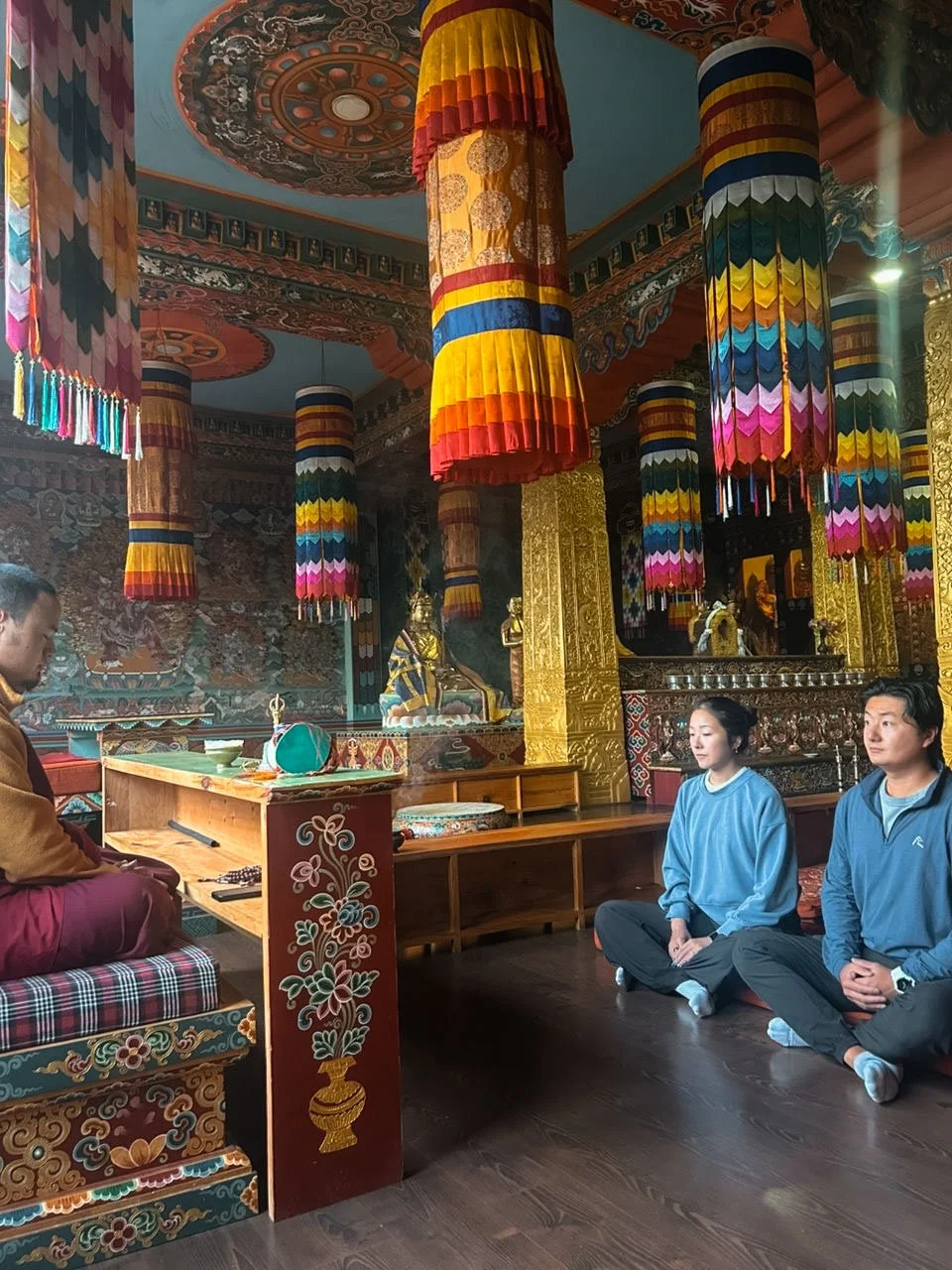
Throughout the week, we visited many more temples and monasteries. You’re not allowed to take photos inside, which honestly makes the experience feel more present. Interiors are dim and atmospheric - thick timber beams darkened by incense, walls covered in colorful murals of Buddhist cosmology, and golden statues of Buddha at the center of each space. Kuenzang talked us through the deities, the stories, and the underlying philosophies. Even as non-Buddhists, a lot of the teachings resonated.
One of the most memorable moments came at a small monastery high in the hills, where we joined an early morning cleansing ceremony. The head monk sat before us chanting in Tibetan, low and steady, while another sprinkled holy water on our heads and scattered grains of rice. Even without understanding the language, the combination of sound and ritual felt grounding. I walked out feeling a bit lighter.
As we visited temple after temple, we noticed that they all had photos of the royal family, and eventually realized their pictures were everywhere - homes, shops, public spaces. It quickly became clear how genuinely well-loved they are. The Wangchuck dynasty has ruled since 1907, and the current king, the fifth in the line, has built a reputation for putting his citizens first. During COVID, when tourism collapsed, he personally paid the salaries of tour guides and even arranged feeding programs for stray dogs across the country. He’s often seen in simple national dress, walking through the capital or traveling to remote villages to meet with locals.
His father, the fourth king, famously introduced Gross National Happiness as a more meaningful measure of progress than GDP, a philosophy that still shapes Bhutanese policy today. It emphasizes well-being through factors like psychological health, ecological diversity, and living standards rather than just economic output. It’s why Bhutan is often described as one of the happiest countries in the world - something Kuenzang and Karma agreed with without hesitation.
Food and Accommodation
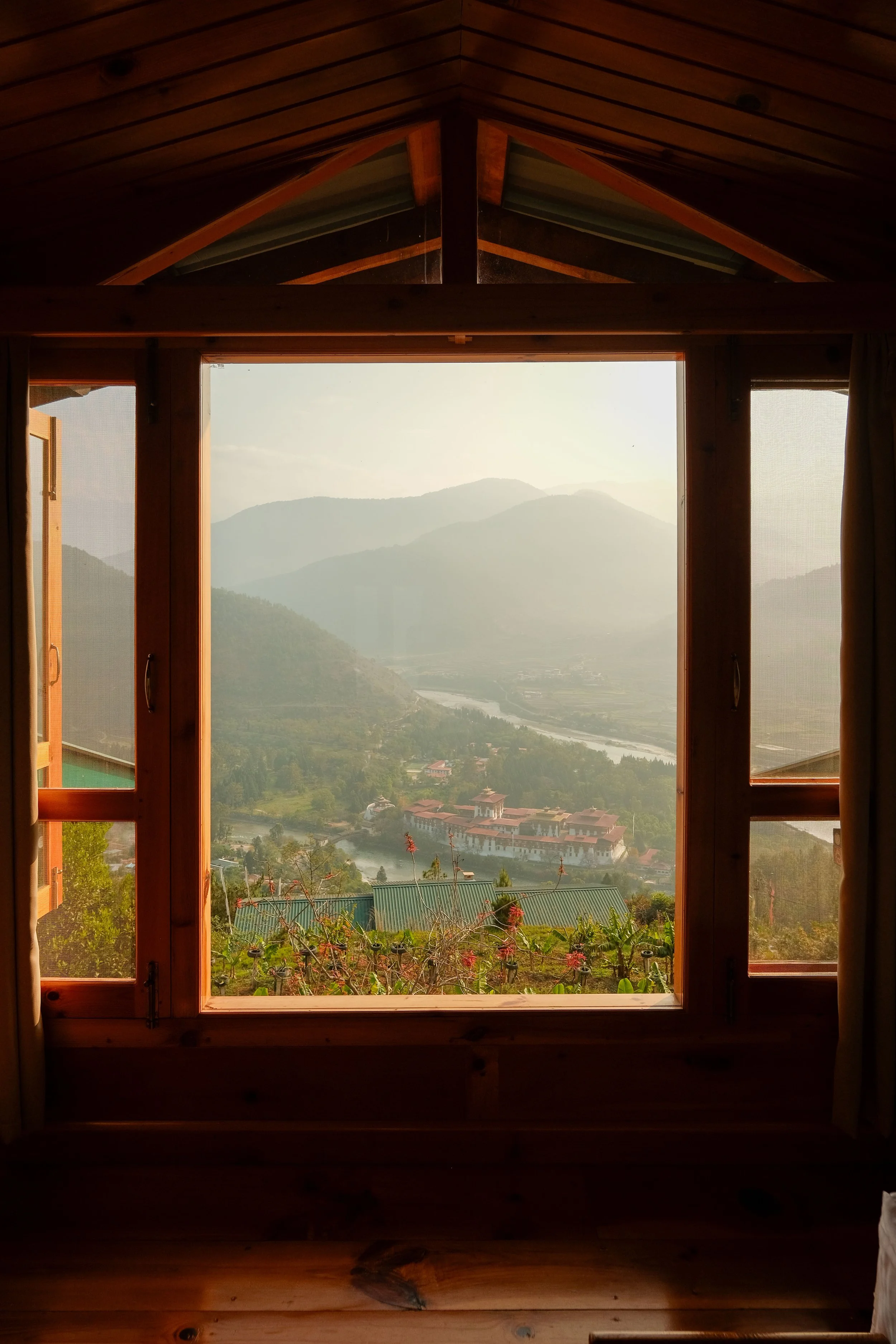
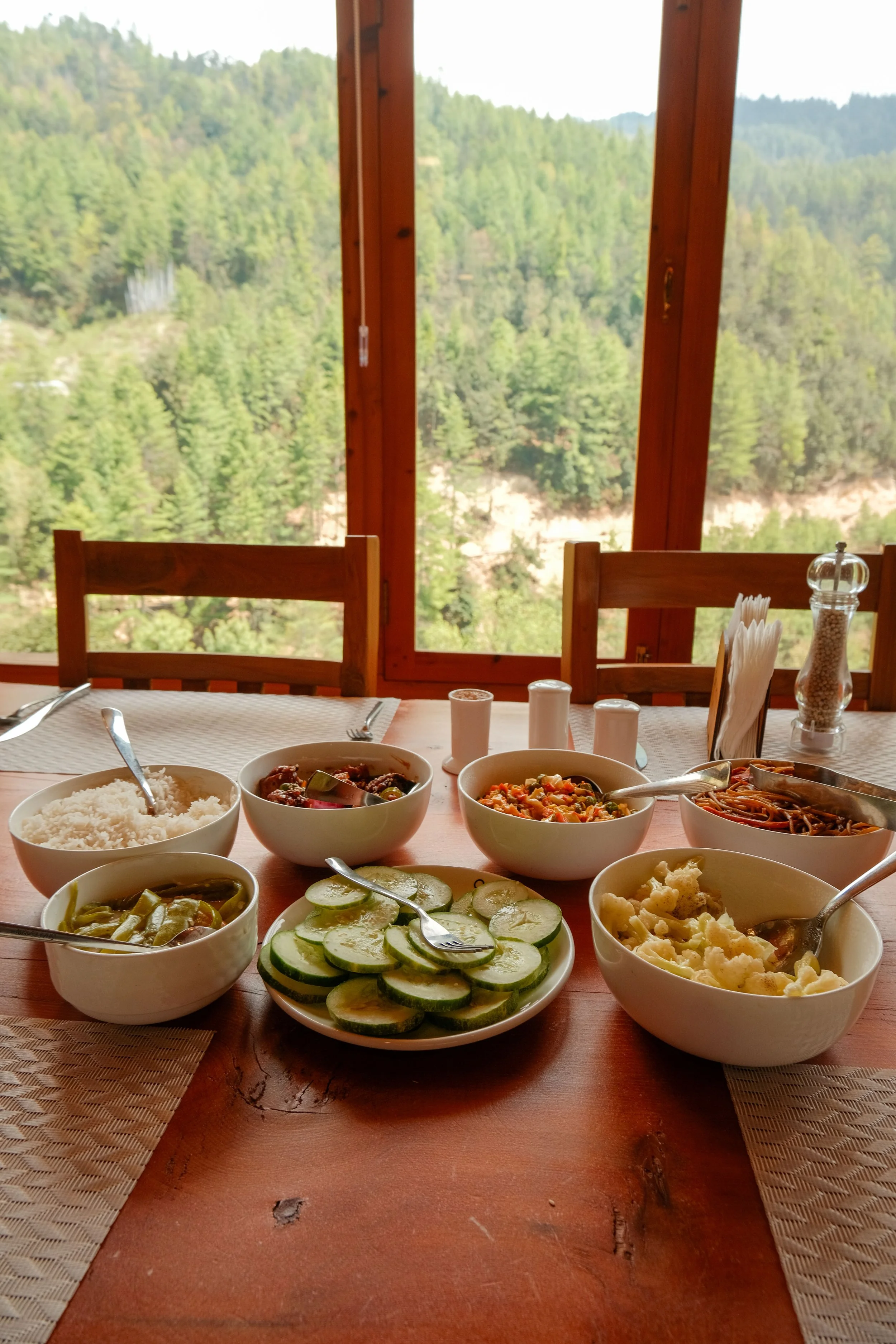
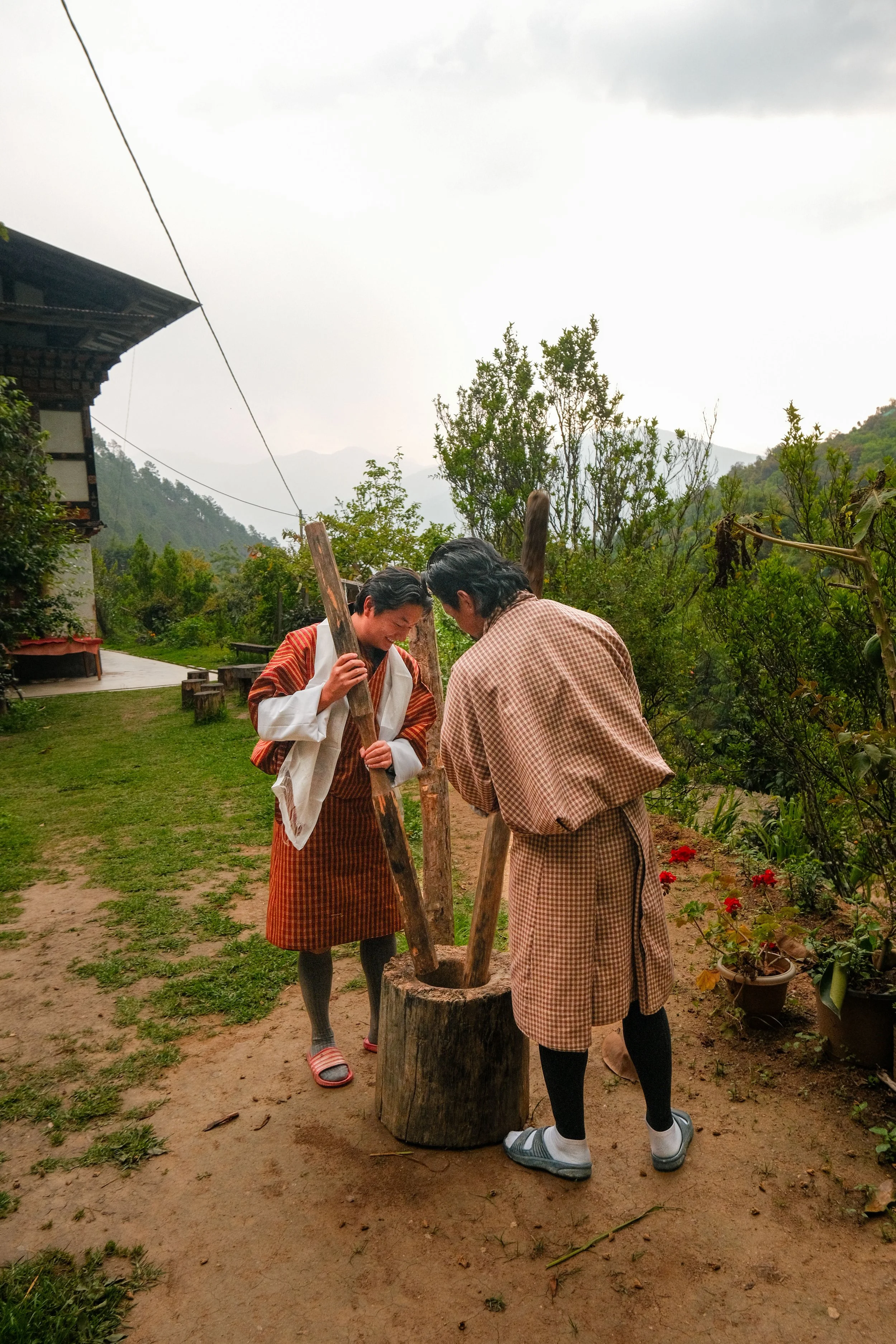
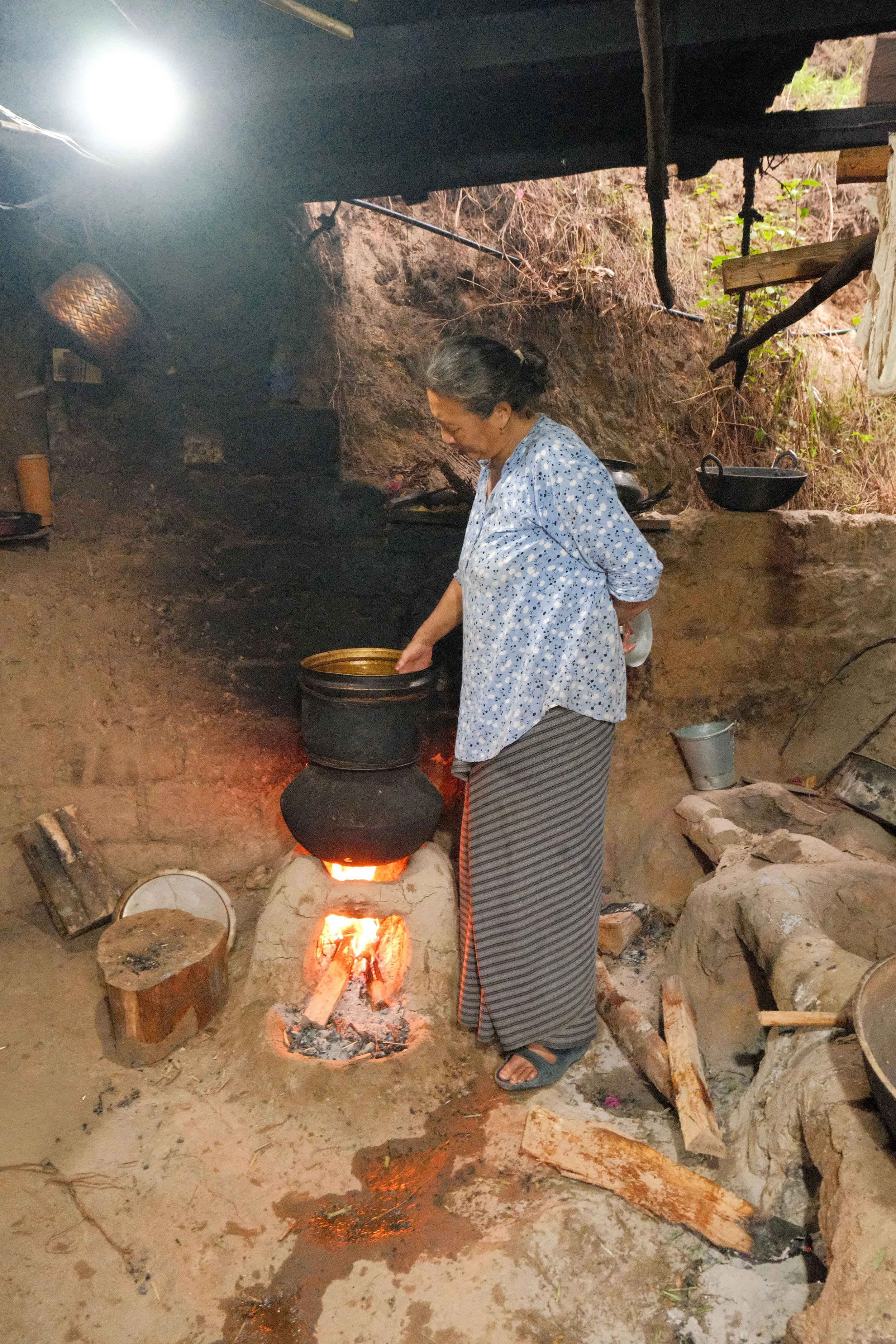
Throughout the week, we mostly stayed in rural guesthouses, where we had private rooms with sweeping views and breakfast and dinner served family style. Most of the ingredients were grown in the garden or sourced from local farmers. We also had lunch at local homestays, including one where we learned to milk a cow (much harder than it looks) and watched rice wine being made. The food in Bhutan is simple and very good. There are lots of vegetables, which I appreciated, and pink rice is served with every meal. Bhutanese people eat a surprising amount of dairy by Asian standards, and the national dish, ema datshi (chili peppers stir-fried with soft cheese), comes with everything.
Punakha and Phobjikha
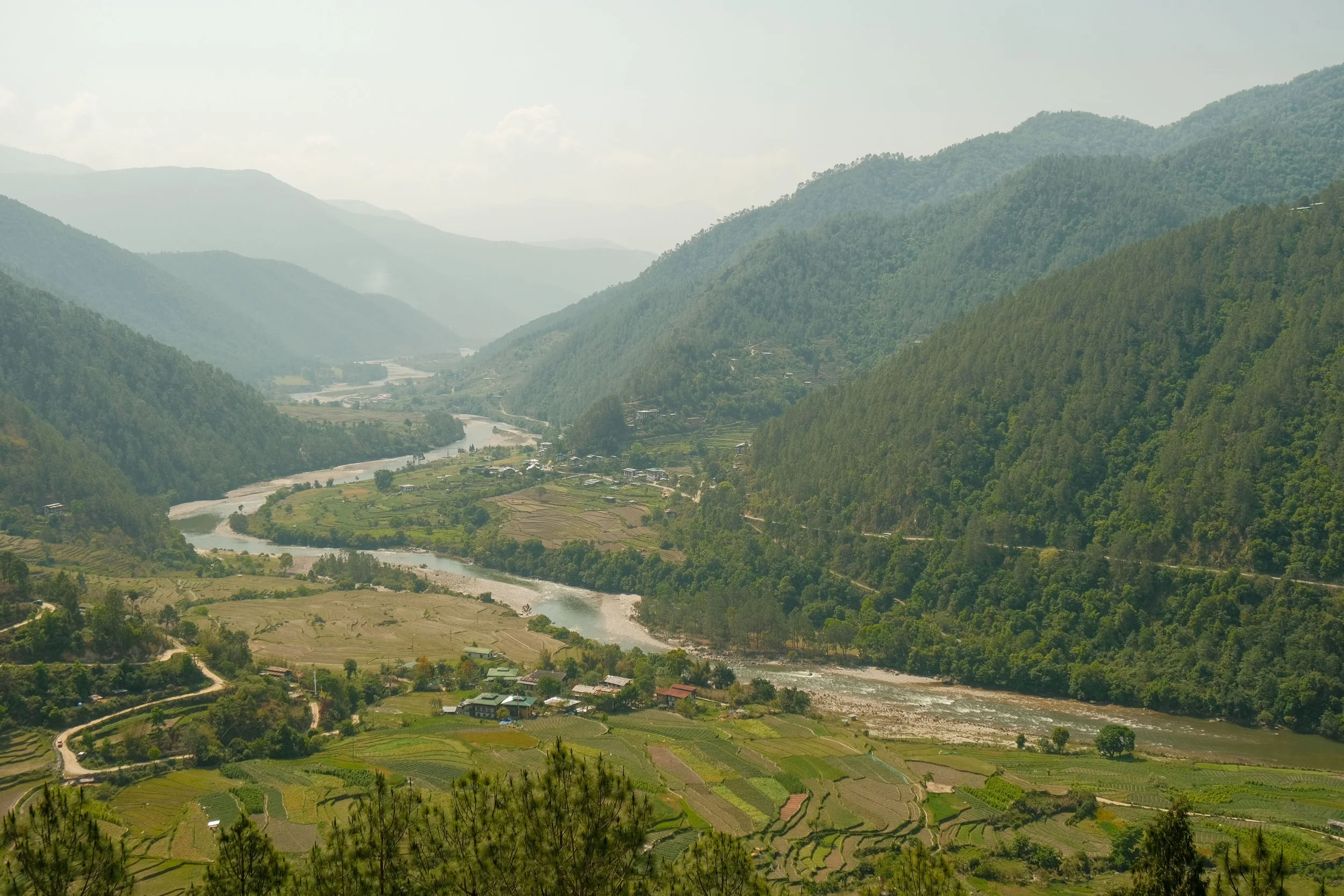
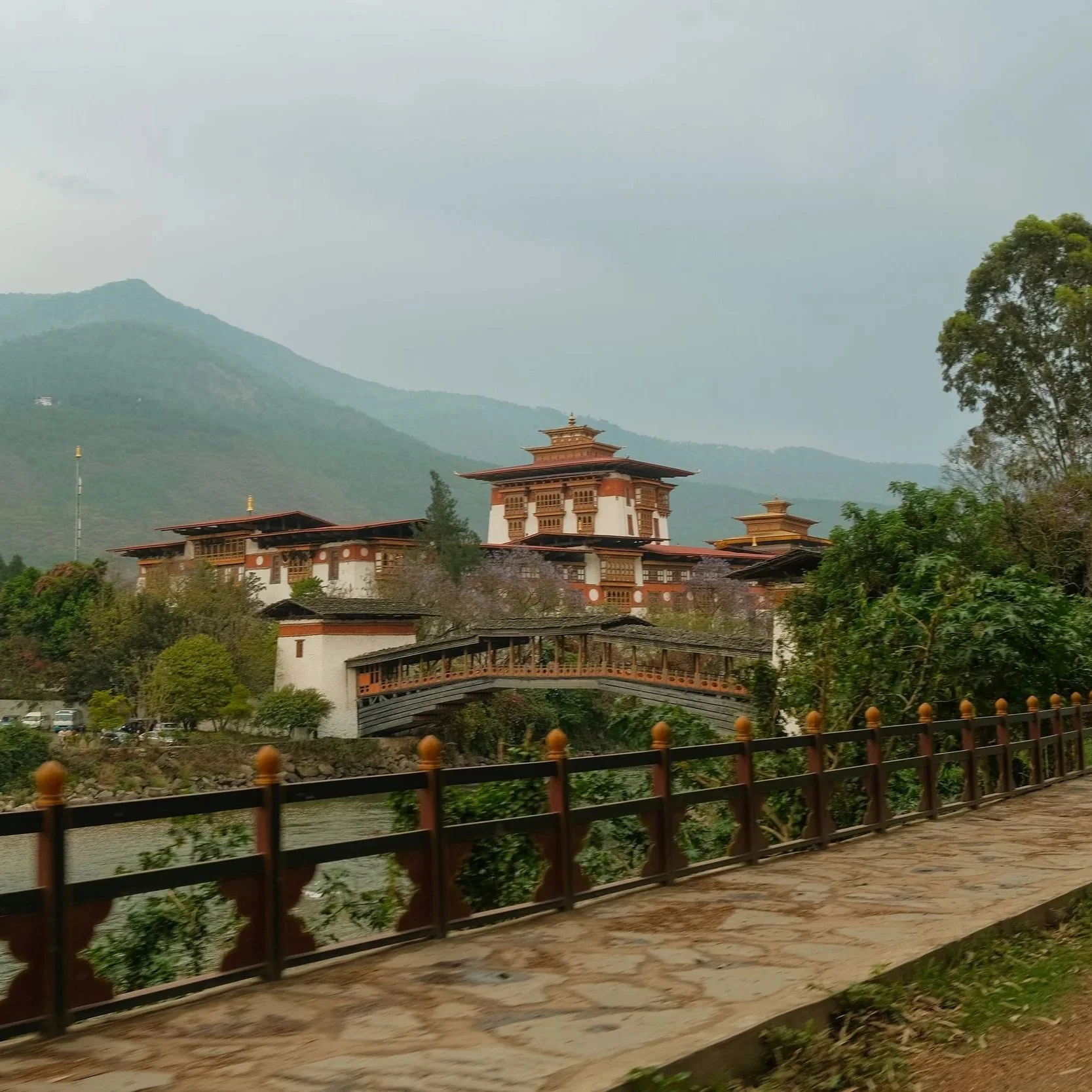
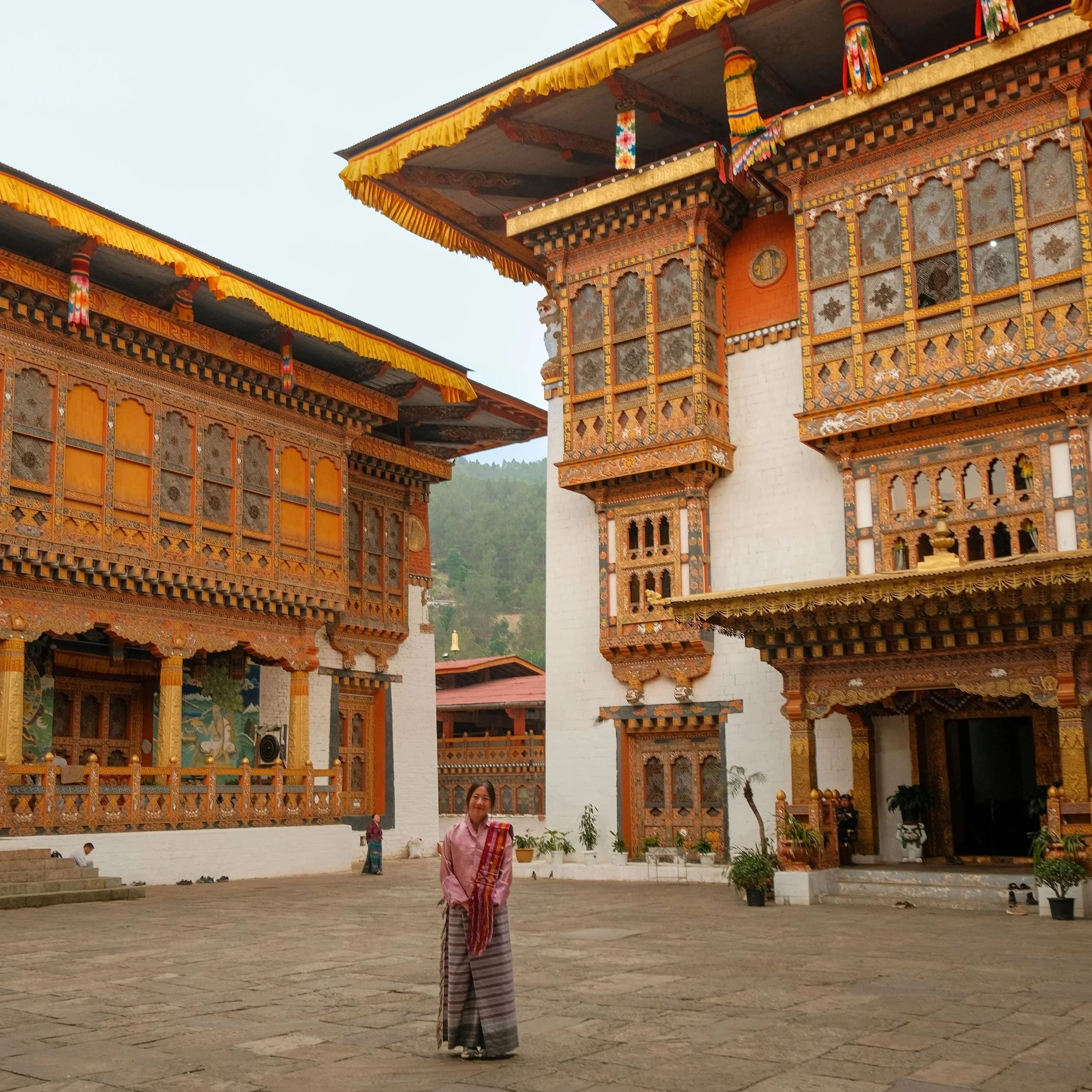
The first half of our stay was centered in western-central Bhutan. Punakha surprised us with its warmth - around 70 degrees, thanks to its low elevation in a lush river valley - and its centerpiece, Punakha Dzong, is one of the most impressive buildings I've ever seen. A massive fortress-monastery that served as Bhutan's capital until the mid-20th century, it hosted the coronation of the first king in 1907 and is still used for major royal ceremonies. Before entering, Kuenzang helped us get dressed in traditional clothes. He had to flag down a woman passing by to help me with my kira since neither he nor Karma knew how to put it on. Minutes after we walked in, a monk and his entourage came through the gates toward us. Karma quietly told us this was one of the five grandmaster monks in all of Bhutan. As he passed, Karma bowed and received a blessing on his head. Hanqing and I followed suit, and the grandmaster paused to bless us too.
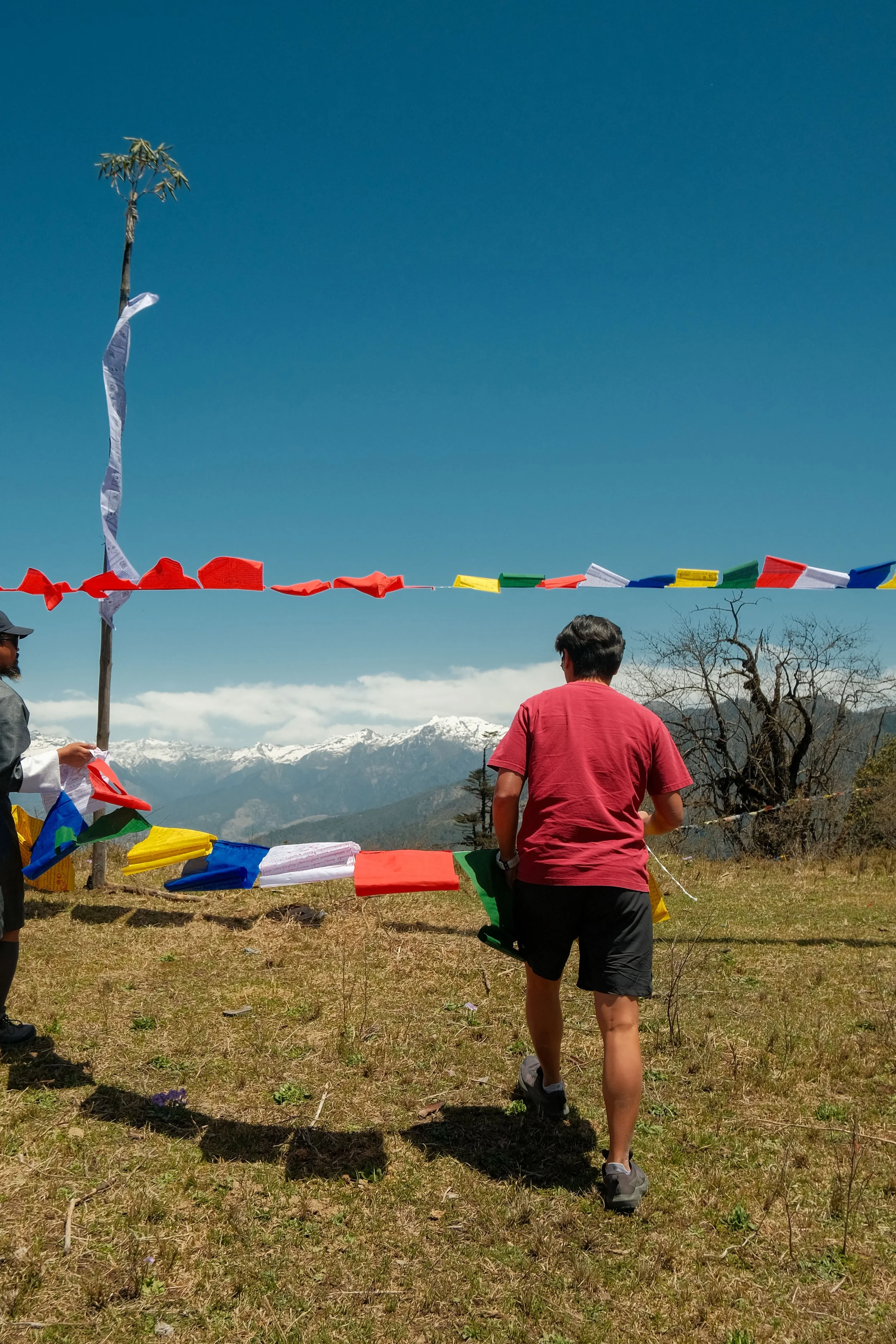
From Punakha, we took a day trip to Phobjikha Valley, high in the Himalayas at around 3,000 meters. We climbed a small hill to look out over the snow-capped peaks, then found a spot to hang our prayer flags - colorful cloth panels inscribed with mantras, typically strung inplaces where the wind can carry their blessings outward. We chose the windward side of the hill to give them the most flutter potential.
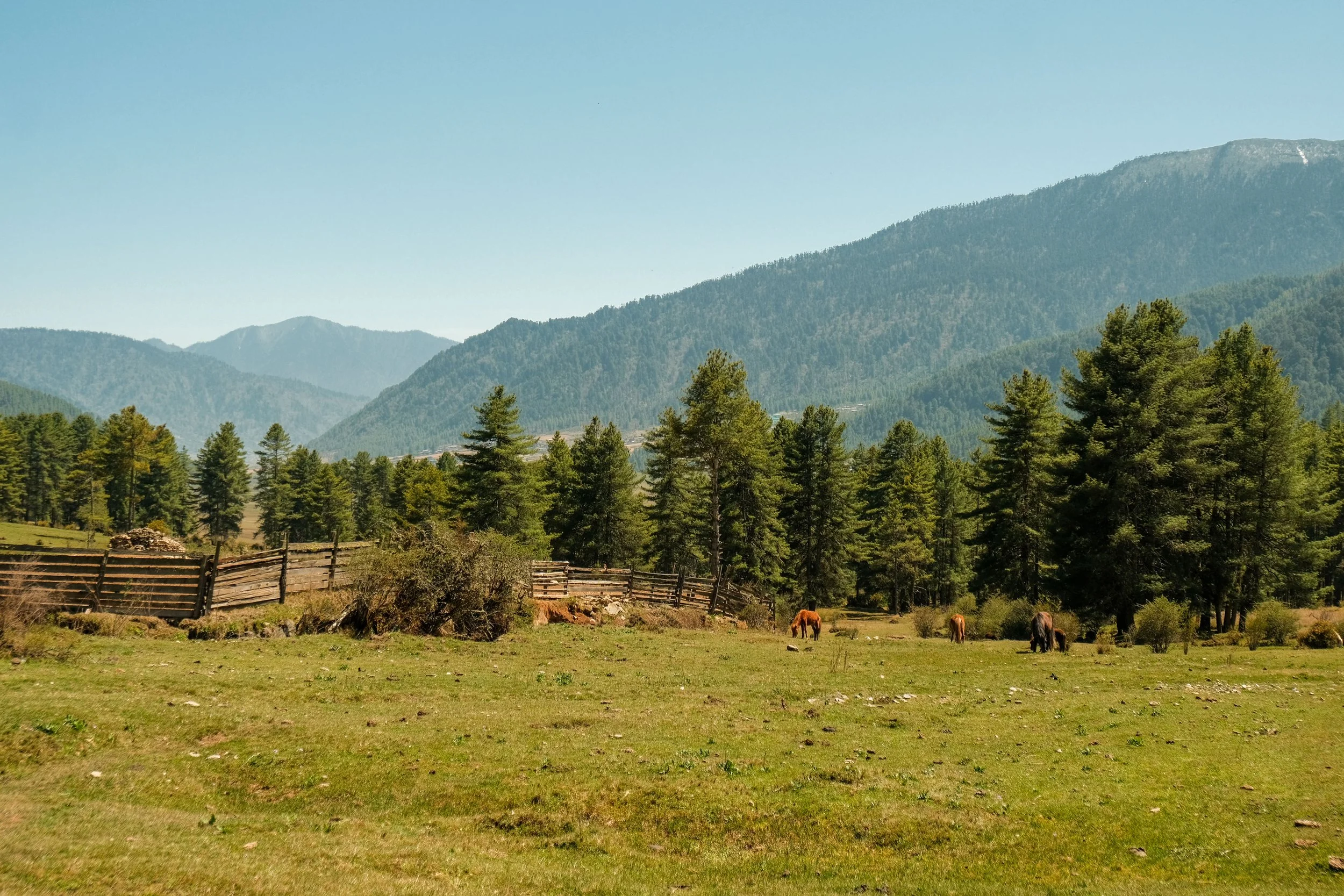
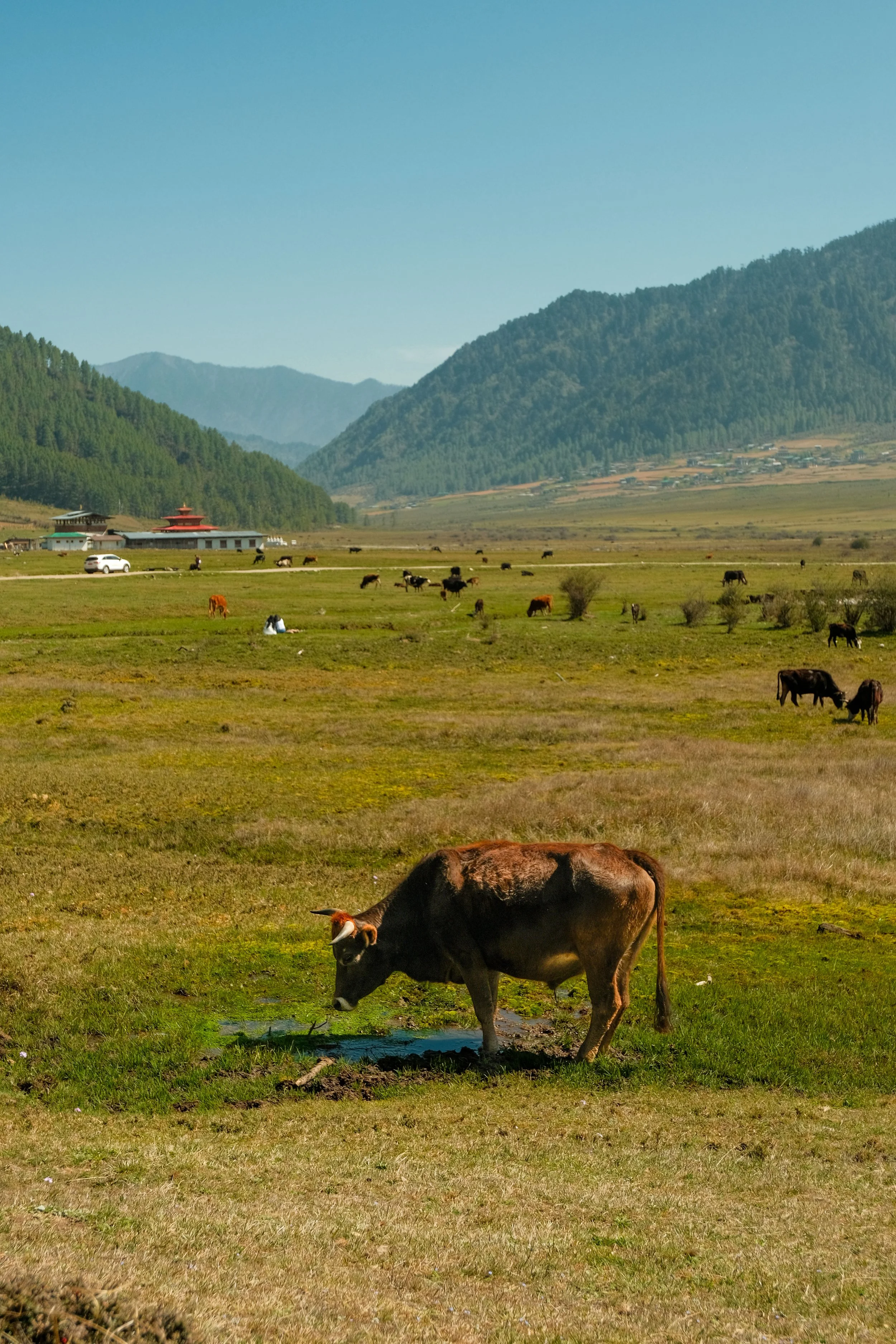
Afterward, we set off along the Gangtey Nature Trail, walking through open fields, rolling hills, and past scattered farmhouses and grazing animals. Kuenzang told us the valley is nicknamed “Second Switzerland.” We haven’t been to Switzerland yet, but it reminded me of the Italian and Austrian Alps. In winter, the valley fills with black-necked cranes migrating from Tibet. We were a bit too late in the season to see them in the wild, but we did meet two rehabilitated cranes at the visitor center. They were striking, elegant birds, and it was easy to see why they return to such a peaceful place each year.
Thimphu
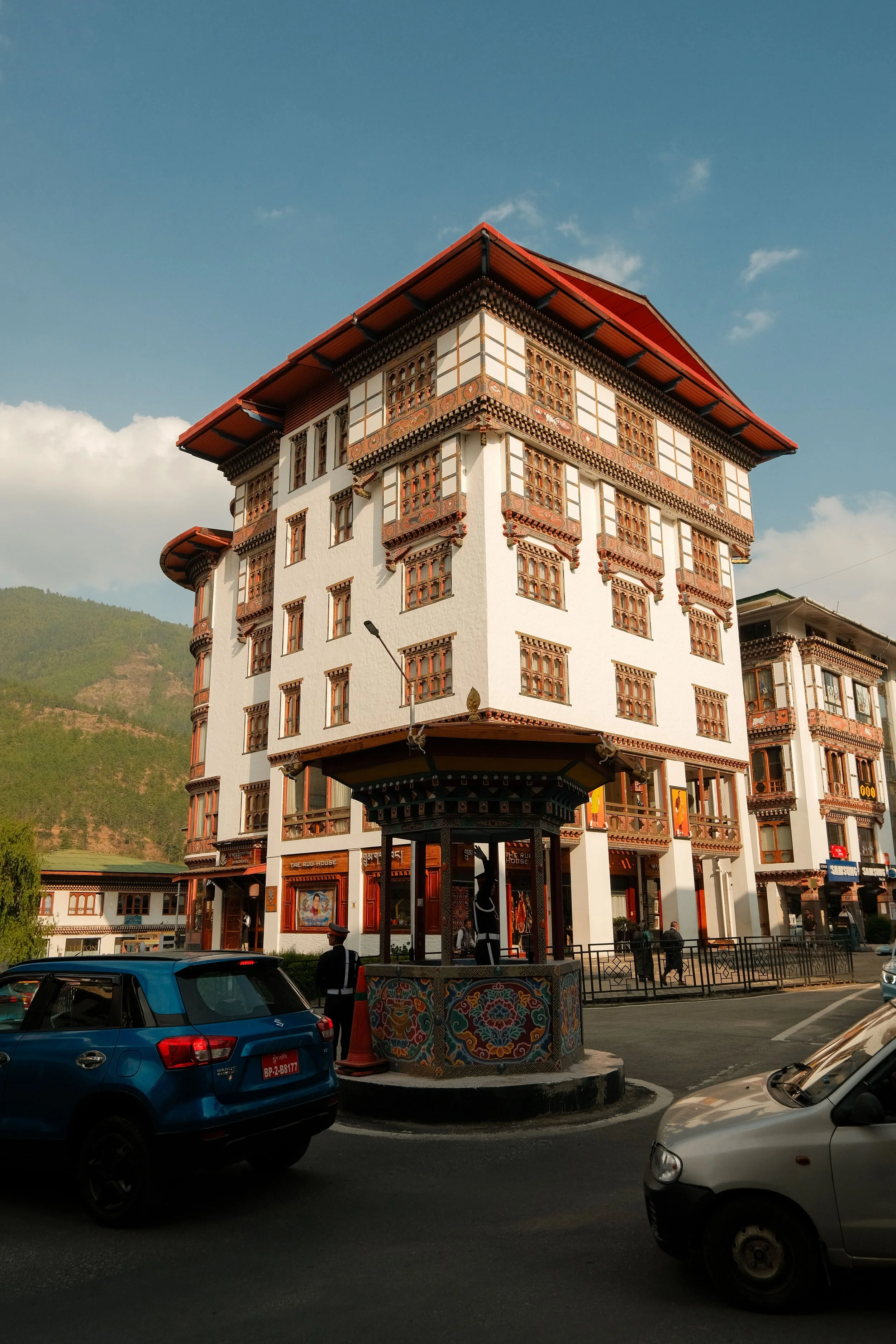
After the first half of the week in central Bhutan, we moved to Thimphu, the capital. It felt less like a major city and more like a large mountain town, with low-rise traditional buildings, no skyscrapers, and notably, no traffic lights (anywhere in the country, in fact!). Instead, busy intersections are managed by traffic officers directing by hand from small booths. It sounds chaotic, but it works.
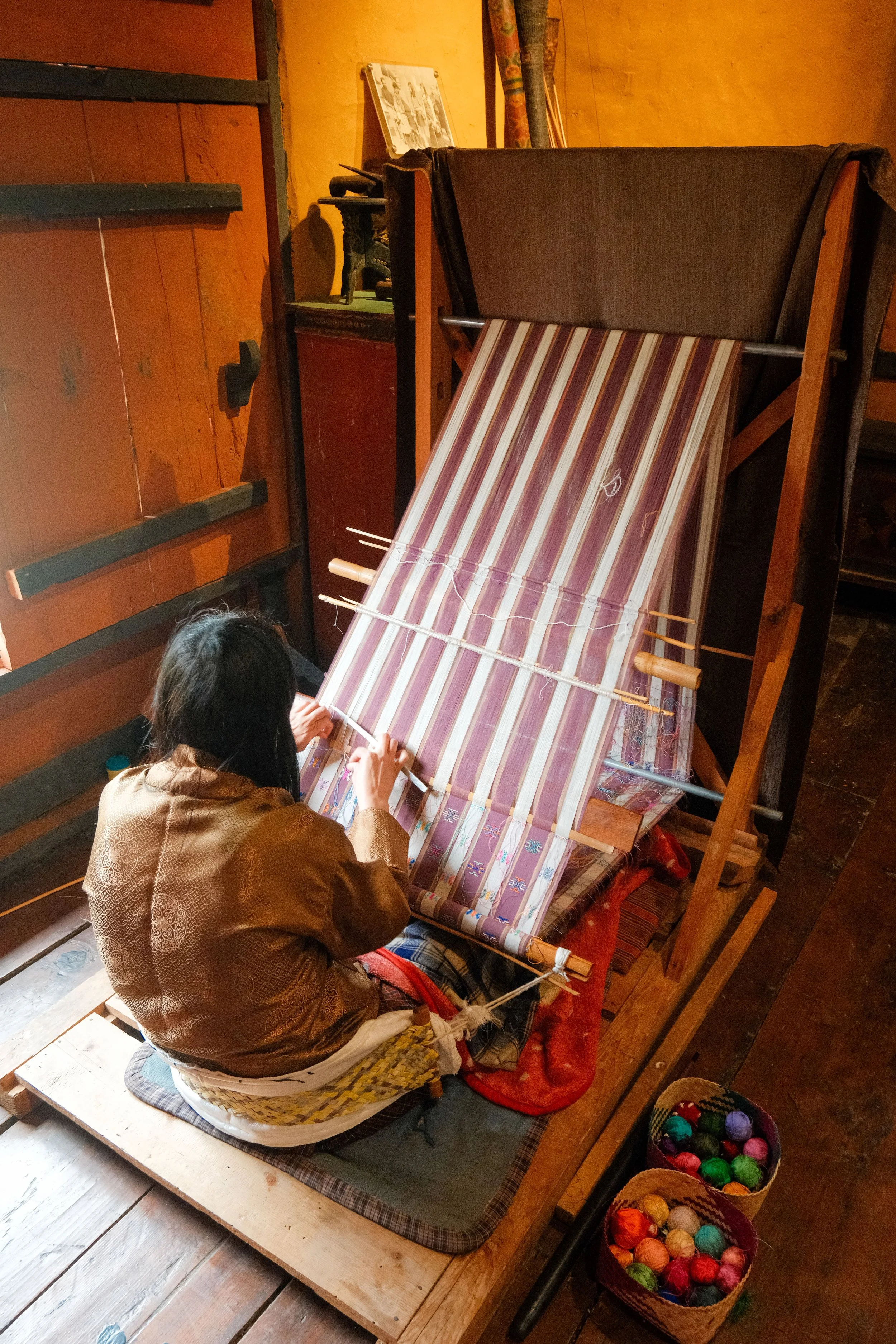
In Thimphu, we visited Choki Traditional Art School, where students learn traditional Bhutanese crafts like embroidery, calligraphy, sculpting, wood carving, and Buddhist painting - the same techniques used to create and maintain Bhutan’s temples and monasteries. The school also provides free education and housing for underprivileged youth, essentially training the next generation of artisans while giving opportunities to those who need them most. A student guided us through the different workshops, where we watched others carefully at work before trying our hand at painting ourselves. It was very meditative, and gave me a new appreciation for the intricate murals we’d been admiring all week.
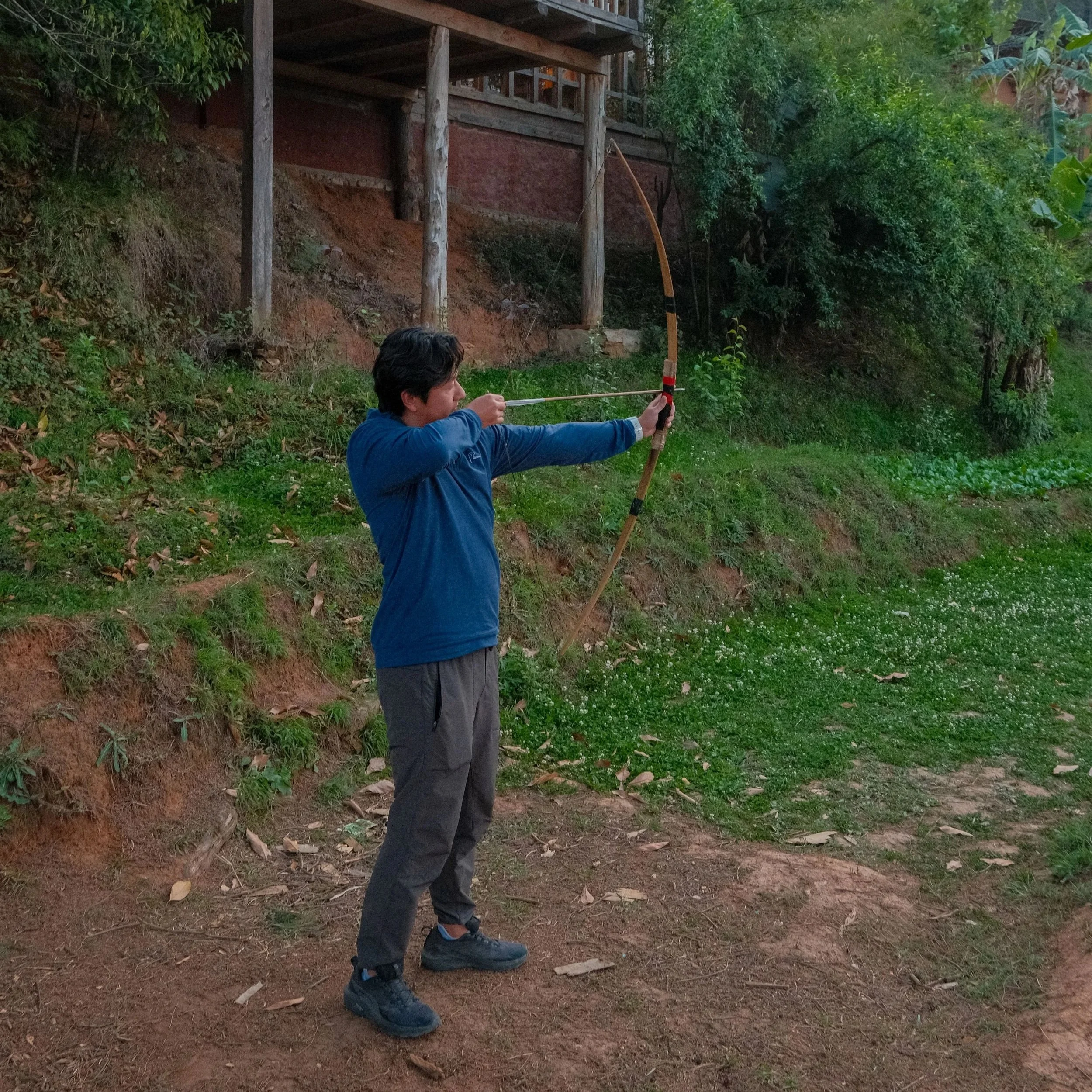
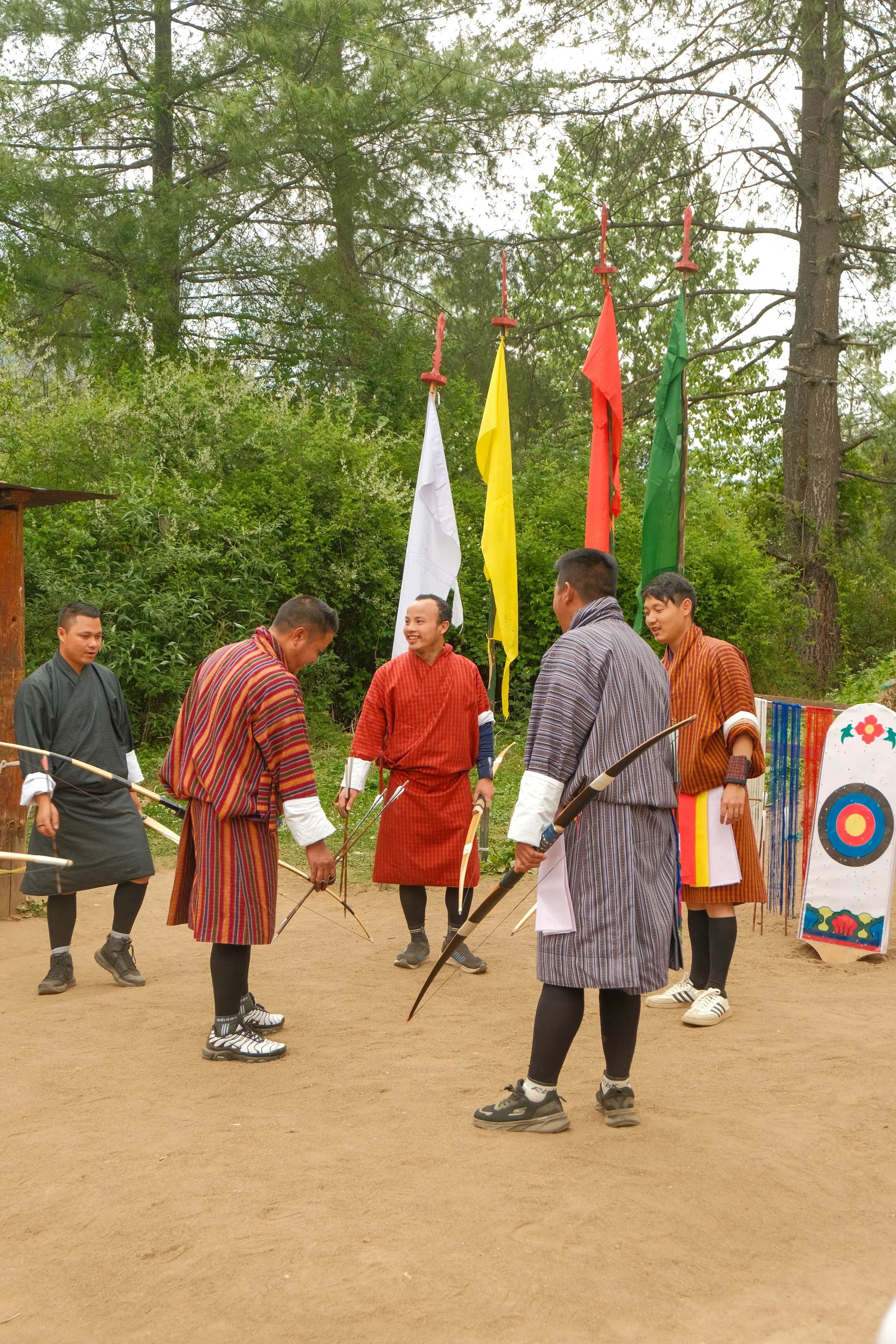
Hanqing's highlight was probably the archery. Archery is Bhutan's national sport, played on a field with targets over 100 meters apart. When a team hits the target, they break into a traditional song and dance. We got to try it out at one of our guesthouses, then watched the locals play for real at an archery club. On our last day we also tried Bhutanese darts, played outdoors with heavy, metal-tipped darts aimed at a small wooden target 30 meters across a field - completely different from the pub darts we’re used to. It had the same energy as the archery: competitive, playful, a lot of dancing and teasing. We were not good, but we had a great time.
Tiger's Nest
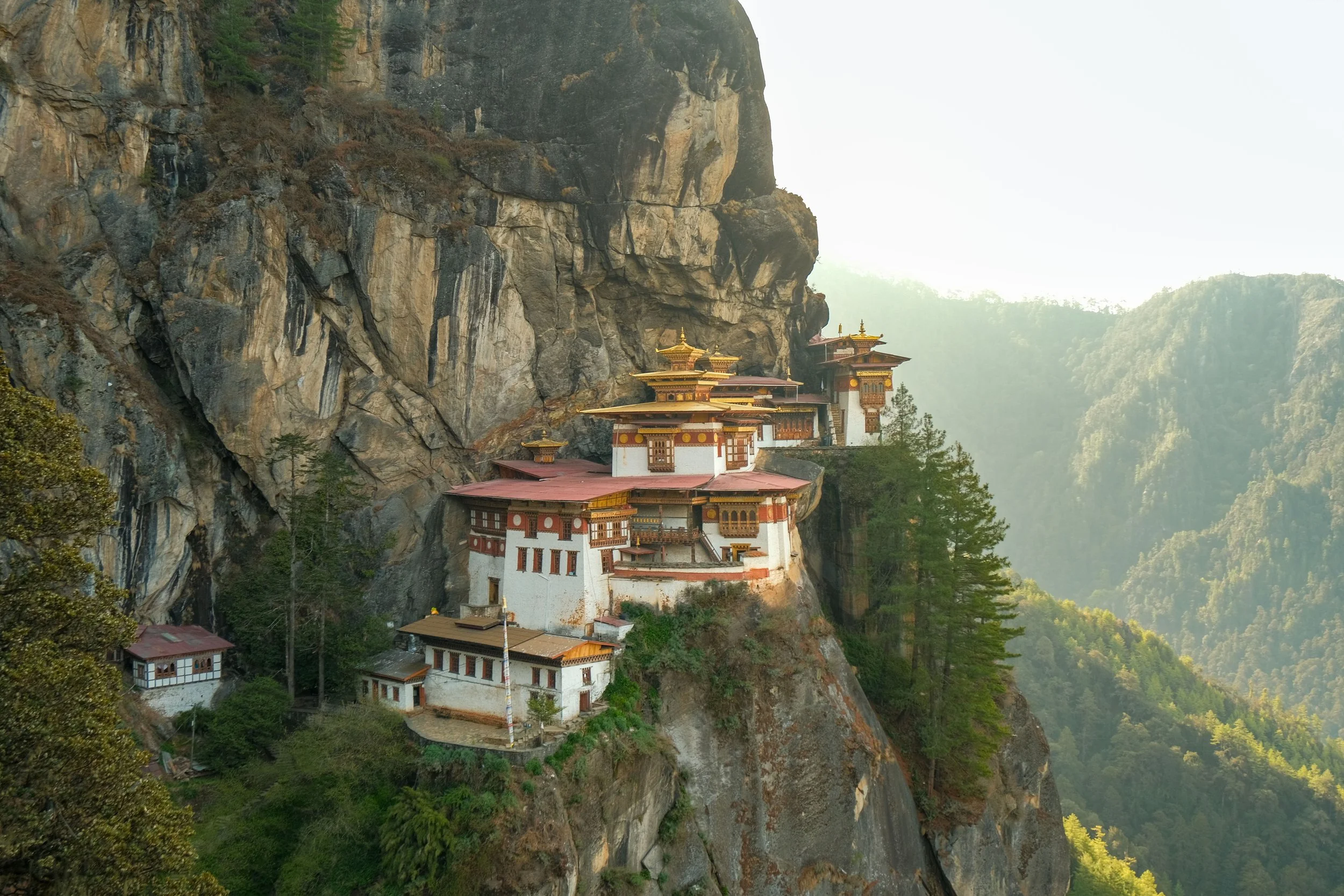
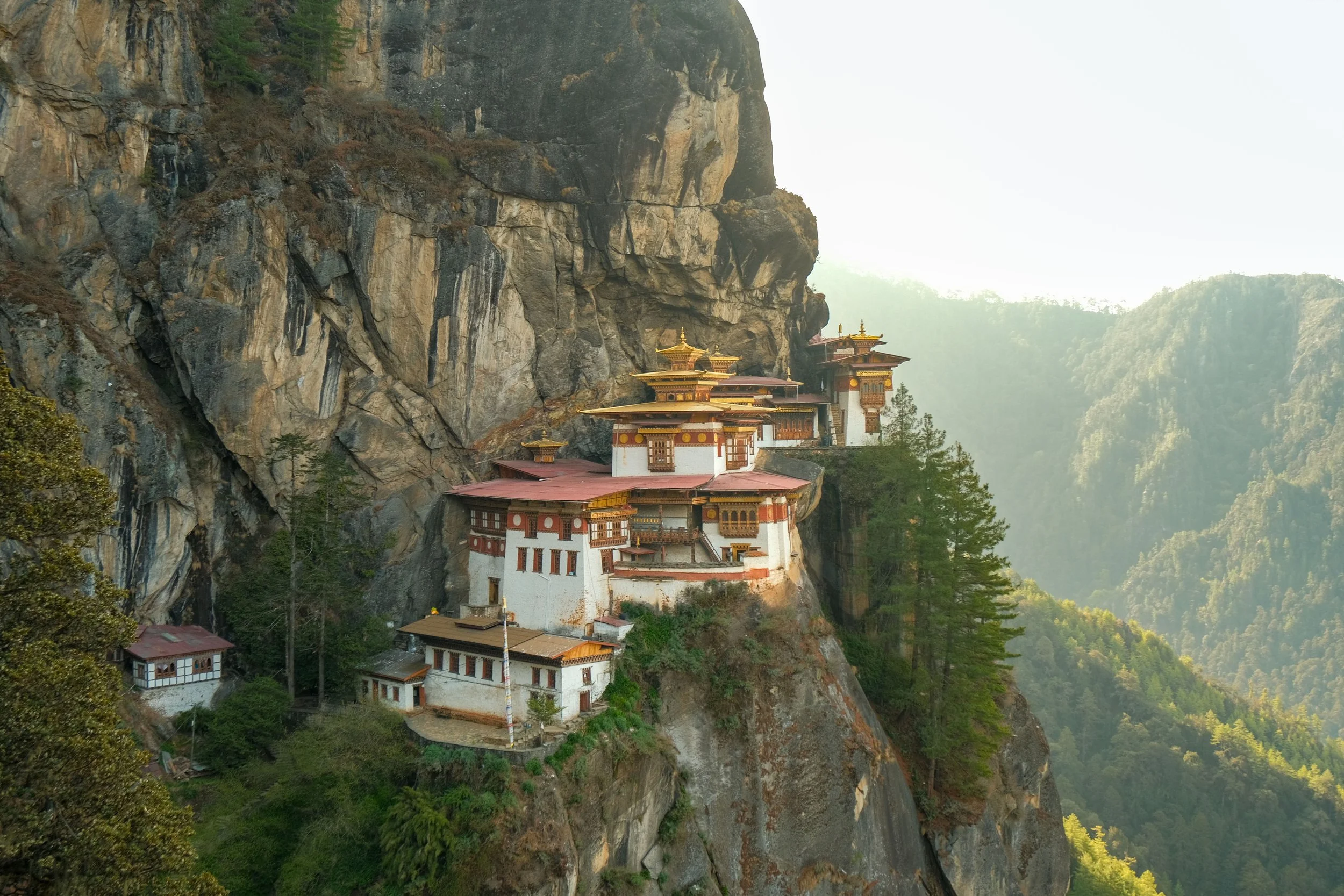
We saved the iconic hike for last. Tiger's Nest Monastery clings to a cliff face roughly 3,000 feet above the Paro Valley. It's one of Bhutan's holiest sites, as much a pilgrimage destination for locals as for tourists. Several Bhutanese people told us they make the climb at least once every few years. According to legend, the Buddhist teacher Guru Padmasambhava flew here from India on the back of a tigress in the 8th century, meditated in a cave for 3 years, 3 months, 3 weeks, 3 days, and 3 hours, and established Buddhism in the region. Most visitors save it for their final day to acclimatize to the altitude first, since the hike is a steep three-hour climb over 10,000 feet. Unfortunately my runner’s knee was acting up, so I sat this one out and sent Hanqing off with my camera.
Hanqing and Kuenzang set off at 6am and were the first to reach the monastery. It was the first time Kuenzang had ever reached the top first, after hundreds of visits, which he said felt like a significant blessing. The complex turned out to have nine temples and shrines built into the cliff face, and Hanqing made a prayer at each one. He also climbed down a series of wooden ladders into the dim cave where Guru Padmasambhava first arrived. Only one person can enter at a time, and because they arrived so early, Hanqing and Kuenzang were able to go in without a wait.
On their way down, they FaceTimed me from one of the main viewpoints so I could see it live and say a prayer. Even over a phone screen it was spectacular. It was the perfect grand finale to an incredible week in Bhutan.
Talk soon,
Tanya
